Tuscany is a land of art under the open sky. Not just museums and galleries but also works that dialogue with nature, where the landscape becomes an integral part of the experience framed by the viewer’s gaze.
Sculptures, murals, parks and widespread museums make up an itinerary that chronicles art “en plein air” in its most striking expressions. Let’s explore together!
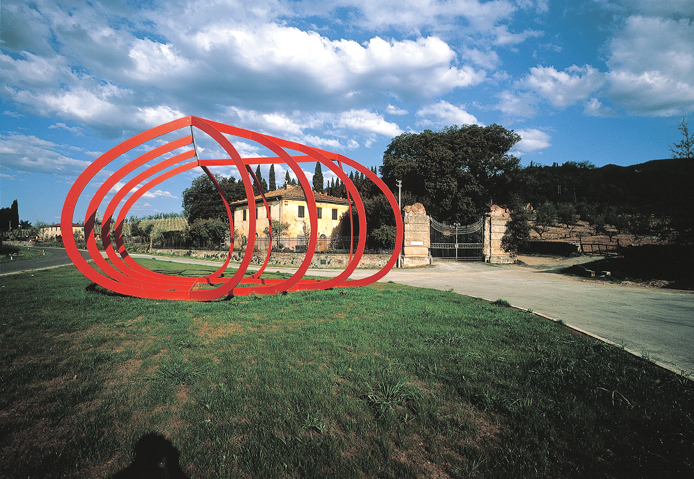
On a hill overlooking the area between Florence and Pistoia is the Fattoria di Celle, considered one of Italy’s most important collections of environmental art.
The collection was born from the will of Giuliano and Pina Gori who, after starting to amass contemporary art, bought this villa in the 1970s and transformed it into an open-air museum.
Since 1982, the Fattoria di Celle has become a unique setting for some 80 site-specific installations, created by international artists and designed to merge with the outdoor landscapes and historic spaces of the villa.
Artists include Daniel Buren, Sol LeWitt, Richard Serra, Mauro Staccioli, Jean-Michel Folon and many others. Marking the entrance is Burri’s massive Il Grande Ferro R, a symbolic threshold to an ongoing dialogue between nature and contemporary art.
In the hills of Pistoia, Villa La Magia—a Medici villa recognized as a UNESCO World Heritage Site—houses a park museum where works of art blend with the surrounding landscape. The route offers art as a sensory experience, among nature, architecture and contemporary installations.
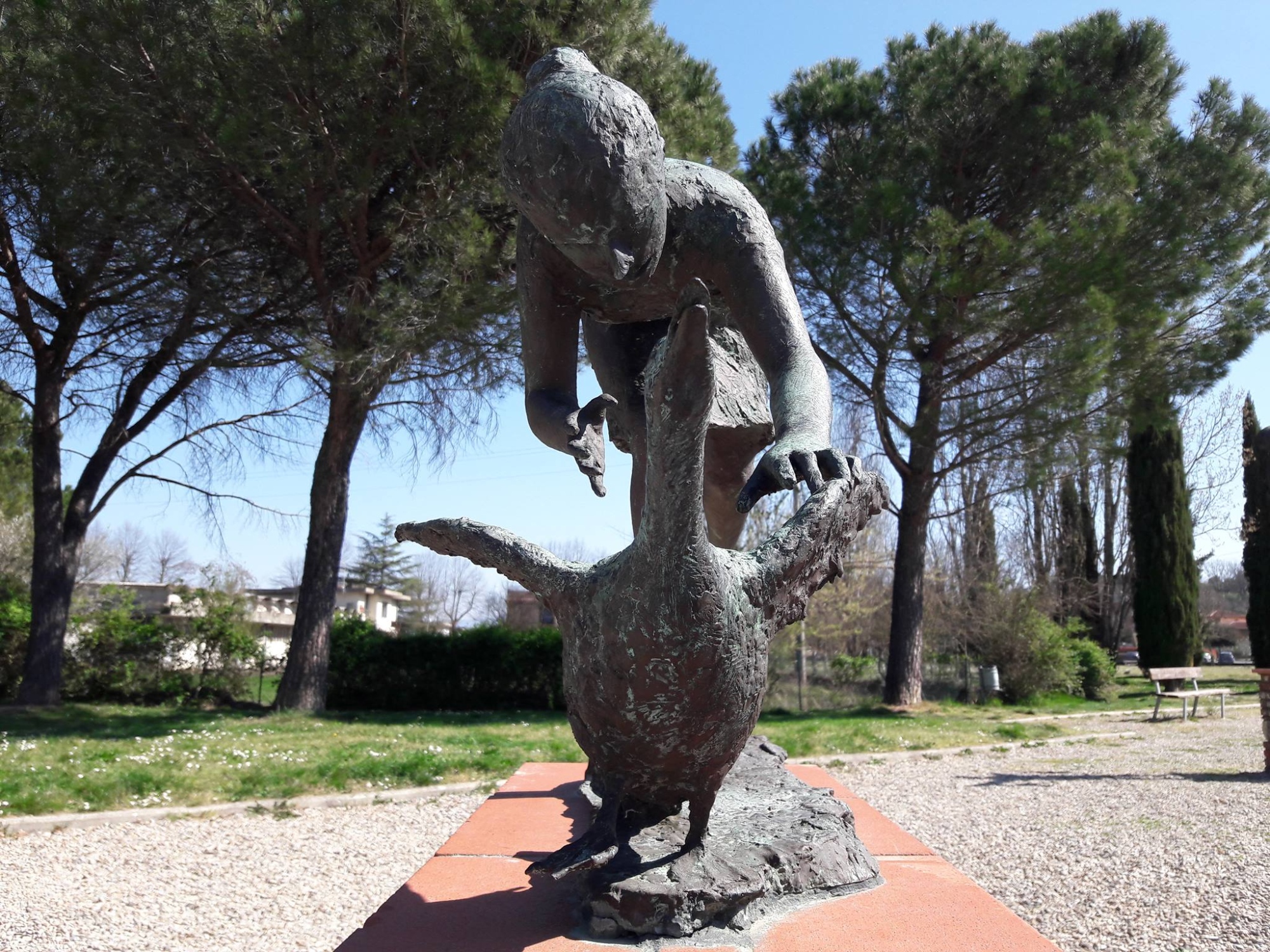
In Seano, in Val di Bisenzio, the Quinto Martini Park Museum celebrates the bond between the artist and his land in an open-air museum preserving his sculptures, unique in Italy for being entirely dedicated to a single artist.
Opened in 1988, the park counts 36 bronze sculptures donated by the artist to his hometown that depict everyday rural life with a sense of spontaneity: a girl chasing a goose, a mother with her child, an innkeeper waiting for customers, a woman facing the door. Simple and familiar scenes that capture the world of Quinto Martini, a leading figure in 20ᵗʰ-century Italian art.
In Luicciana, a small hamlet of Cantagallo, art outdoors is right at home. Since 1982, the village has been transformed into an open-air museum where gardens, façades and alleys host land art installations designed to converse with the environment.
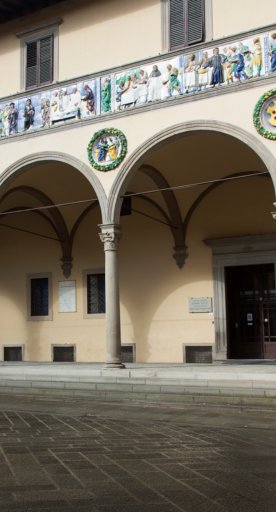
The original nucleus can still be found on the façade of the Misericordia headquarters, with 3 frescoes on plaster and marble dust embedded in aedicules imitating windows. Since, the project has expanded through the efforts of residents and the contributions of artists from all walks of life. Indeed, painters, sculptors, graphic designers and potters have made Luicciana a colorful widespread gallery.
The works include important names in the Florentine avant-garde of the 1960s and 1970s, such as Vinicio Berti, Silvio Loffredo and Gualtiero Nativi, along with masters like Bonnefoit, Burattin, Fertonani and Sebastian-Matta.
At the foot of Piazzale Michelangelo is the Rose Garden, a green oasis that offers spectacular views of Florence’s historic center. Created in 1865 by architect Giuseppe Poggi, it holds more than 400 varieties of roses and over 1,200 botanical species including lemons, tillandsias and other rarities.
In recent years, the garden has been enriched with contemporary art. 10 bronze sculptures by Belgian artist Jean-Michel Folon, donated by the artist’s widow, guard the landscape and flowering paths.
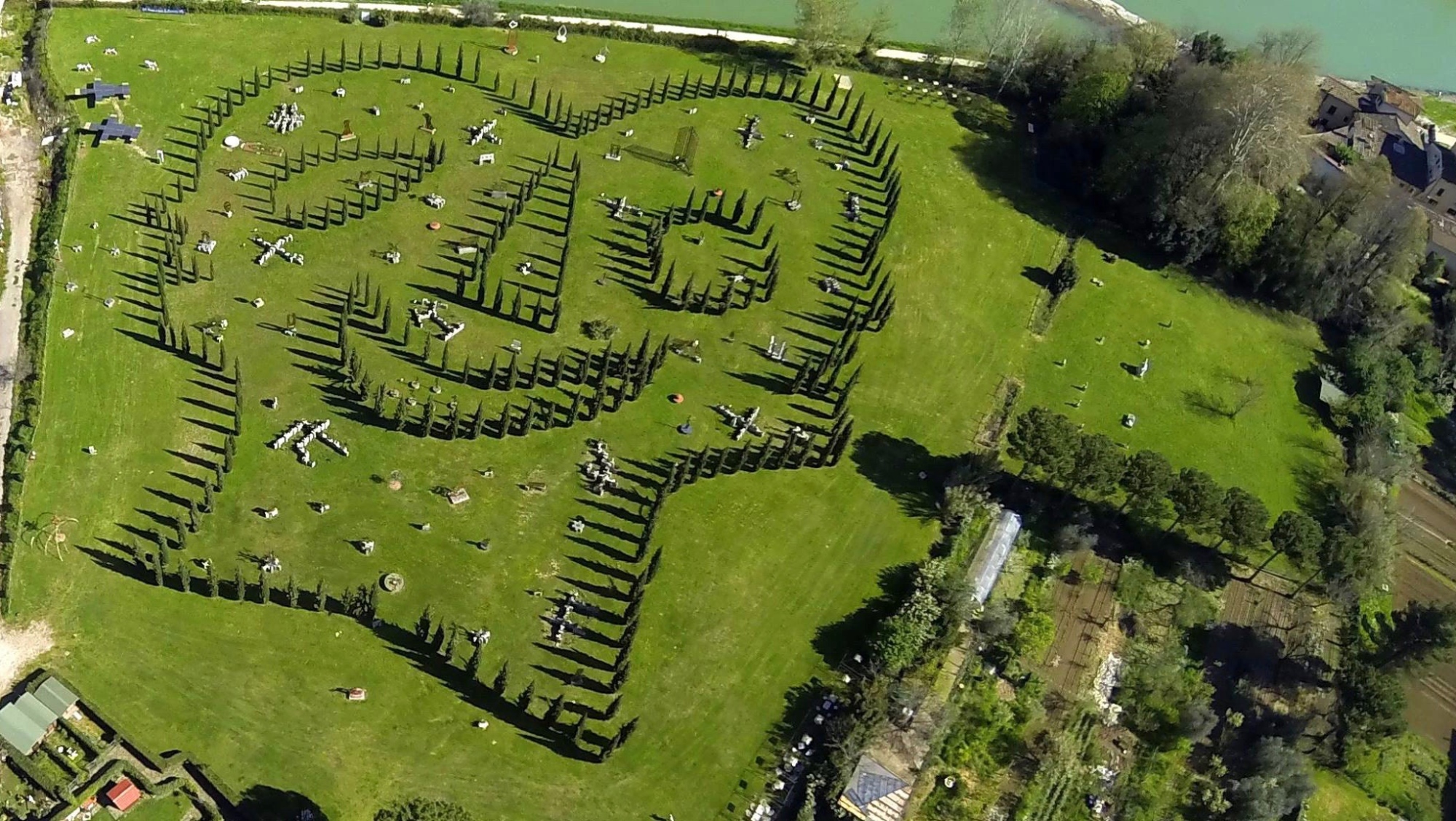
In the southern part of Florence, between the Arno River and the railway to Rome, the Enzo Pazzagli Art Park opens up to a large garden of nearly 258,500 feet (24,000 square meters), safeguarding more than 200 works by the artist. Prominent among them is The Trinity, a unique landscape installation consisting of some 300 cypress trees planted in such a way as to form a face with two profiles when viewed from above.
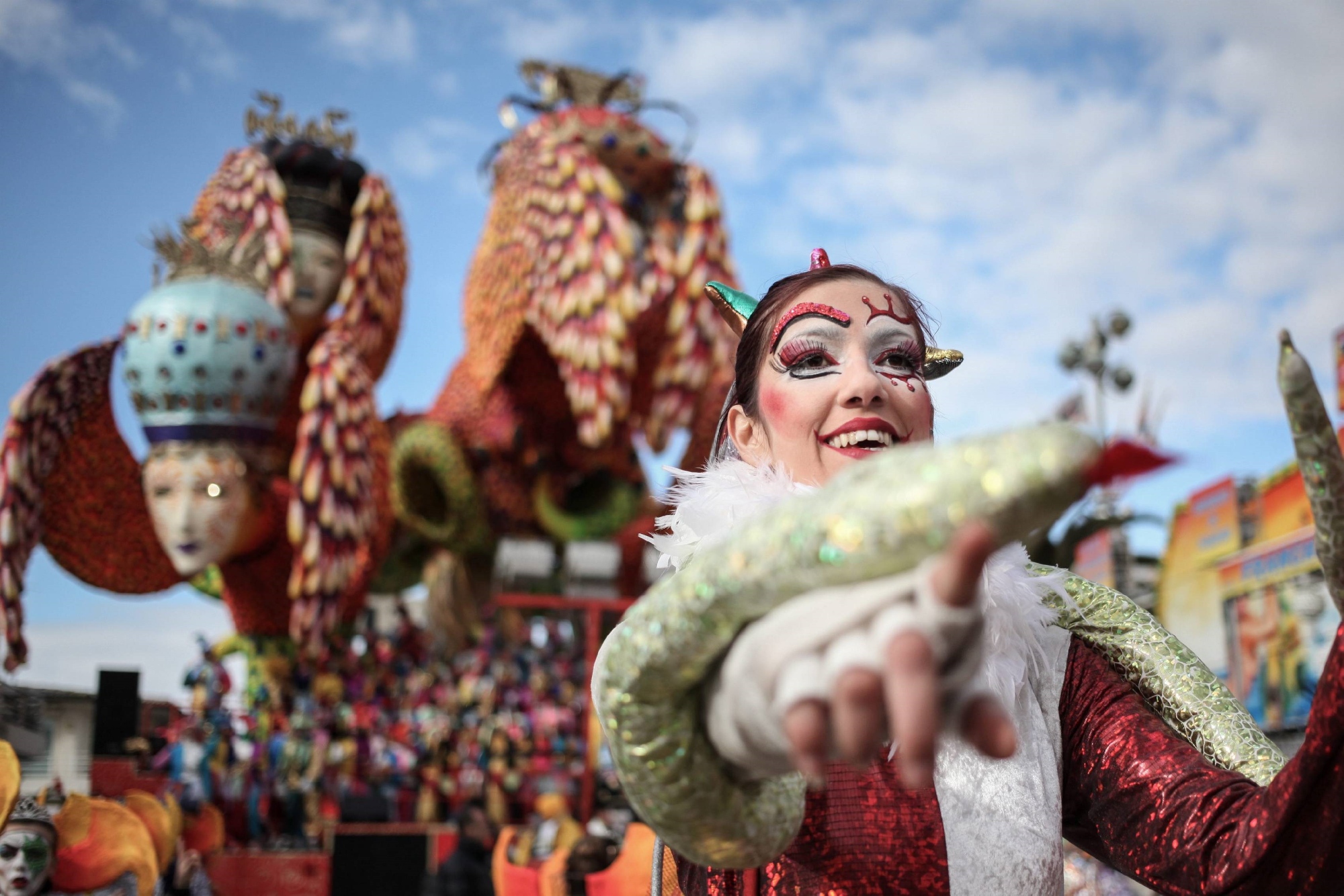
Among the most famous sculptures is the Winged Pegasus, the symbol of the Region of Tuscany. Alongside Pazzagli’s works, the park houses creations by other artists such as Sauro Cavallini and Marcello Guasti, along with satirical masks from the Viareggio Carnival.
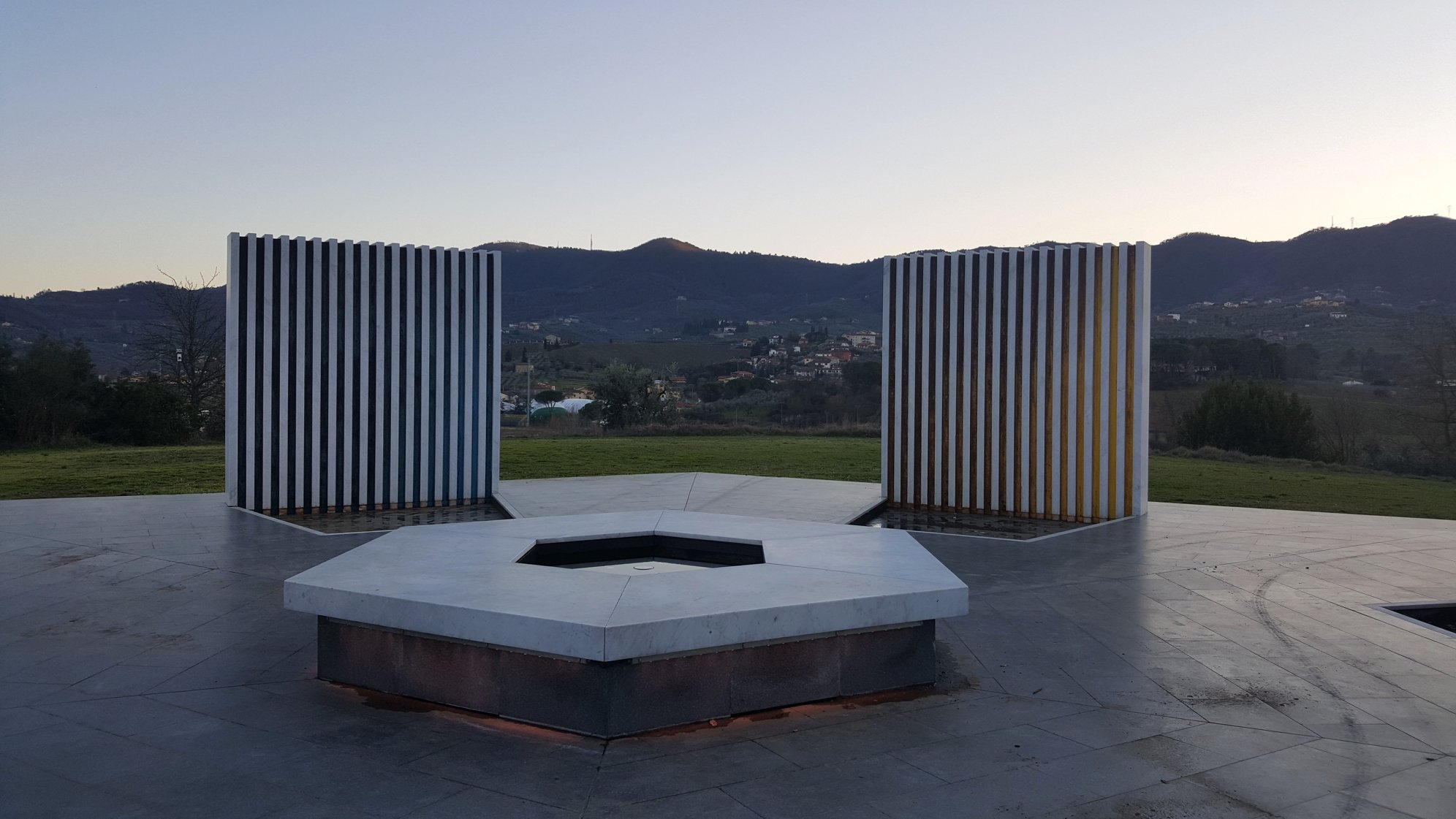
In the heart of Vinci, the Piazza dei Guidi was redesigned by Mimmo Paladino to create a space in communication with the Leonardo Museum and Leonardo’s legacy.
In collaboration with architect Nicola Fiorillo, the artist has reconfigured the square with a network of geometries: slabs of cardoso stone are broken down and recomposed into planes etched by glass dowels and silver inserts, bringing his iconic universe back into the urban landscape.
The result is an autonomous and contemporary set design that pays homage to Leonardo and his land.
At 328 feet/100 meters in length and 9.8 feet/3 meters in height, this mosaic runs through the center of Pontedera on Enrico Baj’s wall, created in 2006 and believed to be the largest in Italy. Human figures transformed into machines tell of the danger of contemporary life with bitter irony.
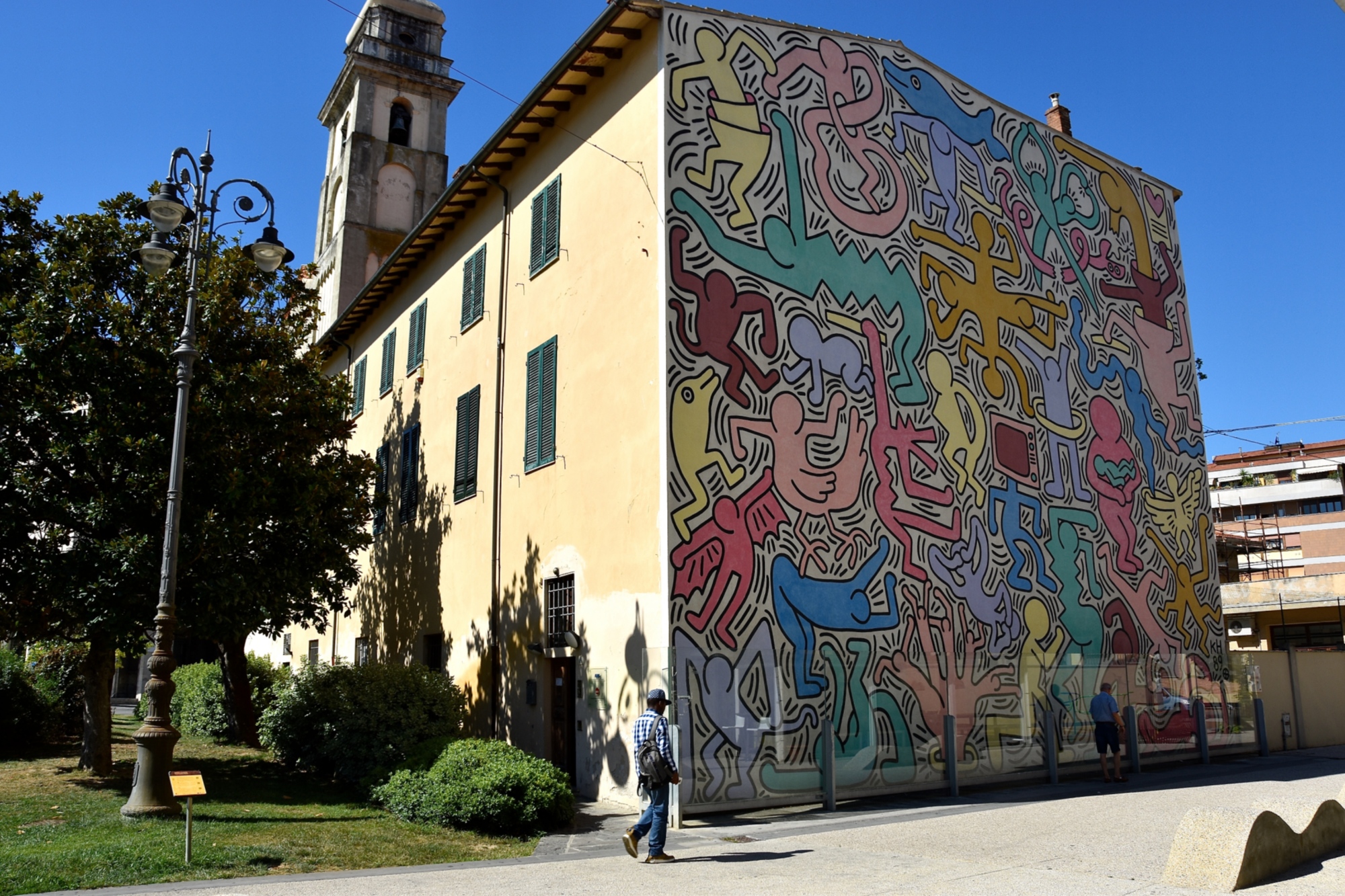
Among Pisa’s most amazing treasures is the giant mural Tuttomondo (All World), created by Keith Haring in 1989 with the help of some students on the external wall of the Sant’Antonio Abate Church.
With its 590 feet or 180 square meters of surface area and 30 figures intertwined like a puzzle, it is one of the few permanent works by the American artist in Italy.
Colorful and lively, Tuttomondo celebrates the theme of harmony and world peace. It is the only mural that the artist conceived from the outset as intended to last, taking a week to create at a time when his creativity was still at its peak, shortly before his passing.
Volterra, a city of ancient Etruscan origins, has always been a place of inspiration for artists and creatives. Among them is Mauro Staccioli, who was born right here and who, after having taken his works all over the world, wanted to pay homage to his native land.
His monumental installations are now scattered across the landscape that inspired them: streamlined, geometric forms that interact with the hills and vistas of Volterra, inviting those who encounter them to stop, observe and reflect on the way the gaze transforms the land.
In the heart of Chianti, among hills and ancient villages, a forest of oaks, holm oaks and chestnut trees is home to the Chianti Sculpture Park, an open-air museum in the village of Pievasciata, in the municipality of Castelnuovo Berardenga.
On display here are contemporary installations and sculptures by artists from 5 continents, all conceived as site-specific, meaning each creator visited the forest and designed the works to liaise with the trees, sounds, colors and light effects of the location.
The path winds for about 0.6 miles or 1 kilometer, alternating traditional materials such as bronze, marble and granite with glass, iron, neon lights and sound, creating an immersive experience in which nature and art complement without overpowering each other.
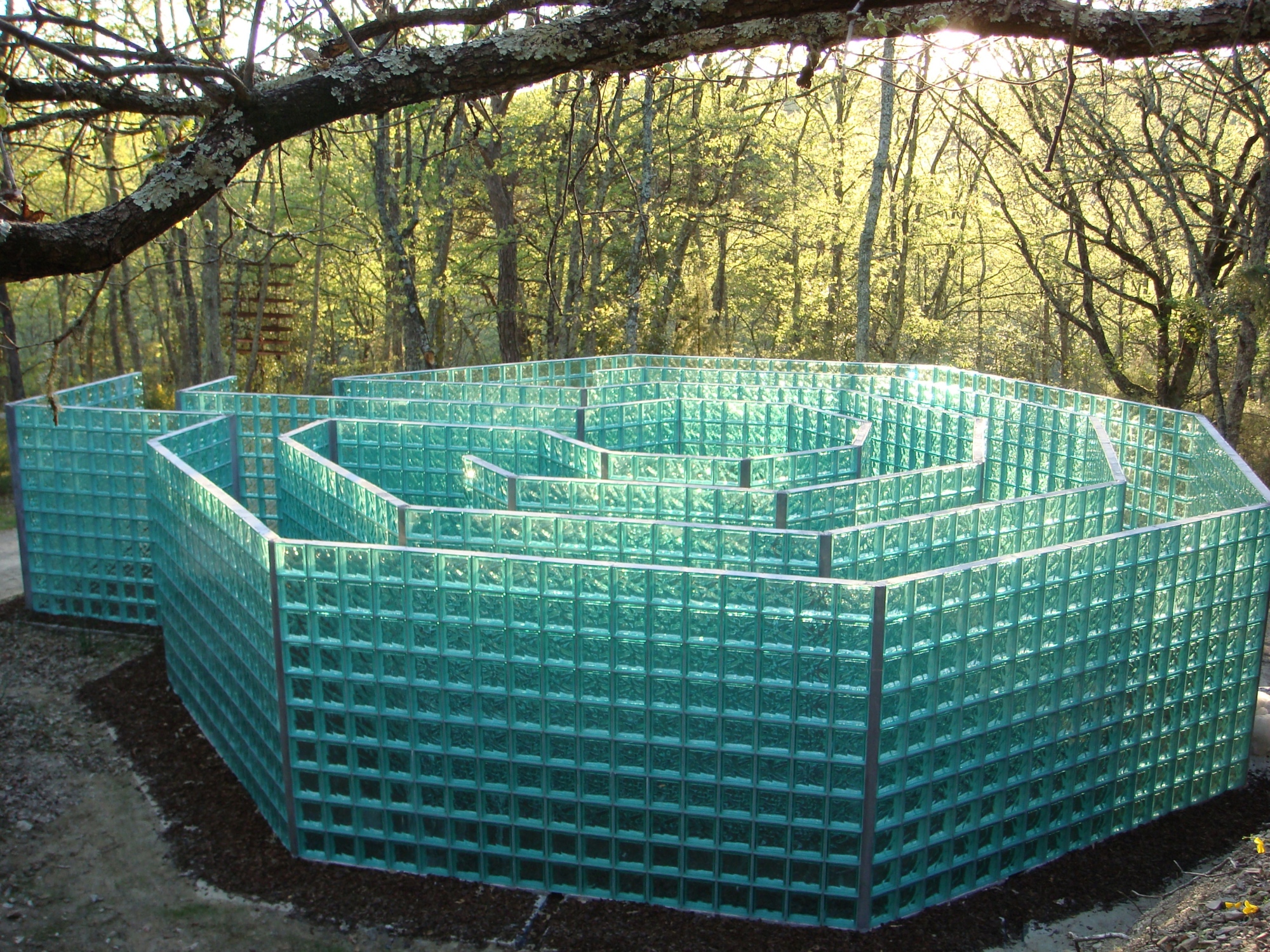
Prominent among the works are a glass labyrinth, a luminous rainbow of neon and the majestic keel of a stone ship. Also located within the park is an amphitheater that hosts concerts and performances in the summer months.
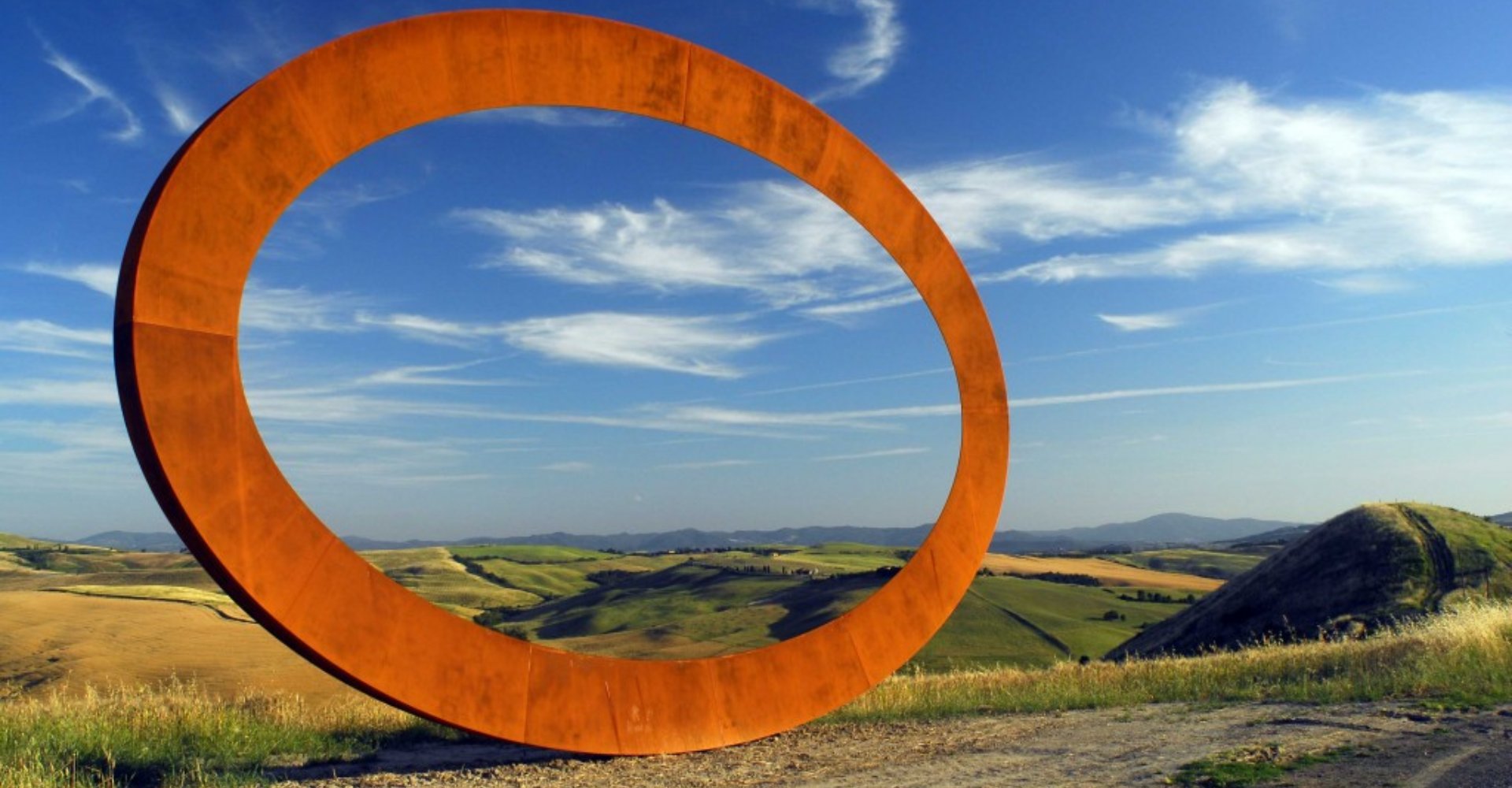
Among the vineyards and cellars of Ama Castle, in the heart of Chianti, contemporary art joins wine in a unique experience. The collection, started in 1999 in collaboration with Galleria Continua, grows year by year thanks to site-specific installations commissioned to internationally renowned artists who are called to dialogue with the landscape, wineries and historic buildings.
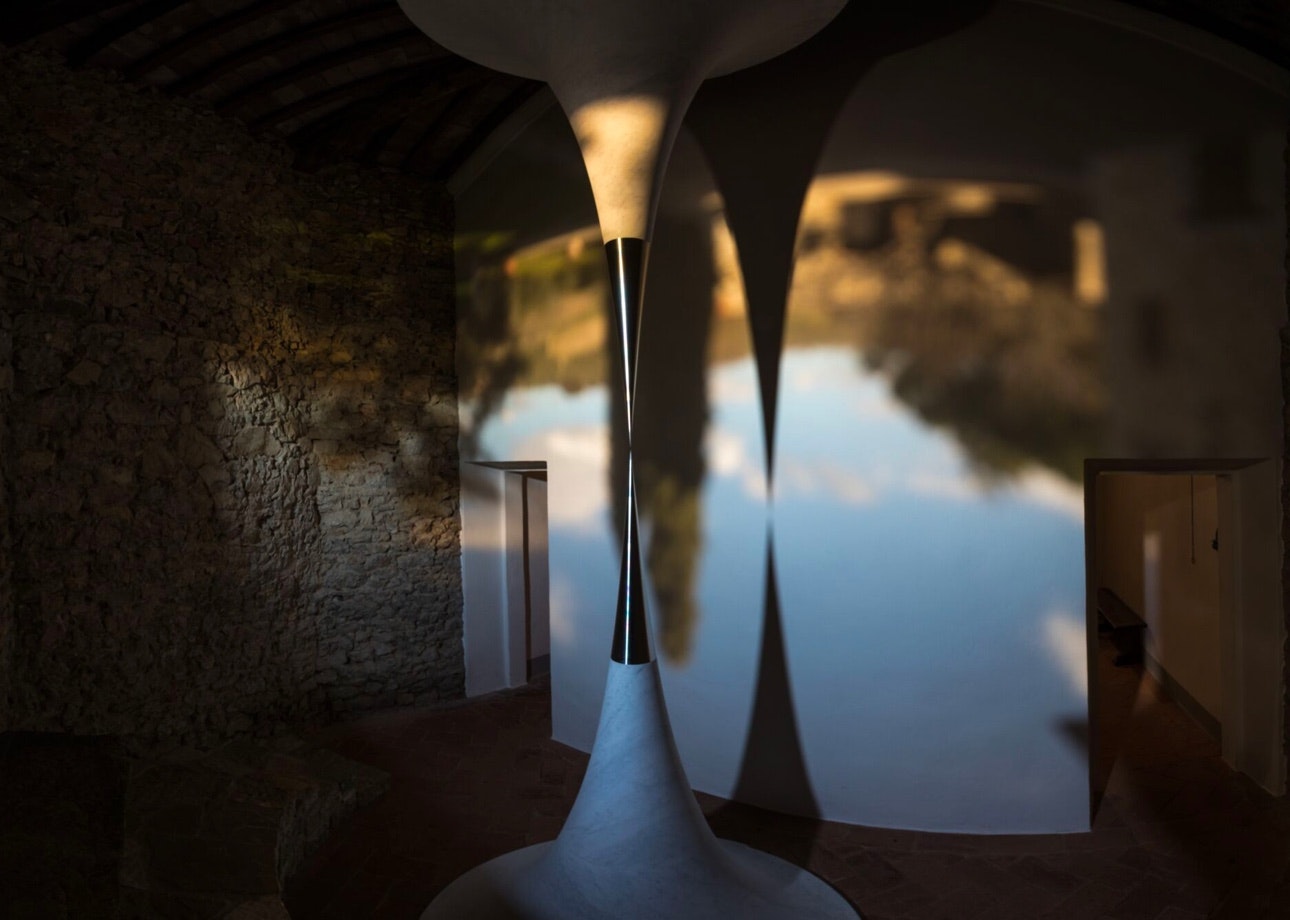
Works are encountered along the cobblestone streets, in gardens, chapels and even among the barrels. Among them is Michelangelo Pistoletto’s Ama Tree, Daniel Buren’s large mirrored wall reflecting the hills, or Hiroshi Sugimoto’s meditative Confession of Zero.
In this interweaving of art and territory, a visit becomes a journey that threads creativity, history and wine tradition.
In the woods of Casole d’Elsa, 1970 feet or 600 meters above sea level, a large oak forest is home to Selva di Sogno (Dream Woods), the sculpture park created over 25 years ago by German artist Deva Manfredo.
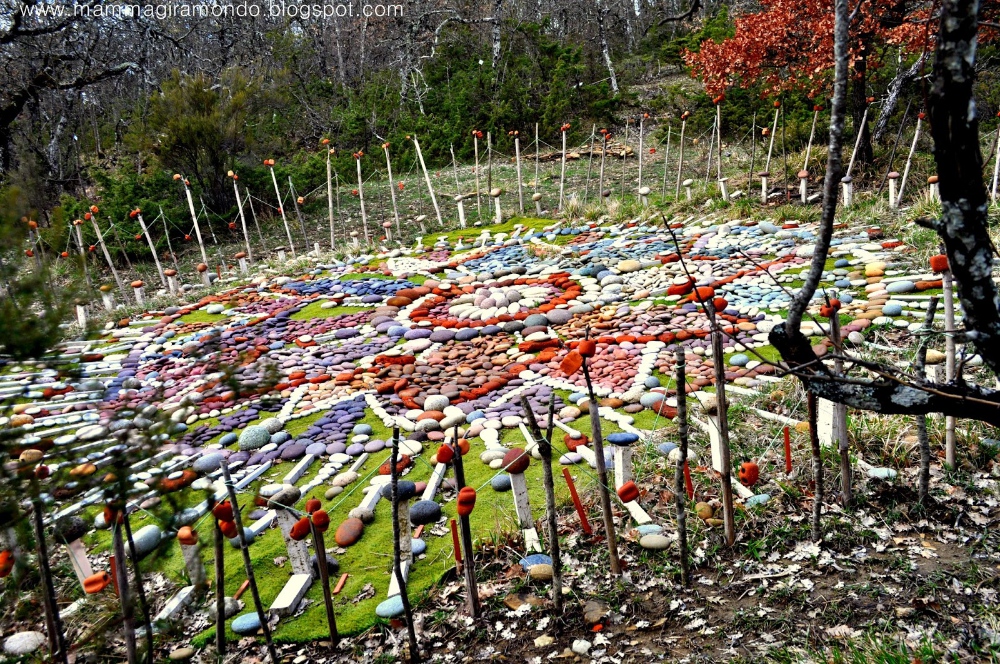
Here, the imagination takes shape in an artistic journey immersed in nature, where anthropomorphic figures seem to emerge from the ground, miniature temples and cities evoke ancient civilizations, mandalas of colored stones intertwine with the landscape, while carpets of stones roll out plays of color among the roots of trees.
Alongside the trail, a stone workshop open to young and old alike allows everyone to experiment with their imagination, leaving a mark in harmony with the environment.
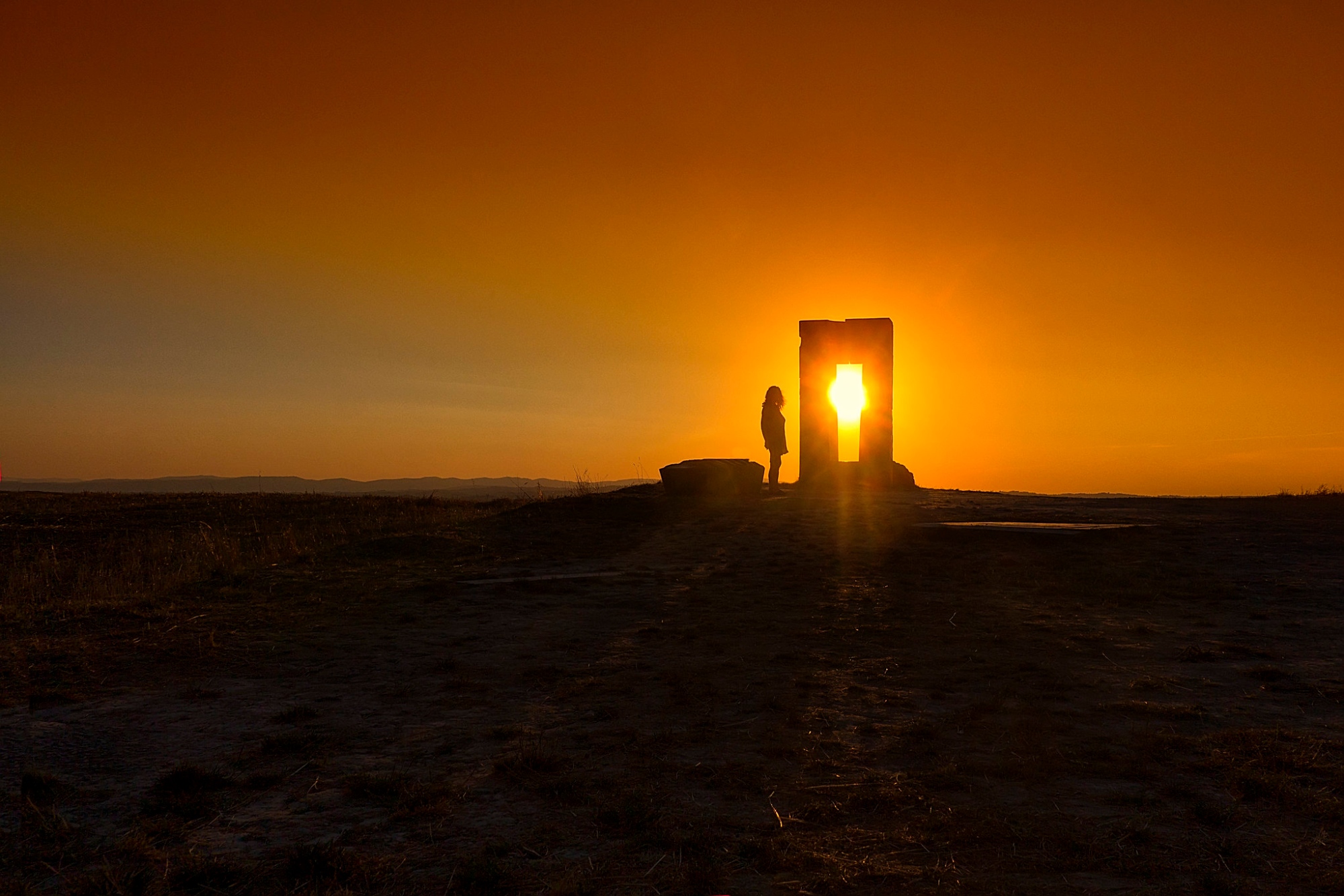
In the lunar landscape of the Crete Senesi in Leonina is the Site Transitoire, a stone work created by French artist Jean-Paul Philippe in 1993.
The installation consists of a chair, a bench and a window that frame the horizon, creating a dwelling without walls open to the sky and the silence of the hills.
From this point, your gaze sweeps as far as Siena and the village of Mucigliani, giving different perspectives depending on if you are standing, sitting or lying down. The most magical moment is the summer solstice, when the setting sun aligns perfectly with the Site Transitoire’s portal, transforming the work into a natural setting that encloses one of Tuscany’s most poetic views.
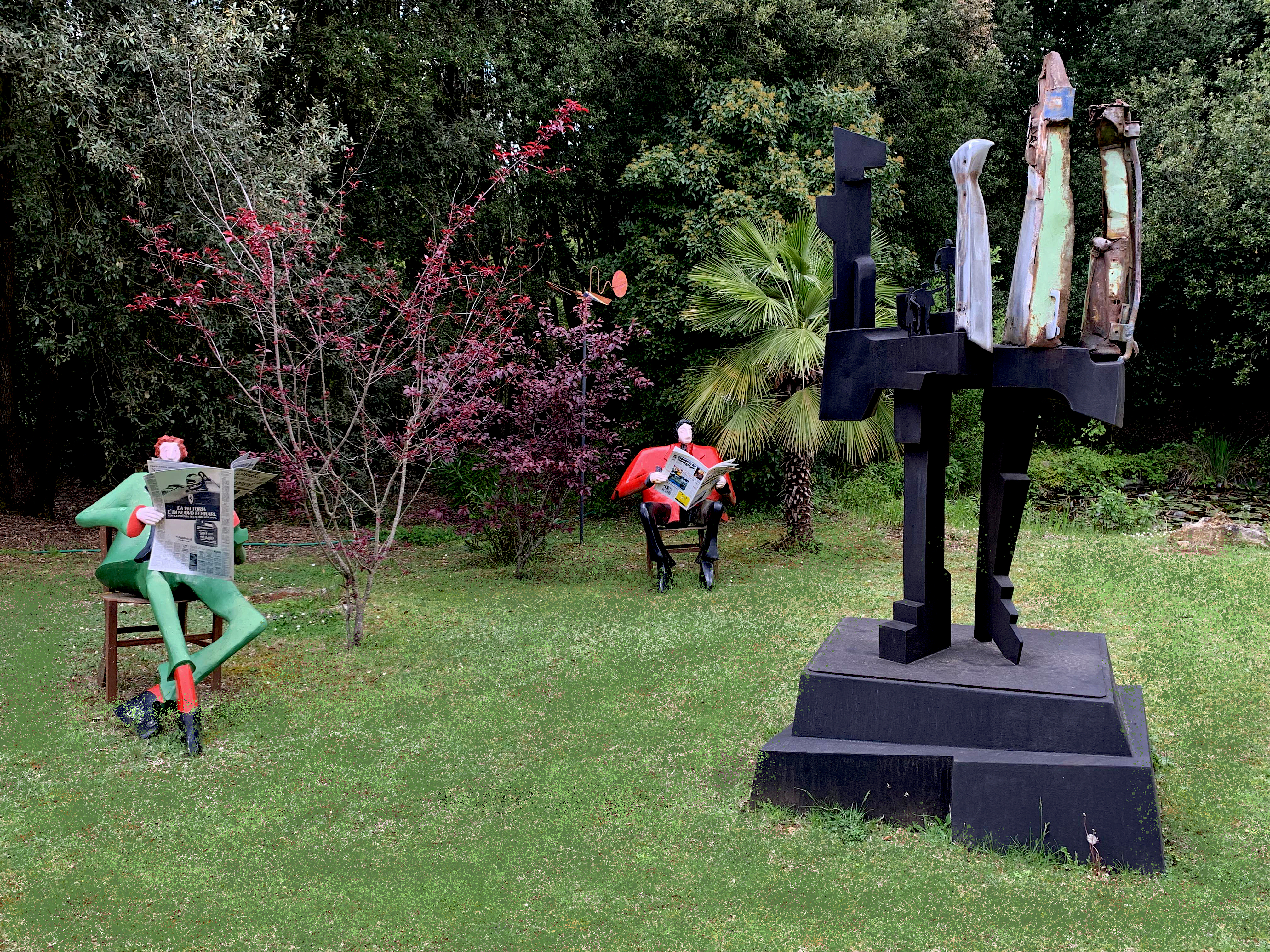
In Iesa, in the municipality of Monticiano, the Kurt Laurenz Metzler Sculpture Garden has been home to more than 50 sculptures since 1995, immersed in the greenery surrounding the Swiss artist’s home-studio.
The works depict brightly colored stylized human figures made of marble, aluminum, bronze and painted resins—urban passersby caught in everyday acts reminiscent of real street theater.
Between dancers, Icaruses and robots, the ironic and playful sculptures lightheartedly tell the story of the relationship between man and the environment, transforming the garden into an open stage where nature and creativity coexist.
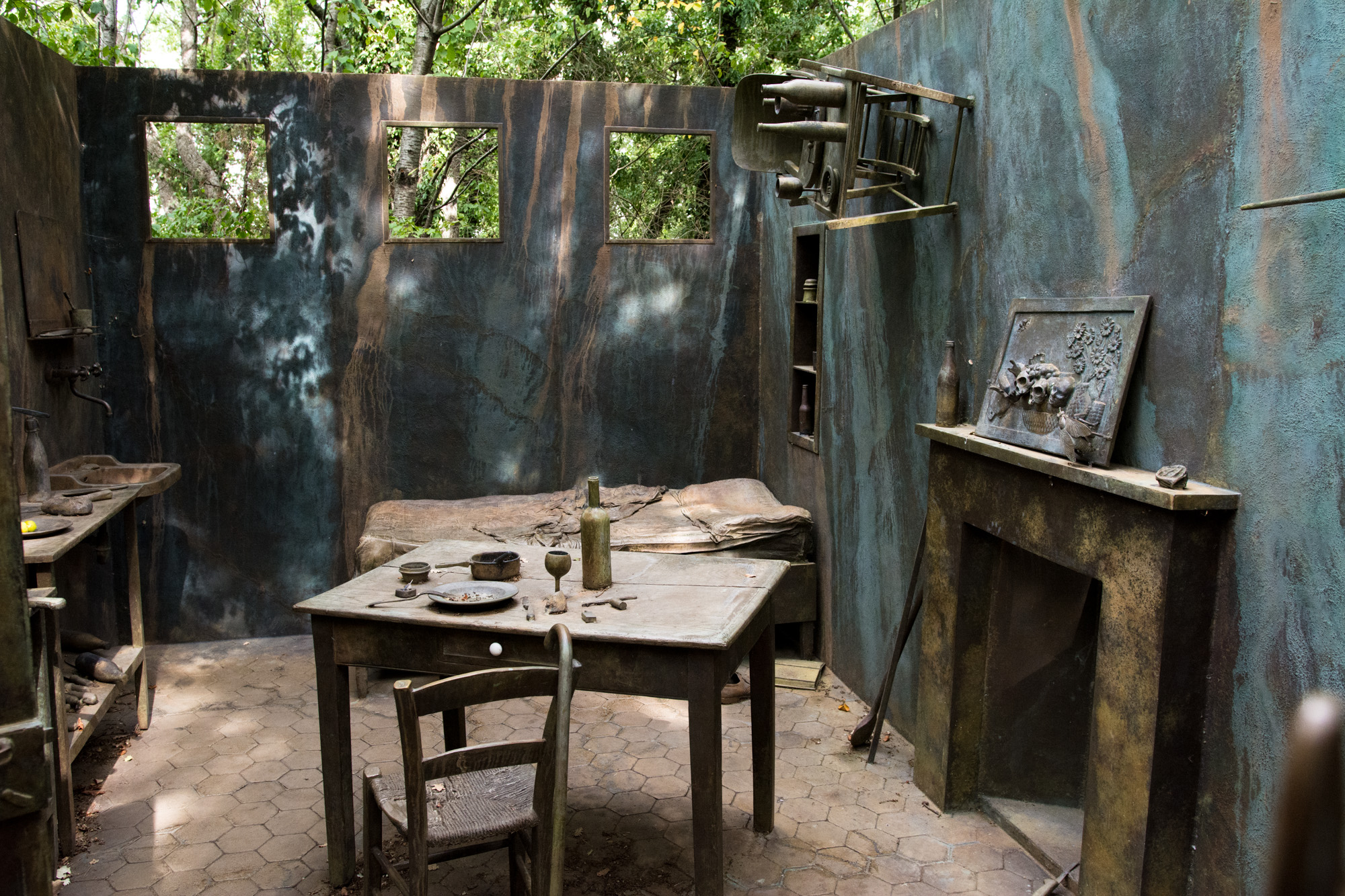
In Seggiano, between Mount Amiata and Montalcino, Swiss artist Daniel Spoerri has chosen to live and pursue his studies by transforming a nearly 39.5-acre (16-hectare) estate into a large sculpture park.
Here, among expansive meadows and groves, nature constantly dialogues with the works, sometimes as an accomplice, sometimes as an antagonist.
In the 1990s, Spoerri began positioning his early installations, resulting in a pathway that was opened to the public in 1997 and now counts 112 works by 55 different artists. Strolling along the paths, sculptures emerge little by little or are hidden among the vegetation, creating an itinerary that alternates between surprise and enchantment, reminiscent of Renaissance and Baroque gardens.
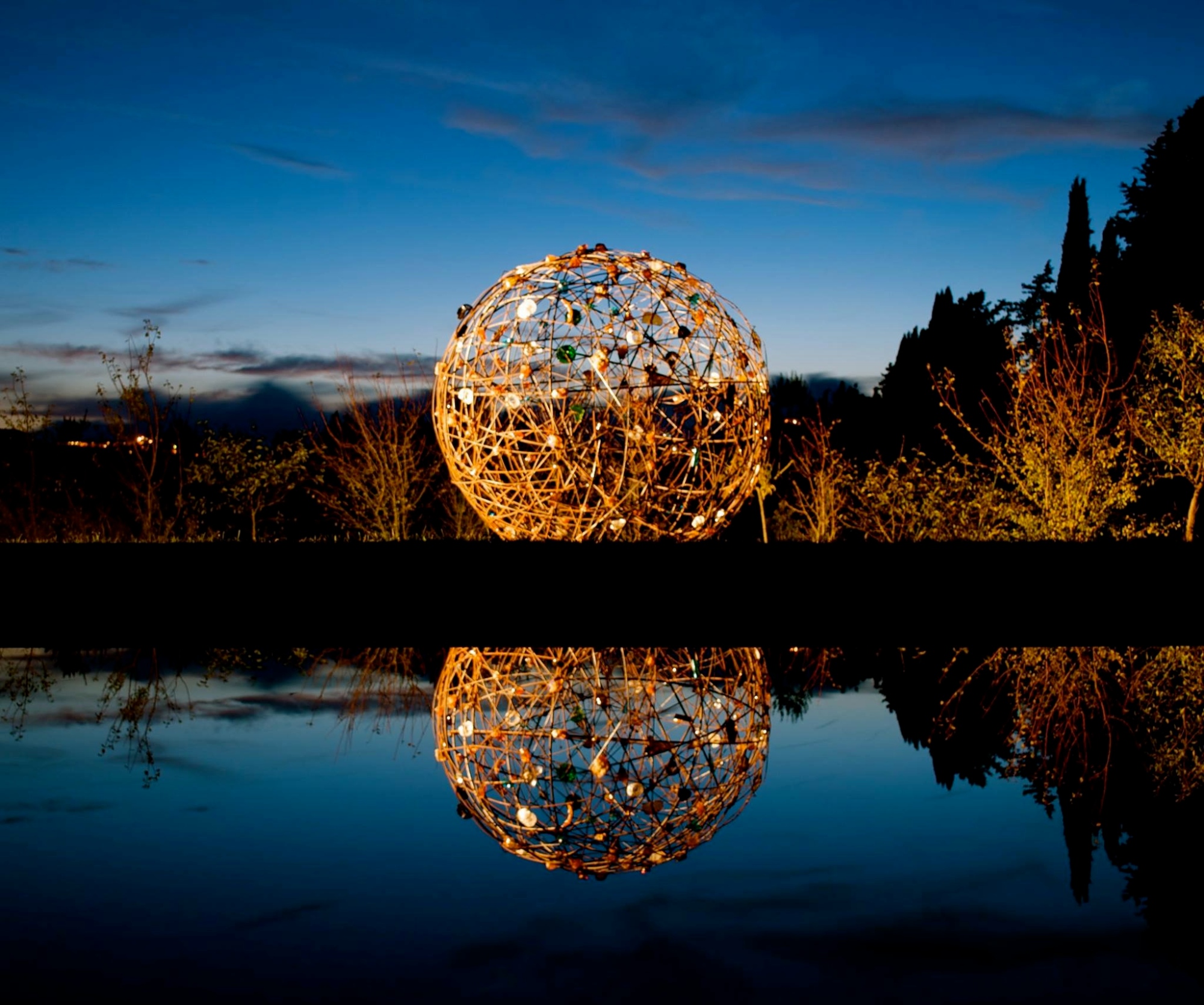
In Buriano, in the municipality of Castiglione della Pescaia, bio-architect Rodolfo Lacquaniti has transformed salvaged materials into works of art, creating the Viaggio di Ritorno (Journey of Return) Garden. A path with a strong symbolic and ecological value, where art becomes a reflection on the relationship between man and the environment.
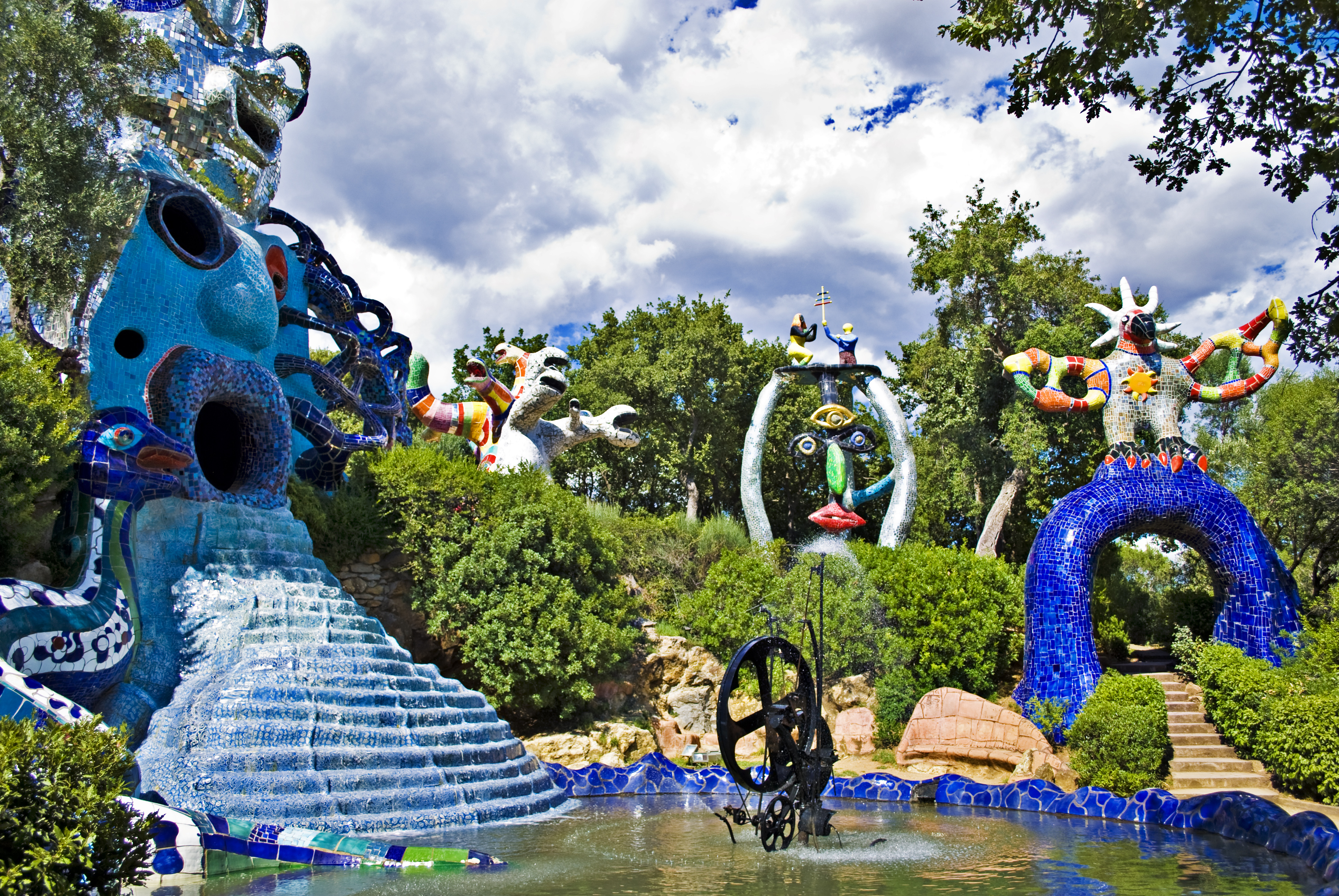
In the heart of Maremma, between the hills of Capalbio and the sea, lies one of the most fascinating artistic parks in Tuscany: the Tarot Garden, emerging from the imagination of French sculptor Niki de Saint Phalle.
Inspired by the figures of the Major Arcana, the artist has created an esoteric path in which monumental sculptures—as high as 50 feet or 15 meters—become veritable cyclopean cards.
With the help of her husband Jean Tinguely, Niki de Saint Phalle began construction of the Garden in 1979, a project in which other artists also participated: Pierre Marie Lejeune with the benches and furniture, Alan Davie with the frescoes on the Magician, Marina Karella with a sculpture of the High Priestess and finally Mario Botta, creator of the ticket office.