Go to main content
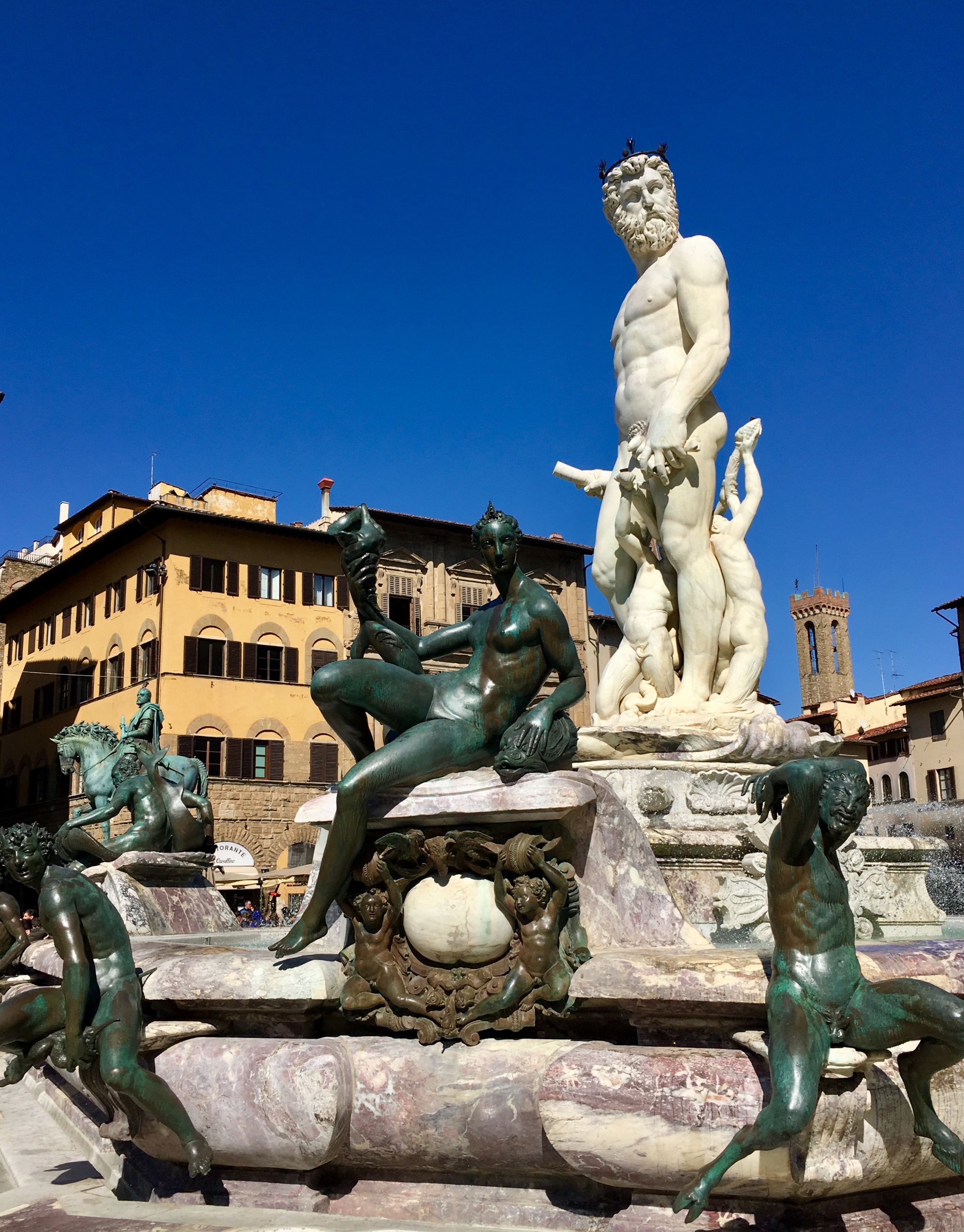
The majestic white marble statue of Neptune in the fountain of the same name in Florence’s Piazza della Signoria, surrounded by jets of water, bronze sculptures and historic buildings
Photo © Adobe Stock/ Arkanto

A Stream of Water: 5 fountains worth checking out

A refreshing journey through art, history and nature in Florence and surrounds

“Marcello, come here!” Anita Eckberg calls out in the iconic film La Dolce Vita, as she cooled off in the Trevi Fountain in Rome, unwittingly sparking a trend. We certainly don’t want to encourage anyone to jump into the fountains of Florence and surrounds, but instead are here to suggest a refreshing and artistic itinerary to discover 5 fountains well worth admiring. From the triumphant Statue of Neptune in Piazza della Signoria to the evocative fountains of Pratolino and Castello, all the way to the tribute to the washerwomen of Grassina.
Contents
  • 1.
    Neptune, the god of the sea
  • 2.
    The Apennine Colossus
  • 3.
    Le Rampe del Poggi in Florence
  • 4.
    The Grotta degli Animali in Castello
  • 5.
    La Fonte della Lavandaia in Grassina

Neptune, the god of the sea

The white marble statue of Neptune in Piazza della Signoria in Florence
Fountain of Neptune - Credit: Comune di Firenze
In the heart of Florence, in Piazza della Signoria, the Fountain of Neptune stands proudly by the left corner of Palazzo Vecchio. This magnificent fountain was commissioned by Grand Duke Cosimo I, who saw it as his mission to bring sites of water where there was none. Moreover, Rome had always been known as the “City of Fountains,” and with his great project, Florence was, in a sense, drawing closer to the Eternal City. From a large block of Apuan marble, Bartolomeo Ammannati carved the figure of Neptune between 1560 and 1565. A colossal undertaking. The fountain as we see it today—with its marble and bronze statues and surrounding border—was inaugurated in 1574, awash with a powerful gushing of water. The Neptune statue has always attracted the attention of Florentines and travelers alike but unfortunately also that of vandals, who have defaced it on several occasions. It is free to enjoy at any time of the day or night.

The Apennine Colossus

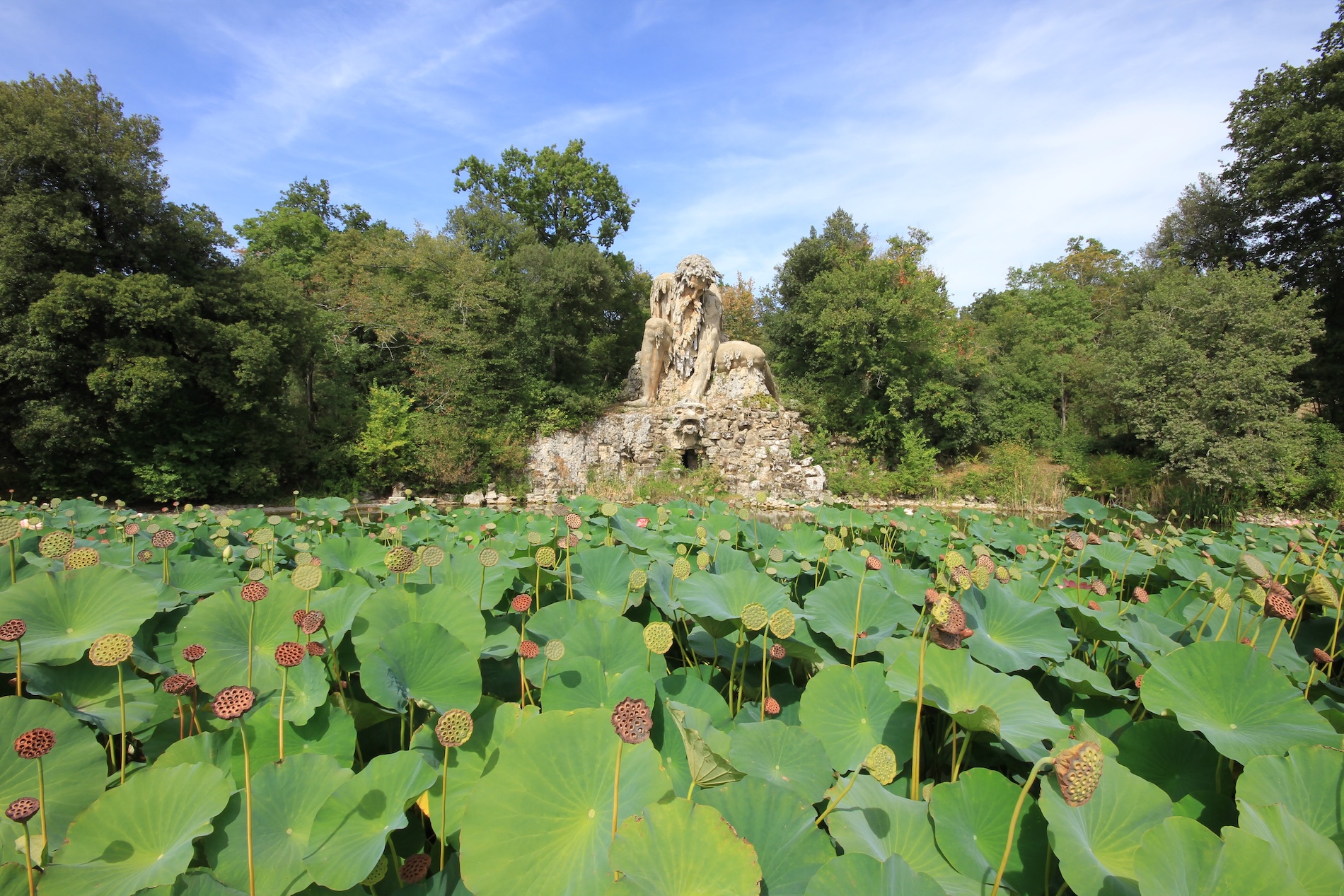
The magnificent stone statue of the Apennine Colossus at Villa Demidoff, seen across a small pond in the foreground covered with leaves and lotus pods.
The majestic Apennine Colossus - Credit: Adobe Stock/ Giuliano del Moretto
We head to Pratolino, to the park of a villa that no longer exists, but where the stunning fountain of the Giant or Apennine Colossus still stands. This is one of the wonders of what Francesco I de’ Medici envisioned as a true Garden of Wonders. While Buontalenti designed the park, the immense Apennine statue was created by Giambologna between 1579 and 1580. The tall, weary-looking old man looks out over a small pond adorned with water lilies as water gushes from a creature that the old man is crushing with his hand. Water was the common thread running through the marvels of Renaissance hydraulic engineering that could once be admired in the Pratolino Park, of which almost nothing remains today. This site is recognized as a UNESCO World Heritage Site and is a delightful destination for Florentines and visitors alike. It is open on weekends from April through October, on weekdays only by reservation during the other months.

Le Rampe del Poggi in Florence

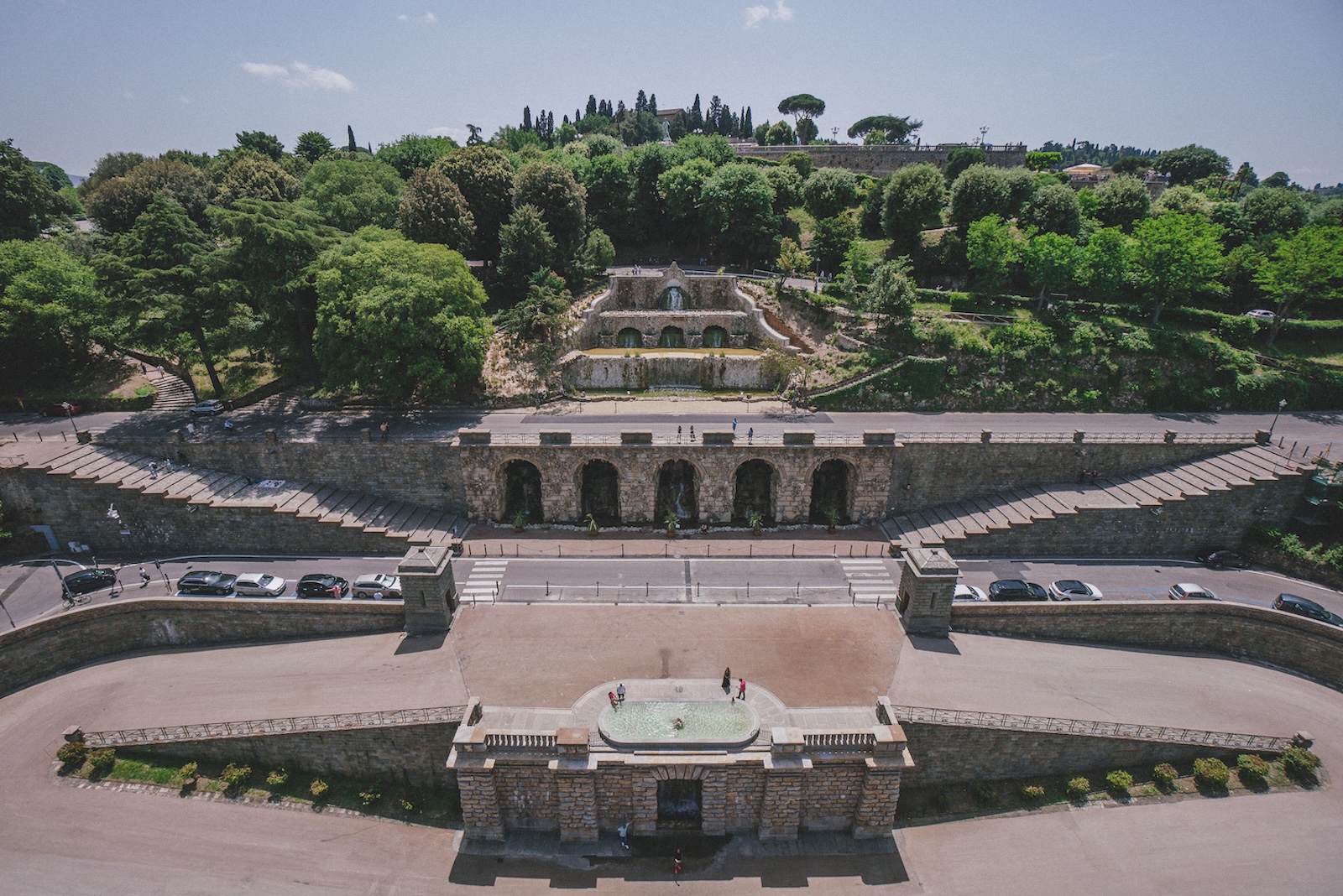
Aerial view of Le Rampe del Poggi in Florence, a monumental multi-level structure featuring stone staircases, fountains and grottoes nestled into the hillside
Le Rampe del Poggi in Florence - Credit: CR Firenze Stefano Casati
Leaving the Renaissance behind but staying in Florence, there is a spectacular destination: Le Rampe del Poggi (The Ramps of Poggi) comprising more than just a fountain but a complex of basins, rocks, fountains and even water features connecting Viale dei Colli with the Arno River near Torre San Niccolò. The spectacular structure, created between 1871 and 1876 by Giuseppe Poggi, served primarily to support the hill on which the road system of Viale dei Colli rests. A type of spur, lightened by waterfalls and fountains, in an ingenious system designed to utilize the water from a very large cistern. Walking up to Piazzale Michelangelo with all this water around you is a wonderful experience. It is free to enjoy at any time of the day or night.

The Grotta degli Animali in Castello

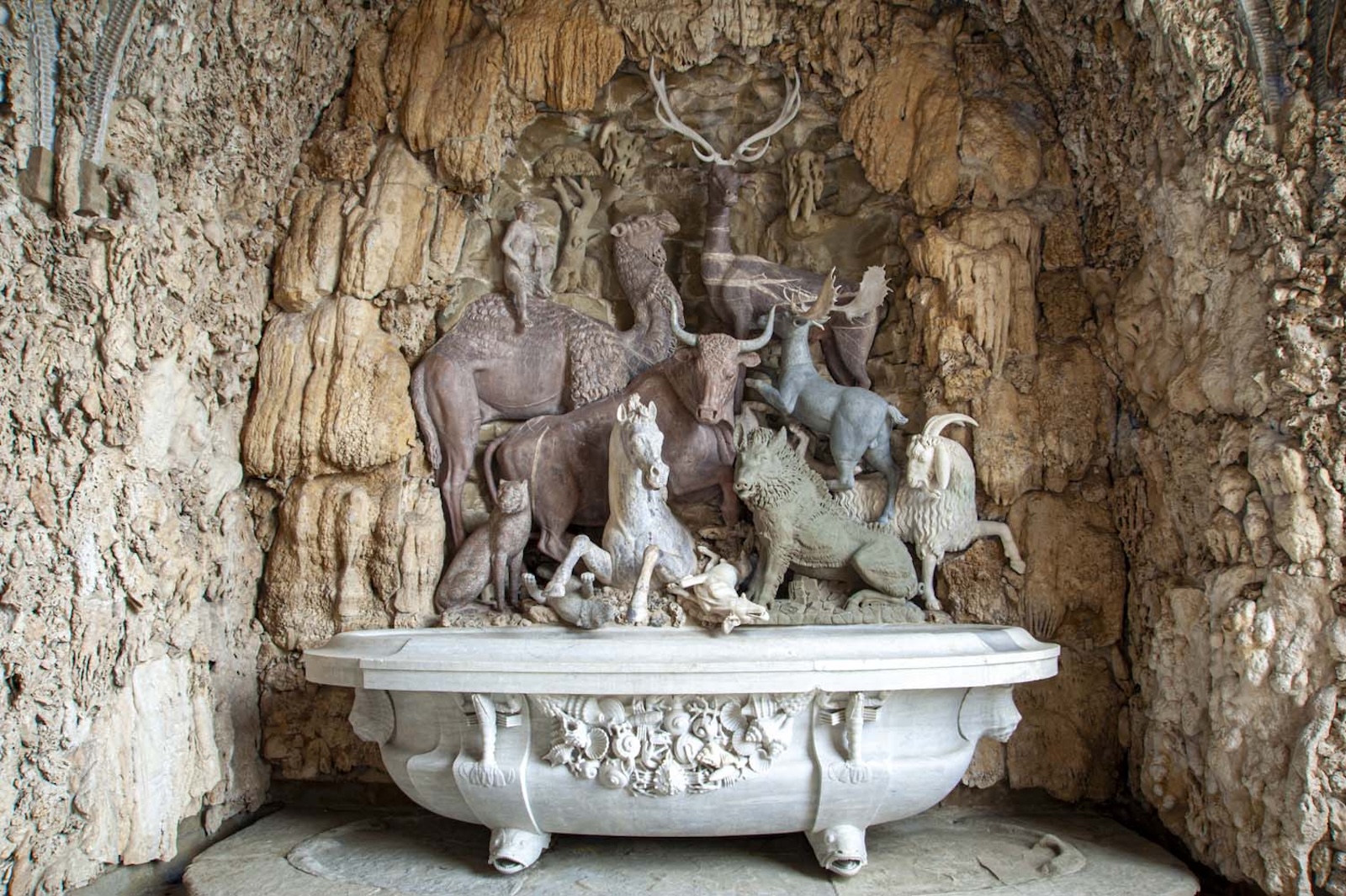
Right-hand niche of the Grotta degli Animali in the Medici Villa di Castello. In the center stands a sculptural group consisting of various animals carved from different colored marble, set atop a marble basin.
The Grotta degli Animali - Credit: Soprintendenza
Just outside the city, in the garden of the Medici Villa di Castello, like Pratolino Park also a UNESCO World Heritage Site, there is a very unique fountain: an elegant grotto filled with statues and water features. We’re talking about the Grotta degli Animali (Grotto of Animals) or the Grotta del Diluvio (Grotto of the Flood). One of the most famous in Europe, the grotto—designed by Tribolo and originally featuring spectacular water features—is a perfect simulation of a natural grotto encrusted with pebbles, sponges and shells, inside which 3 sculptural groups of animals in polychrome marble have been assembled. With its water system also restored, it puts on a spectacular show with its enchanting fountains throughout the summer and into the fall, on Wednesdays, Saturdays and Sundays at 3 different times. 

La Fonte della Lavandaia in Grassina

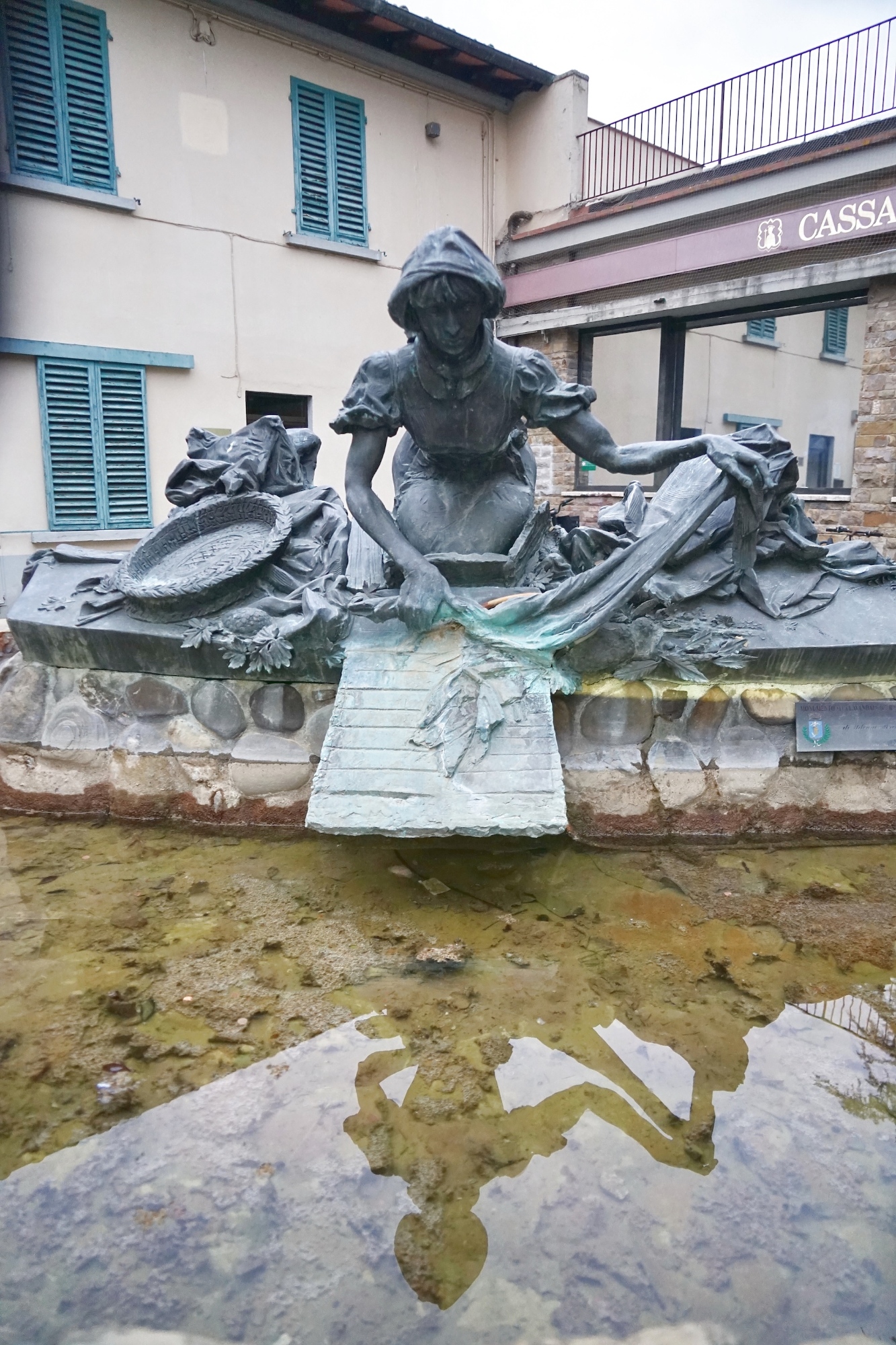
Bronze statue from the monument of La Fonte della Lavandaia in Grassina, depicting a woman kneeling to wash clothes on a wooden washboard over a tub of water.
La Fonte della Lavandaia in Piazza Umberto I - Credit: Adobe Stock/ Sansa55
We leave Florence to head to Grassina, in the municipality of Bagno a Ripoli, where there is a fountain of particular intrigue due to its significance. This recent work by a local sculptor, Silvano Porcinai, is called La Fonte della Lavandaia (The Washerwoman’s Fountain). Indeed, the bronze statue depicts a young woman washing clothes in a stone basin. The realistic details represent the occupation of the women of this village from the 18ᵗʰ century through the 1960s, namely, hand-washing the linens of wealthy families and hotels in Florence, using the waters of the Grassina and Ema streams and some good old elbow grease. The fountain in question (which has stood in Piazza Umberto I since 2009) thus tells a story that must not be forgotten. It is free to enjoy at any time of the day or night.
pan_tool_alt
Please note
The insertion of this event was not edited by the Visittuscany editorial staff. For any information or details, contact Ambito territoriale Firenze e Area Fiorentina
Start your discovery

Must-see places, stage-by-stage routes, events and tips for your trip
Events • 98 results
Ideas • 547 results
Itineraries • 183 results
Travelogs • 18 results