Go to main content
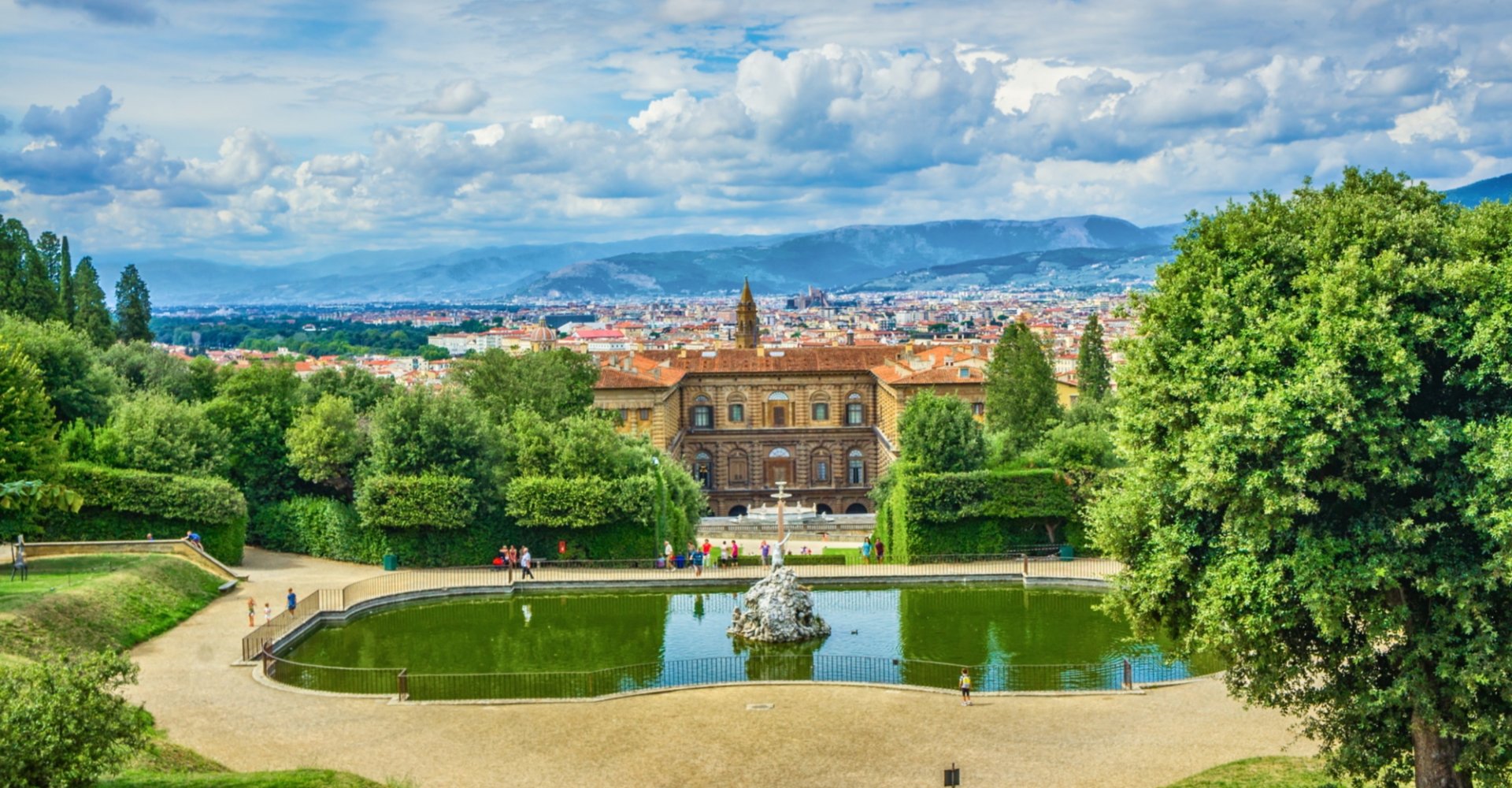
Palazzo Pitti, Boboli Gardens, Florence. Panoramic view.
Photo © Shutterstock / SenSeHi

Gardens not to be missed in Tuscany

A journey through blossoms, geometries and historic mansions

With Medici villas, monumental parks, rose gardens, lemon groves and gardens that delight at every turn, Tuscany holds a green heritage of extraordinary beauty. 
From Florence to Lucca, from the Val d’Orcia to the hills of Siena, visiting any of these gardens means entering a different world, stepping into the refined realm of aristocratic villas, the spectacular domain of large Italian-style parks or the more romantic sphere of seasonal blooms.

Contents
  • 1.
    Boboli Gardens
  • 2.
    The Iris Garden
  • 3.
    The Rose Garden
  • 4.
    Bardini Gardens
  • 5.
    Pratolino Medici Park
  • 6.
    Medici Villa di Castello
  • 7.
    The garden of Villa Peyron
  • 8.
    The Park of Villa Reale di Marlia
  • 9.
    Garzoni Garden and Butterfly House
  • 10.
    Gardens of Villa Grabau
  • 11.
    The garden of Villa La Foce
  • 12.
    Garden of Villa La Magia in Quarrata

Boboli Gardens

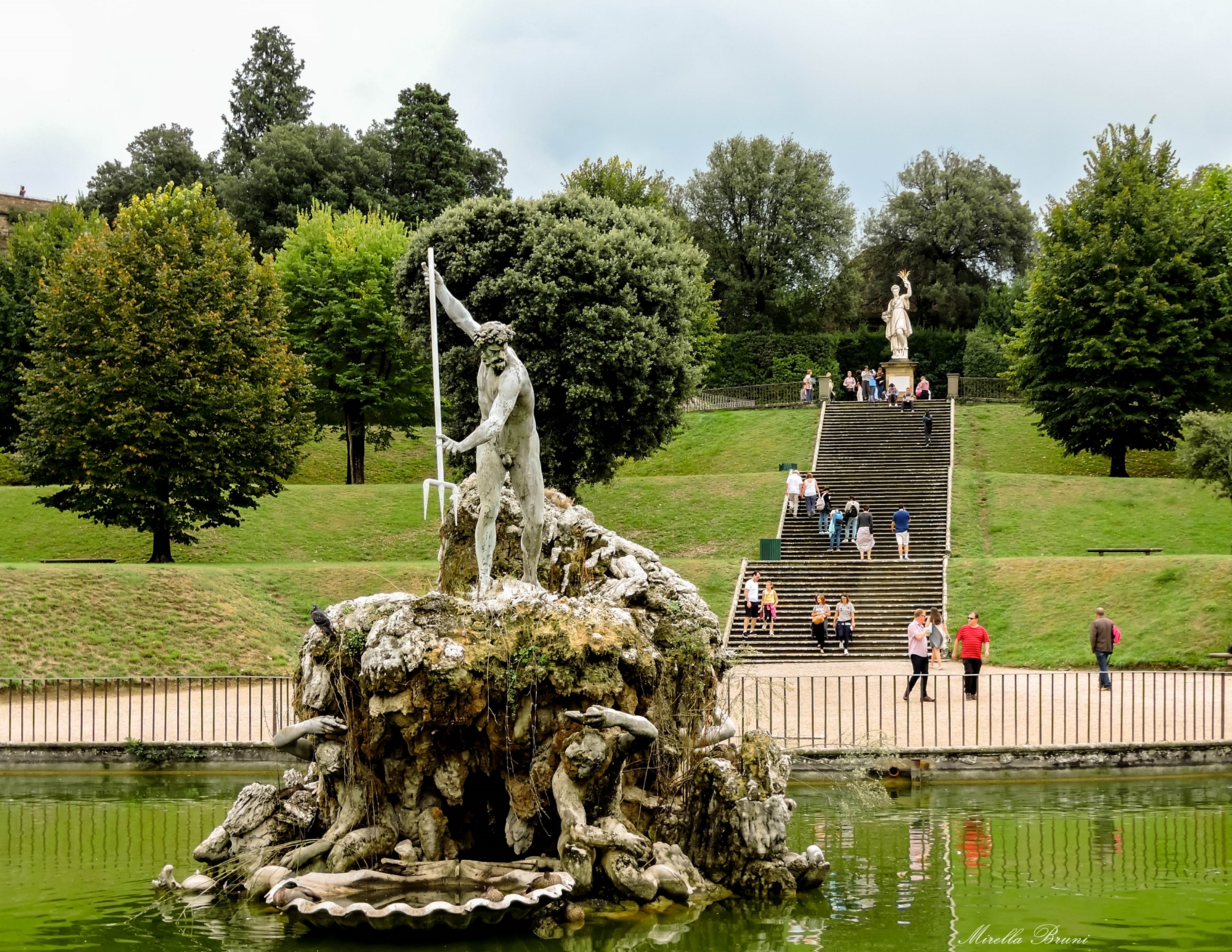
Fountain of Neptune at the Boboli Gardens
Fountain of Neptune at the Boboli Gardens - Credit: Mirella

In the heart of Florence, the Boboli Gardens represent some of the largest and most elegant Italian gardens in the world, a veritable open-air museum devised by the Medici. Between nature, architecture and sculpture, this expansive green space collects works ranging from Roman times to the 17ᵗʰ century and gives, step after step, the idea of a place designed to amaze. Artists and architects such as Vasari, Ammannati and Bernardo Buontalenti worked on its creation from the 16ᵗʰ to 19ᵗʰ century, shaping an ensemble unique in its variety of styles and perspectives.
The Amphitheater with the Egyptian obelisk, the Fountain of Neptune, the Statue of Abundance at the top of the hill ... the Boboli Gardens guides you through monumental views and great perspectives
The Viottolone—a splendid avenue bordered by cypresses and statues—then leads to the Piazzale dell’Isolotto with Giambologna’s Fountain of Oceanus, while buildings include the Kaffeehaus, the Limoniana, the Palazzina della Meridiana and the spectacular Buontalenti Grotto
In between, there is no shortage of curious details, such as the Fontana del Bacchino and Igor Mitoraj’s bronze head.

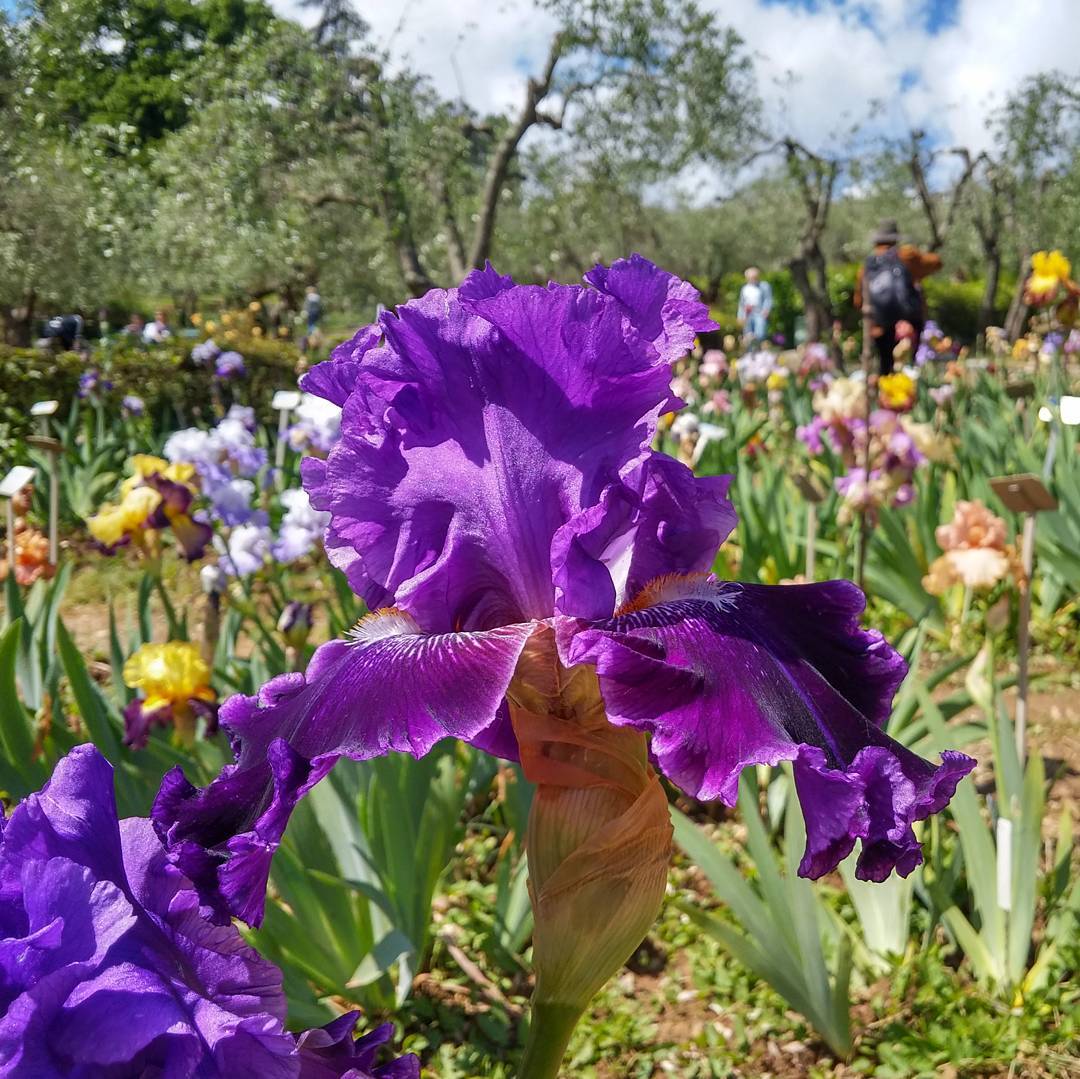
The Iris Garden

Image of an iris in the Iris Garden of Florence

At the corner of Viale dei Colli and Piazzale Michelangelo, on a slope patchworked with olive trees, lawns, flower beds and a small pond dedicated to aquatic flowers, the Iris Garden is a charming place in the heart of Florence. 
Inaugurated in 1957 to host the 1ˢᵗ International Iris Competition, sponsored by the City Council a few years earlier, it is now managed by the Italian Iris Society and safeguards the flower that has been the symbol of the city since 1251, known as the giglio di Firenze (lily of Florence). 
Open for only about one month a year, between April and May while in full bloom, the garden is home to over 1,500 varieties of irises from around the world as well as being an important scientific point of reference thanks to its role as a germplasm, or iris gene bank.

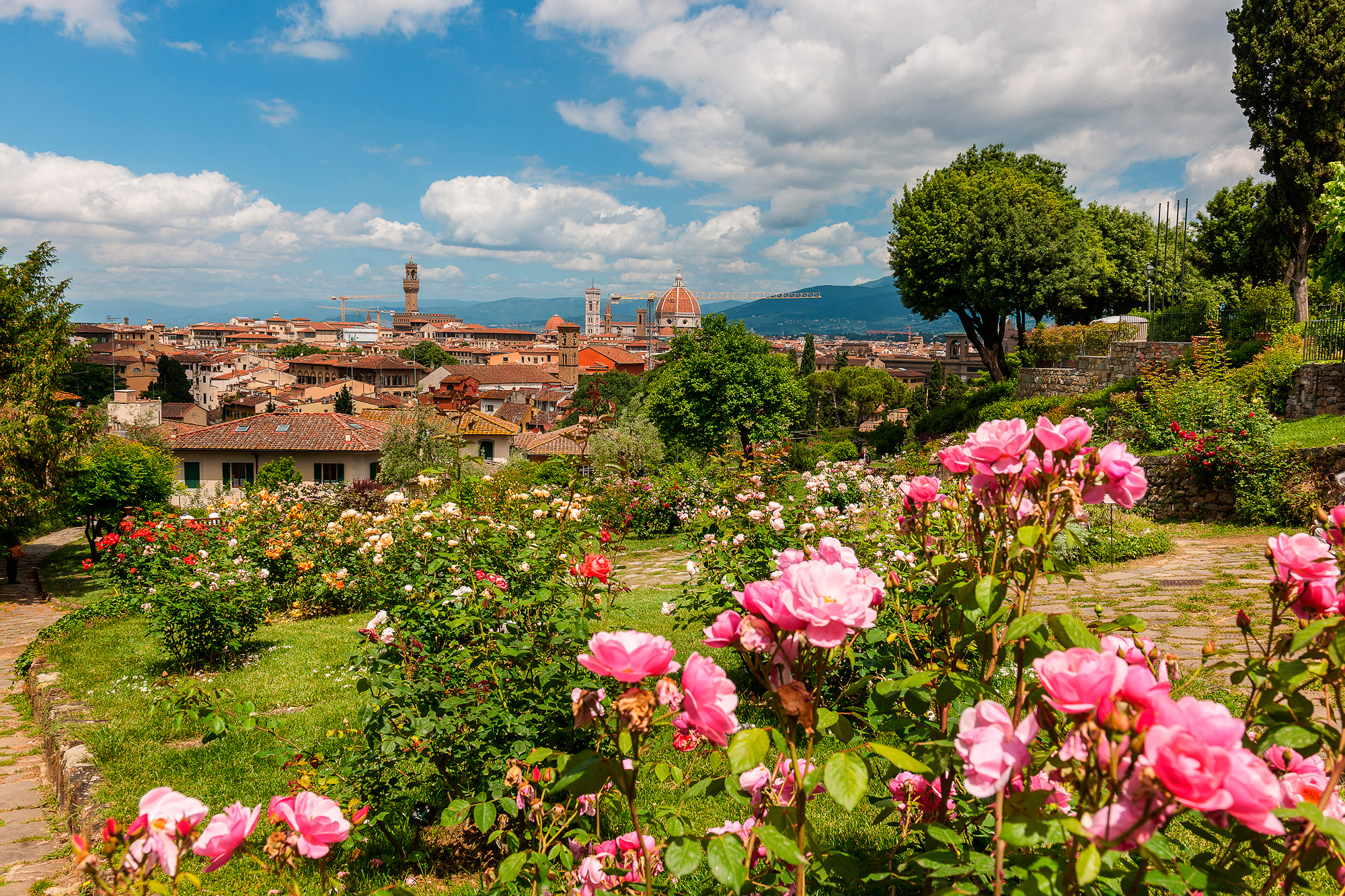
The Rose Garden

The Rose Garden, with Florence in the background
The Rose Garden - Credit: SIME/Guido Cozzi

Just below Piazzale Michelangelo, along Viale Giuseppe Poggi, the Rose Garden is one of the most beautiful places to indulge in a stroll amidst fragrances, blooms and views of the city. From here, the perspective opens onto the historic center of Florence, in a setting of great charm. 
Created in 1865 by Giuseppe Poggi, on the occasion of the transfer of the capital of Italy from Turin to Florence, the garden retains a layout inspired by the French model, where the bucolic atmosphere is intertwined with an orderly design of spaces.
The heart of the garden is the botanical collection, with about 400 varieties of roses and a heritage of some 1,200 plants including lemons, tillandsias and other rarities. In recent years, this space has been further enriched with artistic presences, such as the 10 bronze sculptures by Jean-Michel Folon, perfectly placed along the pathway, and the Japanese Shorai oasis, created by architect Yasuo Kitayama and donated to Florence by the twin city of Kyōto and the Kōdai-ji Zen Buddhist temple.

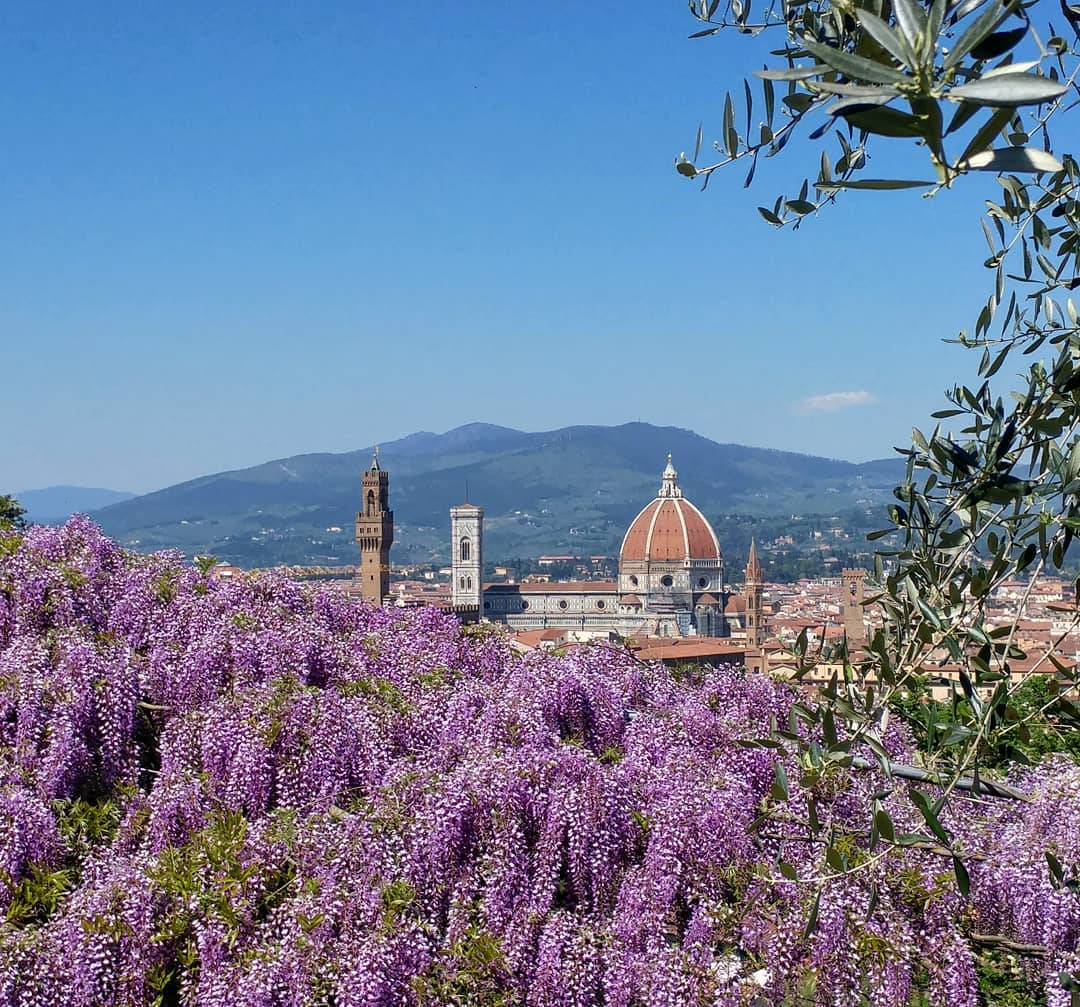
Bardini Gardens

View of Florence Cathedral from the Bardini Garden
View of Florence Cathedral from the Bardini Garden - Credit: Stefano Cannas

In one of the most scenic spots in Florence, Villa Bardini with its garden is a place where art, nature and spectacular views meet. 
The Bardini Garden, part of the Boboli Gardens Museum circuit, covers about 10 acres or 4 hectares and unites 3 different souls: the scenic central Baroque staircase, the English-style woodland to the west and the agricultural extent to the east. 
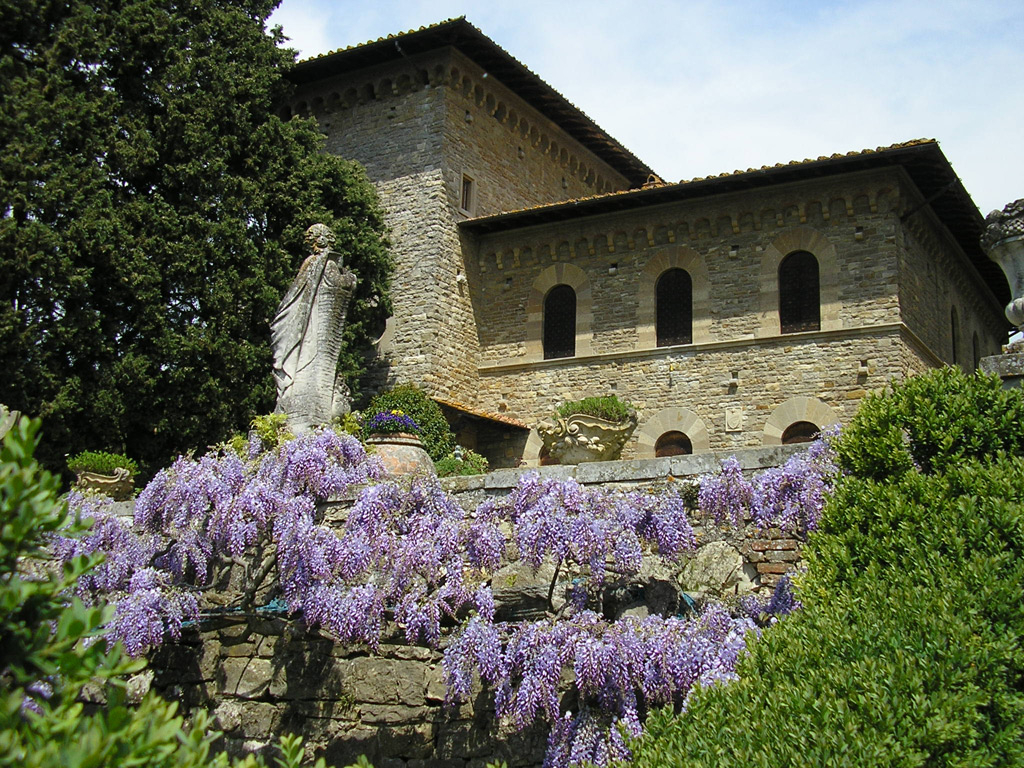
The climb to the Belvedere affords one of the most beautiful views of Florence, accompanied in spring by the spectacular blooming of wisteria, along with irises and China roses.

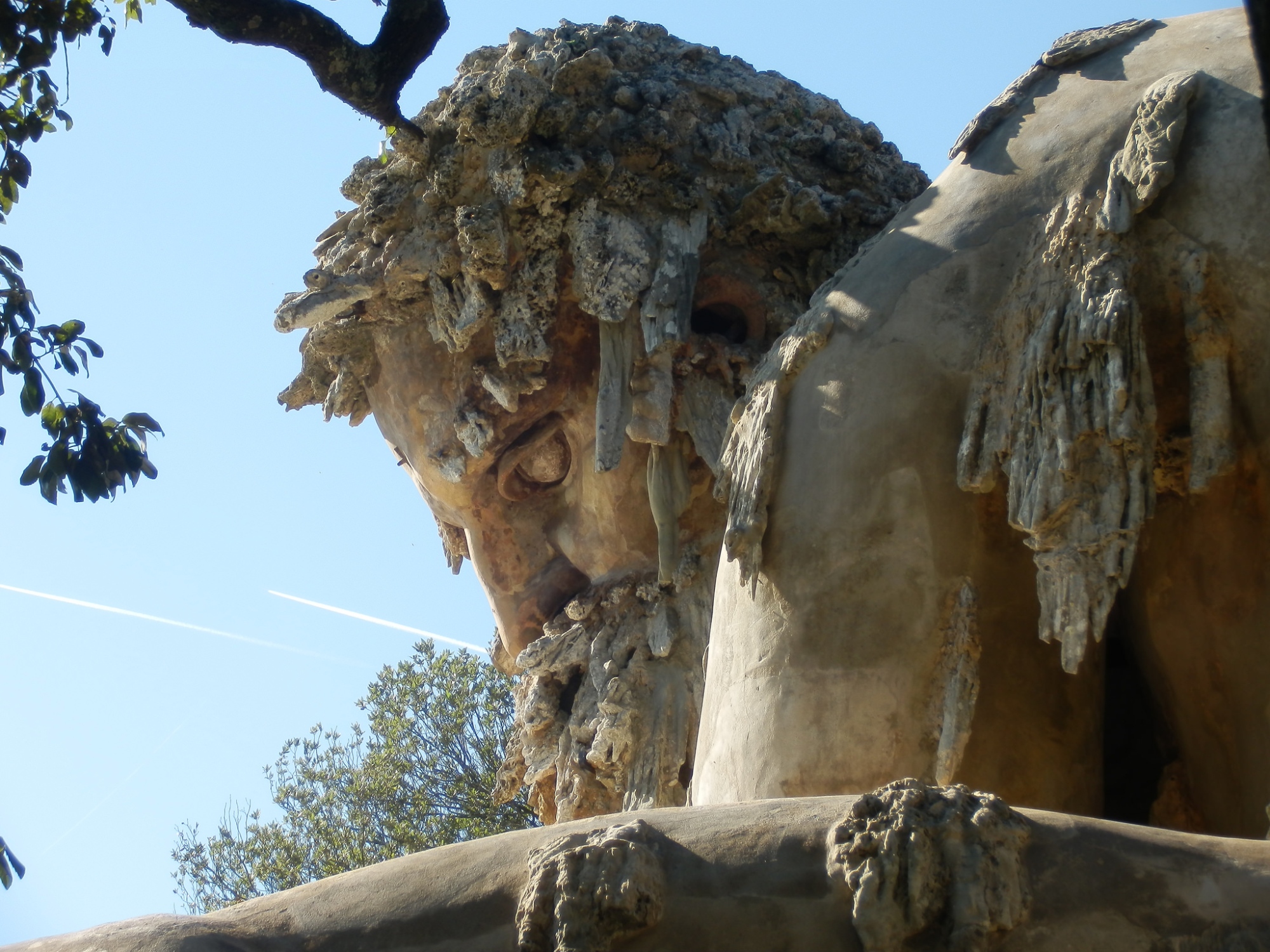
Pratolino Medici Park

A detail of the face of Giambologna’s Apennine Colossus
Giambologna’s Apennine Colossus - Credit: paolo giusti

In Vaglia, just outside Florence, the Pratolino Medici Park is the ideal destination for those seeking a large green space immersed in quiet, not far from the city. The estate was purchased in 1568 by Grand Duke Francesco I de’ Medici, who commissioned Bernardo Buontalenti to transform it into a villa. 
Later, after a period of neglect under Ferdinand III and Leopold II, Grand Duke of Tuscany, the villa was demolished and the park reorganized according to the dictates of an English garden.
Today, the park still retains traces of its spectacular past, including artificial caves, fountains and fascinating works such as the famous Apennine Colossus by Giambologna, the Cupid’s Grotto and the Mugnone Fountain designed by Buontalenti in 1580
It is truly a place to experience slowly, strolling along gravel roads, trails and natural vistas.

Medici Villa di Castello

The Bizzarrie Medicee in the garden of the Medici Villa di Castello
The Bizzarrie Medicee in the garden of the Medici Villa di Castello - Credit: Stefano Casati

In the hills of Florence, the Medici Villa di Castello is one of the oldest country residences of the Medici family—and one of the most significant. The villa is not usually open to the public but its extraordinary garden, considered one of the prototypes of the 16ᵗʰ-century Italian garden, is open to the public.
An exploration winds through spaces of great elegance. There’s the Fountain of Hercules and Antaeus, the famous Grotto of the Animals, the area of the Selvatico, with the large tank-cistern decorated with The Fountain of January by Bartolomeo Ammannati
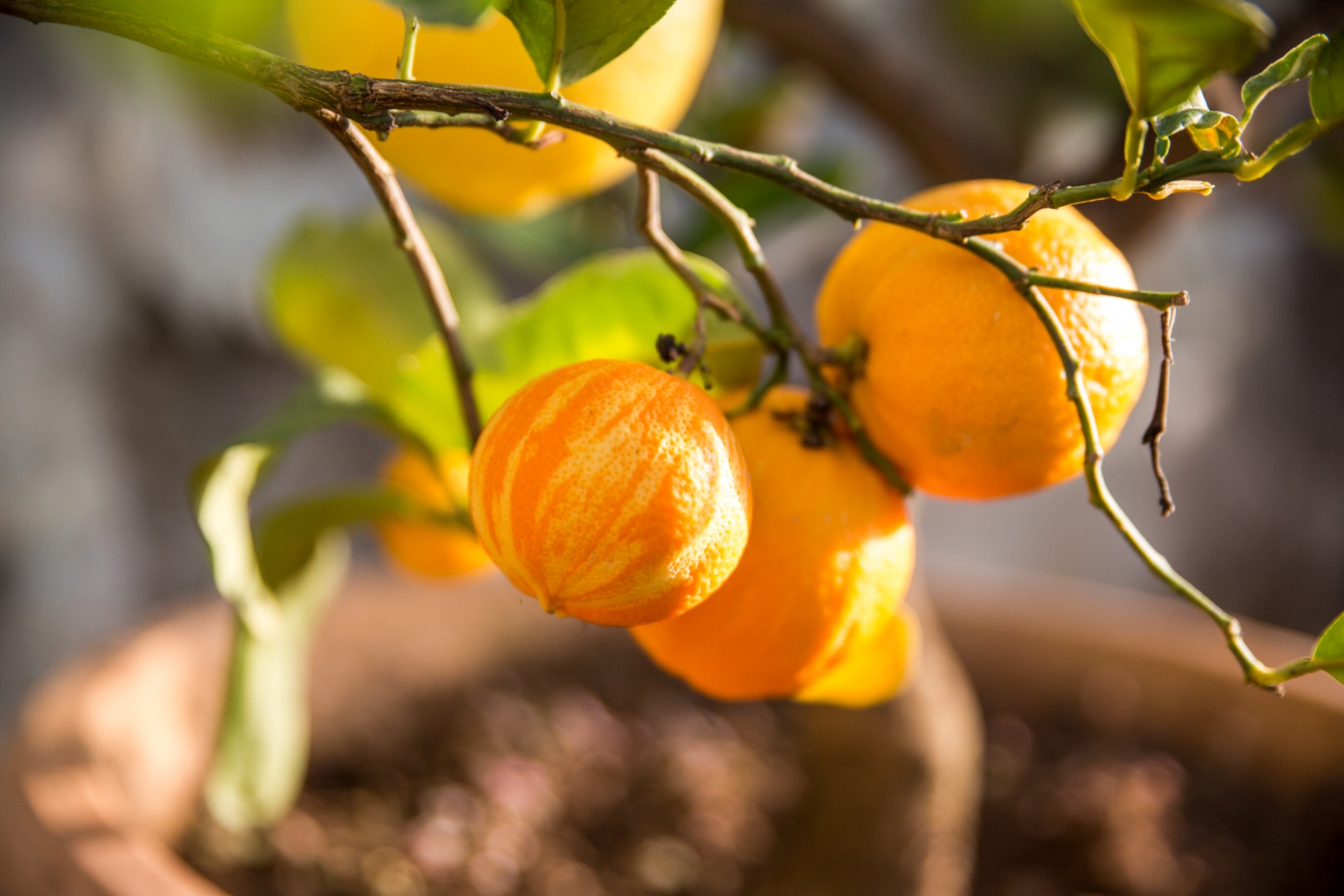
On the 2ⁿᵈ terrace, rather, opens the Citrus Garden, with a priceless collection of some 500 potted plants, including the Bizzarrie Medicee, the gnarly result of grafting and experimentation, alongside rare varieties of fragrant citrons, knurled lemons and large pomelo trees.
According to scholars, moreover, this might be the very place to have inspired Botticelli’s Primavera. Indeed, many of the species depicted in the work, typical of Tuscany and particularly to the booms in March and April, may have been observed here.
The garden of Villa Peyron

View of the Villa Peyron
Villa Peyron - Credit: bardinipeyron.it

On the hills of Fiesole, with a splendid view of Florence, the Villa Peyron al Bosco di Fontelucente complex is nestled in a charming landscape of formal garden, park, olive groves and forest. 
This complex is named after Paolo Peyron, the last owner, who in 1934 started transforming the garden, following an entirely personal vision, without ever seeking out the help of professionals, starting with an existing green expanse alongside the villa.
The name Fontelucente recalls the lush forest surrounding the property and the 16ᵗʰ-century spring that feeds the numerous fountains and a pond. 
Also adorning the garden are statues from Venetian villas on the Brenta river, positioned in place of the originals that were destroyed during World War II. 

The Park of Villa Reale di Marlia

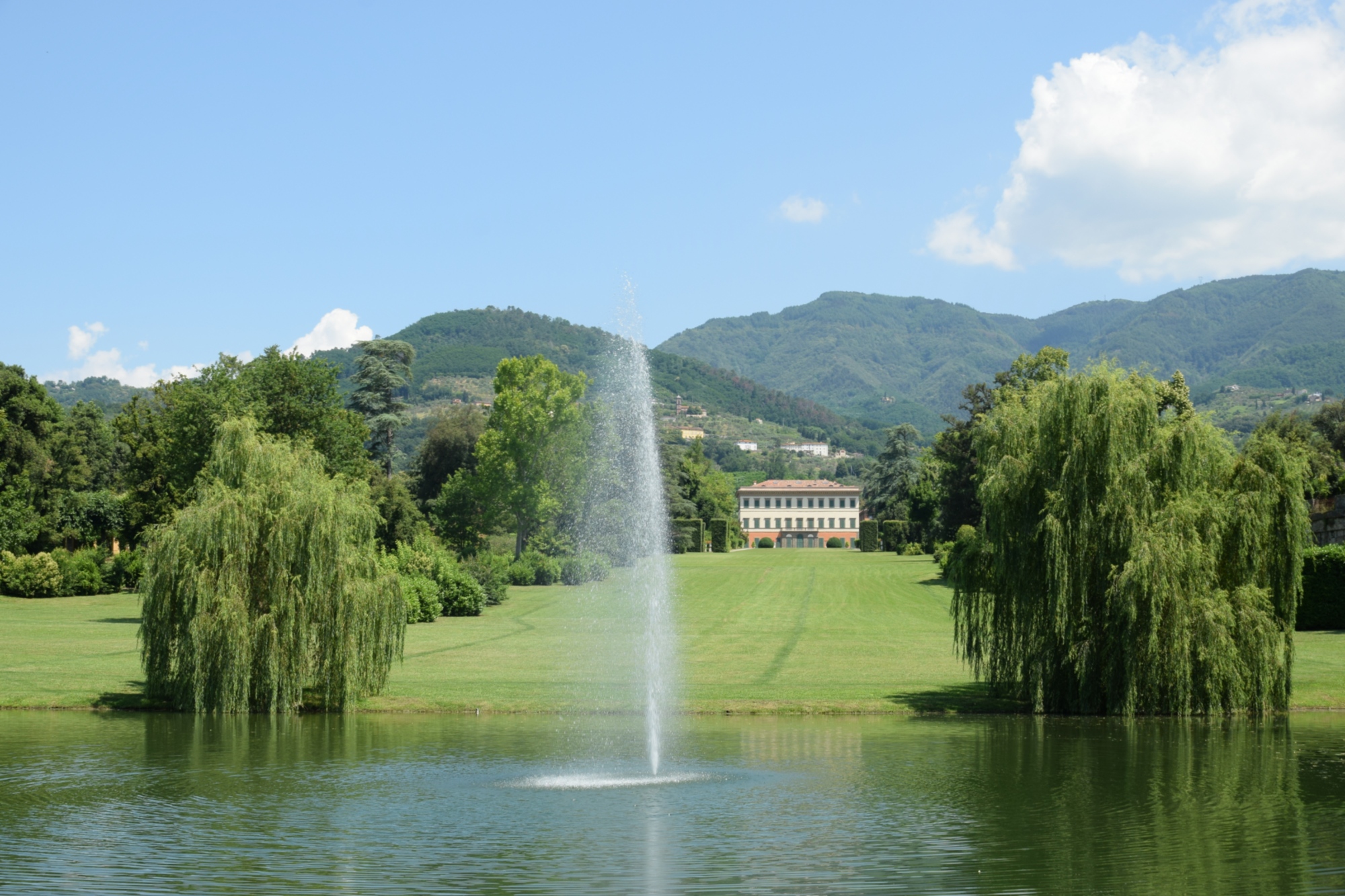
A spectacular view of the Villa Reale di Marlia
Villa Reale di Marlia - Credit: C. D'Aliasi

In the heart of Lucca, the park of the Villa Reale di Marlia is one of the most spectacular in Tuscany. Stretching over 16 hectares, it preserves the 17ᵗʰ-century layout with evergreens arranged in elegant geometries then divided into a succession of avenues, paths and gardens that make for a particularly rich and varied visit. 
It was Elisa Baciocchi, Napoleon’s sister, who transformed the former Orsetti family residence in the 19ᵗʰ century, expanding the park and giving the complex the appearance that still characterizes the place today.
Among the spaces not to be missed are the famous Teatro di Verzura delineated by yew hedges, the Lemon Garden with 200-plus potted citrus plants, the Italian Garden and Teatro d’Acqua with a large pool embellished with waterfalls, statues and masks. 
Completing the route are the Spanish Garden with its art deco flavor, the Viale delle Camelie, the Peschiera and Pan Grotto, in a continuous alternation of monumental views and more cozy atmospheres.

Garzoni Garden and Butterfly House

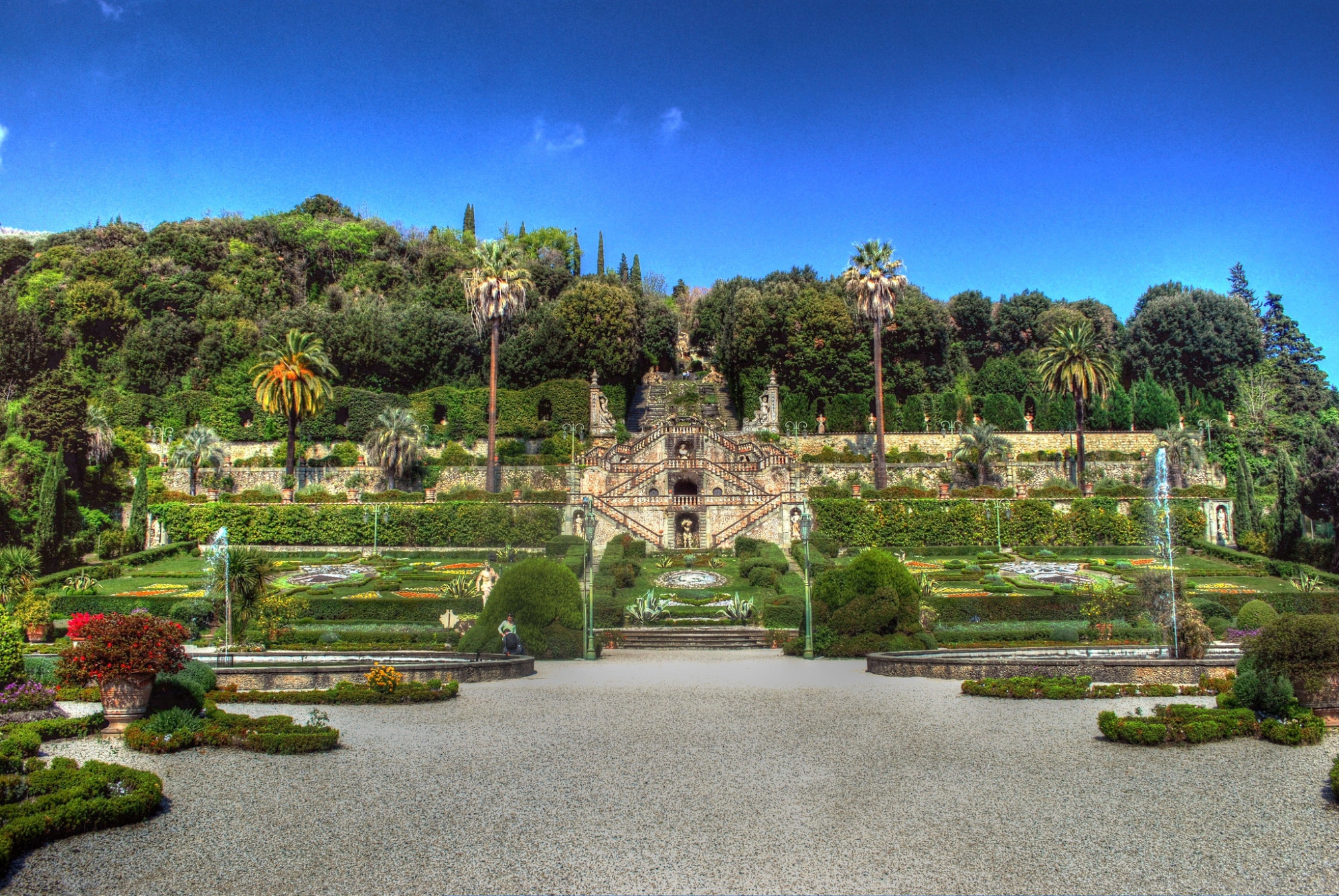
View of the Villa Garzoni
Villa Garzoni - Credit: be_am25

In Collodi, the Garzoni Garden is one of the most scenic in Tuscany. This extensive Italian garden was constructed on terraces that opens like a theater among water features, pools, statues, masks and surprising perspectives. 
Its history is linked to the Garzoni family but also to Carlo Lorenzini—his father worked here as a gardener and it was from this village that the writer took the name by which he would become famous, Collodi
Enlarged from the 17ᵗʰ century onward and improved over time, the garden took on its most famous layout thanks in part to the work of Ottaviano Diodati, the mind behind the Palazzina d’Estate (Summer Palace) and the water features still visible today.
Strolling here means stepping into a place rich in detail and symbolism, between the Labyrinth, the Teatro di Verzura, the Viale dei Poveri (Avenue of the Poor), the Scala d’Acqua (Staircase of Water) and the unique Bathing Pavilion, designed to offer coolness and privacy. 
Rending your visit even more special is the nearby Butterfly House, an indoor tropical garden where hundreds of butterflies from equatorial and tropical areas flutter freely among plants, flowers and fruits, offering an immersive and fascinating experience for young and old alike.

Gardens of Villa Grabau

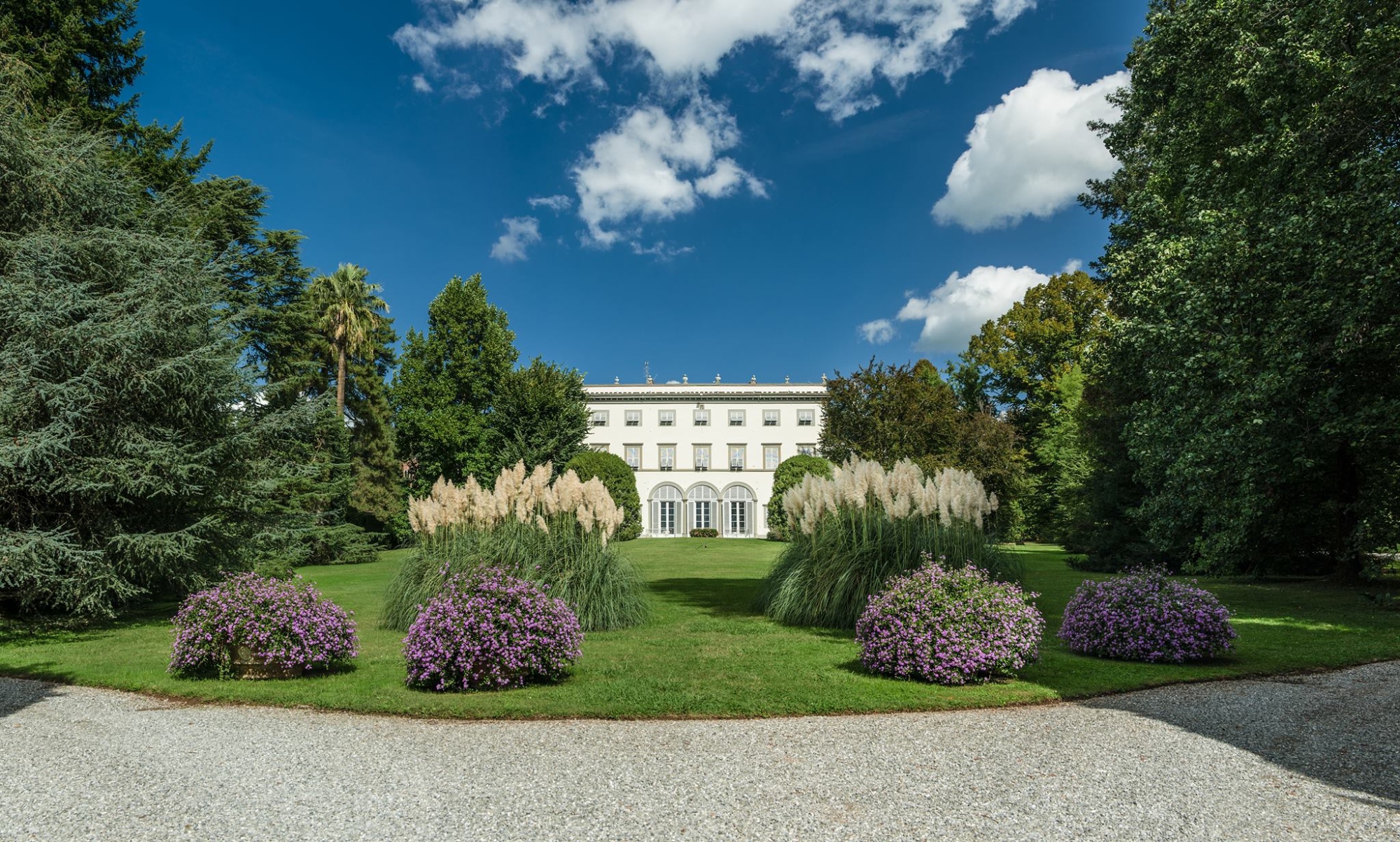
Villa Grabau in Lucca
Villa Grabau in Lucca - Credit: Fb page

Among the hills of Lucca, Villa Grabau is one of the area’s most typical Renaissance villas, set in a landscape that exalts its elegance. 
Surrounding the mansion is a beautiful system of gardens, starting with the space upstream of the Villa, bordered by terracing decorated with black and white mosaics and enriched with fountains, including a grotesque one found in the woods, attributed to the environment of Pietro Tacca.
The Italian garden holds a hundred or so centuries-old citrus trees planted in terracotta pots bearing the coats of arms of the ancient patrons, while the limonaia, considered among the most beautiful lemon house in Lucca, is distinguished by its oval windows framed by Matraia stone ashlars. 
Alongside this more formal layout is an English garden, where rare tree species, monumental trees and a Teatro di Verzura (Theater of Hedges) are preserved.

The garden of Villa La Foce

View of the Villa La Petraia gardens
Gardens of Villa La Foce - Credit: Umberto Bindi

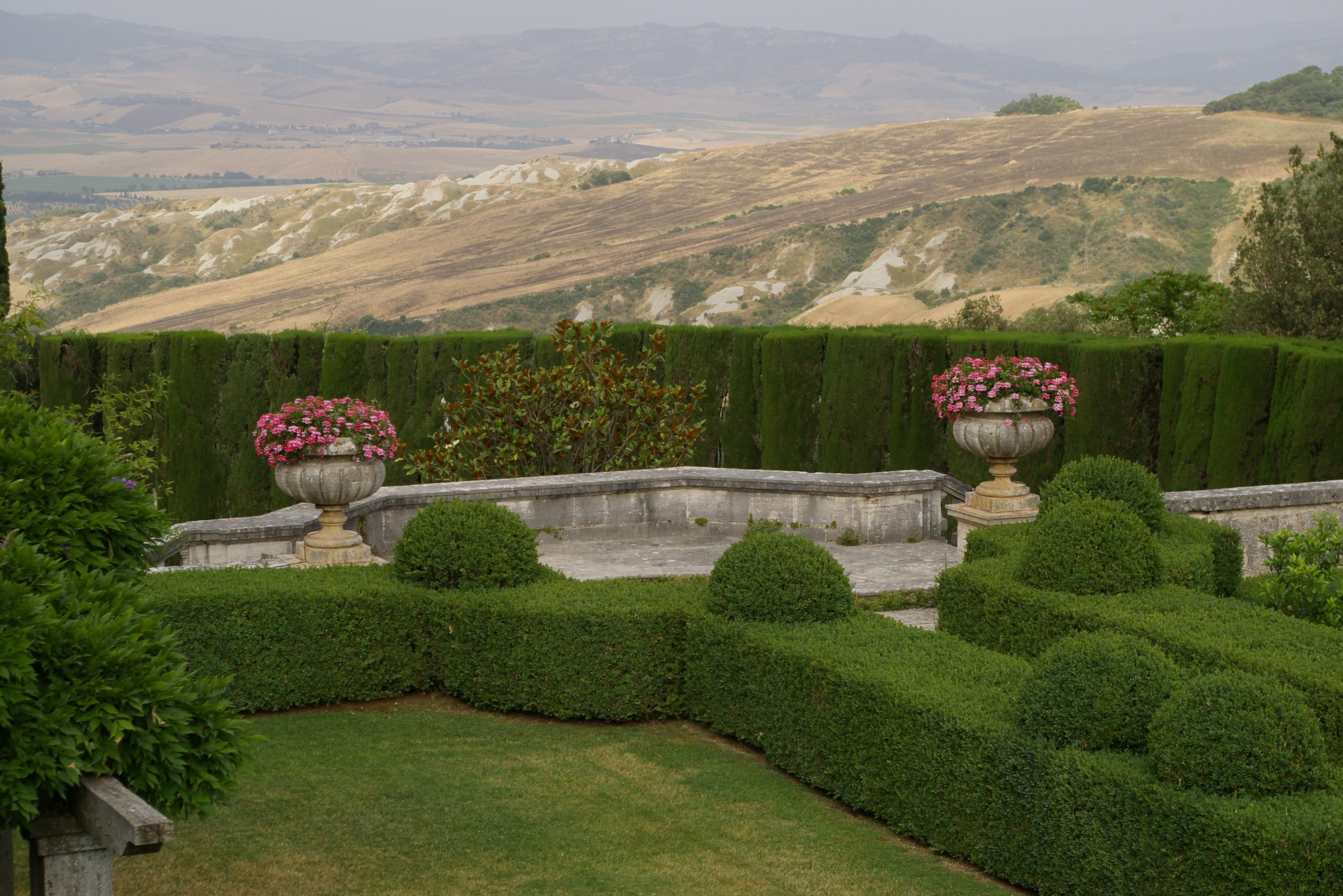
In the countryside of Chianciano Terme, Villa La Foce is surrounded by a garden of great elegance, designed by Cecil Pinsent for the Marquise Iris Origo, beginning in 1927. 
The Italian design opens up from the house toward the Val d’Orcia and Monte Amiata, creating a harmonious dialog between architecture, landscape and nature.
The garden is spread across several levels, between the roseto (rosarium) punctuated by geometric boxwood hedges and the terraced hillside, where cherry, pine and cypress trees alternate, punctuated by wild broom, thyme, rosemary, lemon trees and lavender.
Also contributing to linking the different sections is the large travertine staircase, a scenic way to access the last section of the garden, beneath which opens the striking Blue Grotto
A travertine fountain with two fish, a 17ᵗʰ-century statue of Nature plus a splendid wisteria arbor complete the path.

Garden of Villa La Magia in Quarrata

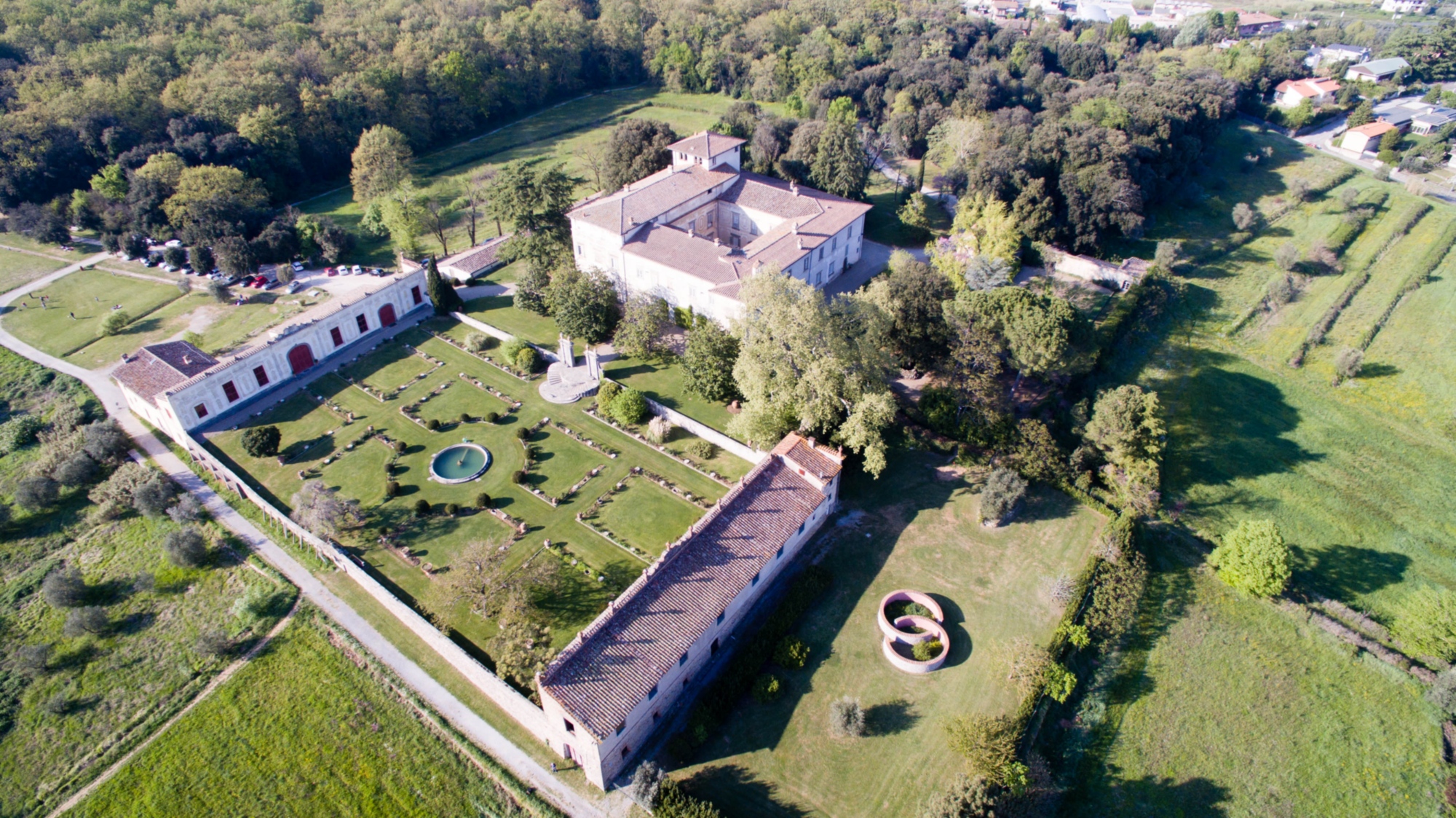
Overhead view of the Medici Villa La Magia in Quarrata
Medici Villa La Magia in Quarrata - Credit: Jacopo Marcovaldi

Villa La Magia is located in Quarrata, at the foot of Montalbano. This historic home has ancient origins, established in the 14ᵗʰ century as a tower house of the Panciatichi family.
Once passed to the Medici clan in 1583, it was renovated by Bernardo Buontalenti, court architect to Francesco I. Since then, the complex has continued to be transformed over the centuries.
The park, too, reflects this layered history. Indeed, the elegant design of the Italian garden, with geometric hedges and circular fountain, is flanked by the romantic park created by the Amati, pierced by cypresses and laurels.
A place where various forms of the landscape coexist naturally, adding charm to your visit.

What’s nearby?

Must-see places, stage-by-stage routes, events and tips for your trip
Events • 29 results
Ideas • 291 results
Itineraries • 70 results
Travelogs • 7 results