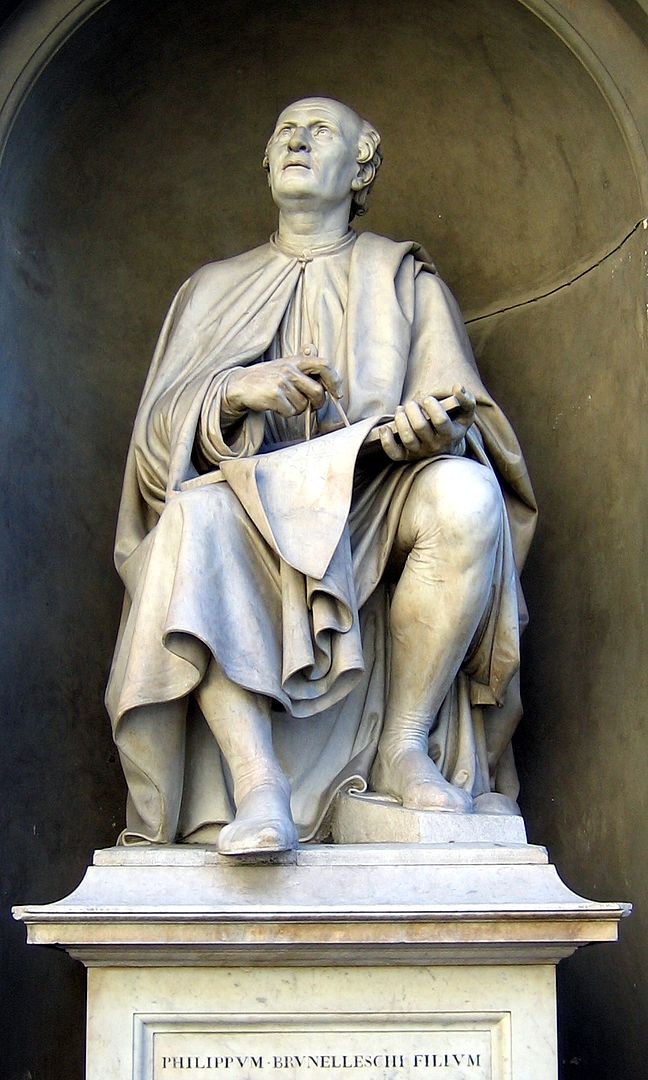
Architect, engineer, sculptor and mathematician, Filippo Brunelleschi is remembered today as the father of linear perspective and the brilliant engineer behind the incredible Dome of the Florence Cathedral. Together with his friend Donatello, Brunelleschi is one of the most important figures in Florentine history and one of the founders of the Italian Renaissance.
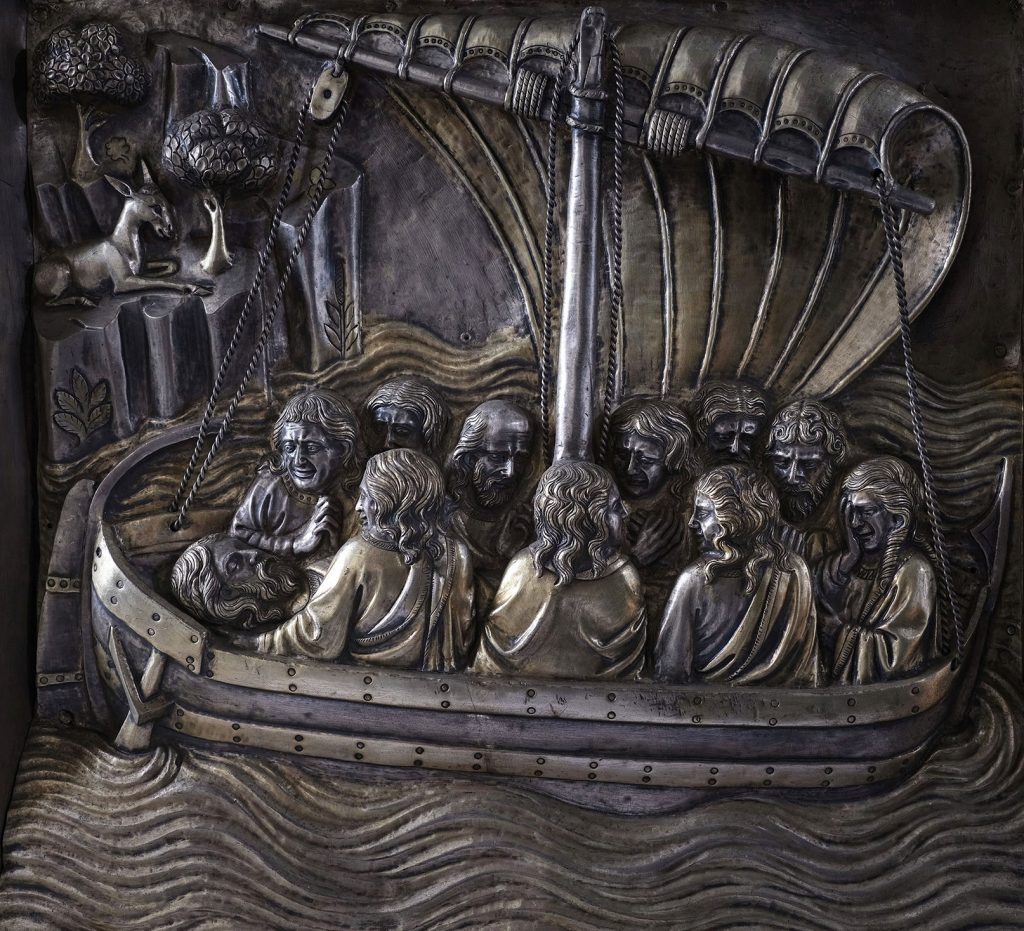
Filippo Brunelleschi was born in Florence in 1377 but we have little information about his youth. Educated in both literature and mathematics, he entered the world of artisans as a goldsmith, an experience that turned out to be useful in perfecting his skills in chiseling, ornamental reliefs and drawing. The line between goldsmithing and sculpture is a thin one and indeed disappears in works such as the Altar of Saint James in the Cathedral of San Zeno in Pistoia. This precious silver reliquary altar is evidence of the very refined style of Brunelleschi, who was about 24 years old at the time.
The young Brunelleschi began working as a sculptor until a "competition lost" changed his artistic direction. In 1401, he participated in a prestigious competition to create a gilded bronze panel depicting the Sacrifice of Isaac for the doors of the Florence Baptistery. Of the seven competitors, he and Lorenzo Ghiberti were the two finalists, but Ghiberti was awarded the commission. Ghiberti also made the famous Gates of Paradise. Brunelleschi then decided to devote himself to architecture.
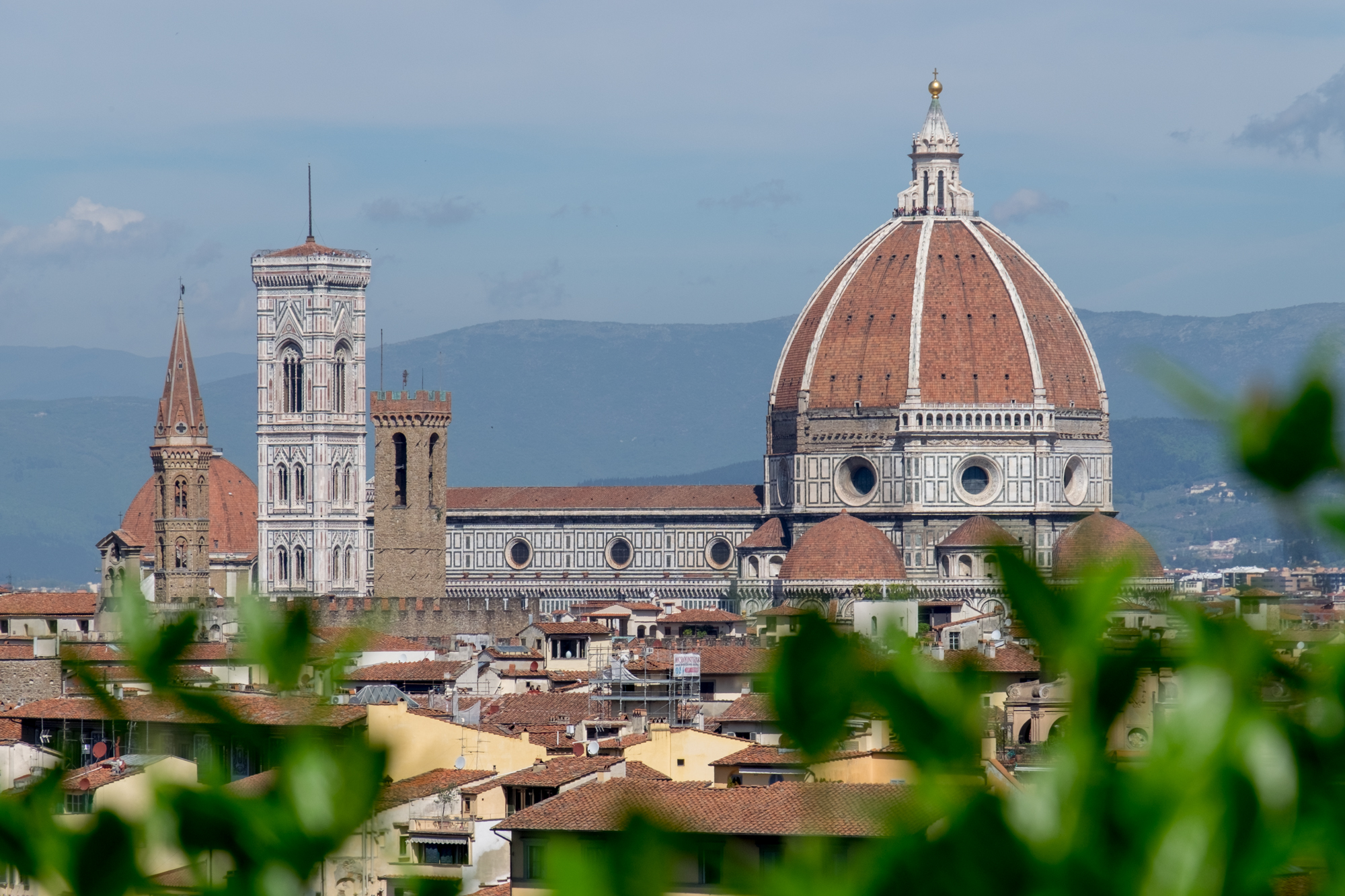
What is the significance of Brunelleschi's contribution to architecture? His work marks the beginning of the Renaissance style after Gothic art. While pointed arches were predominant in Gothic style, the Renaissance favored rounded arches and harmonious geometric shapes like circles and squares. The Dome of Florence Cathedral, although built on a Gothic building, represents the pinnacle of this evolution.
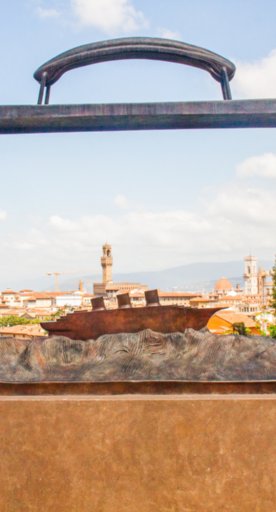
Brunelleschi invented machines for lifting materials and designed fortifications, theater sets and even a ship for transporting marble from Pisa to Florence. The ship, "Il Badalone", was supposed to sail up the Arno but sank on its first crossing, losing its precious cargo.
History considers him the inventor of linear perspective with a single vanishing point, a revolution for the representation of space in drawing and painting.
He died on April 15, 1446 and was buried in the crypt of Florence Cathedral.
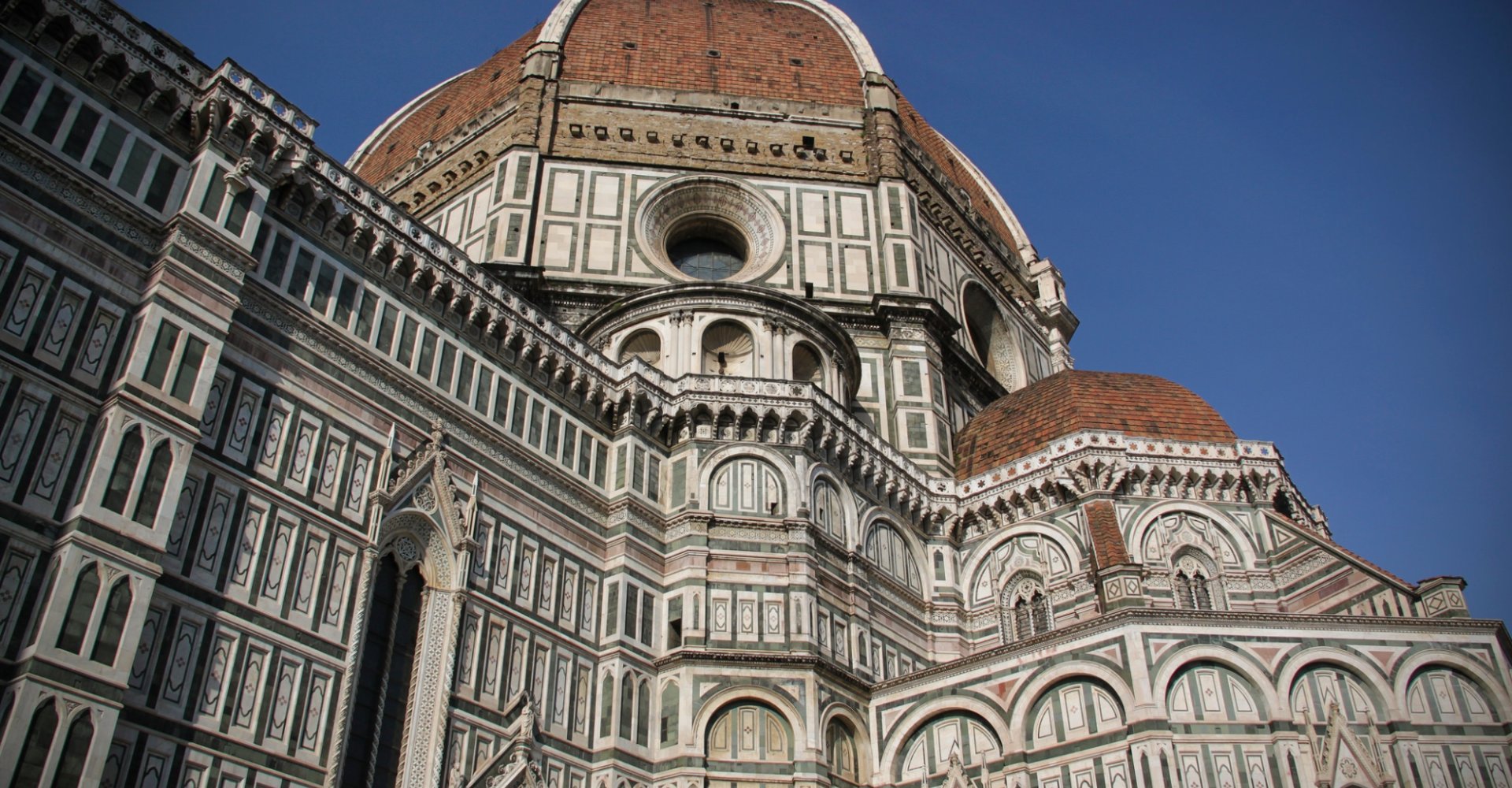
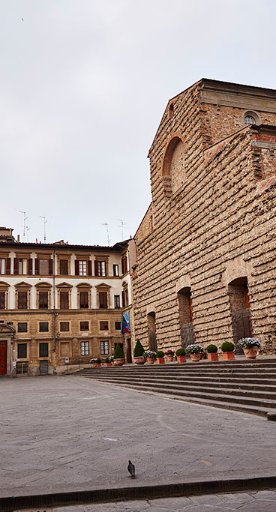
In Florence, the works of Filippo Brunelleschi can be seen in numerous places, especially in the field of architecture. His work extended to almost every major church in the city, such as the Dome of the Cathedral, San Lorenzo and the Pazzi Chapel at the Basilica of Santa Croce and Santo Spirito.
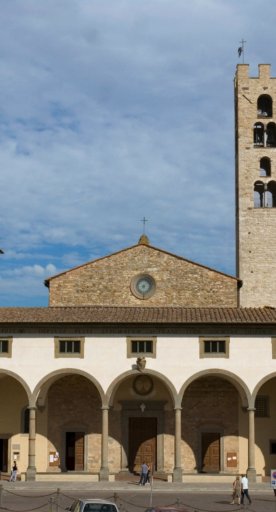
The famous Dome of the Cathedral, the construction of which started in the 13th century, was completed between 1420 and 1436, using innovative techniques devised by Brunelleschi and is now considered the largest masonry dome in the world. His early works also include the Loggia of the Ospedale degli Innocenti, with elegant rounded arches that create a certain harmony with the surrounding buildings. At San Lorenzo, Brunelleschi was initially commissioned to work on the Old Sacristy, which was later extended, representing the first large-scale example of his style. The churches of Santo Spirito and the Pazzi Chapel on the other hand, are evidence of his artistic maturity, characterized by geometric solutions and harmonious proportions.
Outside the city, in Vicopisano, he designed the Brunelleschi Fortress, an example of military architecture with a tower, walls and innovative defensive systems, in 1438.
Brunelleschi si distinse anche come scultore. Al Museo del Bargello è conservato il suo pannello del Sacrificio di Isacco, realizzato per il concorso delle porte del Battistero e confrontato con quello di Ghiberti.
Nel 1410, un altro concorso mise a confronto Brunelleschi con un altro grande artista, stavolta Donatello, per un Crocifisso. Quello realizzato da Donatello per la Chiesa di Santa Croce fu soprannominato da Brunelleschi “il Crocifisso del contadino” perché il volto di Cristo appariva troppo simile a quello di una persona comune. Sfidato a superare la resa di Donatello, Brunelleschi si mise all'opera per creare lo stesso soggetto per la Chiesa di Santa Maria Novella e attualmente è appeso in una cappella a sinistra dell'altare maggiore.
Spostandoci a Pistoia, nella Cattedrale di San Zeno, troviamo l'altare d'argento di San Jacopo all'interno della Cappella del Crocifisso, o del Giudizio. Quest'opera imponente fu realizzata tra il 1287 e il 1456 dalle mani di alcuni dei migliori artisti e artigiani dell'epoca, tra cui proprio Brunelleschi. A lui sono attribuiti la figura a tutto tondo di San Giovanni Evangelista (1400-1401) e i due busti dei profeti Geremia e Isaia.
Scarica l'infografica (in inglese) Brunelleschi in Toscana.