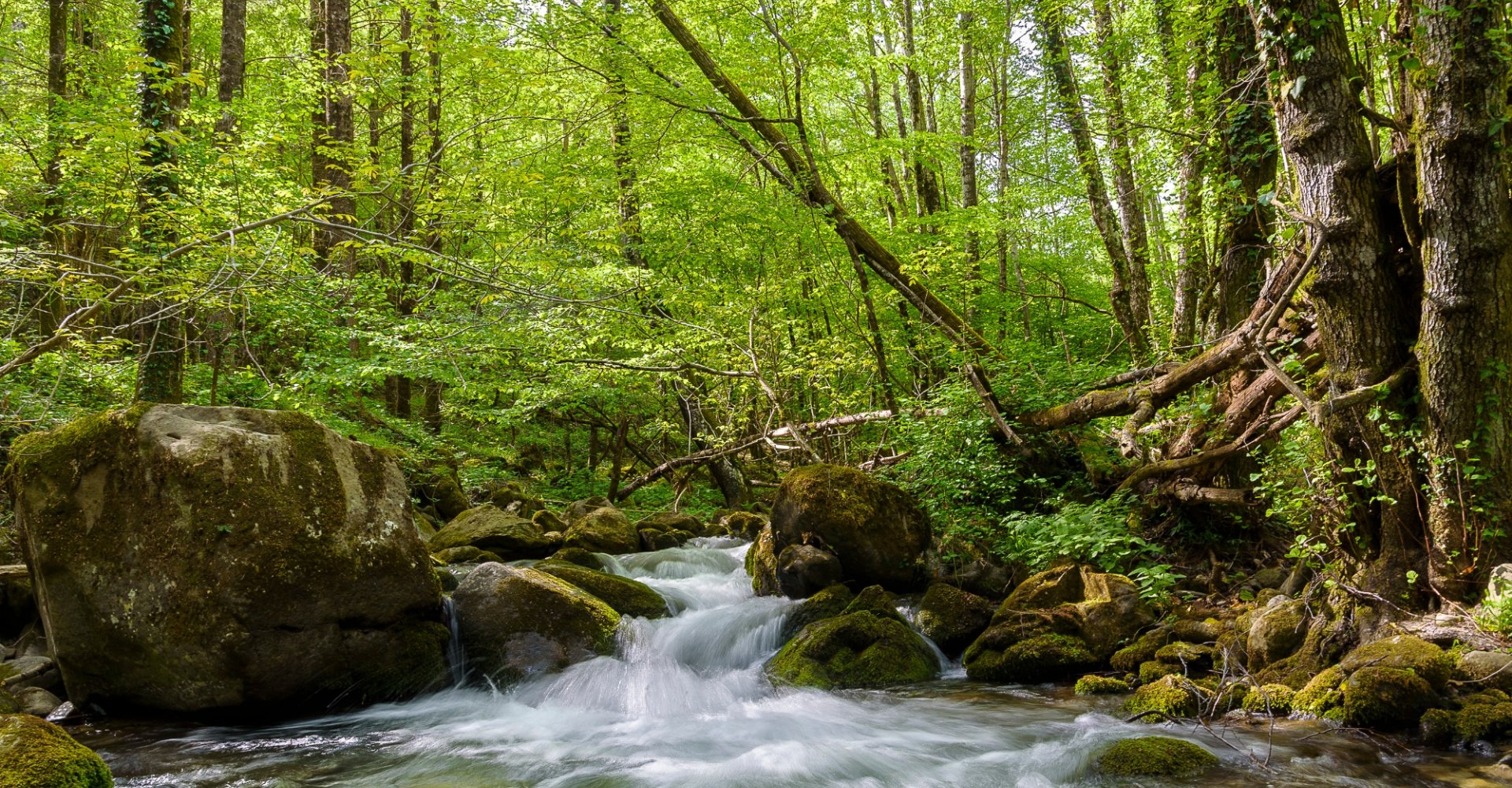
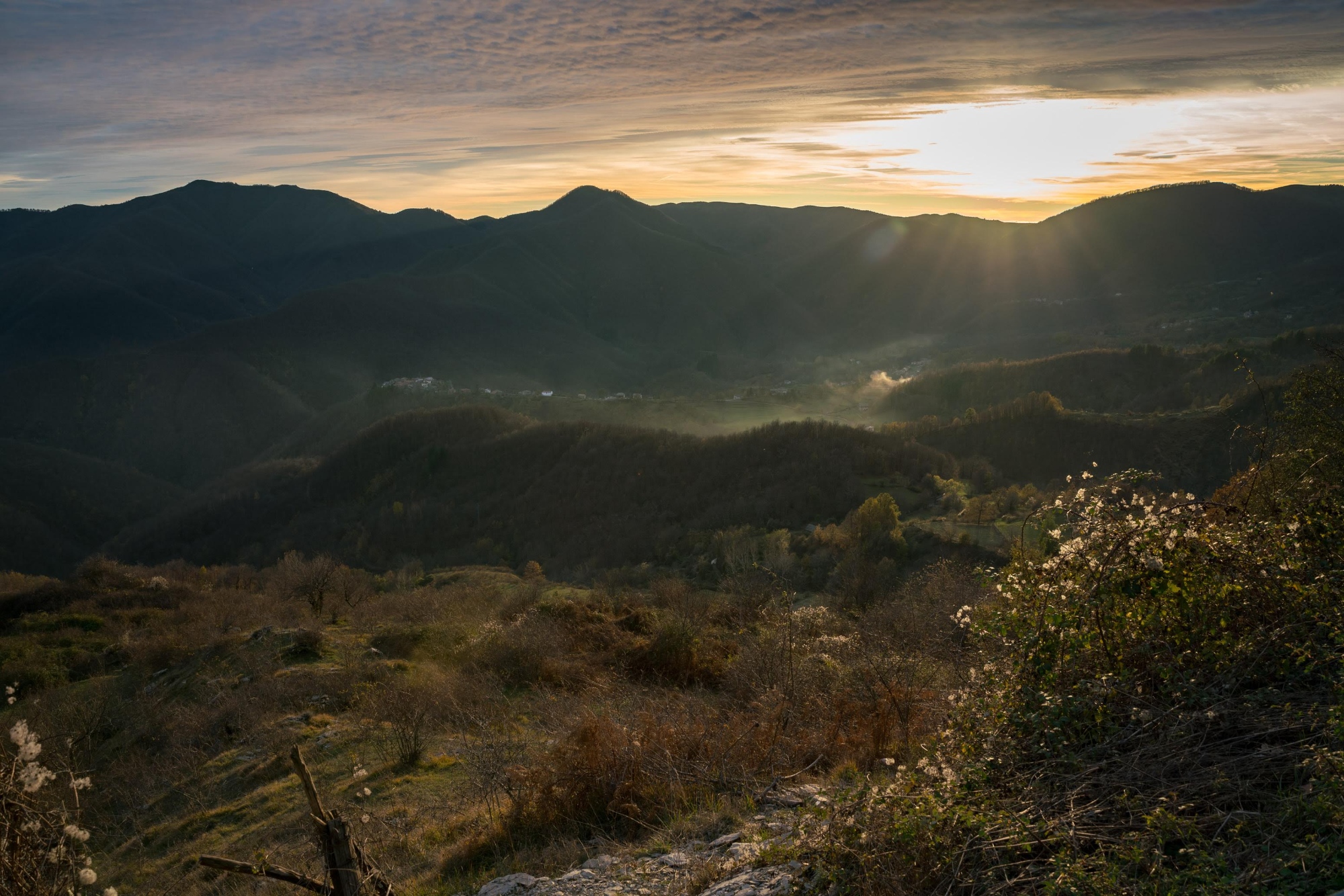
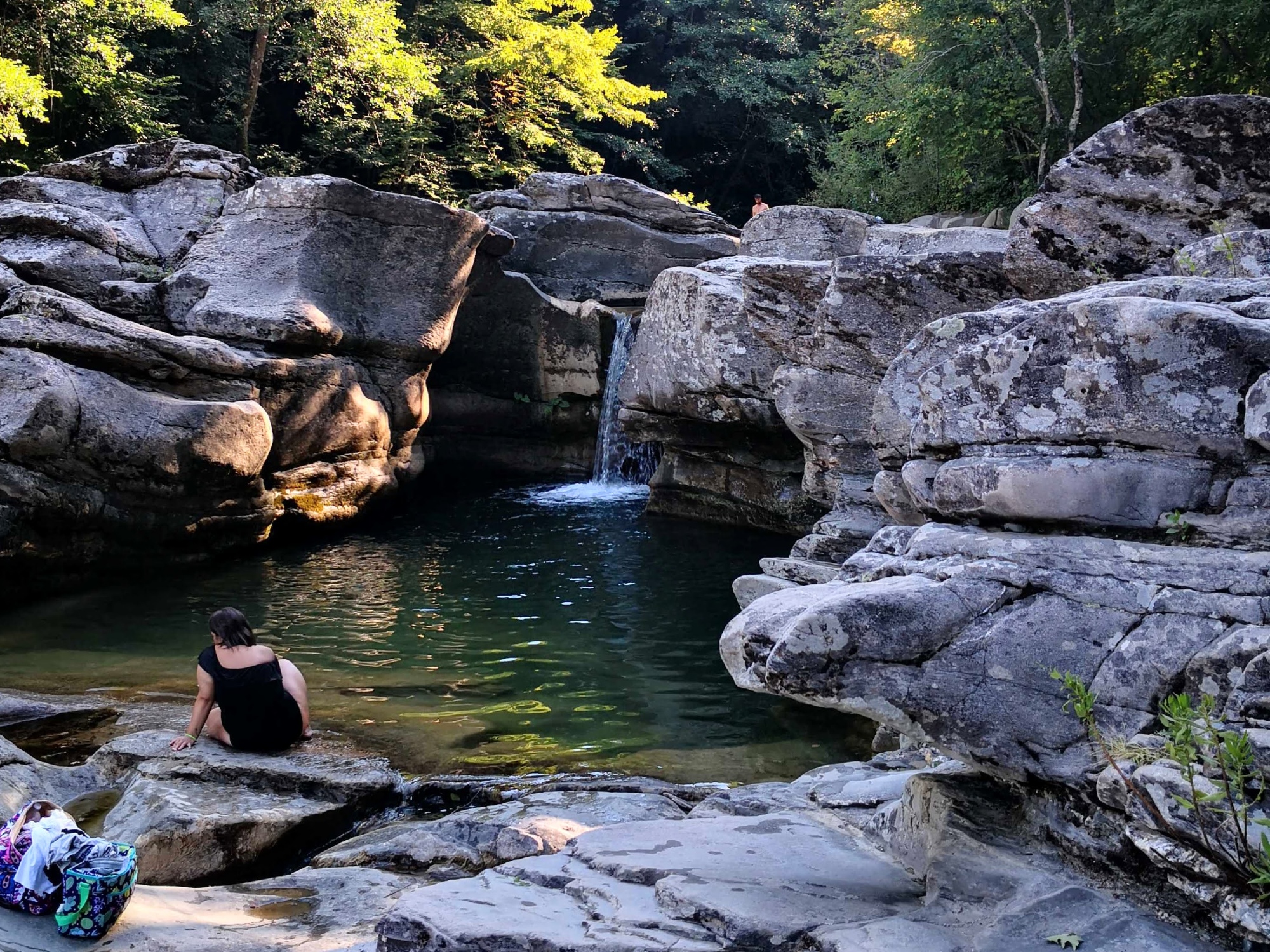
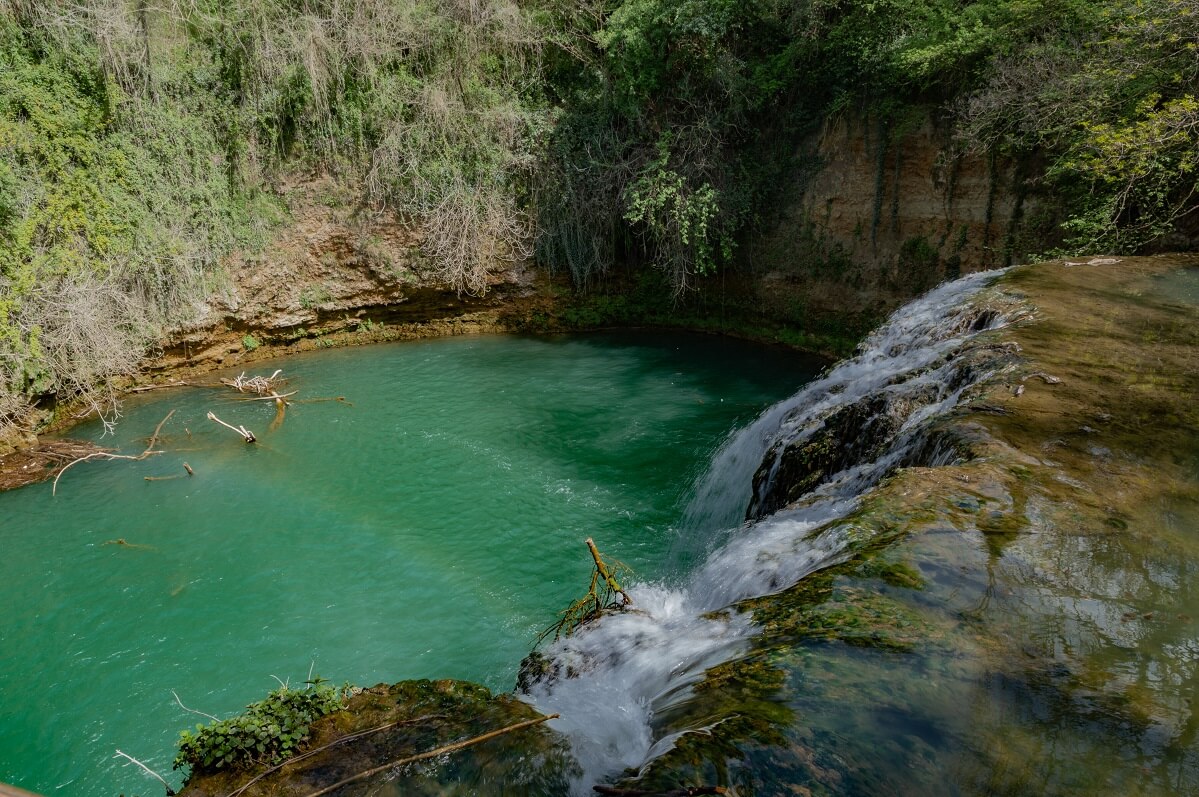
Iconic landscapes, cities of art and historic villages. Tuscany is world famous for its inimitable hills and artistic and cultural heritage. But there is a lesser known and equally fascinating side to the shady forests, water trails and waterfalls surrounded by nature.
Whether you love trekking, summer hikes or are simply looking for a refreshing break, these waterfalls are perfect destinations for an outing.
With this article, we want to introduce you to 9 beautiful waterfalls in Tuscany and provide directions to get there.
In the wild heart of the Val di Zeri in Lunigiana, the Colombara Waterfall is one of the most striking yet least crowded in the region. Located along the path leading to the Rossano Woods, it is found in an unspoiled natural setting.
Directions: From the village of Rossano, follow the signs for Bosco di Rossano and travel along the road for about 1.4 miles or 2.2 kilometers. Just after a bend, a path through the forest sets off on the right. After a short stretch, cross a small stream and, with a final slightly uphill stretch (protected by handrails), you reach the foot of the waterfall.
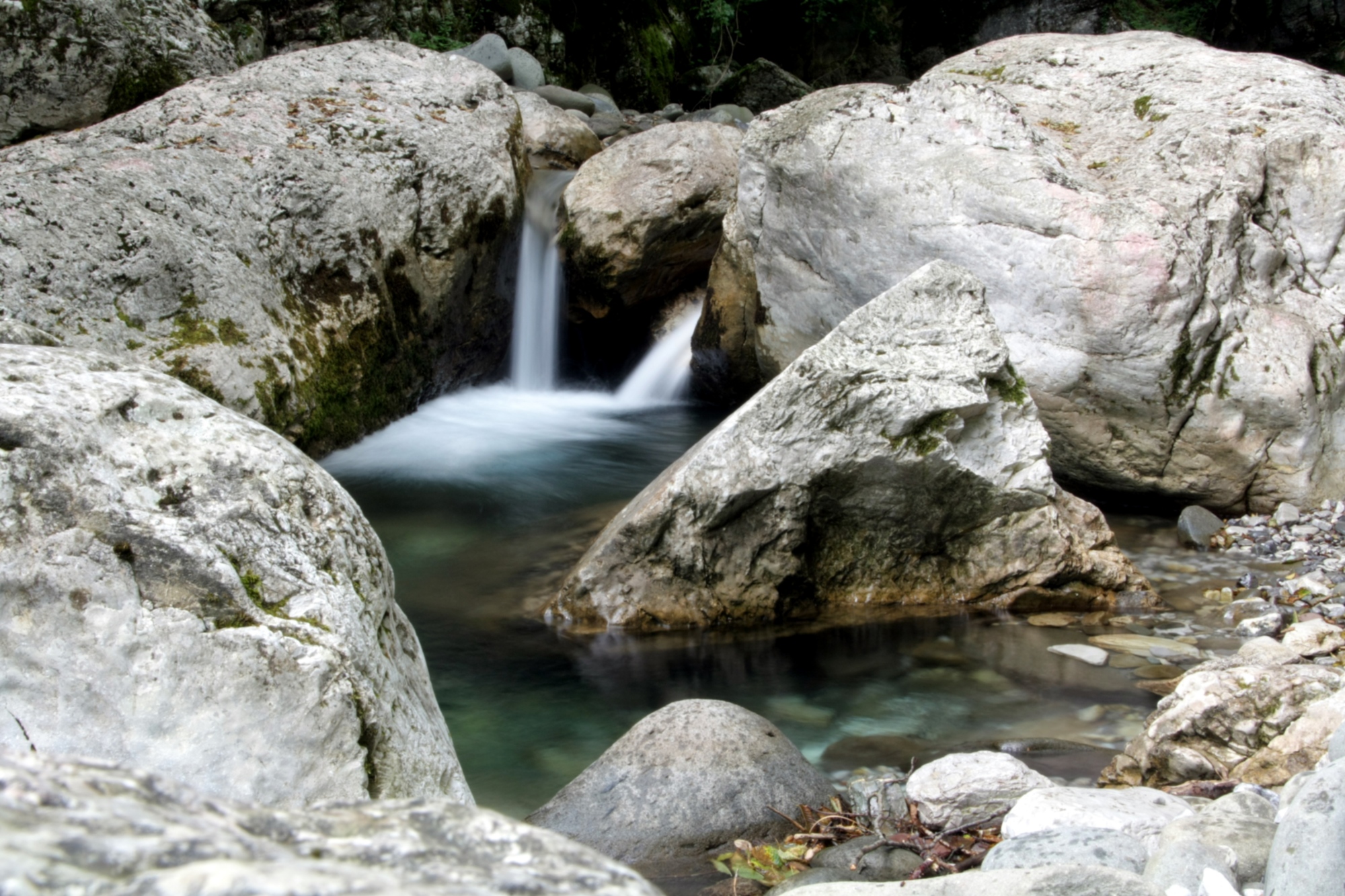
On the border between the provinces of Siena and Grosseto, the Canaloni (Gullies) of the Farma river have been spectacularly carved by water over millions of years. Smooth rocks, natural pools and small waterfalls render this place one of the most fascinating in the Farma Nature Reserve.
The route to reach the Canaloni (Gullies) starts near Roccastrada and estends an easy 1.9 miles/3 kilometers (round trip), running through the woods following the course of the river. The trail is flat and suitable even for inexperienced hikers.
In central Tuscany, the Elsa River creates surprising nooks and crannies such as the Diborrato Waterfalls, with a drop of some 50 feet or 15 meters, plunging into a deep and scenic natural pool.
Reaching these parts is easy. The waterfalls are encountered along the SentierElsa, a nature trail that is also suitable for families. Just beyond the route, you also reach the Caldane, ancient thermal baths used even in Etruscan and Roman times, now popular in the summer months.
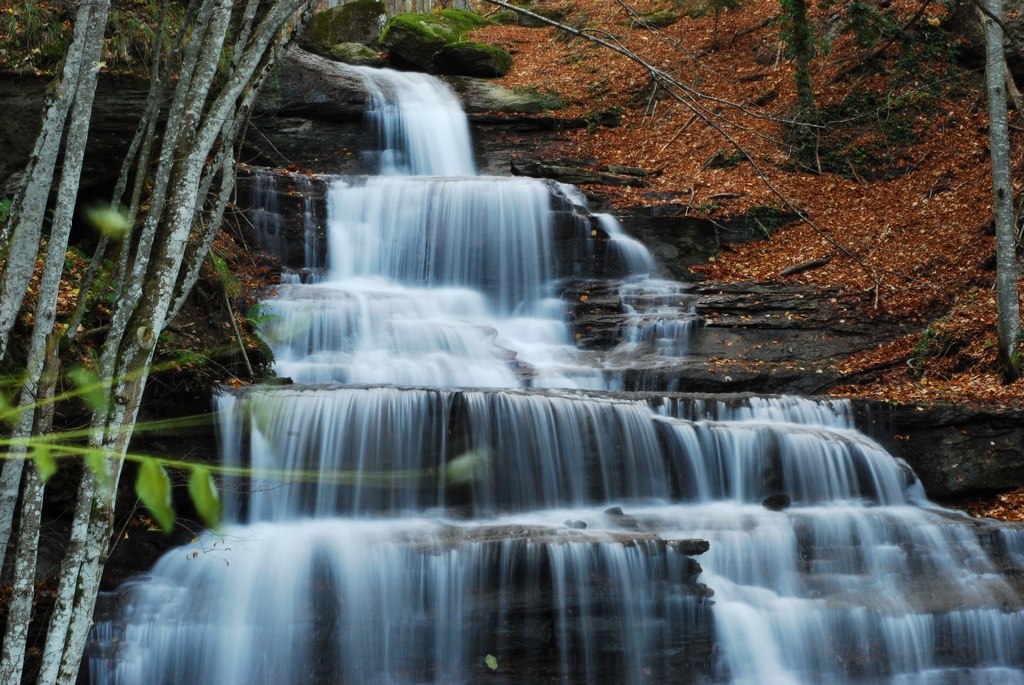
Hidden in the shady woods of Valdera, near the medieval village of Chianni, is the Ghiaccione Waterfall, taking its name from the Italian word for ice (ghiaccio) because of the always-cool temperature of its surroundings.
Directions: Take the provincial road toward Castellina Marittima, after passing a small bridge over the Carbonaia stream. From the parking area, a path starts at the course of the torrent. Cross the river to reach the first of 3 small waterfalls nestled in the forest.
The Orrido di Botri is one of the most spectacular natural canyons in Tuscany. Located in the Val Fegana in the territory of Bagni di Lucca, it is a deep and narrow limestone gorge carved by the cold waters of the Mariana and Ribellino streams.
Directions: Access is from Ponte a Gaio, the only permitted entrance to the protected area, where the ticket office is located. It is mandatory to wear a protective helmet (which can be rented on-site). The visit unfurls by going up the stream and choosing from routes of varying difficulty.
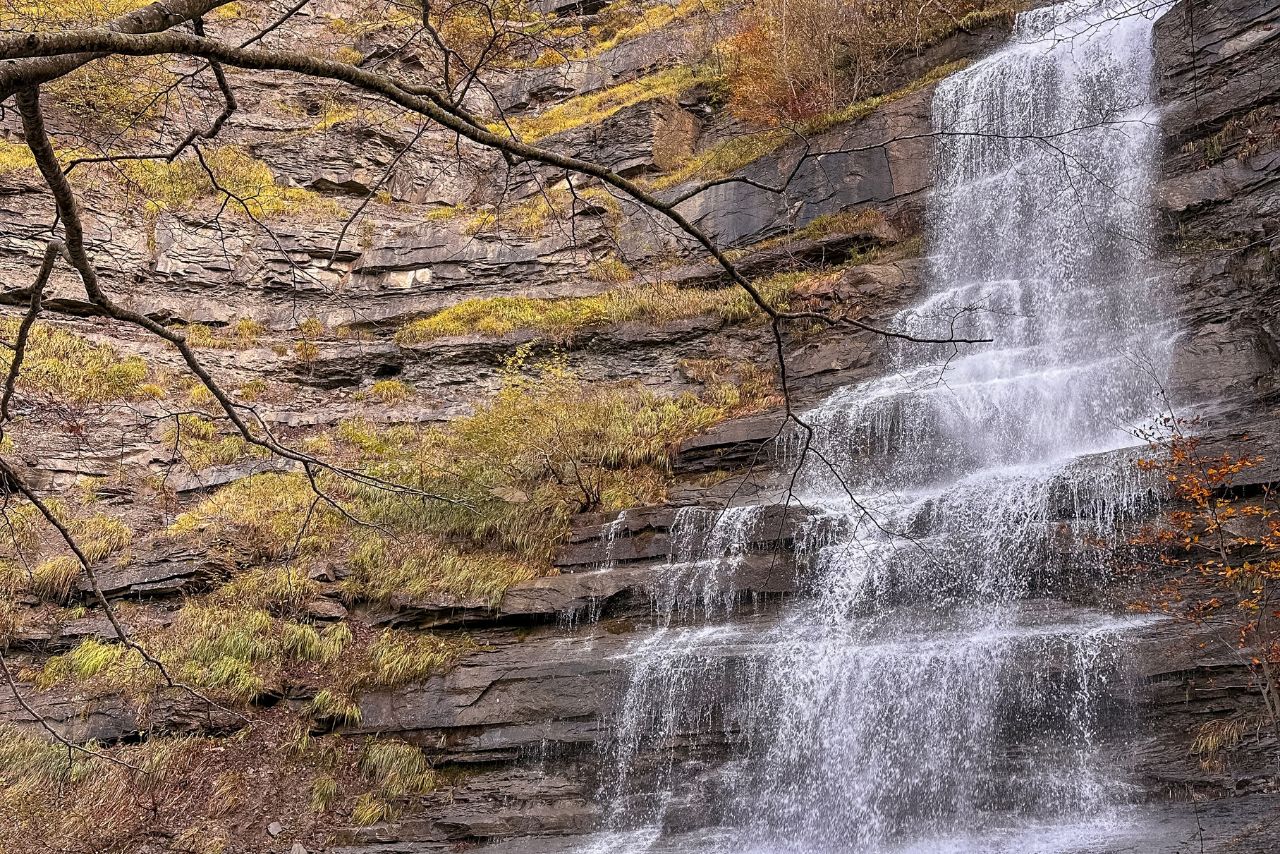
Al confine tra Toscana ed Emilia-Romagna, nel Parco Nazionale delle Foreste Casentinesi, Monte Falterona e Campigna, si trovano le spettacolari Cascate dell’Acquacheta, tra le più celebri e scenografiche dell’Appennino. La loro imponenza è tale da aver ispirato persino Dante Alighieri, che le cita nella Divina Commedia (Inferno, Canto XVI). Il torrente Acquacheta scende tra grandi salti e balze rocciose in un ambiente selvaggio e suggestivo, circondato da faggete e boschi secolari.
Per raggiungerle il percorso più semplice e frequentato parte dal borgo medievale di San Benedetto in Alpe (495 m), raggiungibile in auto da San Godenzo passando dal Passo del Muraglione.
Dal paese si imbocca il sentiero CAI 407, che risale la valle fino alle cascate (circa 720 m di quota). L’escursione richiede circa 2 ore di salita, con un dislivello moderato, ed è consigliata a escursionisti con un minimo di allenamento.
Among the wildest and most secret cascades in Tuscany, the Piscino Waterfall is a powerful and little-visited place, where the force of the water manifests in a spectacular drop of about 230 feet/70 meters, the roar of which can be heard from afar.
Embedded in the valley of the northern slope of Monte Falterona and hidden by the imposing cliffs of the Balze Rondinaie, the waterfall originates from the descent of the Godenzo River. The setting is rugged and evocative, among chestnut groves, streams and beech forests that make the hike an immersive and authentic experience.
Directions: The waterfall can be reached by starting from the cemetery of Castagno d’Andrea, following the dirt road on the right and then CAI Trail 11, crossing first chestnut then beech forests. The last section of the trail requires good orientation and a minimum of training, so is recommended for experienced hikers, especially when the terrain is wet and slippery.
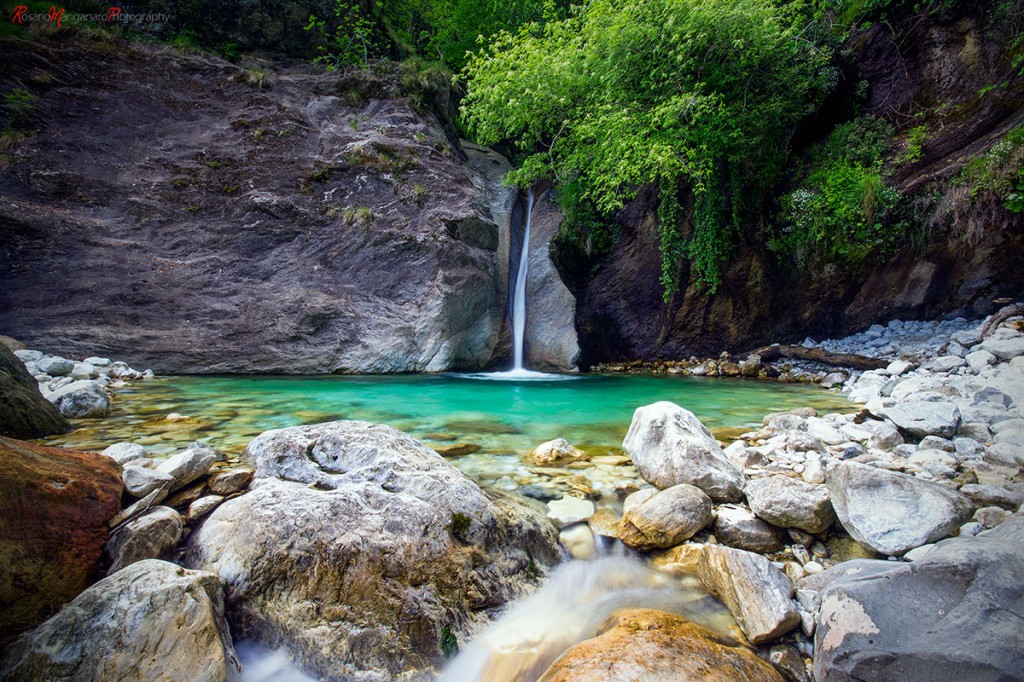
At the foot of the Apuan Alps, just above Seravezza, the Malbacco Waterfalls are considered among the most beautiful natural pools in Tuscany. Emerald pools, small waterfalls and polished limestone rocks create a perfect environment for cooling off on summer days, surrounded by a fascinating natural setting.
The creek flows through a cool, shady valley that is easily accessible, making Malbacco a popular destination and is thus regulated at peak times.
To visit, you have to reach Seravezza (LU), then continue for about 5000 feet or 1.5 kilometers following the signs for Malbacco. Even from the first puddles, you can spot the rest areas.
A ZTL (Limited Traffic Zone) has been established in recent years, so be sure to pay attention to the signage to avoid fines. Past the “Welcome to the Apuan Alps Regional Park” sign are several points for accessing the pools along the stream.
Just above Camaiore, in a quiet and surprisingly wild corner of Versilia, hide the Candalla Waterfalls—a place where crystal-clear water flows past polished rocks, abandoned mills and clear pools in which to stop, breathe and refresh.
The trail follows the Rio Lombricese stream, nestled between the rock walls of Monte Penna. Here, nature intertwines with history. Along the trail, you will encounter the remnants of ancient mills, oil mills and factories that harnessed the motive power of water for centuries. A true open-air museum surrounded by greenery.
Directions: From Camaiore, follow the provincial road SP3 in the direction of Vado/Casoli for about 3.7 miles or 6 kilometers, to the locality of Cascine. Here, take the well-marked CAI Trail 00 to the Vecchio Mulino di Candalla (Old Candalla Mill), the starting point of the nature trail. The trail is easy but has slippery sections close to the water.
In the summer, the area is so popular that the City of Camaiore operates a shuttle service and regulates parking.