The Associazione Nazionale Case della Memoria (National Association of Houses of Memory) curates a collection of dwellings (now house-museums) where distinguished people in every field of knowledge, art, literature, science and history once resided.
The Florentine territory boasts a large number of such places, so we’ll limit ourselves to listing just a few, which can be visited just outside the city of Florence.
These houses are almost always fully safeguarded, mostly managed by Foundations and consequently entrusted to the care of scholars and experts on the personage and art related to the person concerned.
Their charm comes from the atmospheres that are still breathed therein, from the stories that continue to be read, from the very identifiable traces of personal taste.
For us visitors, it is an encounter with the living memory of the places. Today, our emotion is the same as that felt by those who lived, worked, created in that house.
The characters we are going to ‘visit’ in their homes on this short journey are: Enrico Caruso (tenor), Primo Conti (painter), Giovanni Michelucci (architect), Gesualda Malenchini Pozzolini (educator) and Filippo Dobrilla (sculptor).
Before it was chosen by the Neapolitan tenor Enrico Caruso, this place already had great charm, set in the hills above Lastra a Signa.
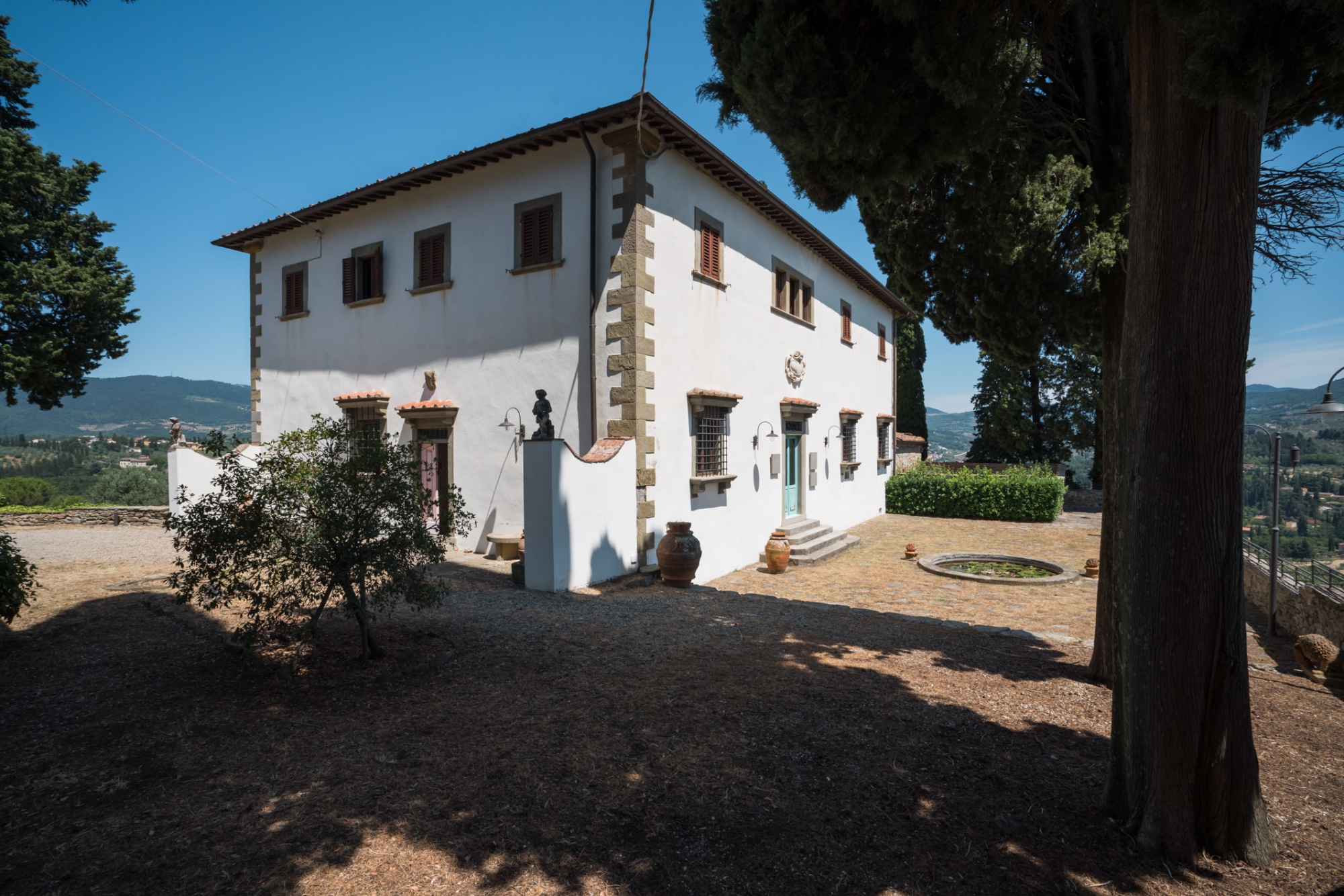
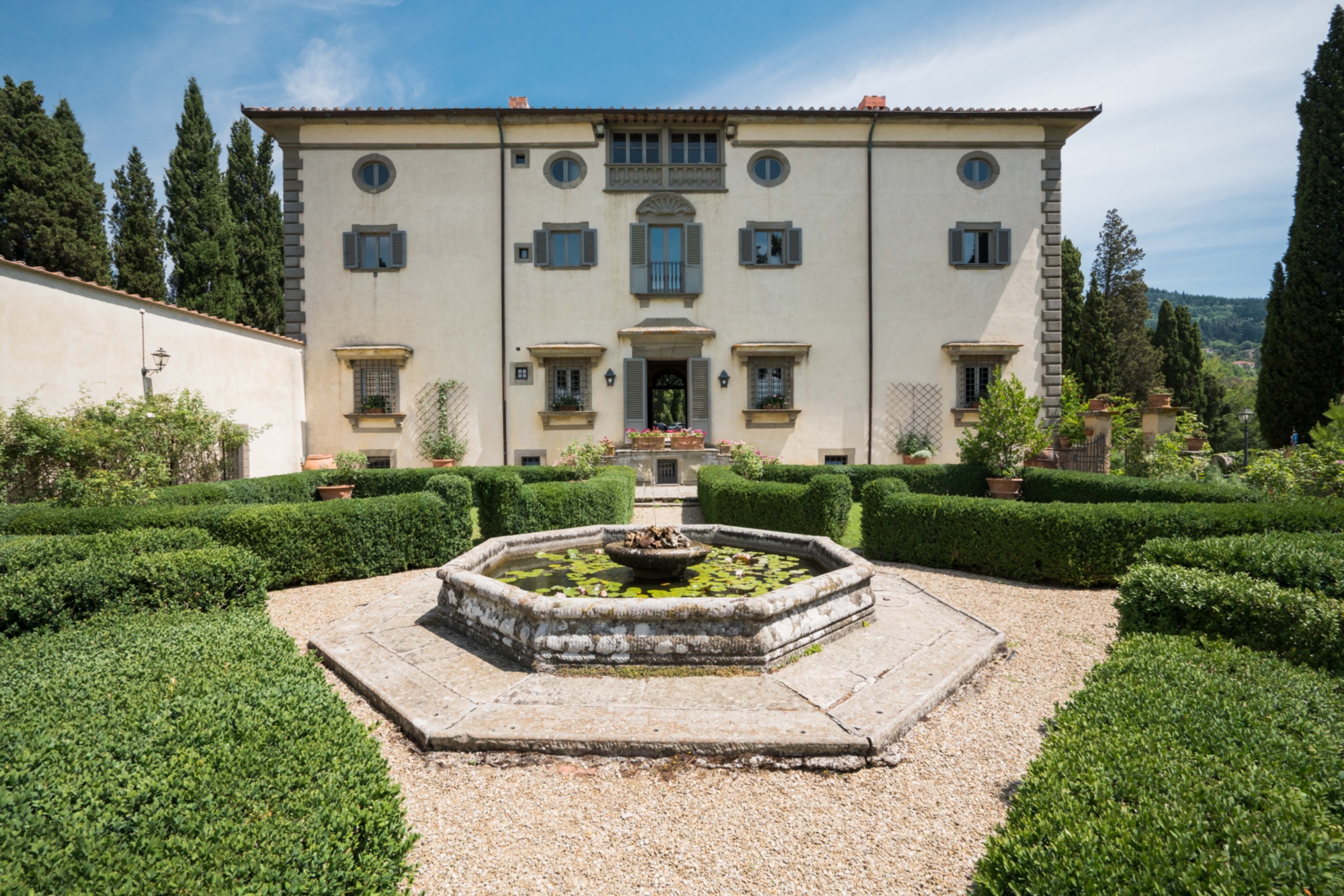
The Villa had once belonged to the Pucci family in the mid-16ᵗʰ century. Traces of that time remain in the Italian garden. It was 1906 when Enrico Caruso, with his beloved Ada Giachetti, arrived here and fell in love with the place.
The current appearance is due to Caruso himself, with the dual buildings joined with an unprecedented symmetry. Of the 2 wings, 1 is now the Caruso Museum, at the behest of the municipality of Lastra a Signa.
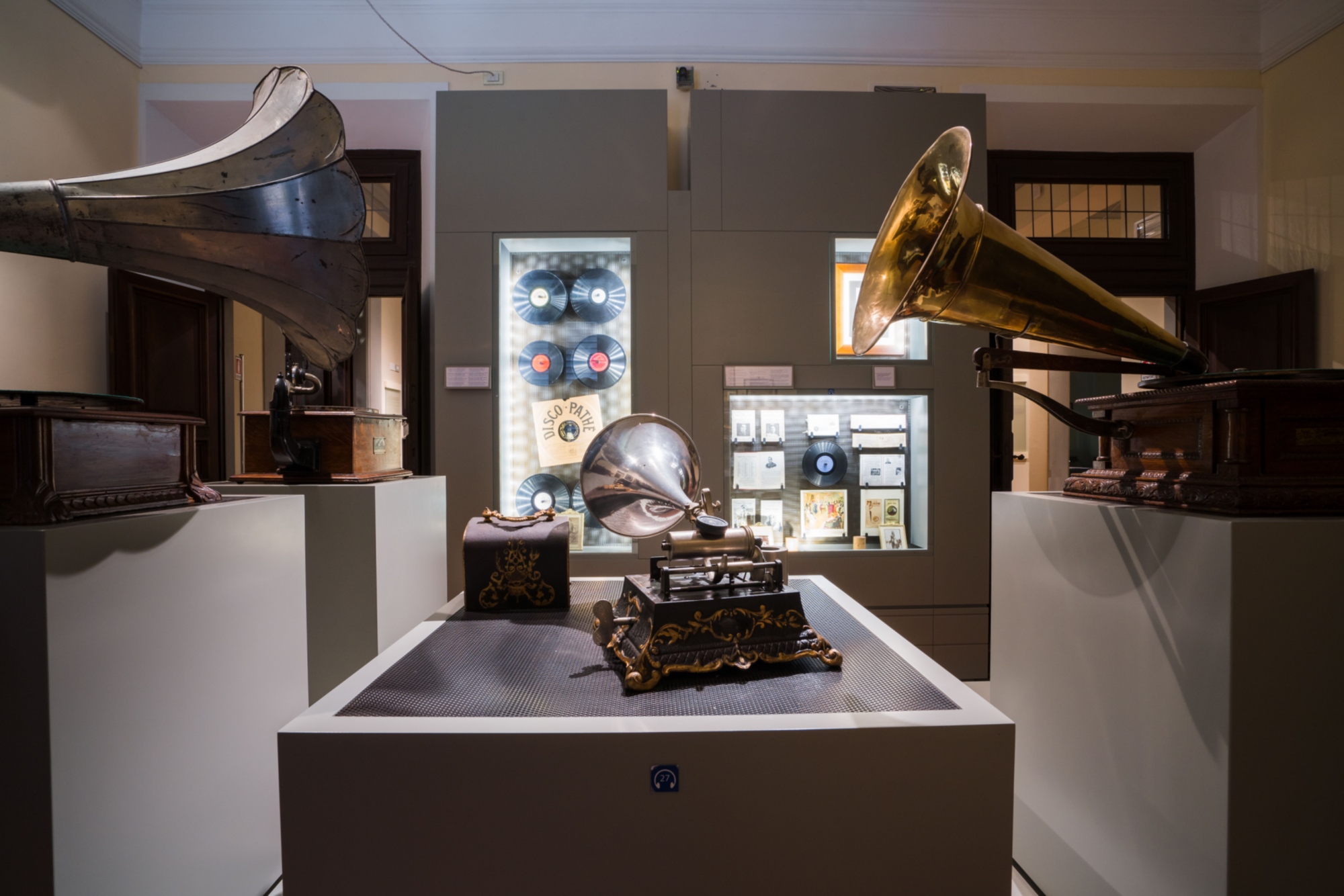
Although the tenor devoted much time and money to furnishing and beautifying the villa, not many traces of his actions remain. However, the Museum still offers a lot in terms of his professional life, private life and the style of an era. The museum setting is also aural, with there being spaces where Caruso’s voice echoes and continues to enchant.
Born in 1900, Florentine painter Primo Conti was a precocious talent.
Sitting somewhere between futurism and the avant-garde, Primo Conti bought the 15ᵗʰ-century Villa le Coste in Fiesole in 1945 and lived there many years with his wife Munda Crips and their 2 daughters.
When he died in 1988, he was buried in the small chapel at the side of the house, which per his will was to be transformed into a center dedicated to preserving “the memory and testimonies of the most important Novationist movements of the 20ᵗʰ century.”
Villa Le Coste thus serves a dual function. On the one hand, there is the Primo Conti Musuem, which houses 66 paintings and 163 drawings by the Florentine artist, a friend of Rosai, Lega, De Chirico and the entire Florentine Futurist group, of which he was a founder. On the other hand, and equally important is the Fondazione with its Archives and Library, a vast collection of documents including letters, journals and volumes.
Flooded with light—this is the most striking element when visiting Villa Il Roseto in Fiesole, the house where Giovanni Michelucci spent so many years of his very long life.
The location of this building is extraordinary. Like a terrace jutting out over Florence, it is surrounded by a garden that the architect’s wife, Eloisa, lovingly tended. The garden offered a full view of Florence, the city where Giovanni Michelucci carried out so many significant works.
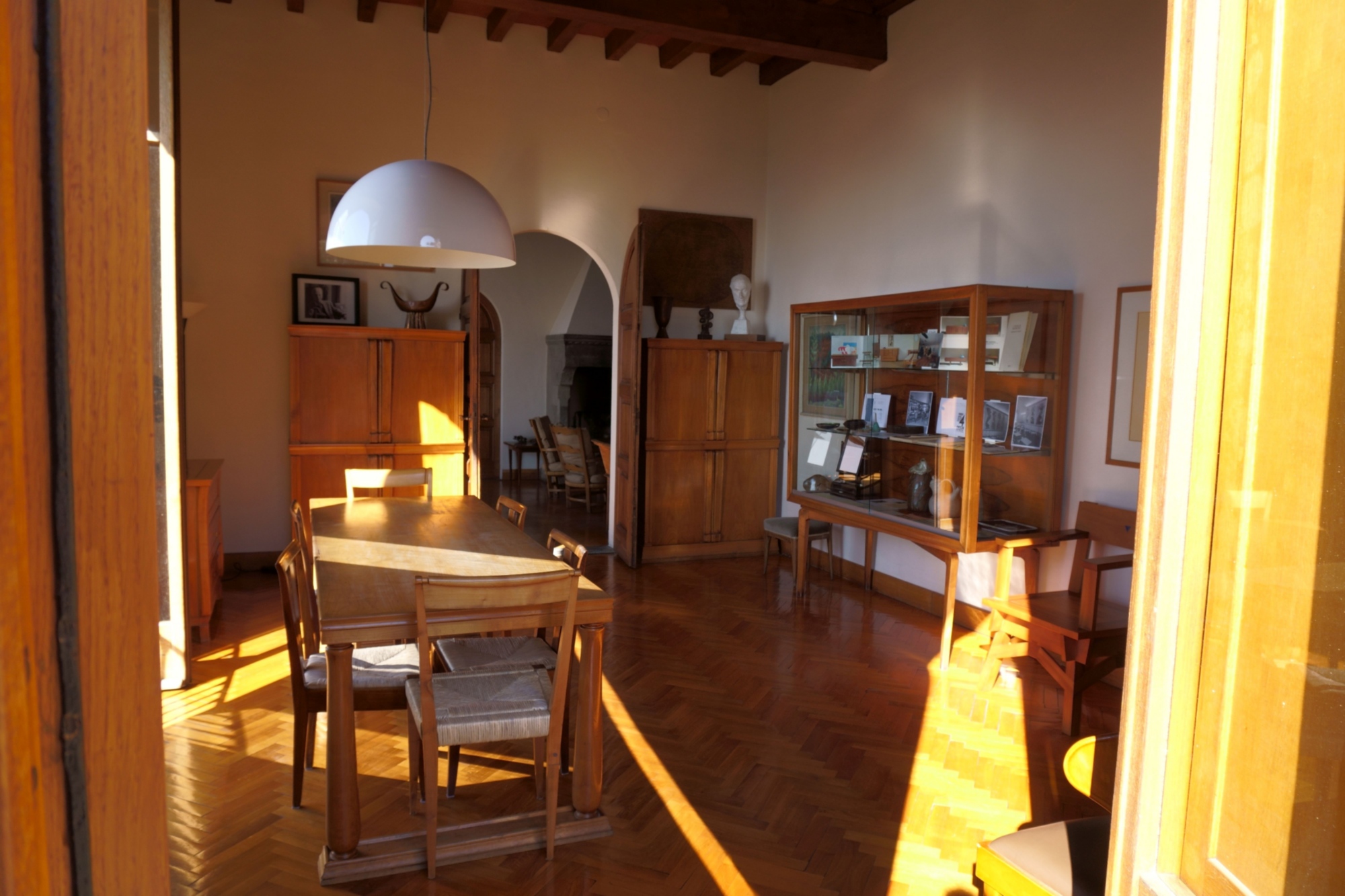
The understated interiors of the villa are then adorned with works straight from the architect’s ingenuity: furniture, bookcases and lofts created for the villa and in the villa, which remained as a testament to a daily life steeped in beauty.
Today, the Fondazione in the spaces of Villa Il Roseto preserve Michelucci’s intellectual legacy: the drawings, models and photos of his architecture; the library; the furniture designed from the early postwar period to the 1970s; and the works and objects of art made by his friends and his wife.
In the town of Vaglia, within the locality of Bivigliano, a villa fits perfectly into the surrounding landscape. The building is named after its previous owner, Luigi Pozzolini, who bought the property in 1859 at an auction of assets then owned by Ginori. The building dates back to the 16ᵗʰ century, perhaps designed by Bernardo Buontalenti, who was working on the nearby villa at Pratolino.
After World War II, as a result of damage, the property was reduced to its current 86.5 acres or 35 hectares. The formal garden is elegant and features a viewpoint over the valley below.
A rural school was even established in these spaces by the women of the family, as an extra element to this story. Around 1868, Gesualda Malenchini Pozzolini, Luigi’s wife, with Cesira and Antonietta (their daughters) created the first form of free public education open to children and adults, regardless of gender, in the Vagliese area.
In Bivigliano, in the building that was once a schoolhouse and is currently used as a clubhouse, you find a plaque commemorating the great benefits Gesualda brought to the community.
The Villa is currently used as a location for events and weddings.
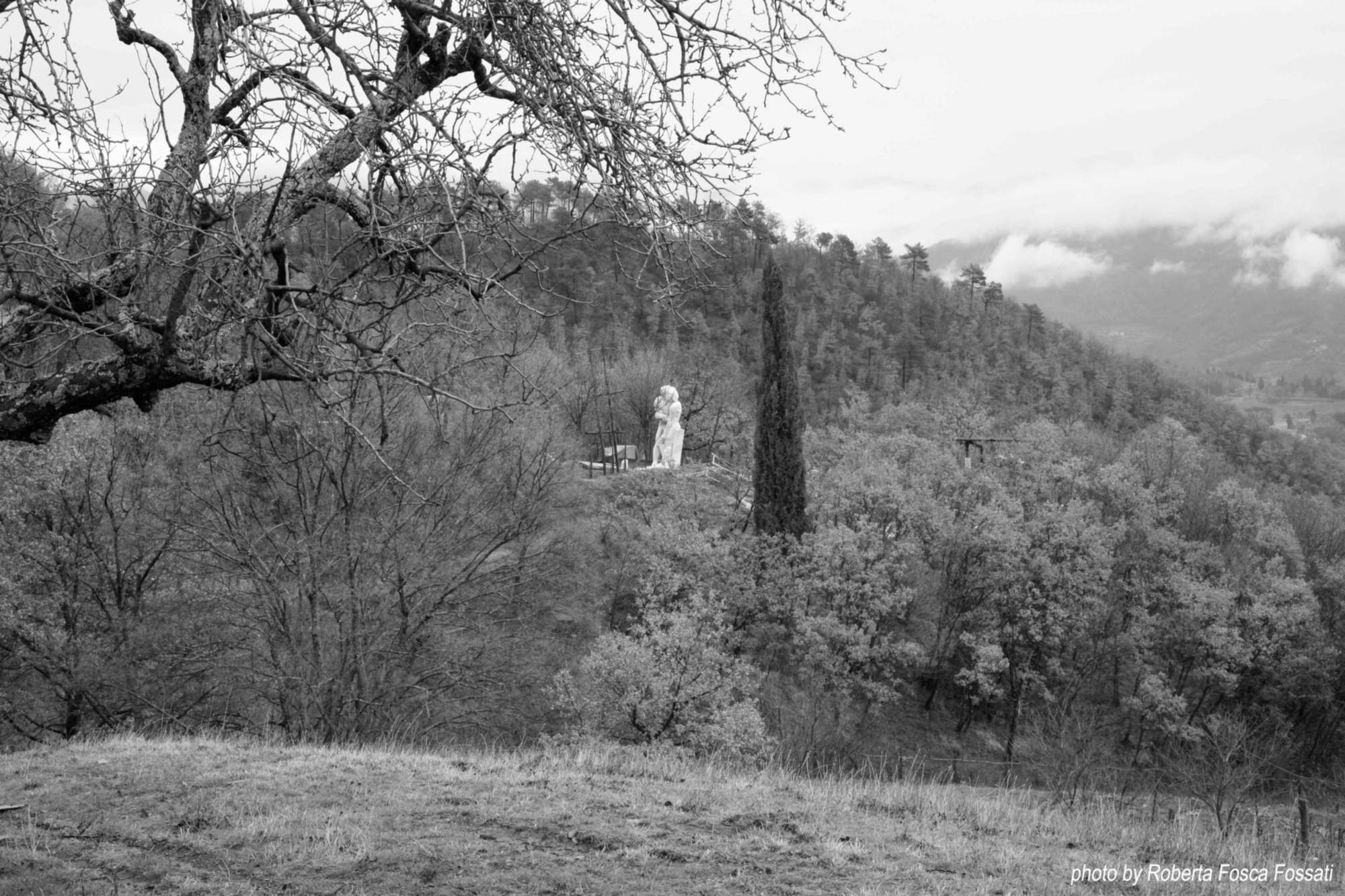
The Filippo Dobrilla House-Museum and Arts Center is a place where art and everyday life are deeply intertwined.
Nestled in the countryside above Pontassieve, Podere Brucoli is where sculptor Filippo Dobrilla (1968–20219) lived and worked, letting time, action and matter naturally dialog. The rooms still retain the authentic atmosphere of an inhabited dwelling, capable of transmitting the living presence of the artist through the spaces, tools and works to have passed through.
Filippo Dobrilla carved marble with respect and dedication, following the voice of the stone and accepting its resistance as part of the creative process. His work was born out of a direct and physical relationship with the material, comprised of slowness, listening and deep knowledge. Each sculpture carries the mark of a long, common period in which form emerged little by little. In addition, Filippo Dobrilla cultivated the fields and took care of plants, which he considered complementary to his work as a sculptor.
Visiting the house-museum, still inhabited by his family members, means entering a place of memory and presence, where the strong connection between man, matter and nature is still felt, and where each visitor is invited to take it slow, observe and listen.