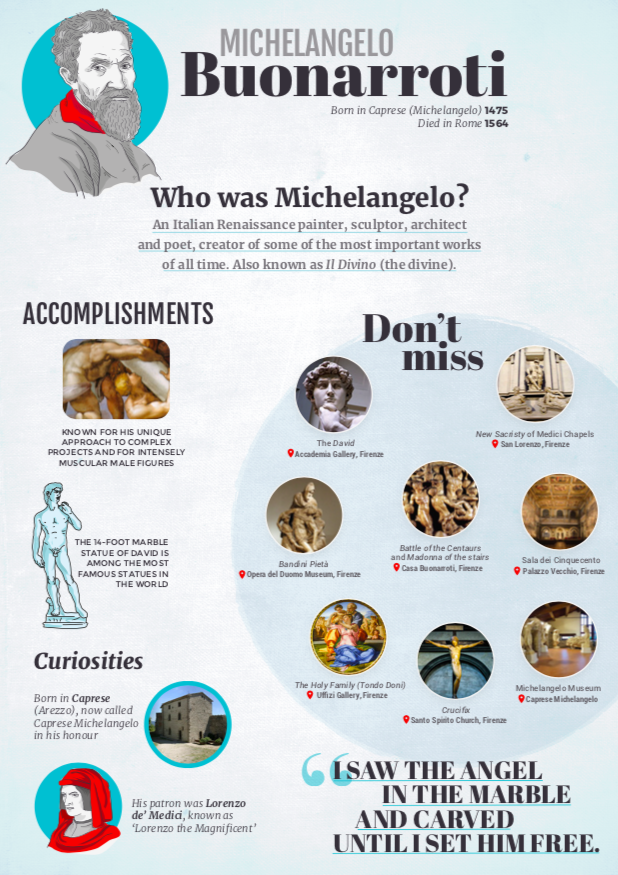
Michelangelo Buonarroti is one of the world's most famous artists, renowned for the superhuman beauty of his sculptures and paintings. The High Renaissance artist was born in Caprese, a small town near Arezzo, in Tuscany, on March 6, 1475. He trained in Florence and worked for the Medici Family, under multiple popes and rulers, in Florence and Rome, dying at the advanced age of 88 years, in February 1564. Most famous for his youthful sculpture of the David and for his paintings in the Sistine Chapel in the Vatican, he is one of the most important artists in history.
The artist showed promise at a young age. Michelangelo showed great talent from a young age. His genius earned him the nickname "divine" during his lifetime: as Giorgio Vasari wrote, "More a heavenly than earthly thing”, as the perfection of Michelangelo’s works seemed to transcend human limits. When he was just fourteen, Michelangelo entered the court of Lorenzo de’ Medici, aka the Magnificent, where he lived for a few years sculpting in the garden surrounded by scholars, artists, poets until Lorenzo’s untimely death (April 8, 1492) put an end to this florid moment in Florentine cultural production. From this period, there are youthful sculptures at the Casa Buonarroti.
In the years that followed, Michelangelo was forced to leave Florence and return several times due to political events in the city, as well as to artistic commissions; being favoured by the Medici meant that his fortune was tied to theirs, and when they were in power in Rome, his presence was essentially obligatory. In Rome, he struggled with a commission from Pope Julius II for his tomb, which was to be truly spectacular, but the project was destined for failure – he complains that this is due to being pulled away to work on the Sistine Chapel, and then, by that pope’s successor Leo X, to create the Medici Chapels in Florence. He left Florence permanently in 1534 after a falling out with the Medici ruler at that time, Alessandro de’ Medici, and lived to old age in Rome. The Pope would have had him buried in St. Peter’s but Michelangelo’s nephew and heir, Leonardo, secretly removed the body, which is buried in Florence in the Church of Santa Croce.
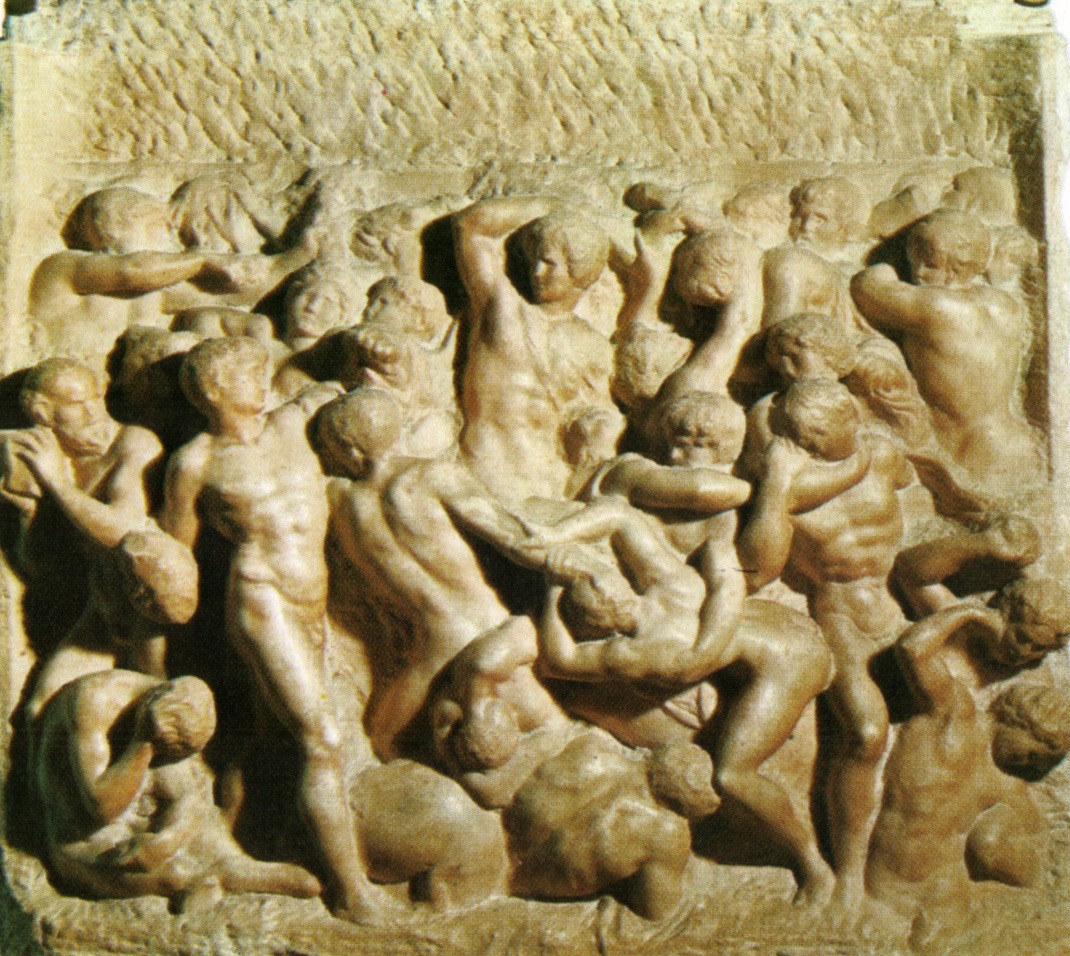
The house-museum of Casa Buonaroti displays two of the earliest known works by Michelangelo: the high relief panel showing the Battle of the Centaurs and a low-relief called the Madonna of the Stairs.
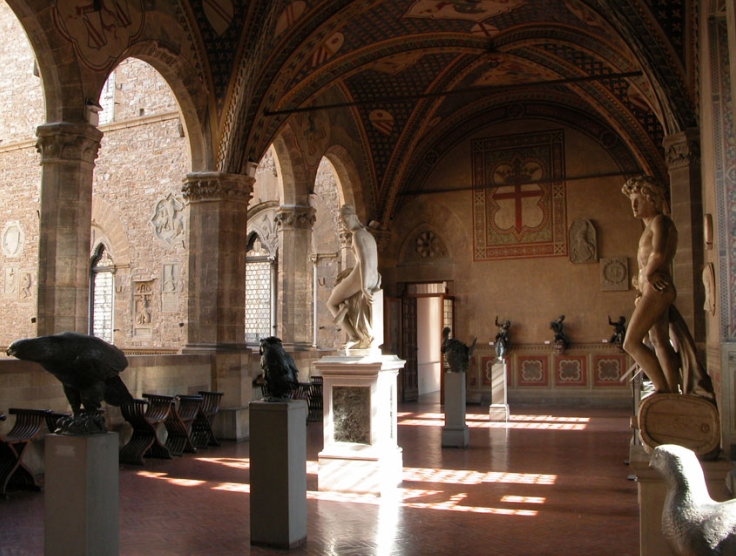
The Bargello Museum contains a number of Michelangelo's fundamental works, from the youthful Bacchus, inspired by classical sculpture and the Pitti Tondo with the Madonna and Child, which shows early experimentation of the unfinished, to his Brutus and the incomplete David-Apollo.
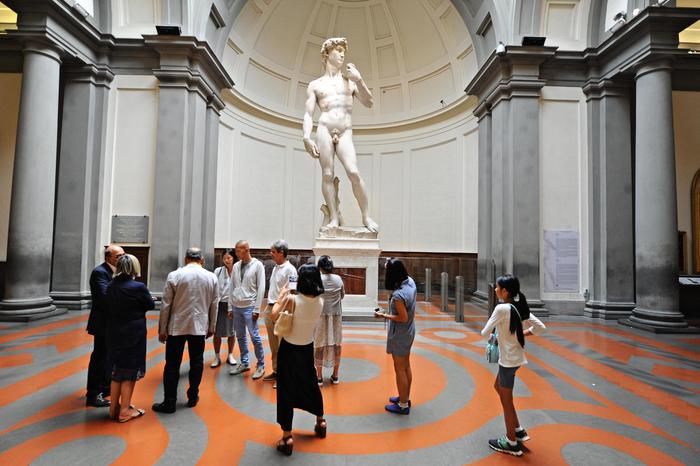
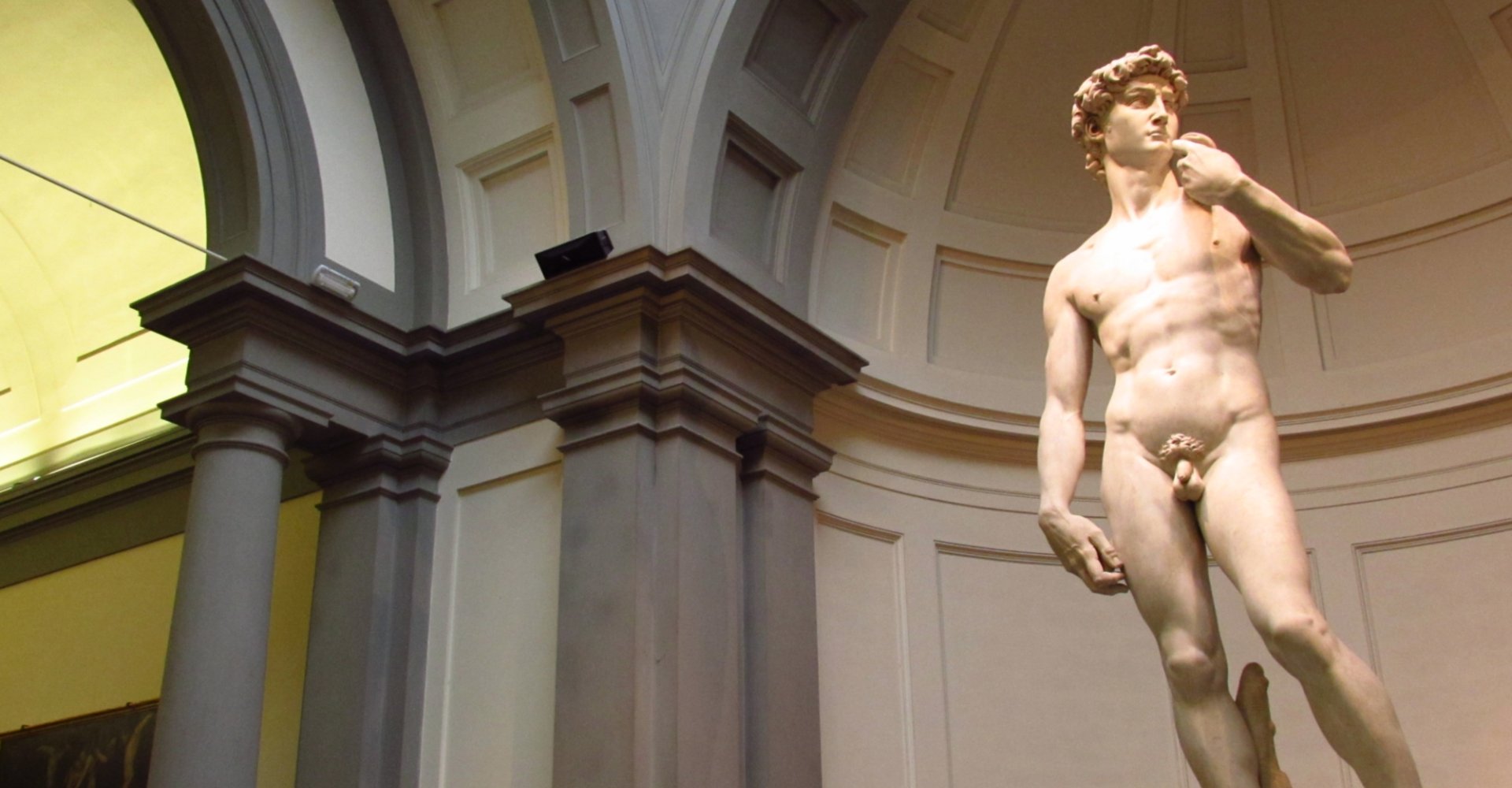
The Gallery of the Academy contains the famous original David, a symbol of republican Florence and the struggle for freedom against the ruling powers. Portrayed before the clash, the young hero embodies courage, intelligence and civic virtue, becoming a universal icon of self-determination. Next to the masterpiece, the Prisoners, unfinished statues for the tomb of Pope Julius II, show figures that seem to emerge from the marble, revealing the creative process and the tension between matter and spirit typical of Michelangelo.
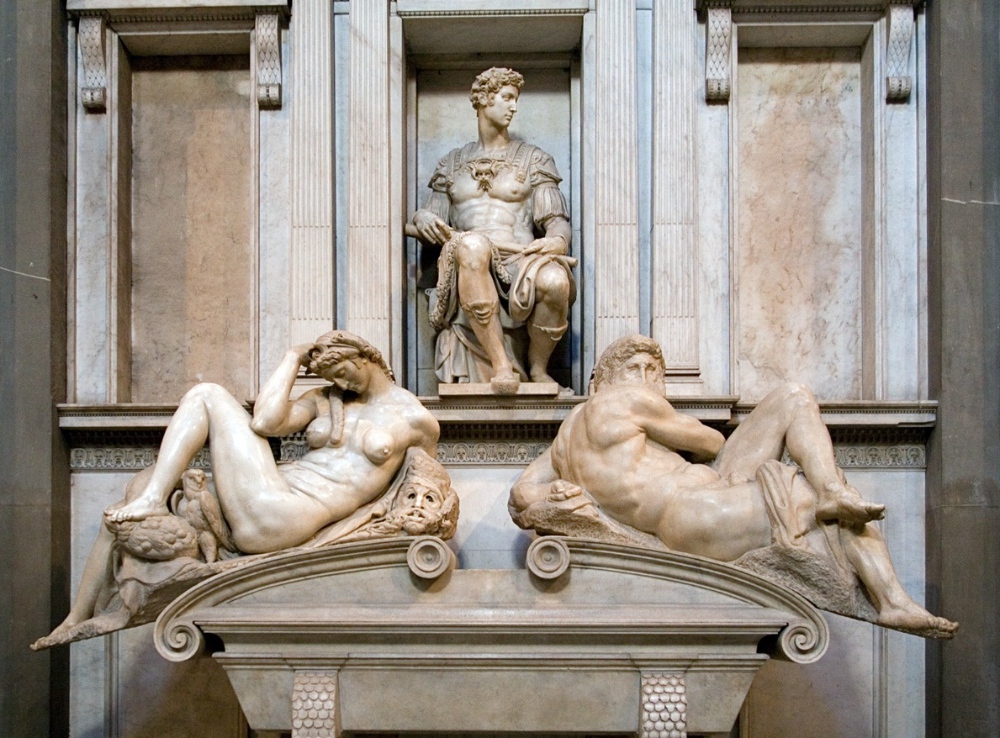
At the church of San Lorenzo, originally constructed by Brunelleschi, Michelangelo intervened almost a century later with two additional Medici commissions – the Laurentian Library and the New Sacristy. The latter is a funeral chapel that mirrors the Old Sacristy by Brunelleschi at the other side of the church (but is accessed externally). It houses the large tombs of two of the younger members of the Medici family, Giuliano, Duke of Nemours, and Lorenzo, his nephew: the tombs feature their seated portraits, mourned by the figures of Night and Day, Dusk and Dawn. The New Sacristy is part of the Medici Chapels museum complex. In the same context, Michelangelo's Secret Room is an evocative, hidden space where the artist took refuge in 1530, to escape the vengeance of Pope Clement VII, leaving sketches and charcoal drawings on the walls, intimate and extraordinary evidence of his creative process.
Michelangelo's only finished painting in Florence, the Tondo Doni, created for the wedding of Angelo Doni and Maddalena Strozzi, is kept here . The work anticipates the style of the Sistine Chapel, with well-modeled figures, sculptural anatomies and bright colors, and it sets the stage for Mannerism through dynamic twists and a powerful rendering of the human body.
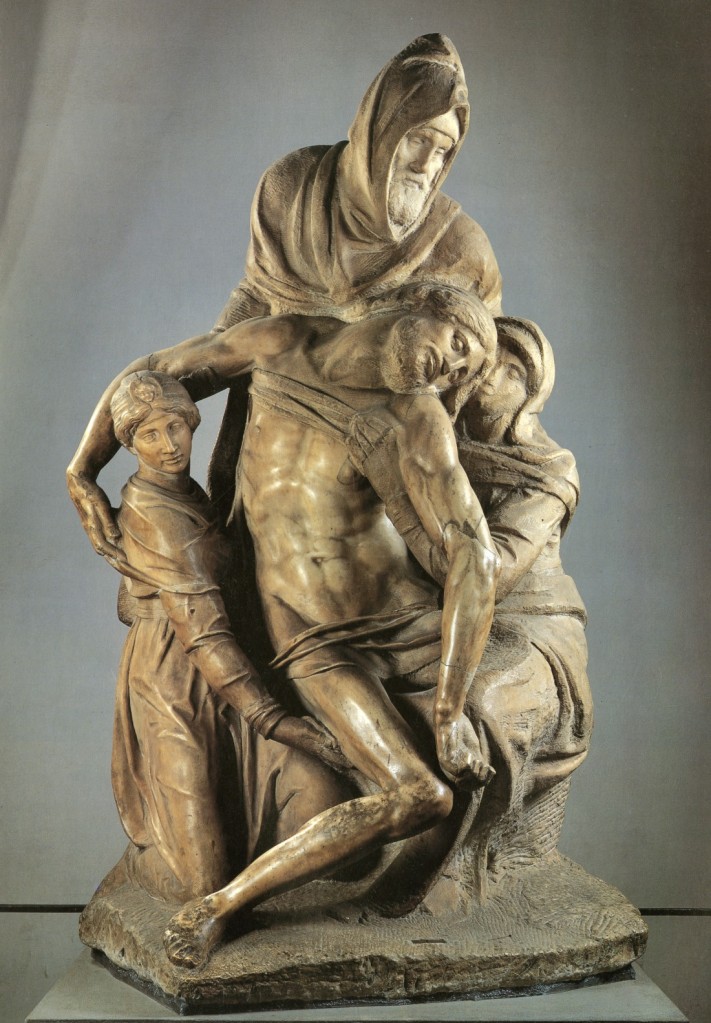
In the museum of works made for the Cathedral, visit Michelangelo’s unfinished sculpture known as the Florentine Pietà. Set in a dedicated room, this emotional work that the artist worked on in old age has a strong triangular composition, with the dead Christ being “deposed” (for this work is more a Deposition than a Pietà) on to the lap of the Virgin Mary, with the help of Mary Magdalene and Nicodemus. Legend says that he tried to destroy the statue with the help of a hammer.
Although the great artist’s major works are found in Florence, die-hard fans could go on an artistic pilgrimage to follow in Michelangelo’s footsteps. We might start with his birthplace, Caprese Michelangelo (the town added the artist’s name in his honour in 1913). His birth home is now the Michelangelo Museum.
One could go for a hike around Settignano, the Florentine hills between the city and that of Fiesole, where Michelangelo lived during the illness of his mother and after her death (1481) in the house of a stonecutter and his family – the farmhouse is now named "Villa Michelangelo". The most important stop on this tour, though, would be Carrara, ideally to visit the Fantiscritti marble quarries, where the great artist personally selected marbles for his important sculptures. There is also a Civic Marble Museum in town where you can learn about the history and culture of marble in the area.