Built by the best architects of the time at the behest of the Medici family, the lords of Florence, the 12 Medici Villas and 2 Gardens in Tuscany, declared a UNESCO World Heritage Site, are true jewels of Renaissance architecture just waiting to be explored.
Created between the 15ᵗʰ and the 1ˢᵗ half of the 18ᵗʰ centuries, these residences tell of the relationship of the Medici with the land—places of government, representation, recreation and experimentation, often surrounded by parks and gardens designed as an integral part of the project.
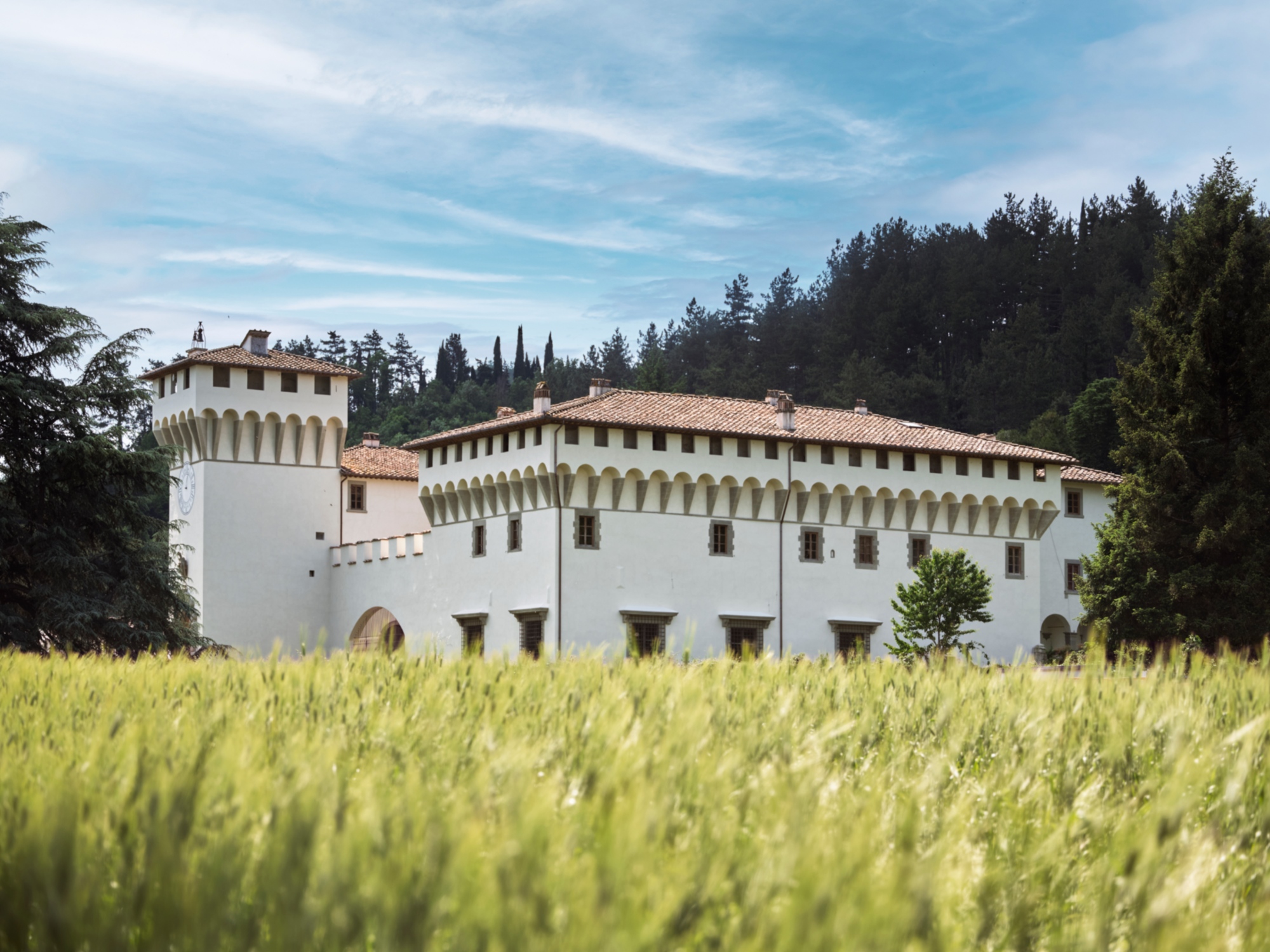
The Medici Villa of Cafaggiolo is one of the oldest Medici residences.
Also known as the Castle of Cafaggiolo, it was transformed by Michelozzo beginning in 1443 at the behest of Cosimo the Elder, who wanted to convert the ancient 14ᵗʰ-century castle into a country residence.
The Villa long retained its connection with monitoring the territory but also became a place for holidaying, rest, agricultural activities and hunting, at the center of a vast estate.
Lorenzo the Magnificent stayed here for some time during his childhood and, as an adult, welcomed men of culture such as Pico della Mirandola, Marsilio Ficino and Agnolo Poliziano.
Throughout the centuries, Cafaggiolo even hosted popes, princes and members of European courts. In 1515, Pope Leo X spent time here while in the 16ᵗʰ century, a number of future brides of the Medici family, including Margaret of Austria and Joanna of Austria, were welcomed.
After passing to the Habsburg Lorraine, the villa was sold in 1864 to the Borghese prince, who introduced major changes. It is currently closed to the public for renovations.
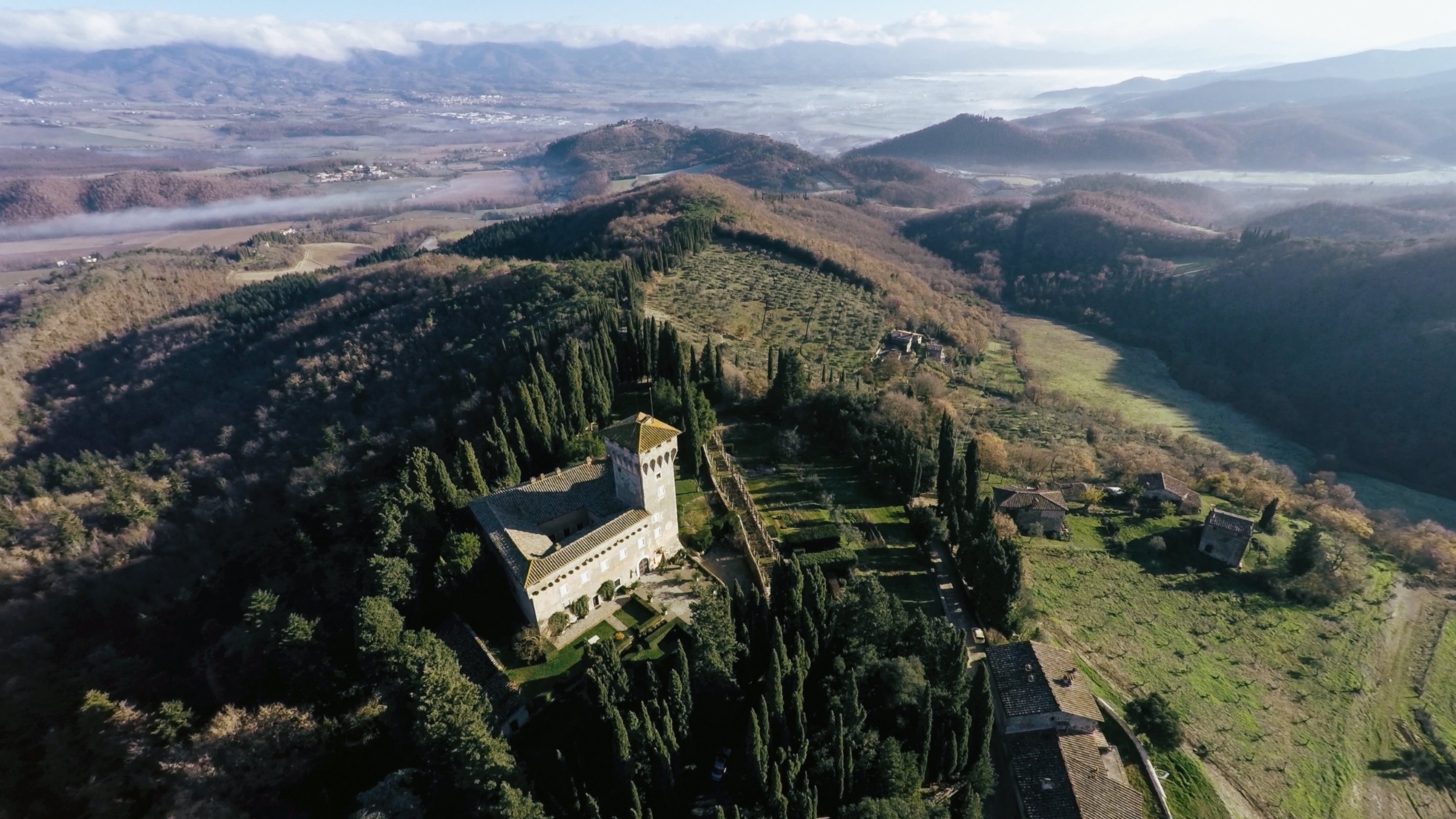
On the hillock of Trebbio, in the heart of Mugello, the Villa del Trebbio stands on a hill and dominates the valley, at a point where important roads crossed in the past. Owned by the Medici since 1309, it was transformed in the early 15ᵗʰ century by Michelozzo, commissioned by Giovanni di Bicci de’ Medici and his son Cosimo, into a villa-castle with crenellated tower, loggia and garden with pergola.
Beloved by Lorenzo the Magnificent especially for hunting parties, in 1476 a very young Amerigo Vespucci stayed here when fleeing the plague in Florence.
It was later linked to Giovanni dalle Bande Nere, his wife Maria Salviati and their son Cosimo I, the future Grand Duke of Tuscany.
Surrounding the Villa are the Italian garden on the west side, vegetable garden terraces to the south and a 17ᵗʰ-century brick pergola. Today, it is private property that can be visited by appointment.
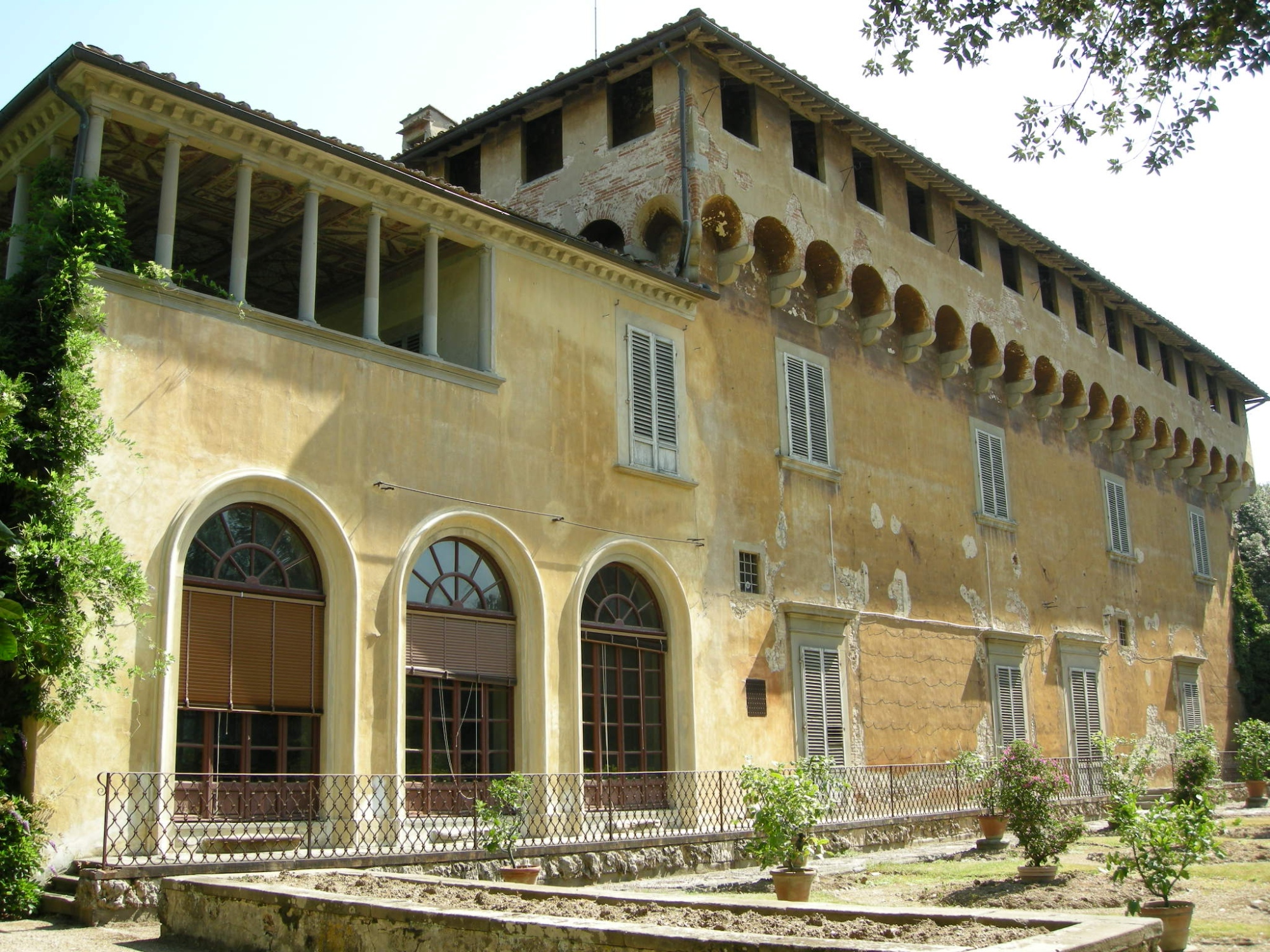
After Villa Cafaggiolo and Villa del Trebbio, the Medici Villa di Careggi was the 3ʳᵈ Medici country residence restored by Michelozzo.
Located on the hill of the same name near Florence, it retains the character of a villa-farm, as a residence linked to the countryside but close enough to the city to allow the family to keep up with public and private affairs.
The building is reminiscent in appearance of a fortress, with the crenellated crowning, although it serves no defensive function.
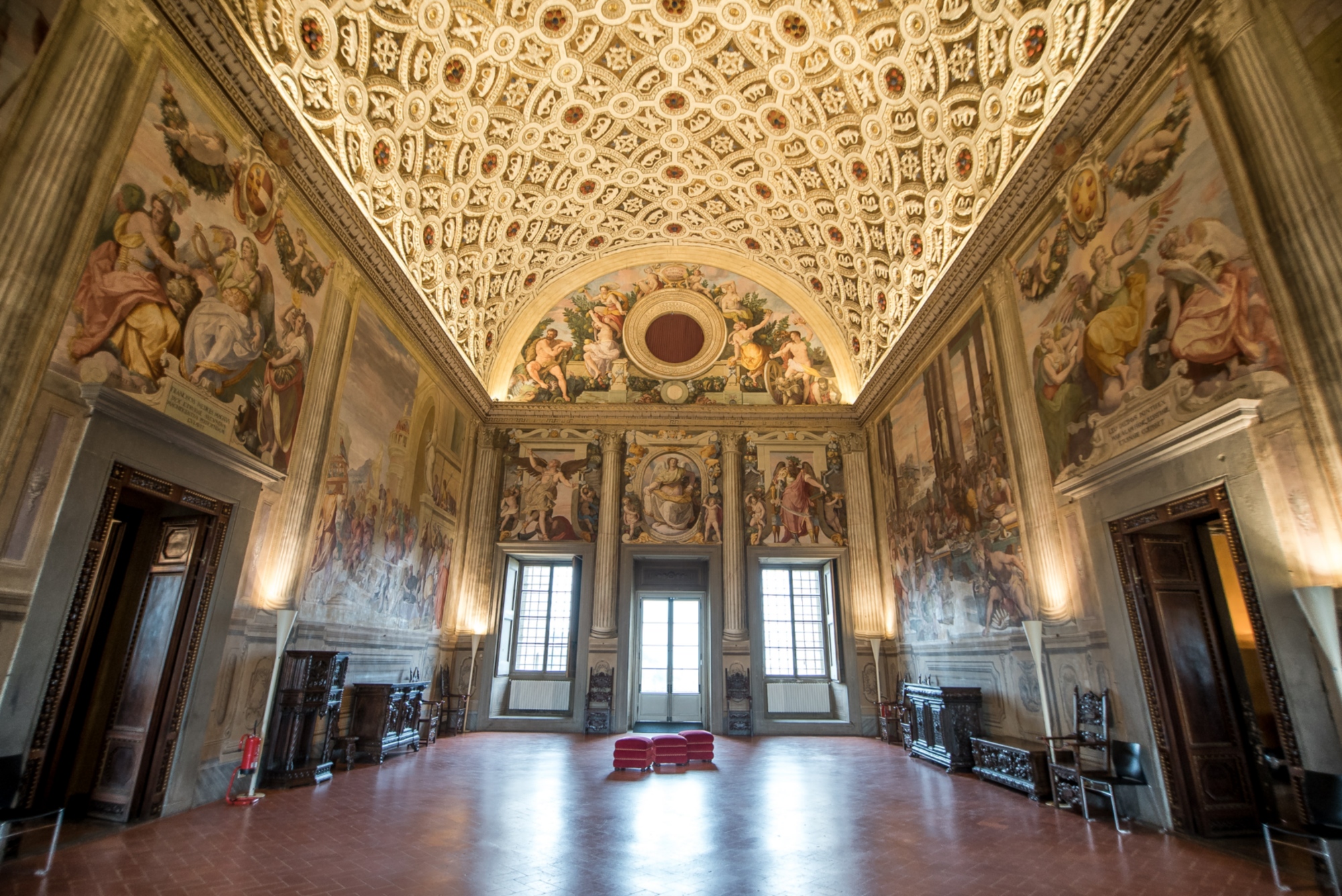
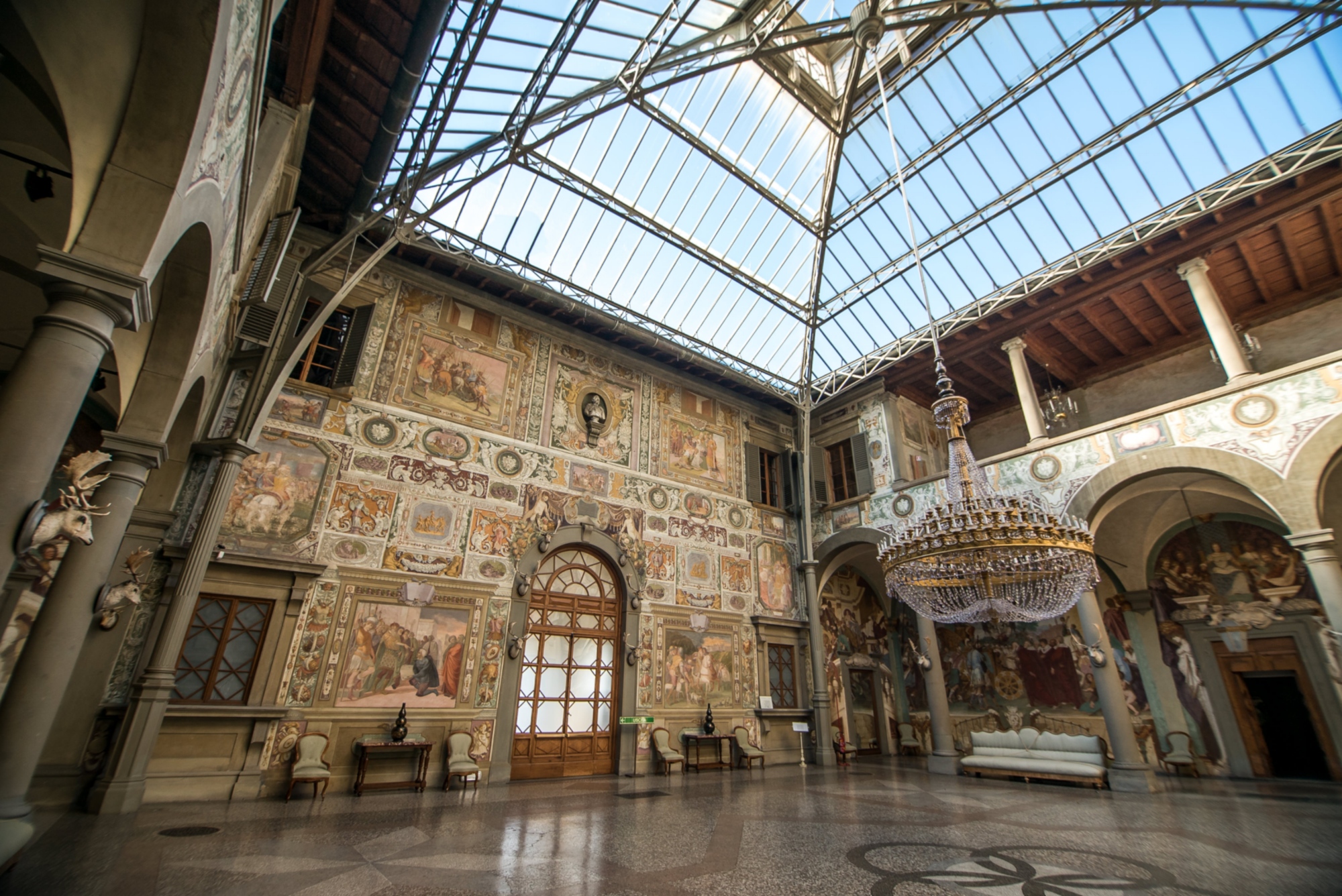
Its interior contains rooms of great interest, such as the courtyard with loggia, the frescoed hall on the ground floor, the 17ᵗʰ-century nymphaeum ordered by Cardinal Carlo de’ Medici, the Salone del Camino (Fireplace Hall) and the Lorenzo the Magnificent’s Study.
The Villa even housed the Neoplatonic Academy, linked to Cosimo the Elder and Lorenzo the Magnificent.
Outside, extend a formal garden and large landscaped park, the 19ᵗʰ-century layout of which was called for by Francis Joseph Sloane.
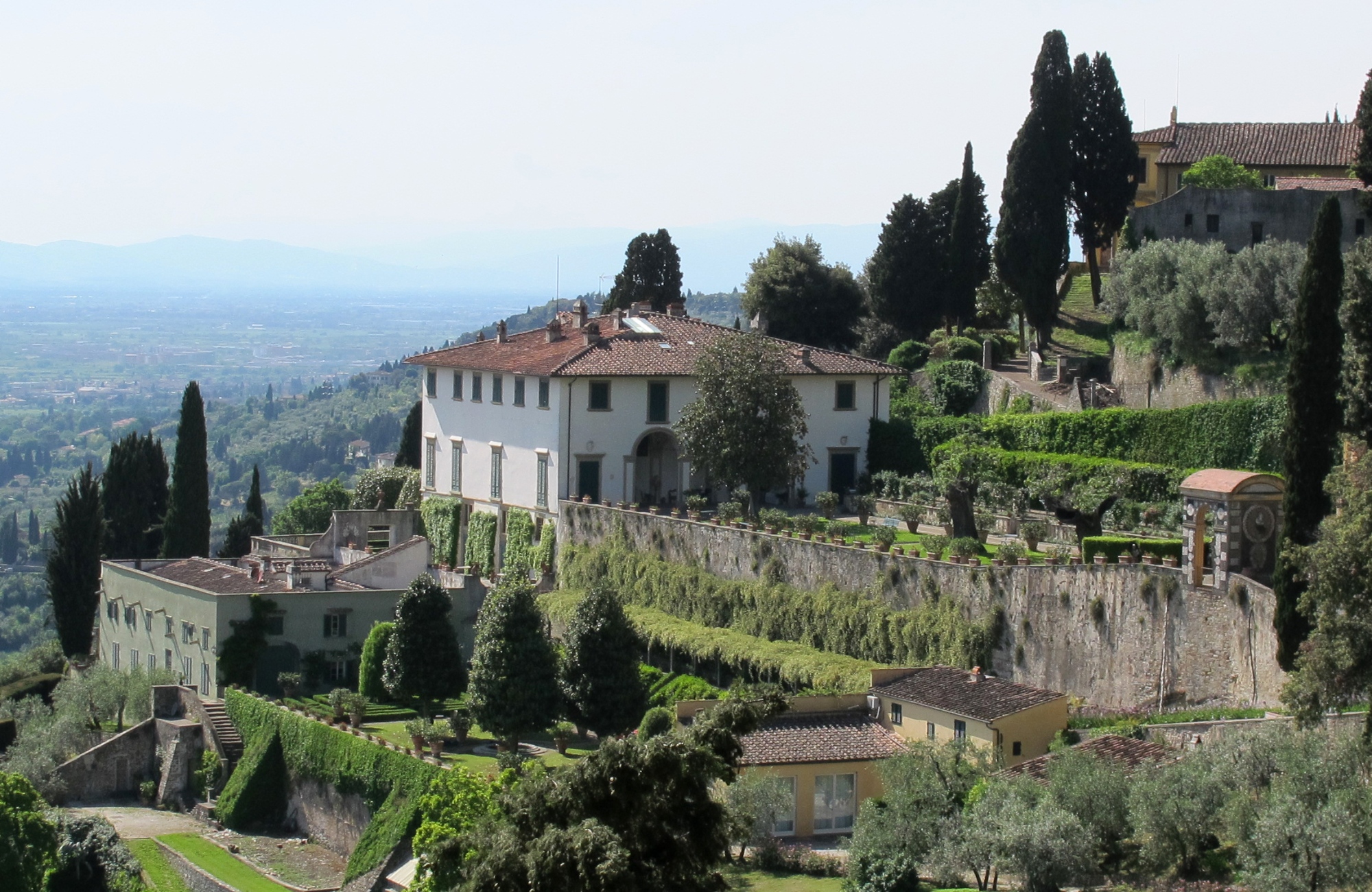
Built between 1451 and 1457 for Giovanni, son of Cosimo the Elder, the Villa Medici in Fiesole is considered one of the earliest examples of a Renaissance villa.
More recent studies go beyond the attribution to Michelozzo and link the project to Leon Battista Alberti, along with Bernardo Rossellino and Antonio Manetti, with Giovanni de’ Medici himself having an active role.
The Villa marks an important transition: the country residence no longer recalls a fortress or castle but opens to the landscape through loggias, terraces and harmonious proportions.
The garden also dialogs with the architecture, following a geometric order.
In 1469, the Villa passed to Lorenzo the Magnificent, who used it as a summer residence, inviting humanists such as Pico della Mirandola, Marsilio Ficino and Agnolo Poliziano there.
The Villa, precisely during one of the gatherings of the Accademia Platonica, was the scene of the famous Congiura Dei Pazzi (Pazzi Conspiracy), a failed plot against Lorenzo the Magnificent.
In the gardens, split across several levels, fruits from southern Italy were introduced for the first time, destined to become a distinctive feature of the Medici gardens.
Over the following centuries, the complex was transformed several times, with works on the terraces, entrances and gardens, through to the 20ᵗʰ-century arrangements in neo-Renaissance taste.
The Medici Villa of Castello is one of the oldest country residences of the Medici family, as owners of the property since 1477.
The name comes from the castellum, the cistern of the ancient Roman aqueduct that passed through this area.
Beloved by Cosimo I, the Villa was renovated starting in 1537 and is today home to the Accademia della Crusca. For this reason, the interiors are not usually open for visits except during special openings.
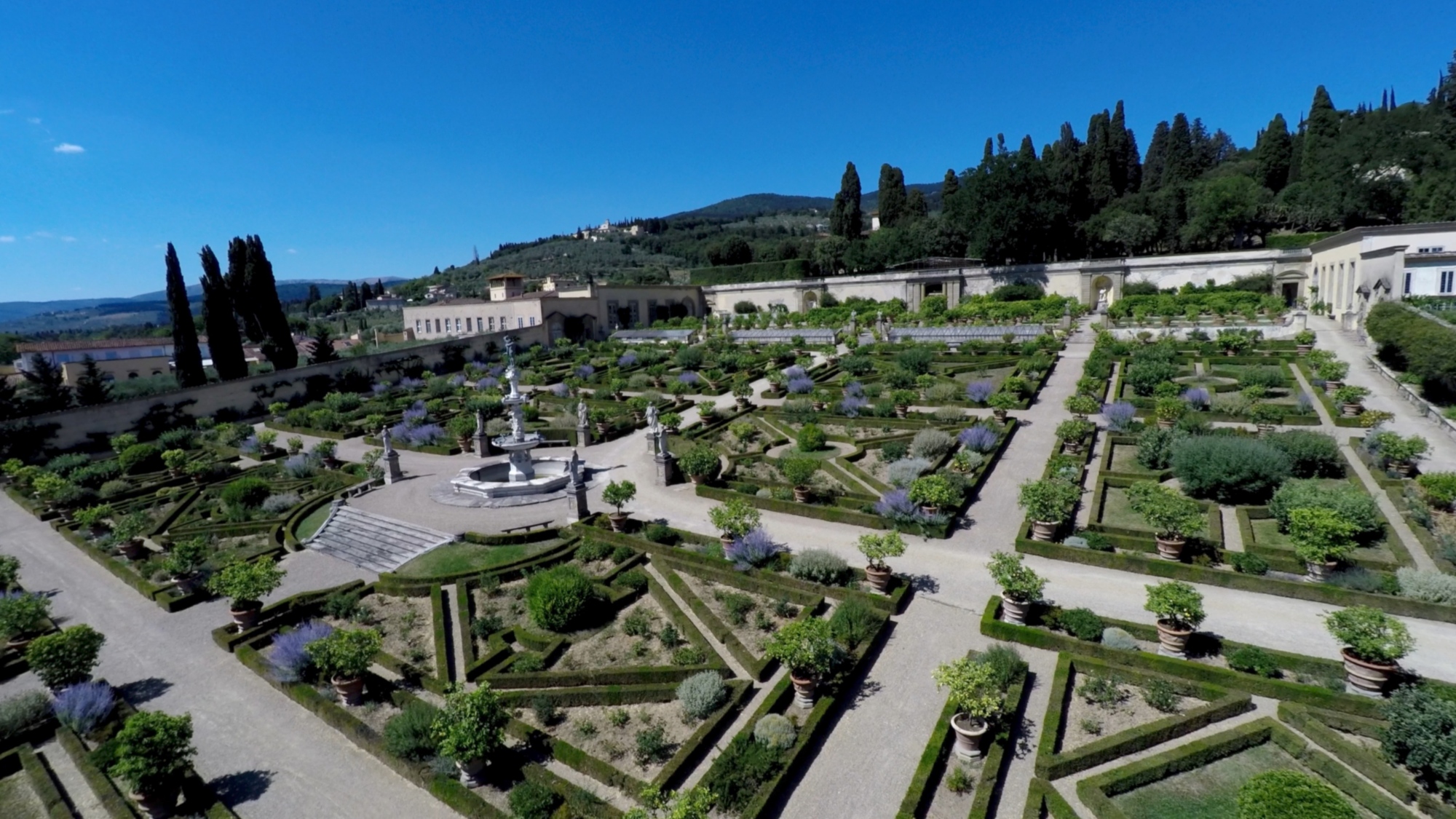
Instead, the garden is open to the public, considered a prototype of the 16ᵗʰ-century Italian garden, designed at the behest of Cosimo I.
Among its most famous features are the Fountain of Hercules and Antaeus, the Grotto of the Animals (also known as the Grotto of the Flood), the Selvatico with holm oaks, oaks and cypresses, as well as the large cistern-pond with the sculpture of the Apennine (also known as the Fountain of January).
The garden even holds an extraordinary collection of some 500 potted citrus trees, harking back to the Medici family’s penchant for botanical experiments.
According to scholars, this very place may have inspired some of the species depicted in Botticelli’s Primavera, painted for the Villa and now preserved in the Uffizi.
Designed by Giuliano da Sangallo for Lorenzo the Magnificent, the Medici Villa of Poggio a Caiano is also known as Ambra.
Built atop a knoll and opening up to the landscape, it is considered one of the 1ˢᵗ great examples of Renaissance architecture, capable of combining the lessons of the classics with the elements of a rural Tuscan villa.
Works began in the second half of the 15ᵗʰ century and continued after Lorenzo’s death under his son Giovanni, who became Pope Leo X.
In time, it also became the country residence of the Lorraine and Savoy families, before passing to the State in 1914.
Inside, it preserves remarkable rooms, including the Leo X Room, with frescoes by Pontormo, Andrea del Sarto, Franciabigio and Alessandro Allori, along with the celebrated lunette of Vertumno and Pomona del Pontormo.
On the 2ⁿᵈ floor is the Still Life Museum, with some 200 paintings largely from the Medici collections. Outside, the garden and park preserve rare plant species, terracotta statues, the large 19ᵗʰ-century limonaia (lemon house) and the 16ᵗʰ-century stables.
In a panoramic position on the slopes of Monte Morello, the Medici Villa La Petraia dominates the plain with a splendid view of the city and Brunelleschi’s Dome.
An ancient castle that already existed in the 14ᵗʰ century, it became the property of the Medici upon their return to Florence and was given by Cosimo I to his son Ferdinando, who had it enlarged and transformed into a Villa.
The interiors preserve period furnishings and important fresco cycles. One by Cosimo Daddi is dedicated to the Deeds of Goffredo di Buglione and another is by Baldassarre Franceschini, also known as Il Volterrano, with episodes from the Glories of the Medici Family.
Also housed inside is Giambologna’s Venere-Fiorenza, once part of the fountain of the garden.
Outside, the Italian garden is spread over 3 levels following the slope of the hill. On the north side opens up the English-style park, created in the 19ᵗʰ century according to Romantic tastes.
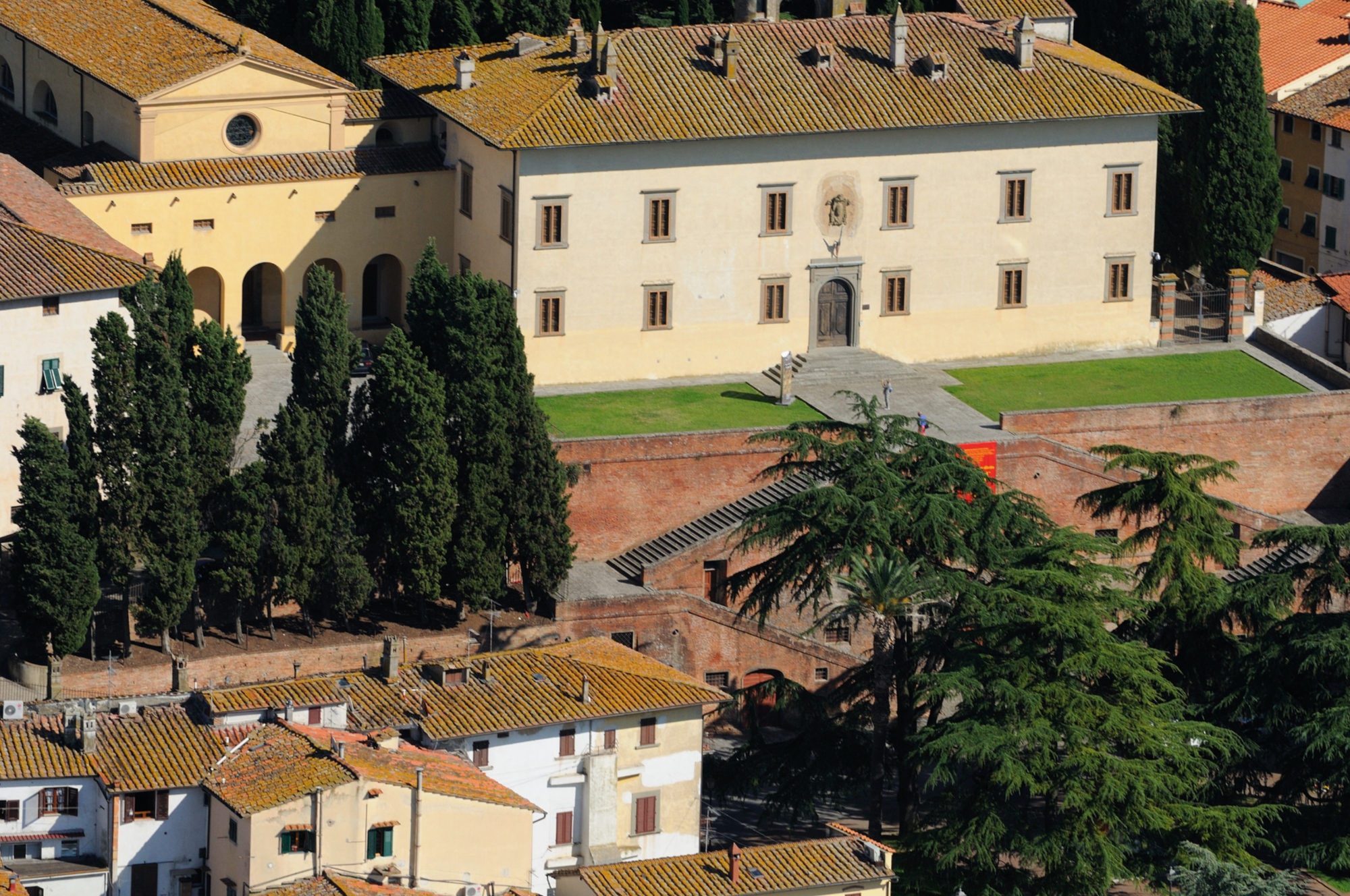
In the center of Cerreto Guidi, in a dominant position on the knoll, the Villa was built by Cosimo I de’ Medici as a hunting lodge, partly because of its proximity to the Barco Reale, the large Medici hunting reserve that served as the estate’s true natural park, and as a point for monitoring the surrounding territory and the Fucecchio Marsh.
Built between 1564 and 1566, it was constructed also with materials from the Rocca dei Conti Guidi and the 2ⁿᵈ circle of walls.
The most recognizable features are the Medici bridges, the 4 large symmetrical access ramps attributed to Bernardo Buontalenti. The Villa is even linked to the figure of Isabella de’ Medici, Cosimo I’s favorite daughter, who died here in 1576, an affair long shrouded in legends, now reread by studies in a different light.
Open to the public since 1978, it preserves furniture reconstructed on the basis of historical inventories, Medici portraits, tapestries, paintings, sculptures and artifacts.
Since 2002, it has also housed the Historical Museum of Hunting and the Territory, with iconographic evidence, hunting and shooting weapons, as well as archaeological materials displayed in the rooms of the Medici bridges.
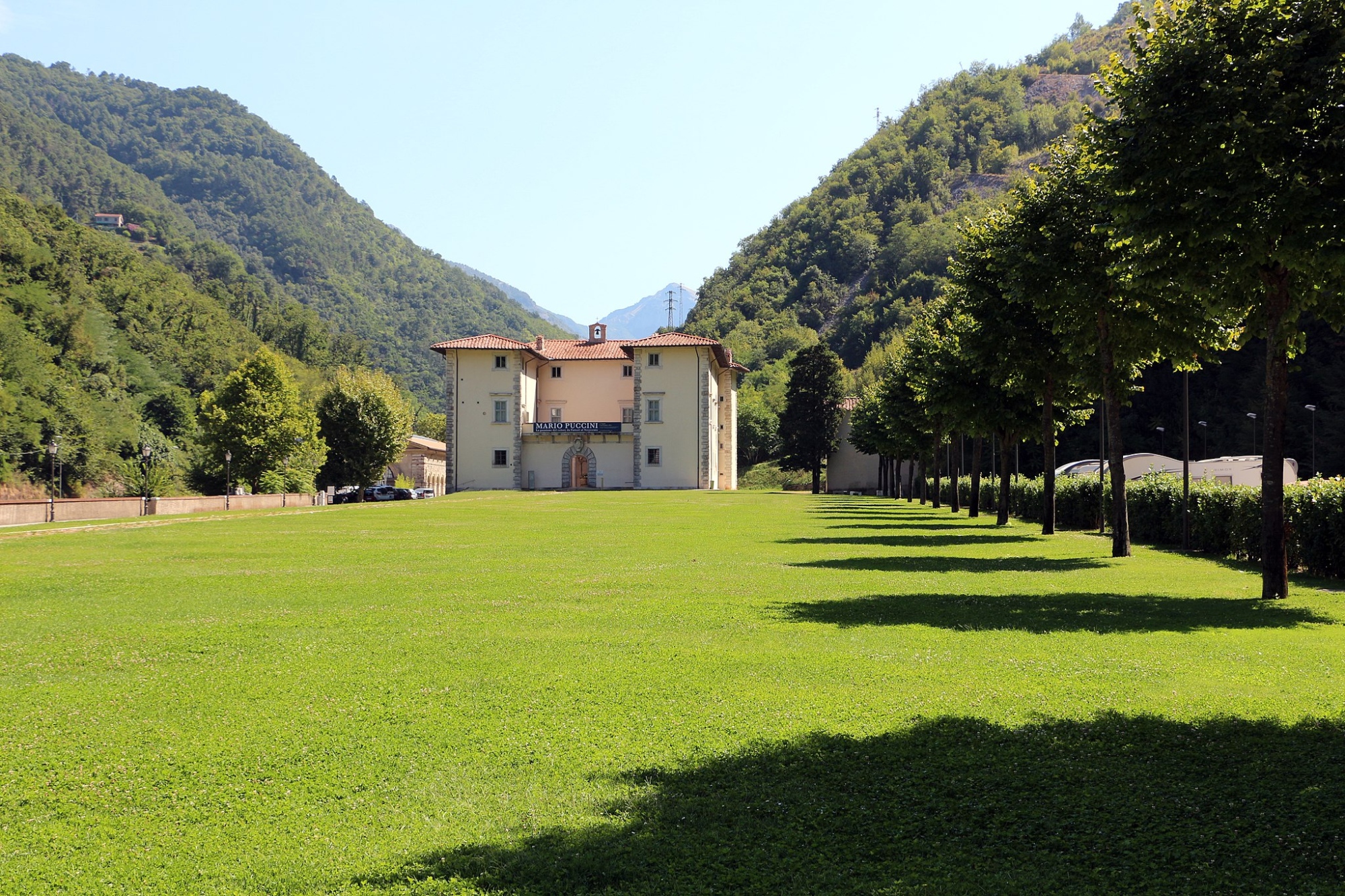
At the foot of the Apuan Alps, the Medici Palazzo of Seravezza was built by Cosimo I between 1561 and 1565 as an outpost in Versilia, in a territory strategic for the presence of marble quarries and iron and silver mines.
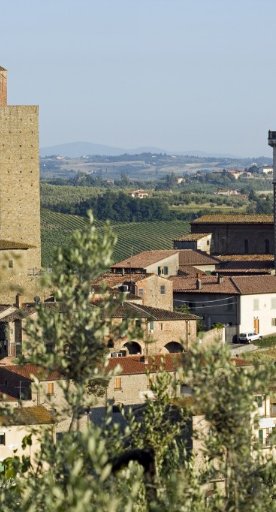
The complex served a dual function: as a settlement for the Medici court and presidium related to control of the territory’s borders and resources.
In the decades between the 16ᵗʰ and 17ᵗʰ centuries, it often hosted representatives of the Medici family, including Christina of Lorraine, who stayed for an extensive period.
With the unification of Italy, it passed to the State and in 1864, was donated to the municipality of Seravezza.
Today, the Palazzo houses the Municipal Library, the Municipal Historical Archives and the Museum of Folk Work and Traditions in Historic Versilia. The main floor hosts modern and contemporary art exhibitions, while the stables are home to the theater and cinema.
Next to the Palazzo is the chapel associated with Christina of Lorraine, as well as a collection of ancient oil jars and grain pots displayed in the cellar.
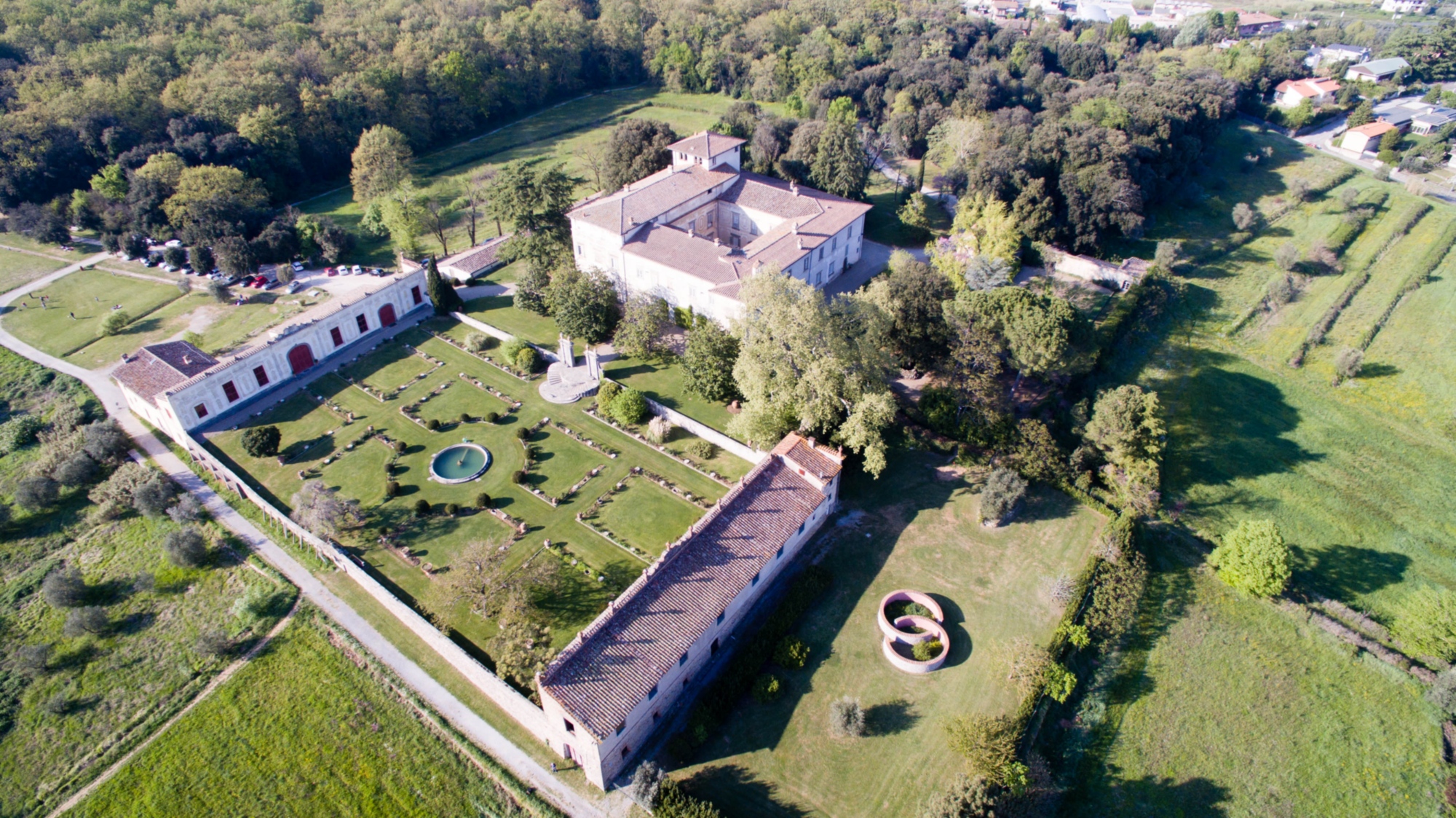
In Quarrata, on the slopes of Montalbano, Villa La Magia grew out of an ancient defensive settlement built in 1320 by the Panciatichi family.
Over time, the property took on a residential character and, on November 26, 1583, was purchased by Francesco I de’ Medici, entering the system of Villas linked to the control of the territory and the hunting reserve of the Barco Reale.
Its heyday was in the late 16ᵗʰ century, when Bernardo Buontalenti devised the plans for renovating the Villa and constructing the lake.
In later centuries, the complex passed to the Attavanti and then to the Amati Cellesi, with major interventions on the monumental staircase, inner courtyard, lemon houses and outbuildings.
Since 2000, the Villa has been owned by the Municipality of Quarrata and is open to the public by reservation. It is possible to visit the historical paths, the fresco cycle, the garden, the picture gallery and the contemporary environmental art collection.
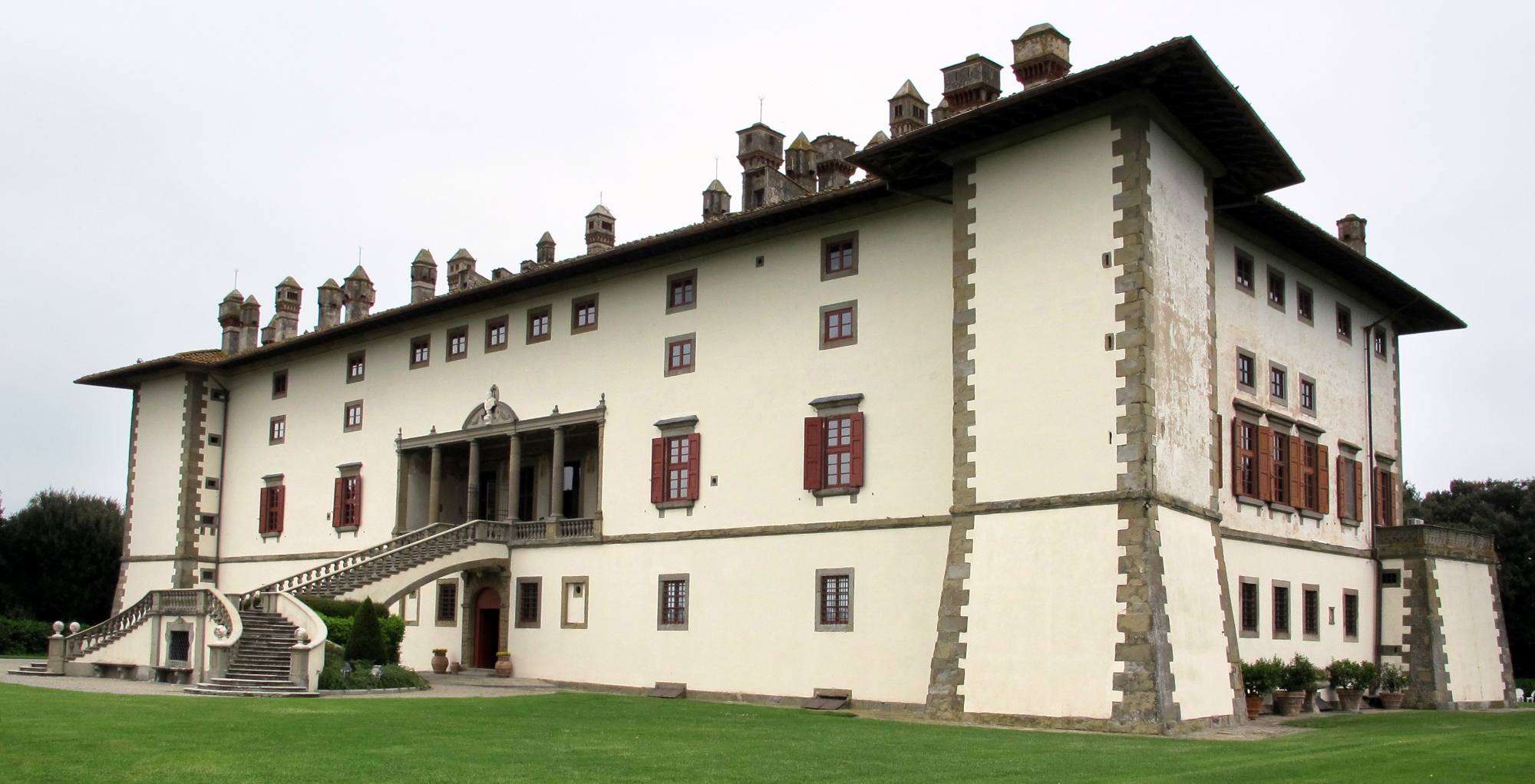
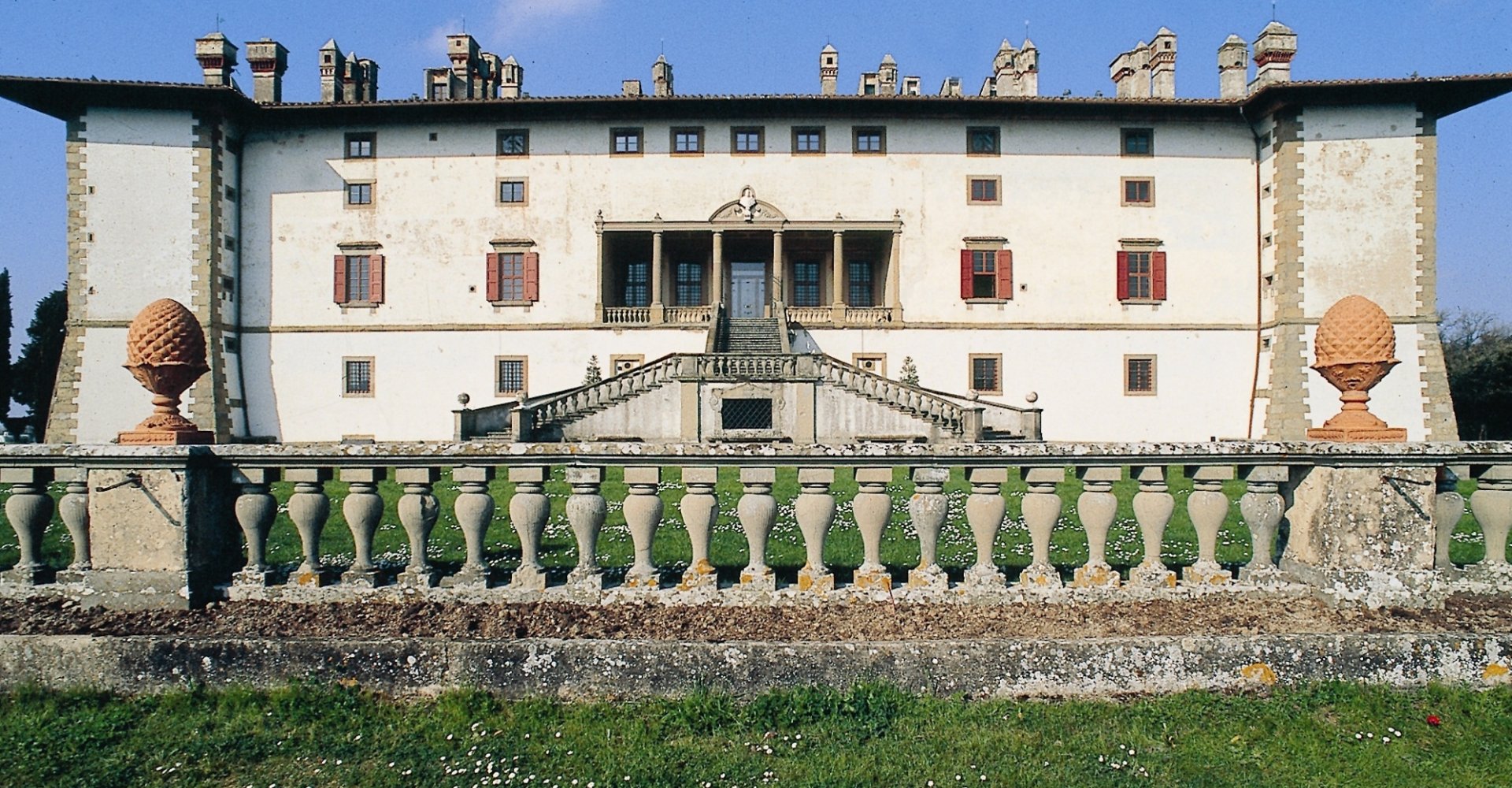
On the hills of Carmignano, amid the vineyards of Montalbano, the Villa La Ferdinanda in Artimino was built between 1596 and 1600 at the behest of Ferdinando I de’ Medici, designed by Bernardo Buontalenti.
Established as a hunting lodge, the Villa was connected to the Barco Reale (hunting reserve). La Ferdinanda is also known as Villa dei Cento Camini (Villa of a Hundred Chimneys) because of the numerous chimneys protruding from the top of the building, once used to heat the rooms during winter stays. The architecture retains an austere, almost military appearance, alleviated by the loggia and the staircase perfect for dramatic entrances. Inside are halls frescoed by Domenico Cresti, known as Il Passignano, and Bernardino Poccetti, along with the chapel and rooms associated with Christina of Lorraine.
Prominent guests included Galileo Galilei, who was invited here in 1608 by Ferdinand I to instruct his son Cosimo in mathematics.
The villa is now a private facility but can be visited periodically for open days, events and guided tours.
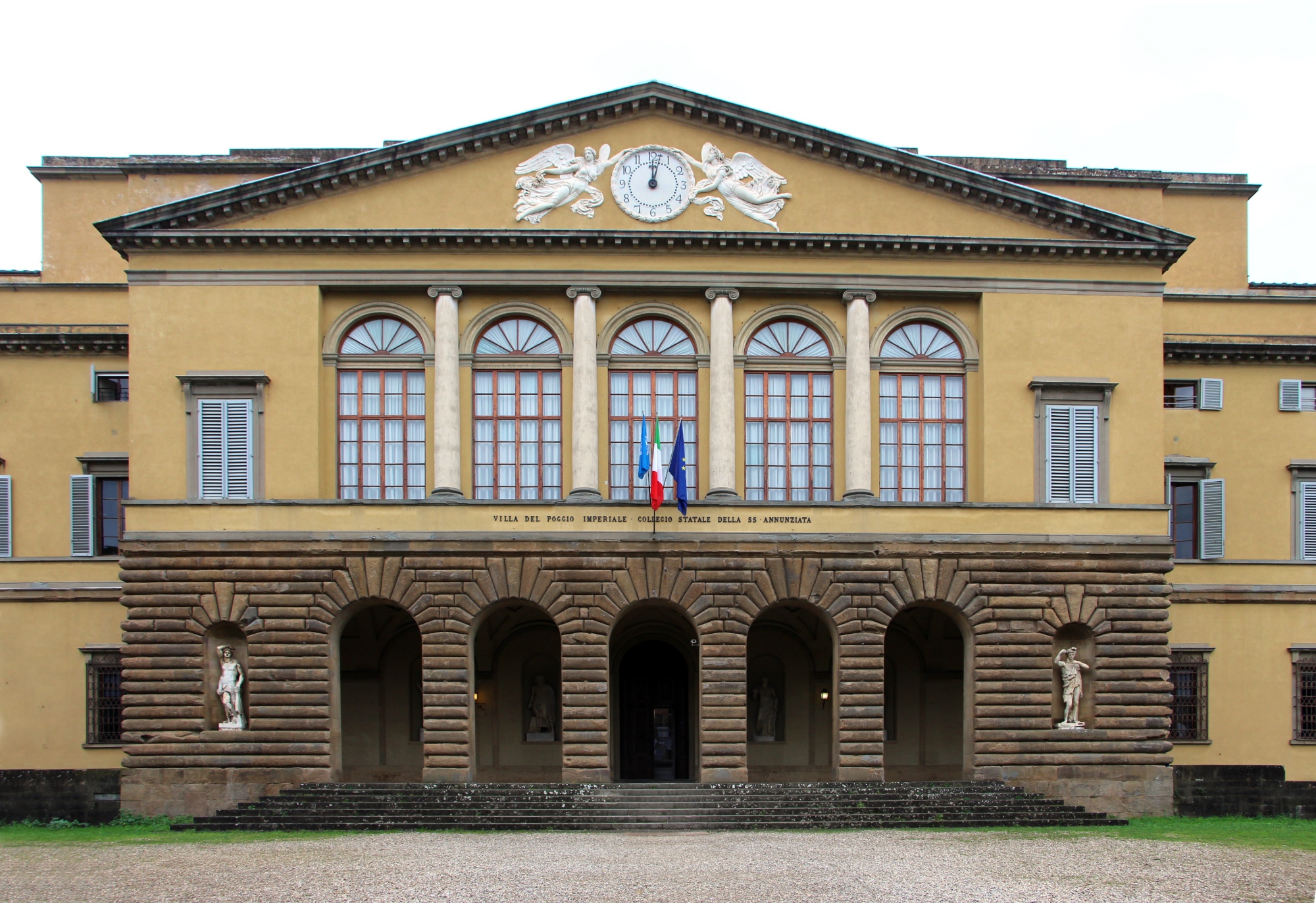
On the hill of Arcetri in Florence, the Villa del Poggio Imperiale grew out of the ancient Palazzo Baroncelli, documented as early as 1427 and later passed to the Pandolfini, the Salviati and finally the Medici. Cosimo I gave it to his daughter Isabella, who chose it as her favorite villa and also devoted it to cultural activities, enriching the place with numerous works of art.
In the 17ᵗʰ century, Maria Magdalena of Austria had it enlarged and named Poggio Imperiale. Later, Vittoria della Rovere continued the works and gathered there part of the precious collection inherited from the Duchy of Urbino.
With the Lorraines, the Villa increasingly took on the character of a palace between town and country. Indeed, Pietro Leopoldo chose it as his residence and started a long renovation project, while in the 19ᵗʰ century, Maria Luisa of Bourbon, Elisa Baciocchi and Ferdinand III contributed to the current neoclassical appearance.
In 1770, Mozart gave his only Florentine concert there.
Since 1865, the Villa has been home to the Santissima Annunziata State Boarding School. It is not normally open to the public but can be visited by appointment.
Behind Palazzo Pitti, the Boboli Gardens are one of the most important examples of Italian gardens and a true open-air museum, with sculptures, grottoes, fountains and scenic perspectives.
Created as a Medici garden and expanded over the centuries by the Lorraine and Savoy clans, the Boboli Gardens occupy over 74 acres (30 hectares), preserving an interweaving of nature, architecture and art created between the 16ᵗʰ and 19ᵗʰ centuries.
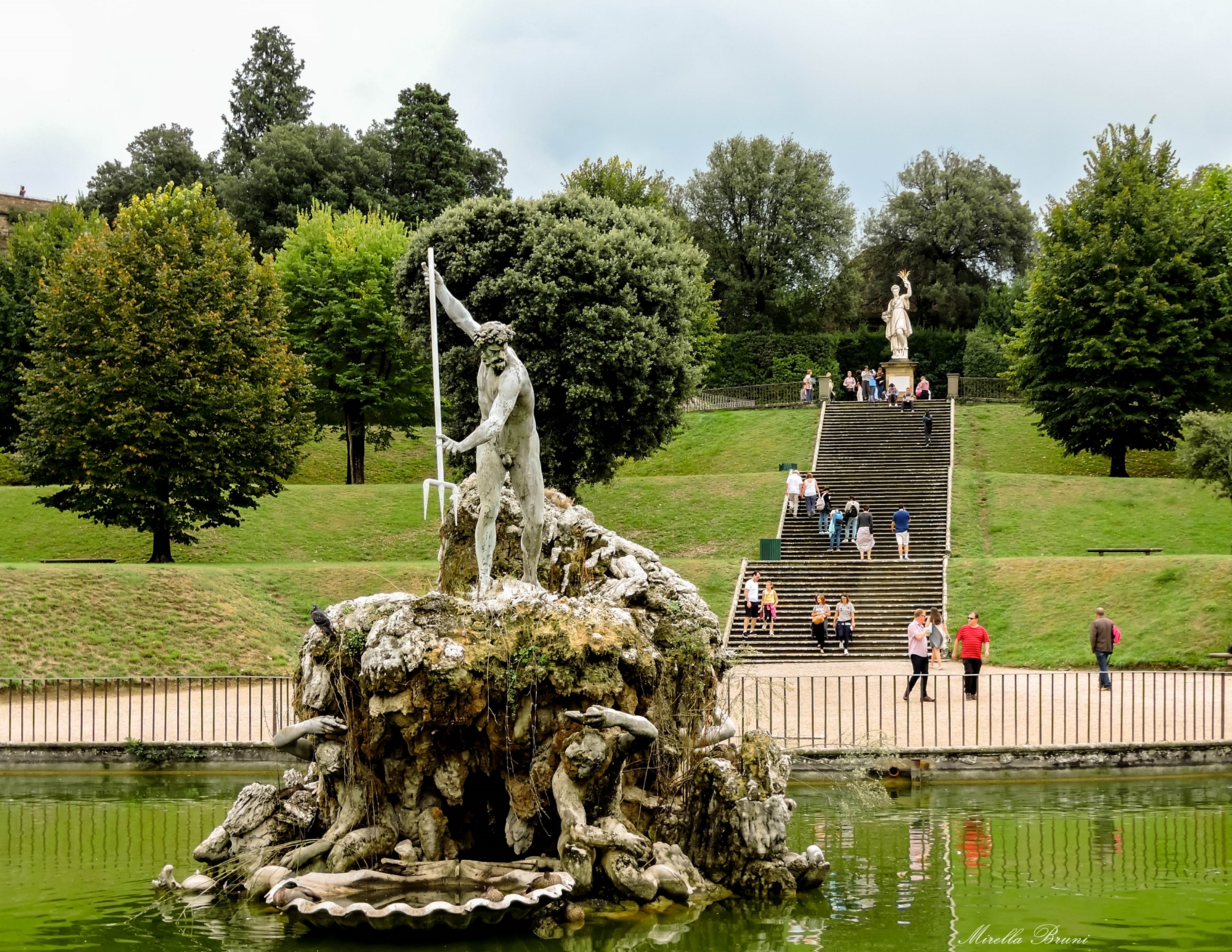
A visit passes through symbolic places such as the Amphitheater, with the Egyptian obelisk from Luxor, the Fountain of Neptune, the Viottolone (also known as Viale dei Cipressi or Cypress Avenue), the Isolotto with the Fountain of Oceanus by Giambologna and the Kaffeehaus commissioned by the Lorraines, a rare example of Rococo taste in Tuscany.
Among the most famous features is the Grotta Grande (or Buontalenti Grotto), a masterpiece of European Mannerism where painting, sculpture and architecture unite in an environment populated by rocks, shells, human figures and animals.
The Boboli Gardens also hold more recent curiosities and presences, from the Fontana del Bacchino to Igor Mitoraj’s imposing bronze head in the Prato dell’Uccellare.
In Vaglia, not far from Florence, the Pratolino Medici Park preserves the memory of the large estate purchased in 1568 by Francesco I de’ Medici, who entrusted Buontalenti with the transformation of the place into a villa and garden.
The park became famous in Europe for its wonders: artificial caves, fountains, water features, automatons and hydraulic devices designed to amaze visitors.
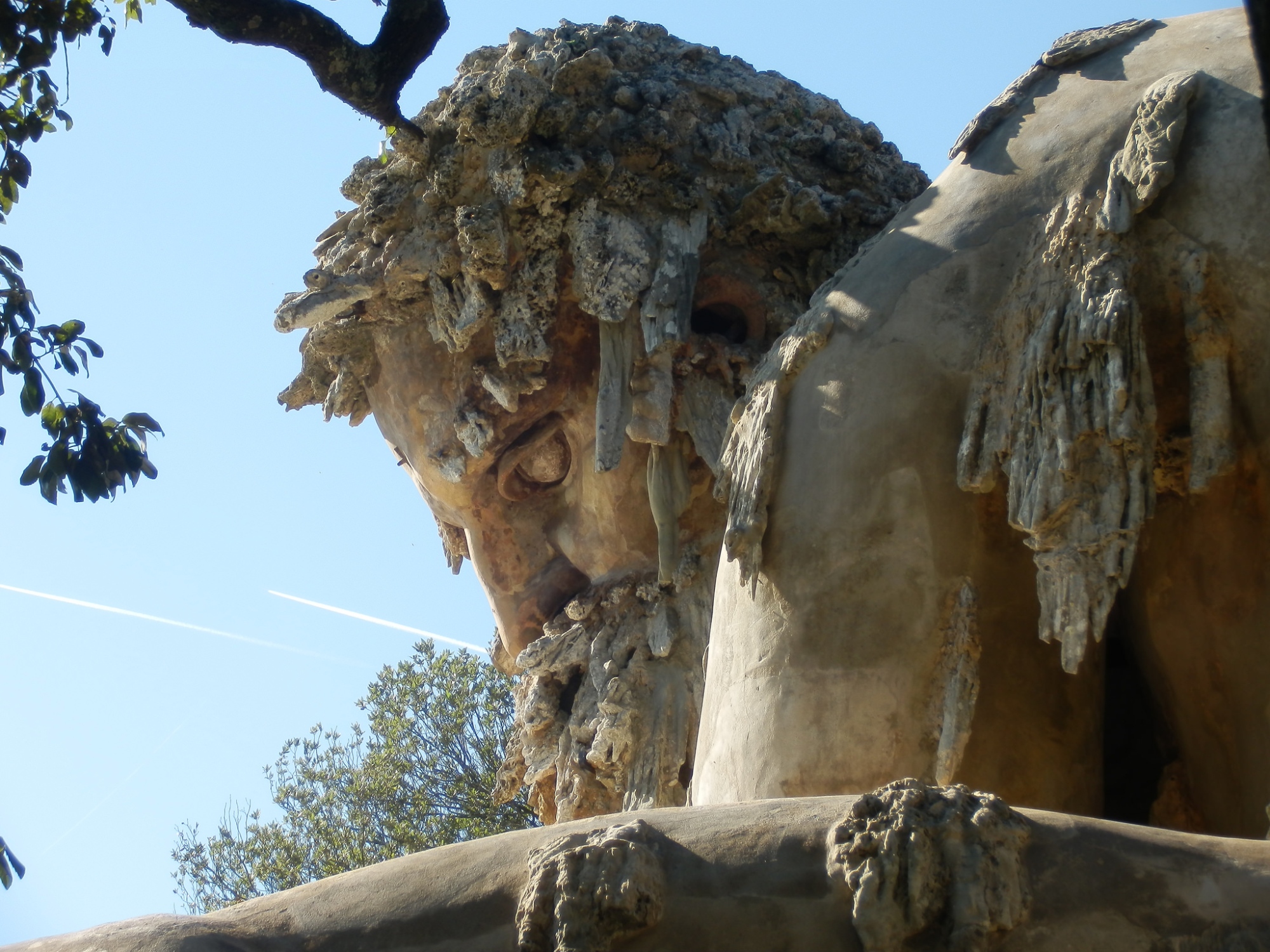
Of that ancient complex remains today the celebrated Apennine Colossus by Giambologna, a monumental statue-fountain and symbol of the park, along with Cupid’s Grotto, the Mugnone Fountain and the chapel designed by Buontalenti.
After the Medici period and the passage to the Habsburg Lorraine, the Villa was demolished and the park was reorganized according to the tastes of an English garden, with lawns, avenues, groves and ponds.
Later purchased by the Demidoff princes, who restored the surviving structures and the Apennine Colossus, Pratolino is now a large historic park open to the public, ideal for strolling along the pathways and gravel roads, spying traces of the ancient Medici garden.
Available from the App Store and Google Play is the official Ville e Giardini Medicei App. The App offers an interactive map, thematic itineraries and dedicated content to orient and discover each location.
Download from the App Store
Download from Google Play