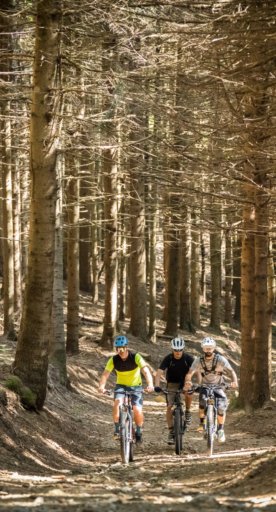
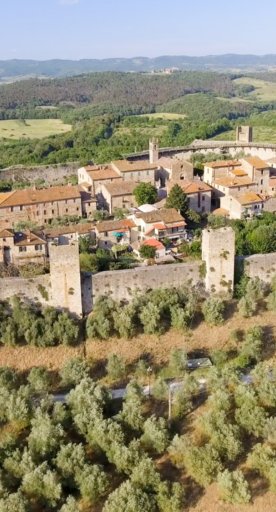
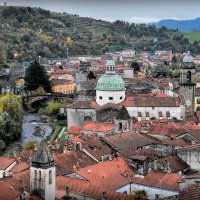
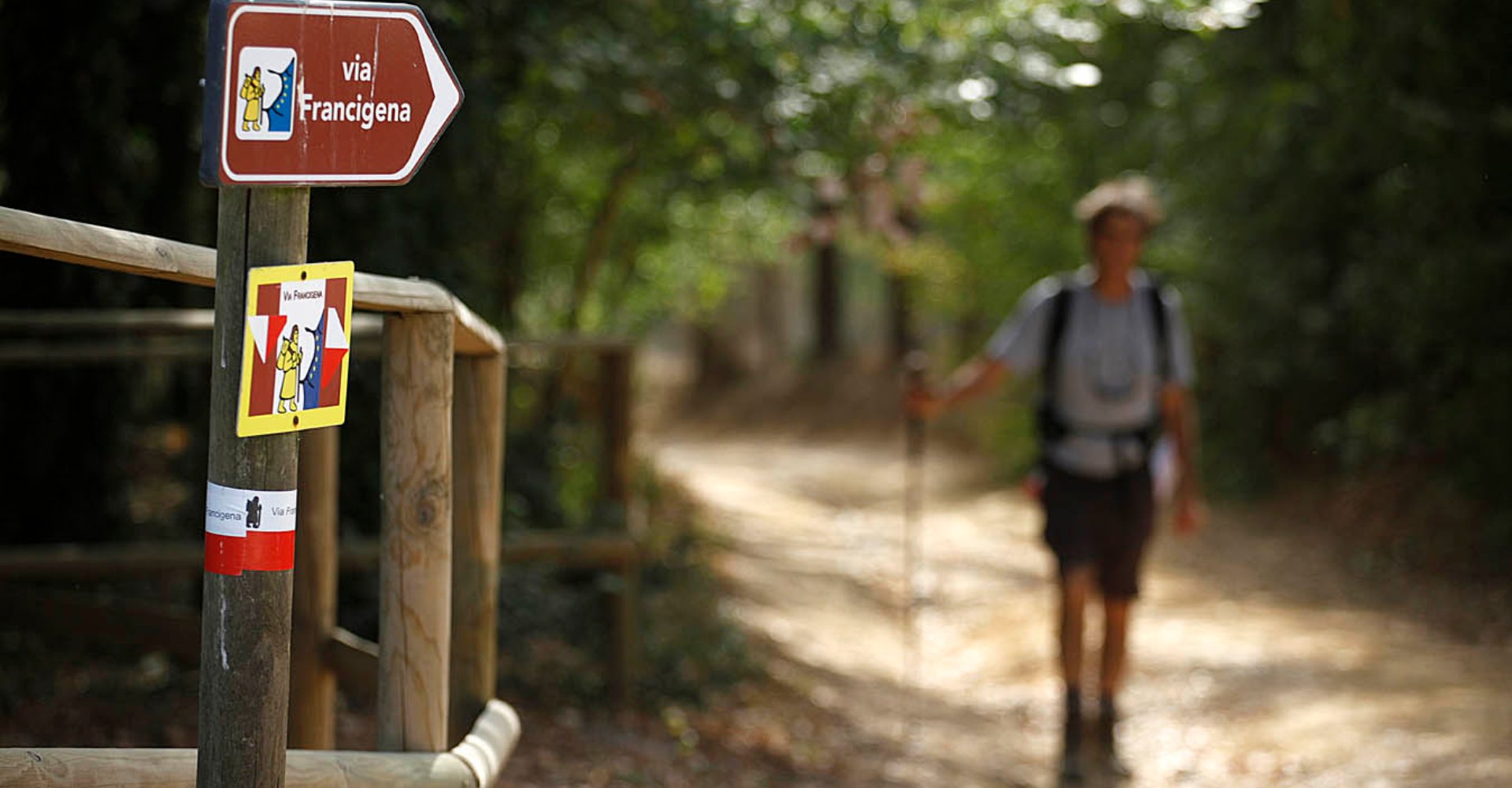
The Via Francigena, the ancient road that leads pilgrims from Canterbury to Rome, enters Tuscany at north, at the Cisa Pass, and ends at Radicofani, in the south. The Tuscan stretch of the Francigena is a unique itinerary: it allow to walk 380 km sourrounded by history, culture, and traditions, in a breathtaking landscape. Is is also accessible by bicycle or on horseback.
Along the entire route, in addition to the most famous places—Lucca, Siena, San Gimignano, Bagno Vignoni—you'll encounter other wonders. Here's a selection of "jems" to admire, step by step!
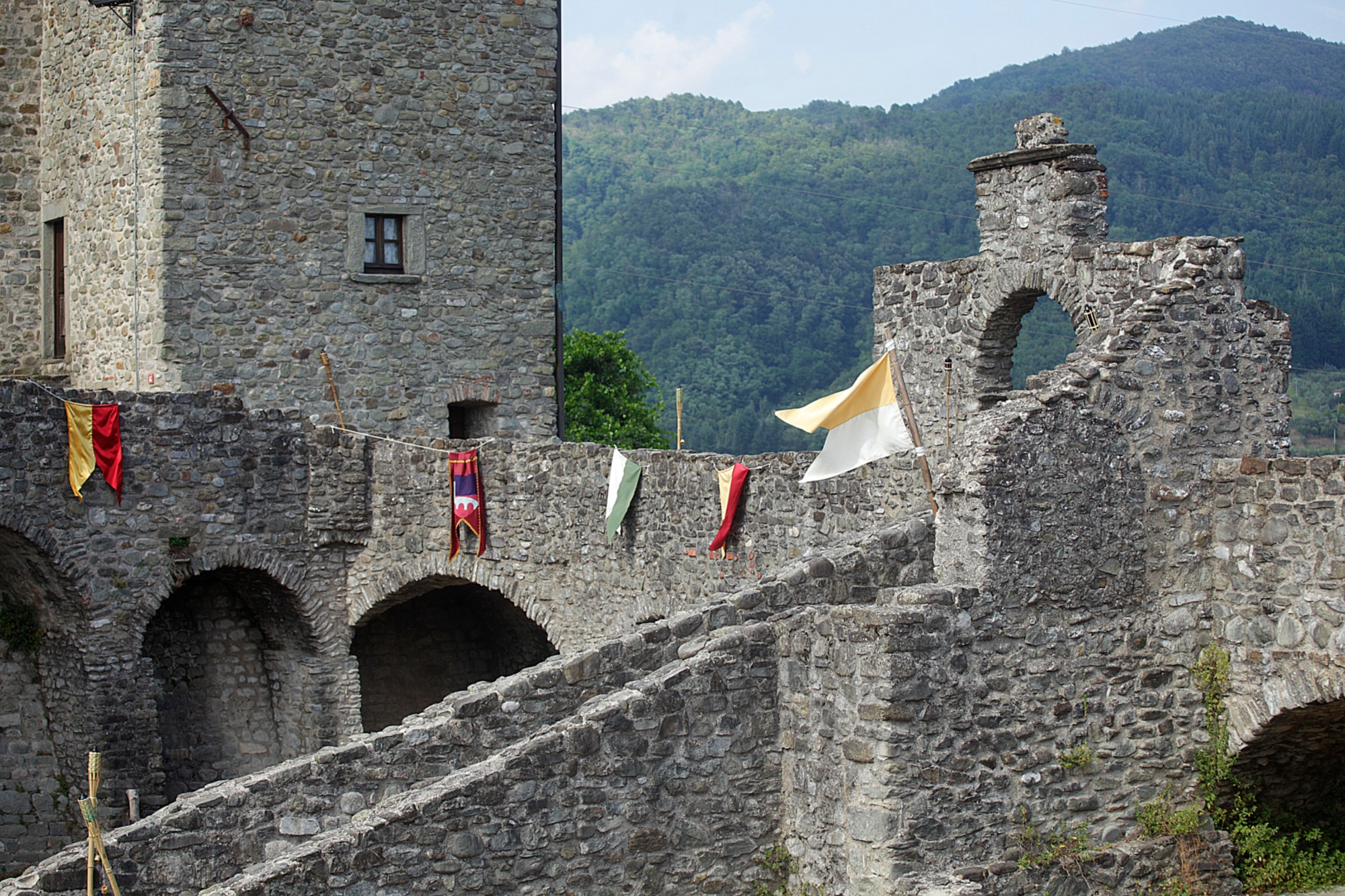
The Piagnaro Castle stands atop a hill overlooking the historical centre of Pontremoli (Massa Carrara area). It was erected in the 11th century so to control the network of underlying roads and became an integral part of the town’s defensive system.
Nowadays the Castle is open to the public and is home to the Museum of Lunigiana Stele Statues.
Leg 22: Passo della Cisa - Pontremoli
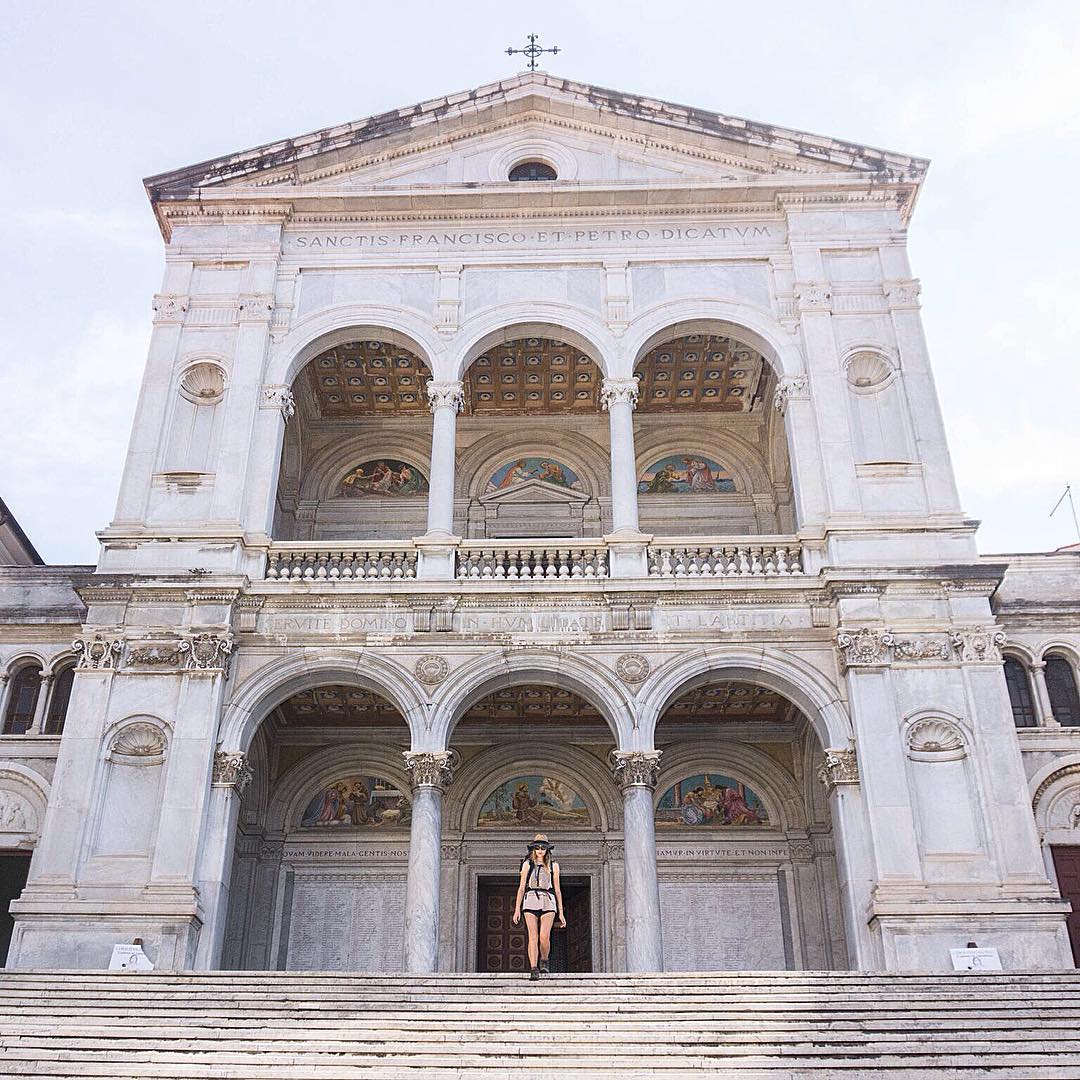
The Cathedral of Massa, also known as Cathedral of the Saints Peter and Francis, boasts an impressive façade that was reconstructed in 1936, but its history dates way back to (at least) the 15th century. The visual impact of the building, as it gets closer and closer while walking along Via Dante Alighieri, is astonishing, you'll love it!
Leg 25: Sarzana - Massa
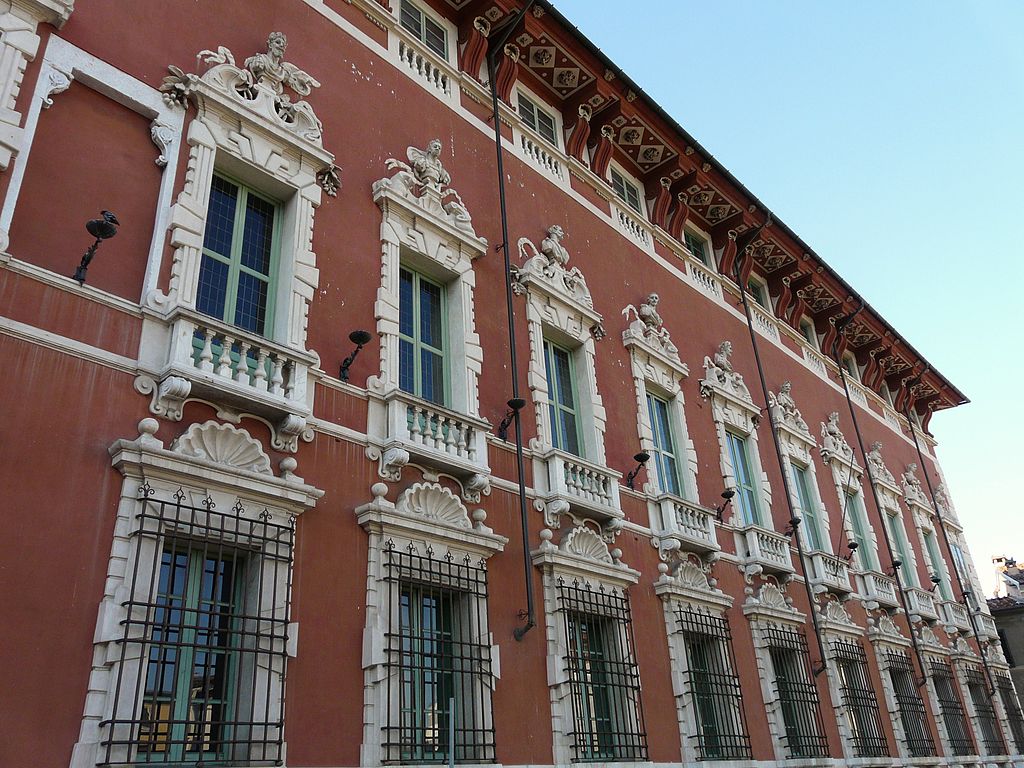
Also known as the Red Palace, Massa's Palazzo Ducale is a sumptuous palace filled with columns, stairs and arcades, with decorations all strictly made of white marble. It was built by the Malaspina family at the beginning of the 16th century.
Nowadays the building hosts the offices of both the Provincial Authority and the Prefecture. Occasionally, the Sala degli Specchi and the Salone degli Svizzeri host temporary exhibitions.
Leg 25: Sarzana - Massa
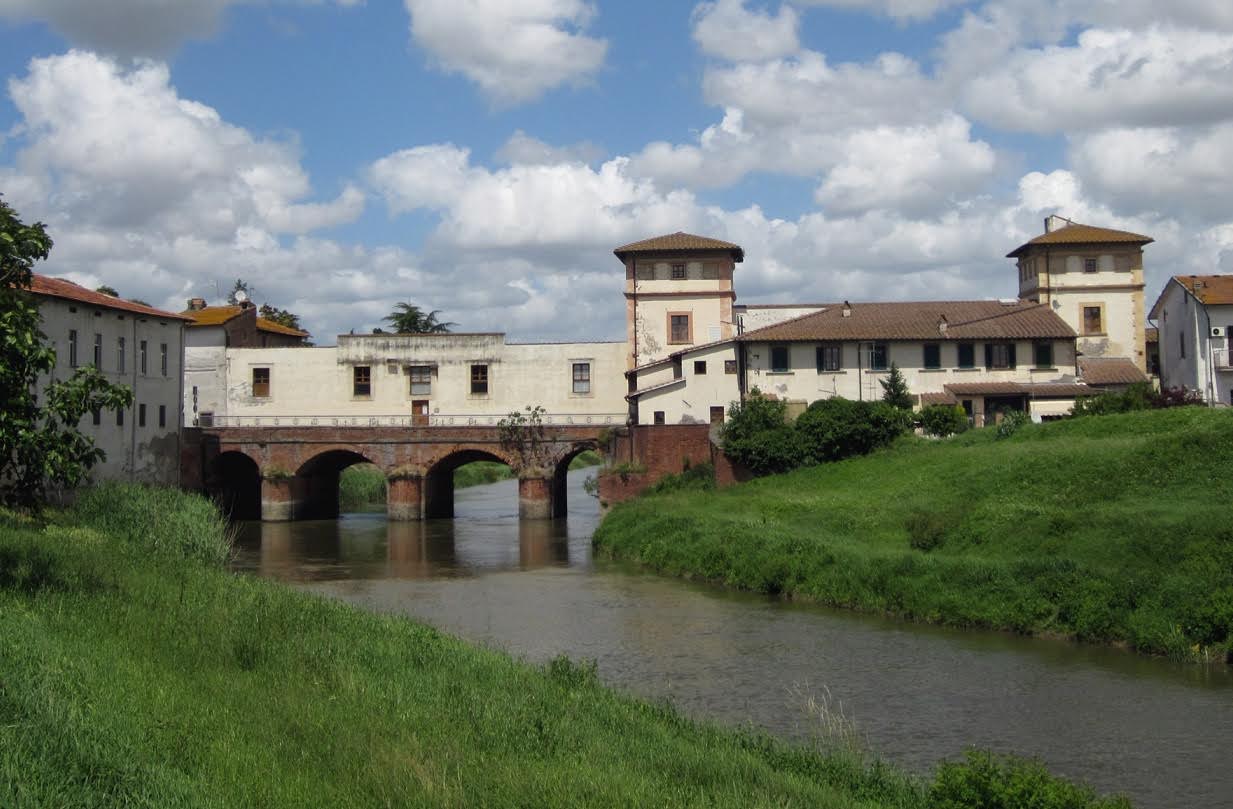
According to historians, the first mentions of a bridge providing passage over the Usciana canal in the area of Cappiano (Florence area) date back to the Middle Ages. Over the years, such bridge grew in importance and popularity, thanks to its strategic position along the Via Francigena and, for a certain period, it was managed by the Hospitallers of Altopascio. In 1325, during the conflicts between Florence and Lucca, it was destroyed and then rebuilt as a drawbridge with a fortified tower.
After further vicissitudes and renovations across the centuries, the history of the Ponte a Cappiano changed substantially in the first half of the 16th century at the hand of Cosimo I de' Medici. Cosimo had both the covered and the open bridge built, along with some other buildings, and the complex took the form we know today.
Leg 29: Altopascio - San Miniato
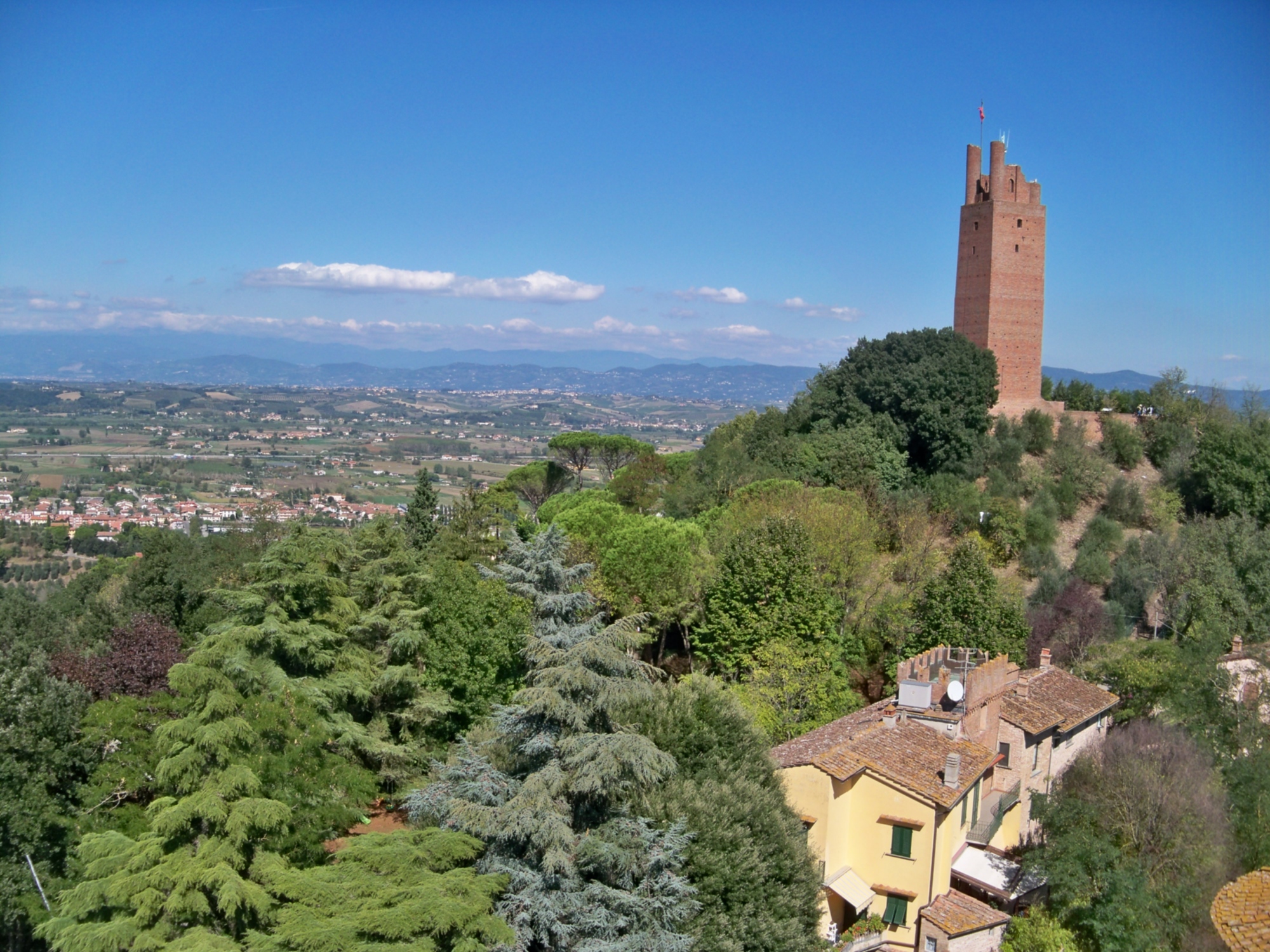
The Rocca di Federico II, named in honour of the emperor who had it built between 1217 and 1223, stands on the summit of the hill of San Miniato. In 1944 the Germans mined the tower razing it to the ground and what we see today is a faithful reconstruction.
From the top of the tower (30 metres high!), thanks to powerful telescopes, you can see the point where the Via Francigena meets the Roman road that runs from Pisa to Florence.
Leg 29: Altopascio - San Miniato
The Abbey of Santa Maria a Coneo is a Romanesque church founded around the year 1000, flanked by the buildings of the monastery. It is splendidly nestled in the countryside surrounding Colle Val d'Elsa, and definitely deserves a visit.
Leg 32: San Gimignano - Monteriggioni
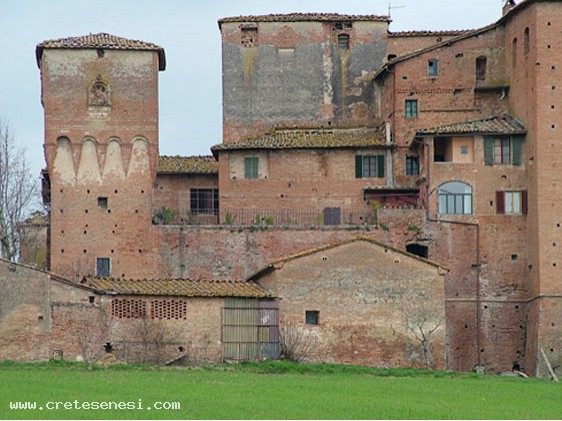
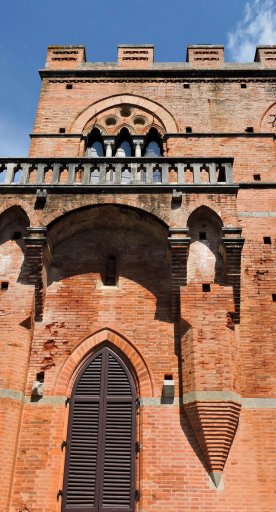
Grancia di Cuna in Monteroni d'Arbia represents one the most interesting architectural structures in Tuscany, thanks to its size and characteristic red bricks, and it's a fascinating example of a fortified medieval farm.
Here, in 1152, the presence of a "spedale" (hospital) is documented for the care of pilgrims and merchants. At the beginning of the 13th century the lands were purchased by the city of Siena and by the Spedale della Scala.
Leg 34: Siena - Ponte d'Arbia
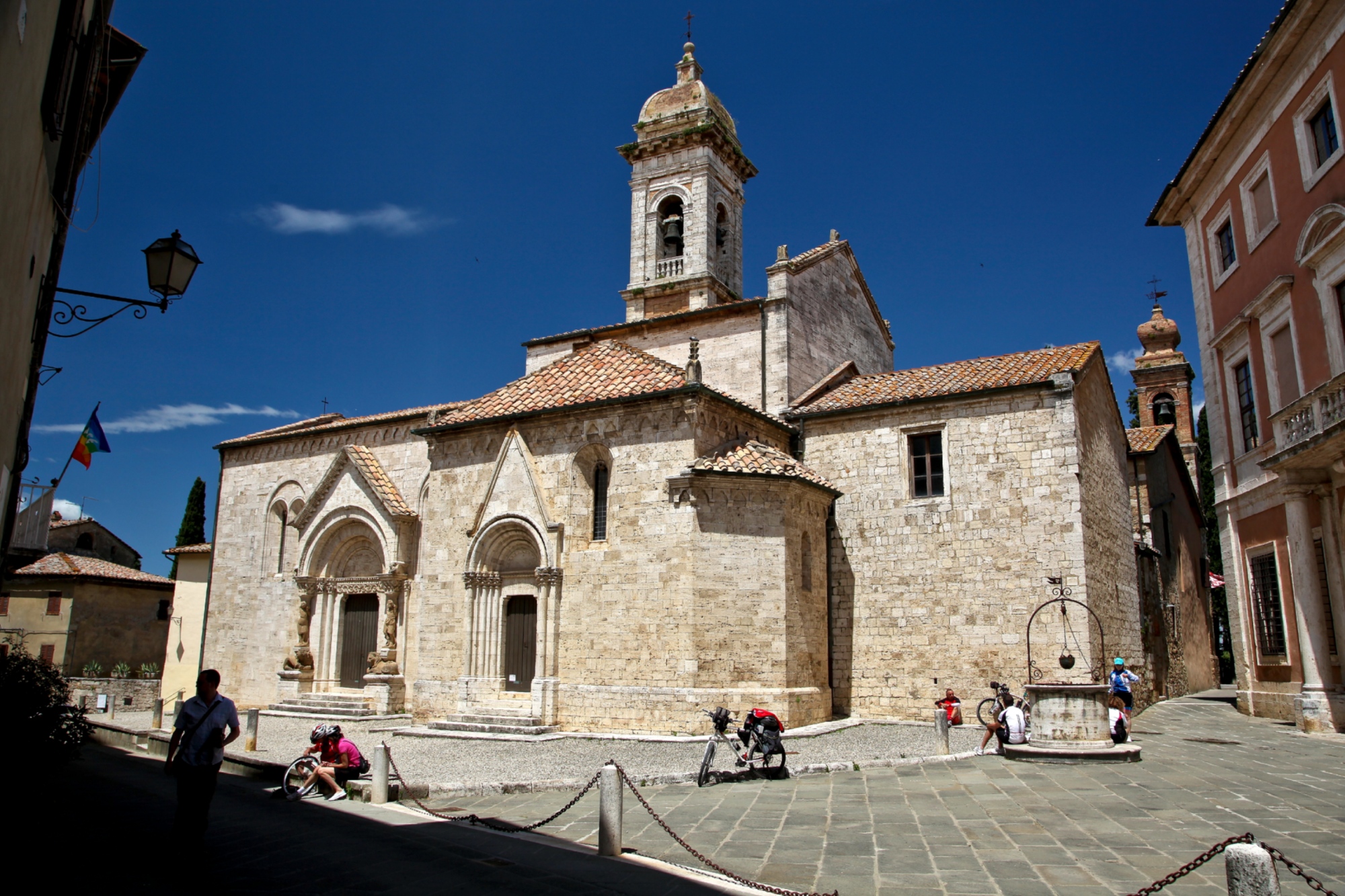
The first known document about San Quirico d'Orcia dates to 712 AD and it’s an act relating to a dispute between the diocese of Siena and Arezzo for the possession of some churches, among which figure the beautiful church of San Quirico in Osenna. Centuries later, the Collegiata dei Santi Quirico e Giulitta was built in that exact spot.
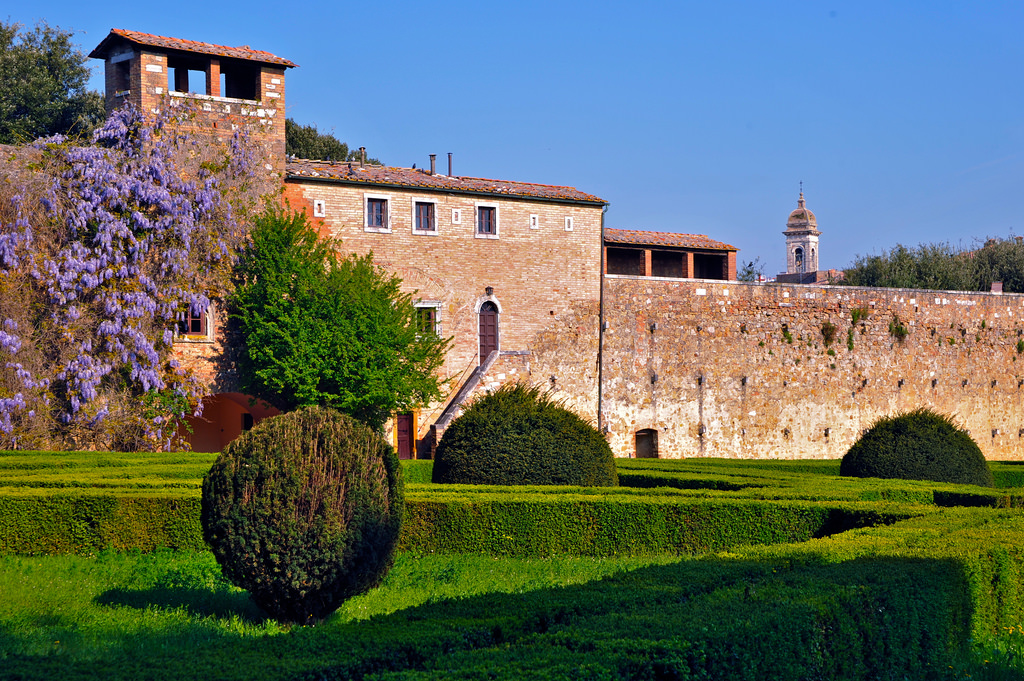
The Horti Leonini were created around 1581 on a land that Francesco I de' Medici had given to Diomede Leoni.
The gardens have maintained to this day the original structure, creating a well-preserved example of classic Italian garden.
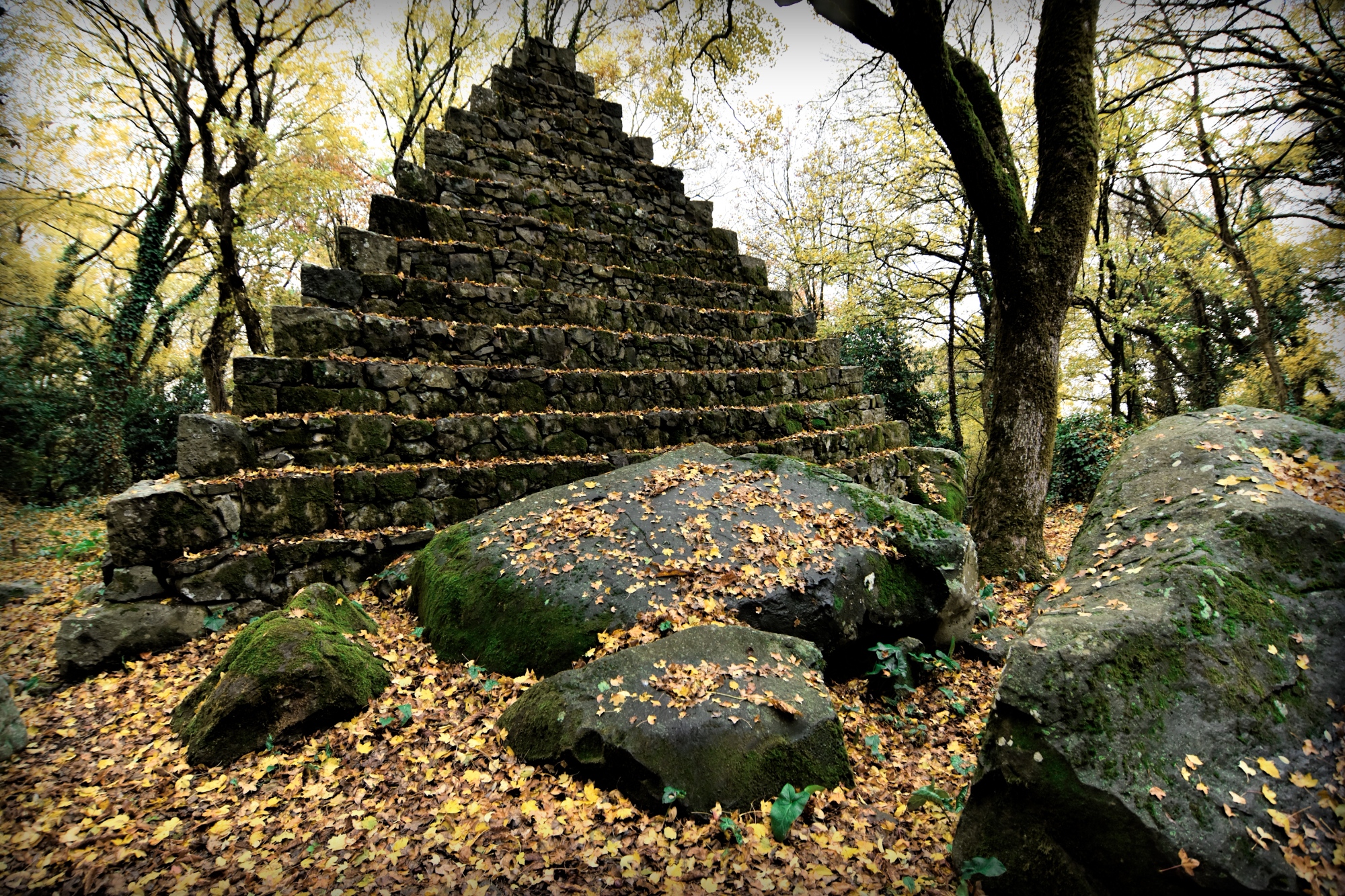
A romantic and esoteric garden of approximately 2.5 hectares, built by the Luchini family starting in the late 19th century. Paths, ponds, bridges, and a stone pyramid blend perfectly with sequoias, cedars, pines, cypresses, chestnuts, and wild cherry trees.
Leg 36: San Quirico d'Orcia - Radicofani