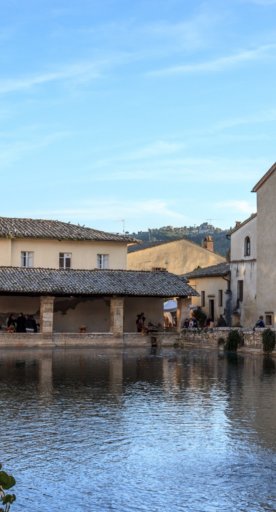
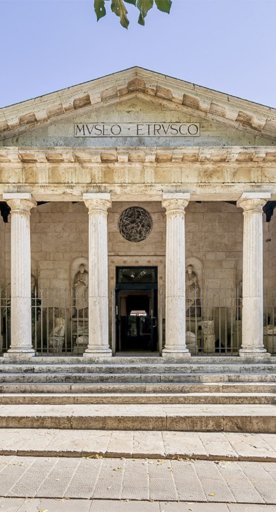
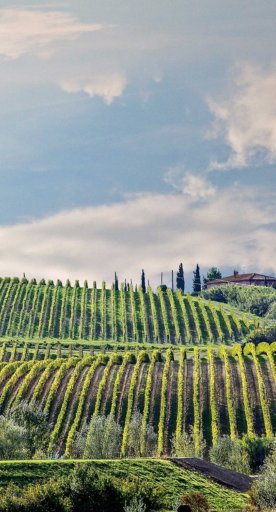
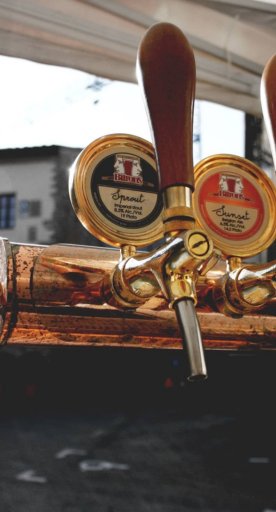
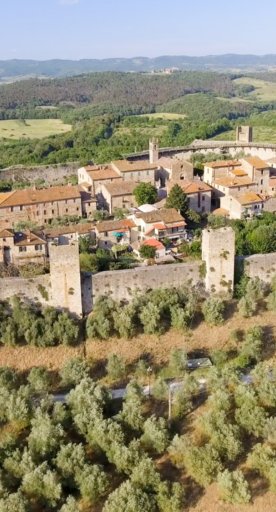
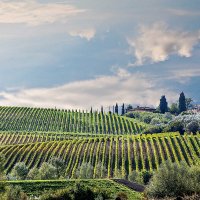
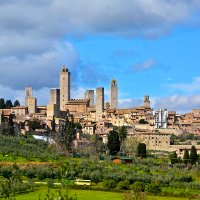
An encounter between images that seem already familiar and details capable of surprise—this is how Tuscany is revealed, in a spontaneous harmony between iconic places and moments to be experienced without rushing.
The journey takes shape between stages, like chapters that tell the story of what happens along the way: a white road that invites you to slow down, a silent piazza, a panorama that sees you change direction without warning.
Among endless possibilities, these suggestions offer an initial orientation to start getting to know the area and be guided by its beauty, step by step.
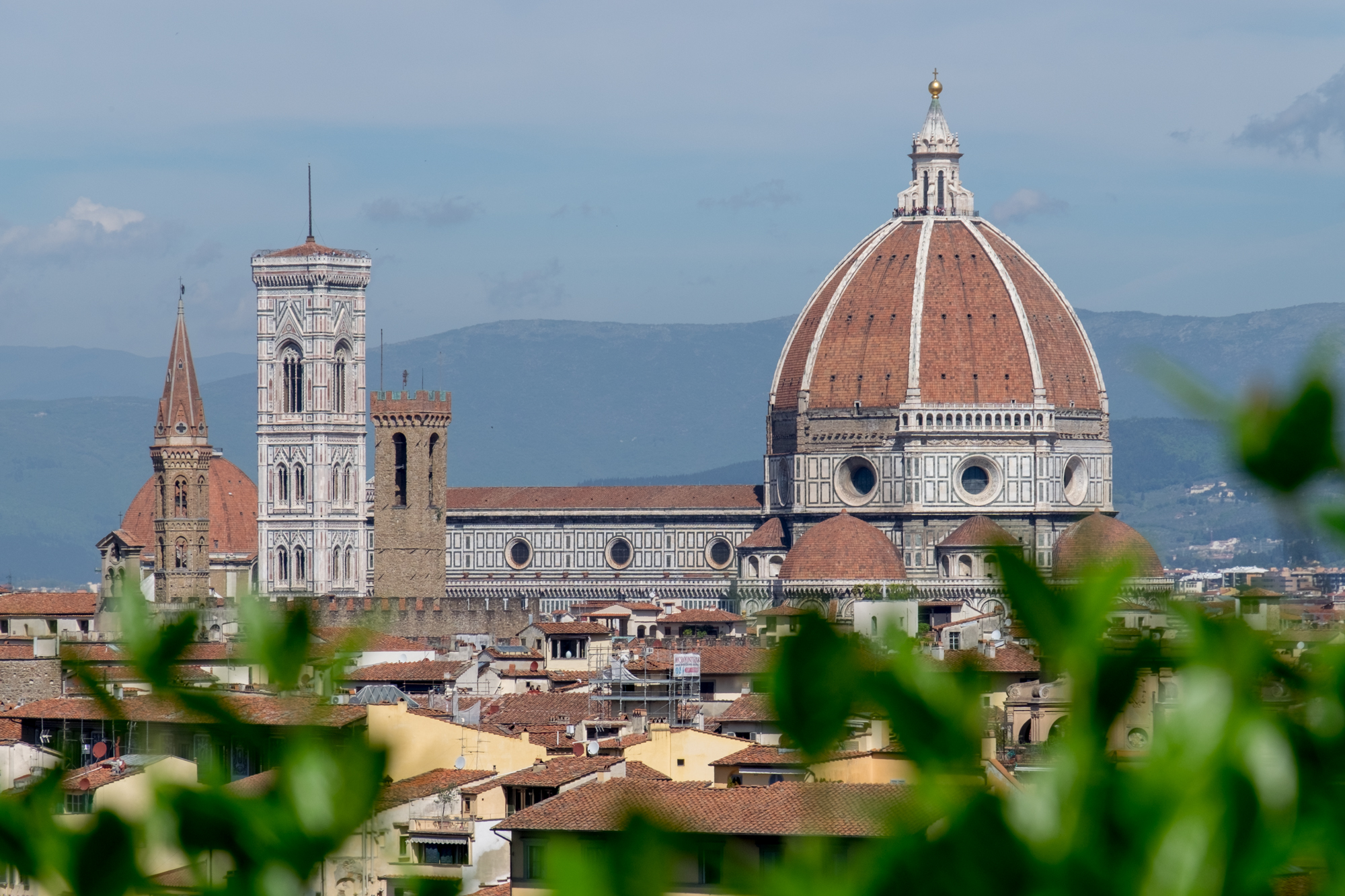
Magnetic and magical, Florence is one of those places where beauty is not concentrated in a few monuments, but imbued.
This might be the cradle of the Renaissance, but it is also a city to be traversed by letting squares, palaces, stores and glimpses of the Arno River guide you.
Piazza della Signoria, the Cathedral, the Dome, Ponte Vecchio and Palazzo Pitti are just some of its most recognizable symbols. All around are bustling neighborhoods, historic markets, crafts and culinary traditions that tell of a city that is never still, but deeply lived.
Florence is discovered this way, by walking, watching and listening, in a natural balance between art and life.
Everywhere the imprint of the Medici family is felt as a permeating presence. Their vision shaped the Florence we know today, in a city that still cherishes this legacy naturally as part of its everyday life.
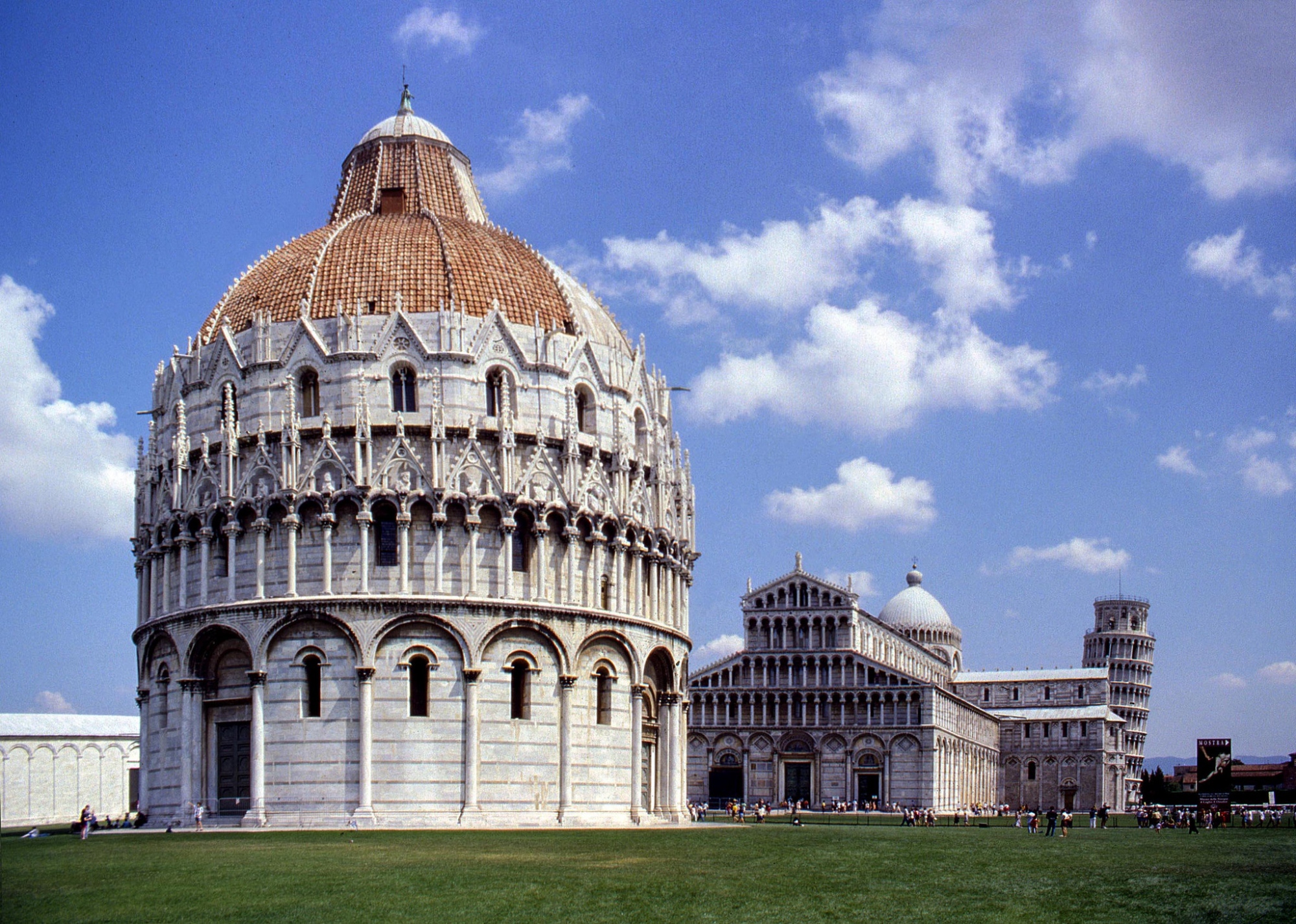
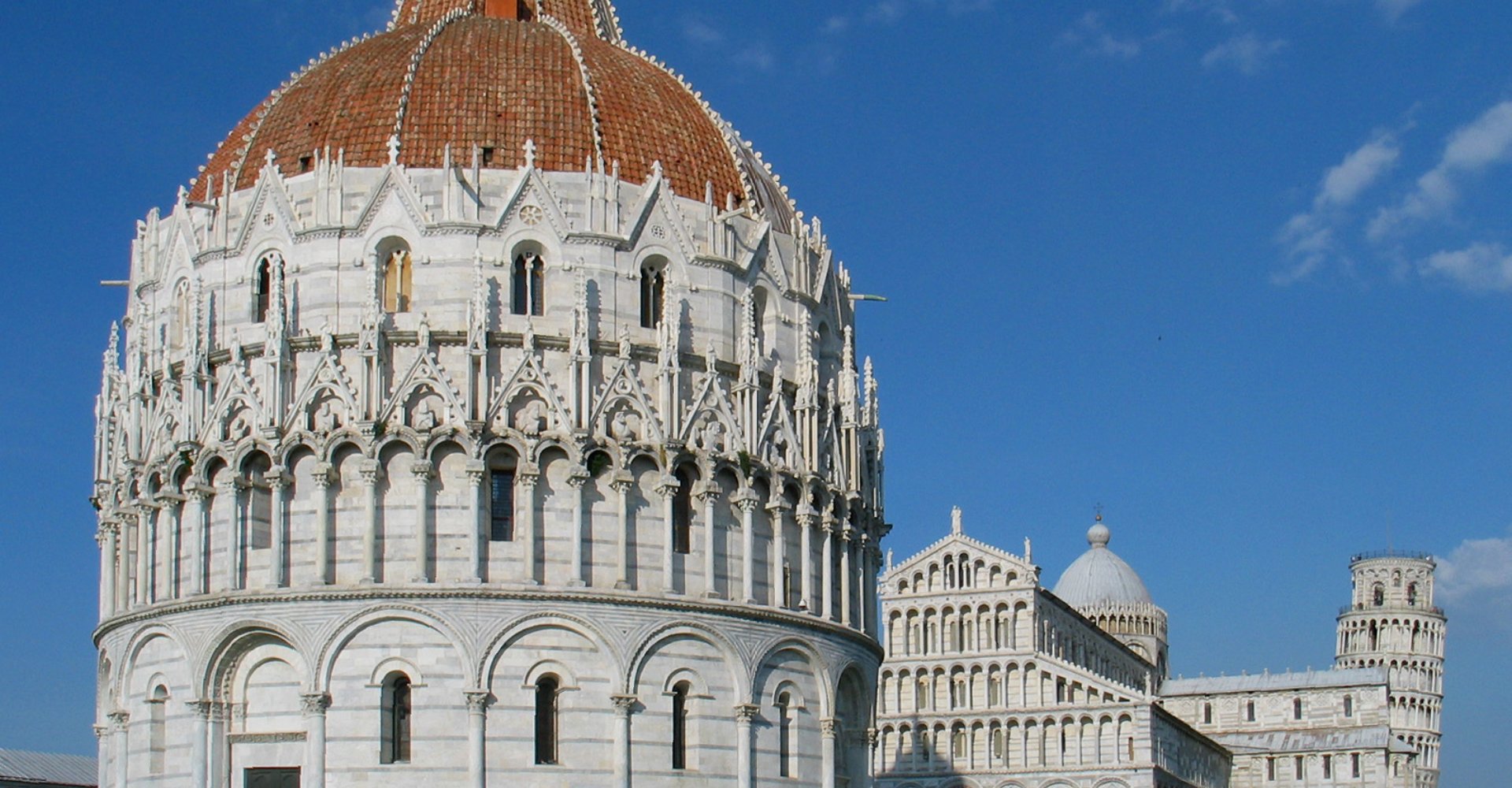
Next to Florence, Pisa is among the best-known destinations, not only for the Leaning Tower and the iconic Piazza dei Miracoli, but also for its web of less famous places that complement its character.
Just step a little way away from the large monumental complex to discover a city of historic squares, bustling alleys and elegant overlooks on the Arno River.
Between Piazza dei Cavalieri, Borgo Stretto and Piazza delle Vettovaglie, the past of an ancient maritime power and cultural center resurfaces, while stretches along the riverbank—the Lungarni—accompany a walk among noble palaces, museums such as Palazzo Blu and quaint Gothic churches like Santa Maria della Spina, suspended between stones and water.
Monumental and well spaced out, Pisa is able to uphold the strength of its history and a living, authentic atmosphere.
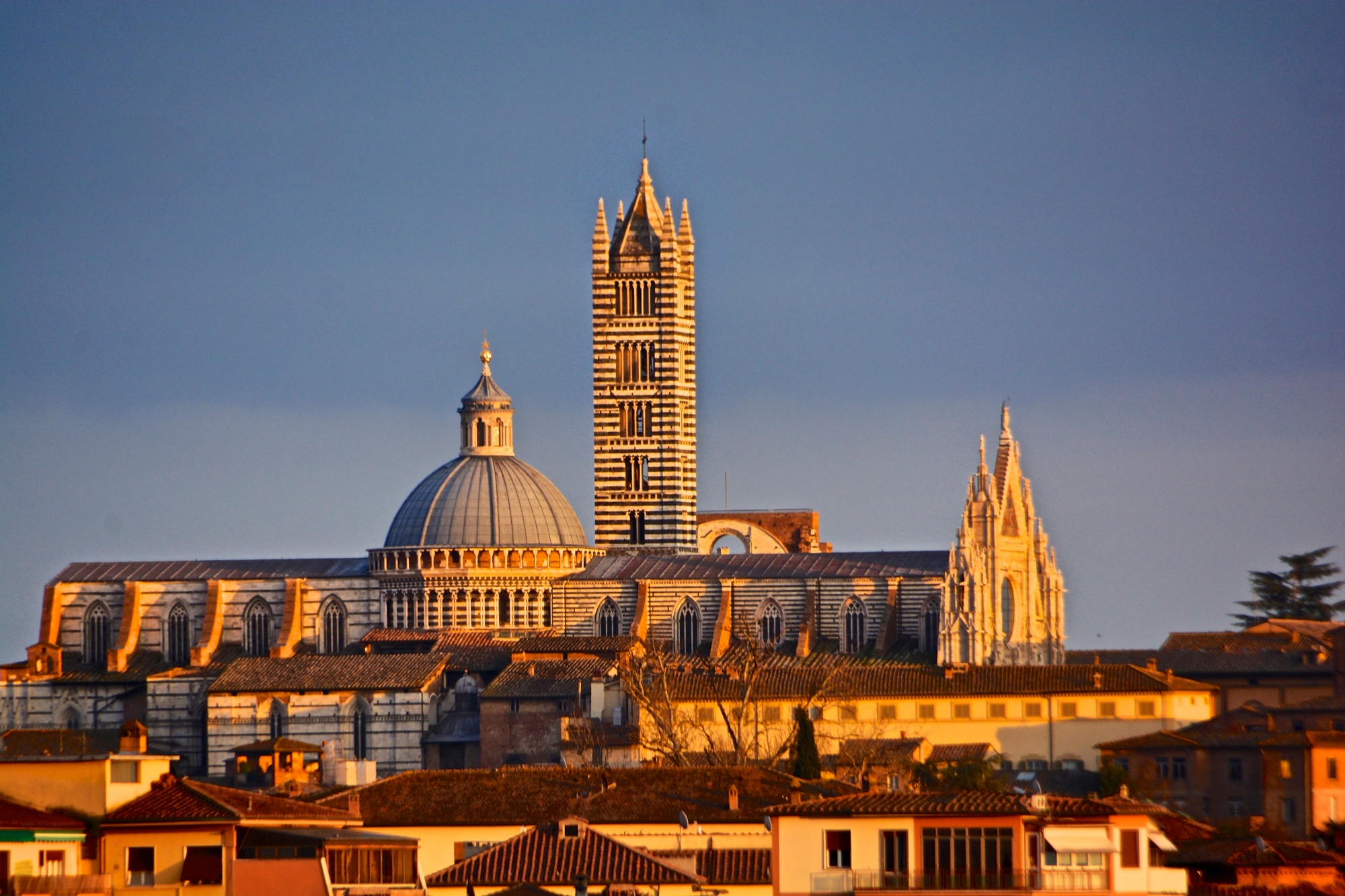
Siena is a city told in the rhythm of stone alleys and sudden scenic openings. The historic center, which has remained remarkably faithful to its medieval layout, is a compact web of streets, contrade (districts) and symbols that describe centuries of civil, religious and artistic history.
At its heart is Piazza del Campo, with its unique shell shape, dominated by the Torre del Mangia and the Palazzo Pubblico, in a space that is at once a place for meeting, the setting of the Palio and the manifesto of the Sienese soul. From here, the city expands in a succession of ancient palaces, churches, museums and unexpected glimpses to the Duomo—a monumental treasure chest of art and light—and to lesser-known spaces such as Santa Maria della Scala, the medieval gardens and the underground Bottini.
The city, compact and intense, is revealed as you walk among the districts, hidden gardens, museums and sudden silences.
Just beyond the walls, the landscape suddenly changes to the Crete Senesi, comprised of pale clays and wind-sculpted hills that amplify the sense of isolation and beauty, naturally accompanying the departure from the city into the countryside.
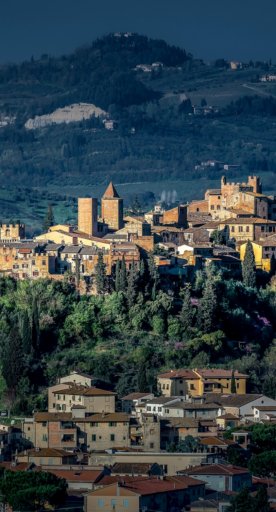
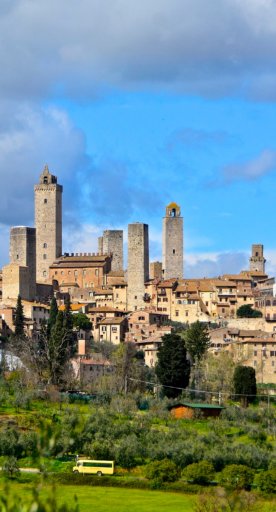
With its unmistakable profile emerging among the hills, San Gimignano is one of the most iconic places in Tuscany. The stone towers, visible from afar, construct a unique skyline that tells of the ambition and wealth of the great medieval families when the village was a strategic stop along the Via Francigena. Not for nothing is it known as the “Manhattan of the Middle Ages”.
Walking through the historic center, you enter a perfectly preserved setting: Piazza del Duomo, the Collegiate Church of Santa Maria Assunta and the Palazzo Comunale (Town Hall), as the civic and political face of the city. To climb the Torre Grossa is to embrace rooftops, countryside and rows of vines with one of the region’s most celebrated views.
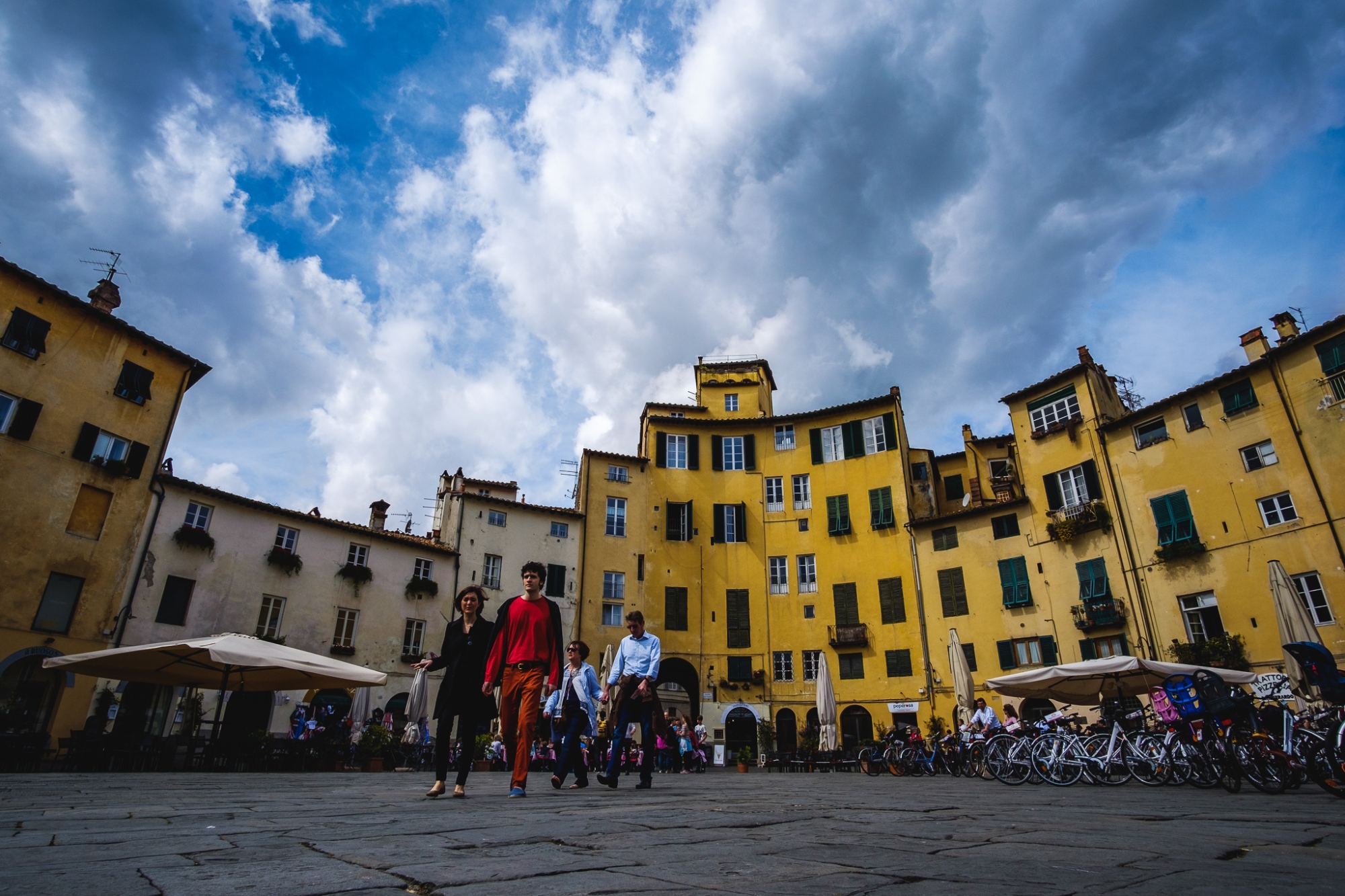
Enclosed by a circle of perfectly preserved Renaissance walls, Lucca is a city of quiet and measured grace. Walking along the tree-lined ramparts that hug the historic center means slowly snuggling into its rhythm, observing rooftops, hidden gardens and bell towers emerging beyond the walls.
Inside, the city retains a compact and harmonious layout, where Roman, medieval and Renaissance traces coexist naturally.
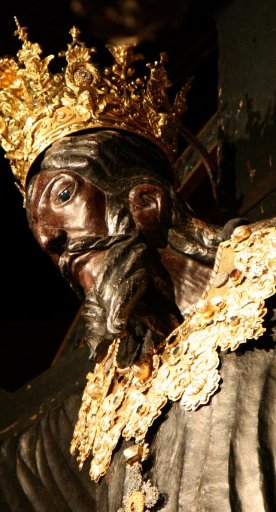
Piazza dell’Anfiteatro, constructed on the ancient Roman arena, retains its elliptical form and is still one of the most recognizable and experienced spaces. Not far away, religious architecture tells the story of Lucca’s character, ever linked to places of worship: the Cathedral of San Martino, with its asymmetrical Romanesque façade, holds masterpieces such as the Holy Face and the tomb of Ilaria del Carretto, while San Michele in Foro and San Frediano reveal a decorative richness expressed through light, marble and silence.
Let your gaze then ascend to the towers that polka-dot the urban fabric.
Between cobblestone streets, the surplus of squares and streets like Via Fillungo, the city invites unhurried movement, leaving room for discovery.
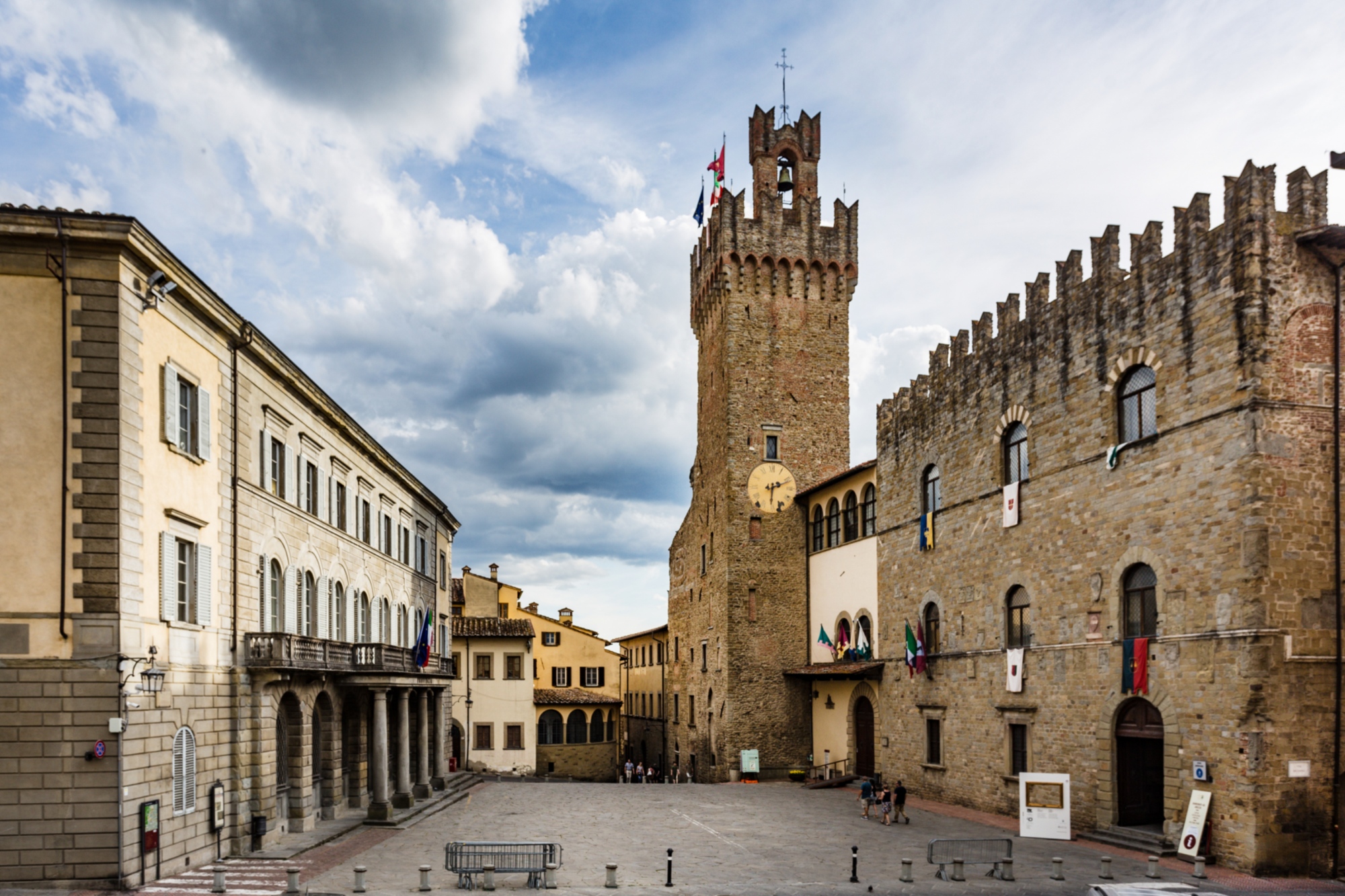
More open in landscape, Arezzo is perched on a hill and overlooking four valleys. It retains a solid and authentic character of stone, broad perspectives and a history that surfaces all over.
Its ancient origins—Etruscan first, Roman later—are still legible in the urban design and the remains of the amphitheater, like deep scars carved by time.
The historic center unfolds in a succession of piazzas, churches and palaces that tell of centuries of autonomy, conflict and rebirth. Piazza Grande, irregular and scenic, is one of the most iconic places, its profile defined by the Vasarian Loggia that amplifies its sense of space. Not far away, the Basilica of San Francesco houses Piero della Francesca’s cycle of the Legend of the True Cross, a masterpiece that indelibly marks the city’s artistic identity.
Between the Parish Church of Santa Maria, the Duomo, the Medici Fortress and Roman remains, the city is defined through a sober and continuous historical presence.
Nestled on a hill between the Era and Cecina valleys, Volterra retains its compact and severe character enclosed by a double wall, Etruscan and medieval, that still defines its profile.
It is a city with a medieval appearance, where the old town atmosphere accompanies every step through the streets of the historic center.
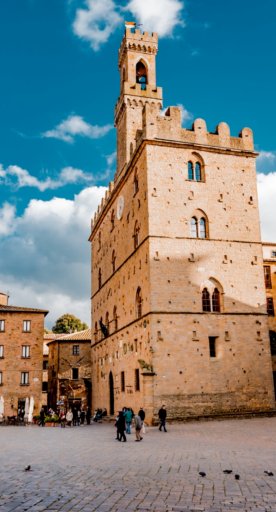
The artistic and religious heart is gathered around Piazza San Giovanni, with the Cathedral of Santa Maria Assunta and the Baptistery, while not far away, the Palazzo dei Priori—begun in 1208—dominates the square with its austere presence, as the oldest municipal palace in Tuscany.
Alongside its history, Volterra has guarded a distinctive tradition for centuries: working alabaster, making this one of the most important craft centers in Italy.
Just beyond the walls, the Etruscan Acropolis and the Roman Theater open onto a view of an understated and pristine landscape, as a natural continuation of the city. Volterra is left this way, amidst stone, silence and craftsmanship, in a metered rhythm that invites you to take a beat.
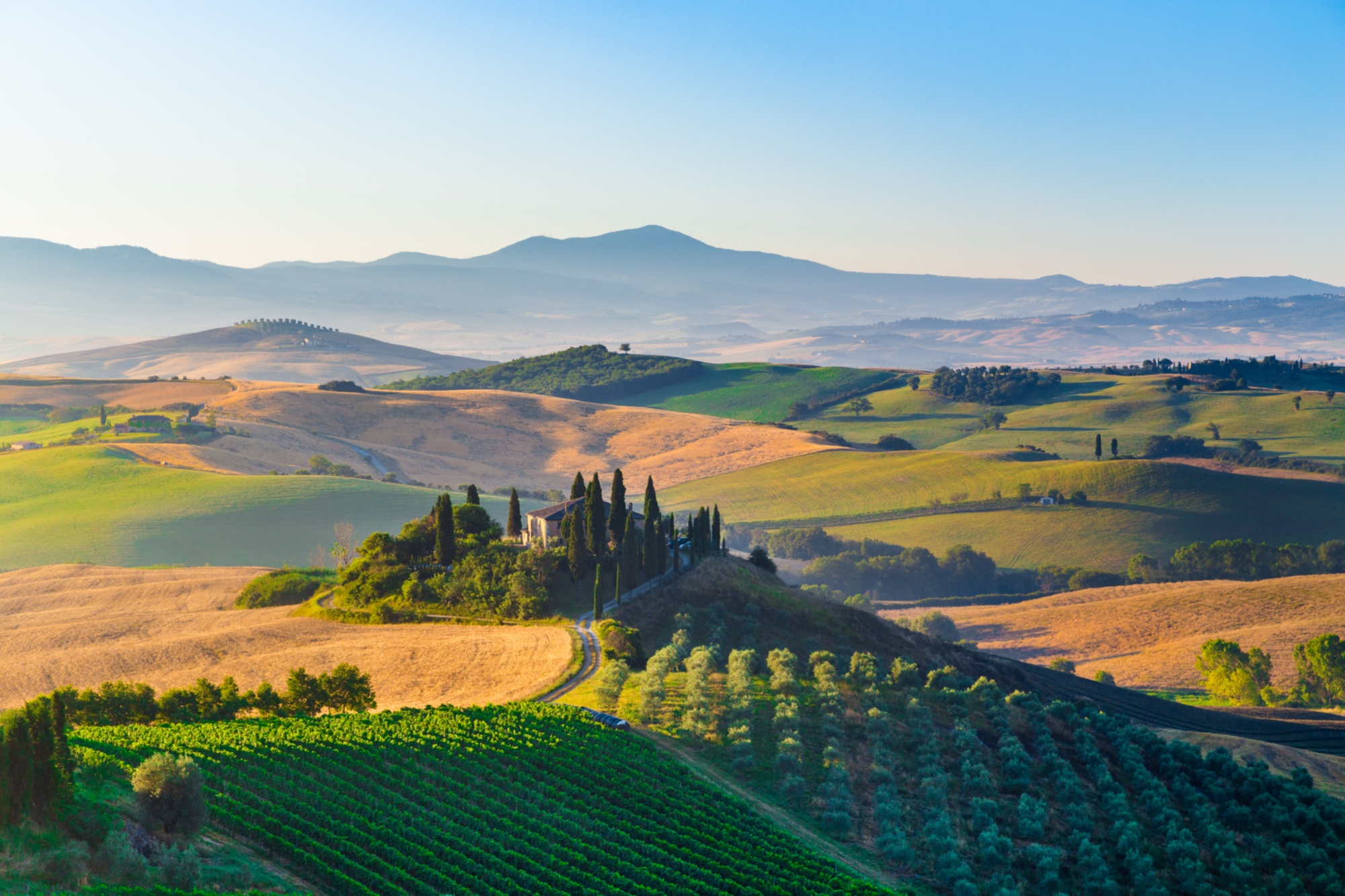
Soft hills, white roads that etch out perfect curves, rows of cypress trees that seem to guide the eye ... the Val d’Orcia, south of Siena, is one of the most recognizable and harmonious landscapes in Tuscany.
Here, nature is not a mere backdrop but dictates the pace.
The Orcia River flows through a valley shaped by time, among gullies, cultivated fields, olive groves and vineyards that coexist in an ancient design. From the hills, villages and fortresses, observe the territory from above, while the profile of Mount Amiata closes the horizon with its imposing presence to the west.
From the fortress of Radicofani, a privileged vantage point over the entire valley, the route descends to Pienza, designed in the Renaissance as an ‘ideal city’, continuing among the cypress trees of San Quirico d’Orcia, crossing Castiglione d’Orcia and reaching Montalcino, a land of great wines and views that change with the light.
Uniting it all is Via Francigena, the ancient path for medieval pilgrims, a common thread of slow and conscious tourism, knotted with steps, stops and open horizons. A territory to be traversed unhurriedly, letting the landscape more than anything else lead the way.
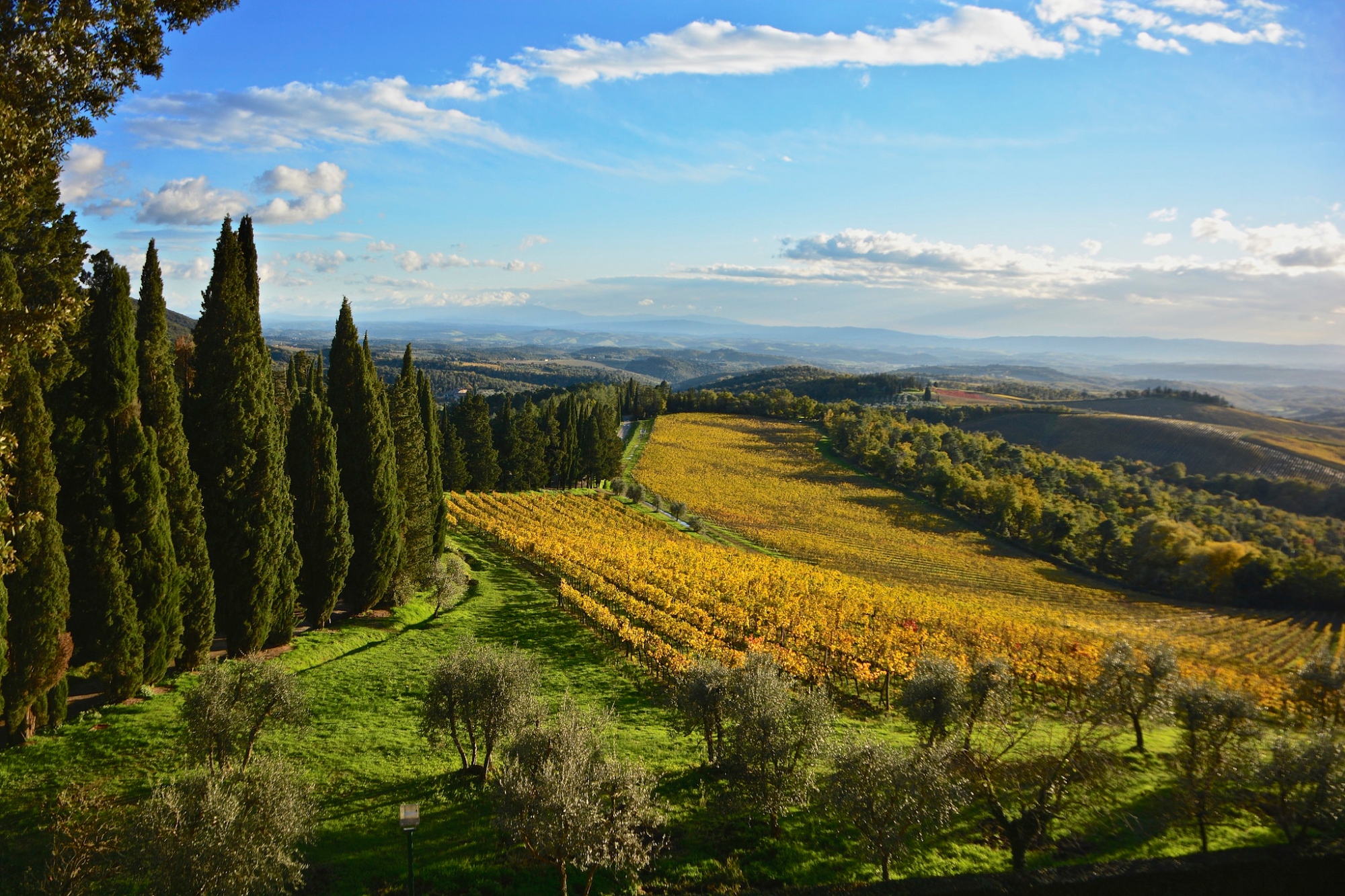
Hills designed with great care, rows of vines that follow the contours of the land, oak and cypress forests that alternate with parish churches, castles and petite villages: Chianti stretches between Florence and Siena like a harmonious landscape, where nature and history have coexisted for centuries in an unmistakable balance.
The land is the result of an extensive dialog between man and the land. Wine is the fil rouge that stitches the landscape, yet the area is also known for its extra-virgin olive oil, Cinta Senese cured meats and traditional country dishes.
The hills that are now home to vineyards and olive groves were once was the center of the Lega del Chianti, established in the 14ᵗʰ century by the Florentine Republic, and still tell a story of boundaries, identity and symbols, such as the famous black rooster.
Traveling through Chianti means following the rhythm of the roads weaving through the landscape. Via Chiantigiana connects Florence to Siena, passing through towns such as Greve in Chianti, with its porticoed square, Castellina with its fortress overlooking the hills, Radda and Gaiole.
All around, the collection of villages such as Montefioralle or Panzano emerge among vineyards, safeguarding wineries, stores and everyday life linked to the land.
Here, every stop is naturally intertwined with the journey, and even the distance covered between villages becomes an experience—a succession of hills, vineyards and horizons morphing at each turn.
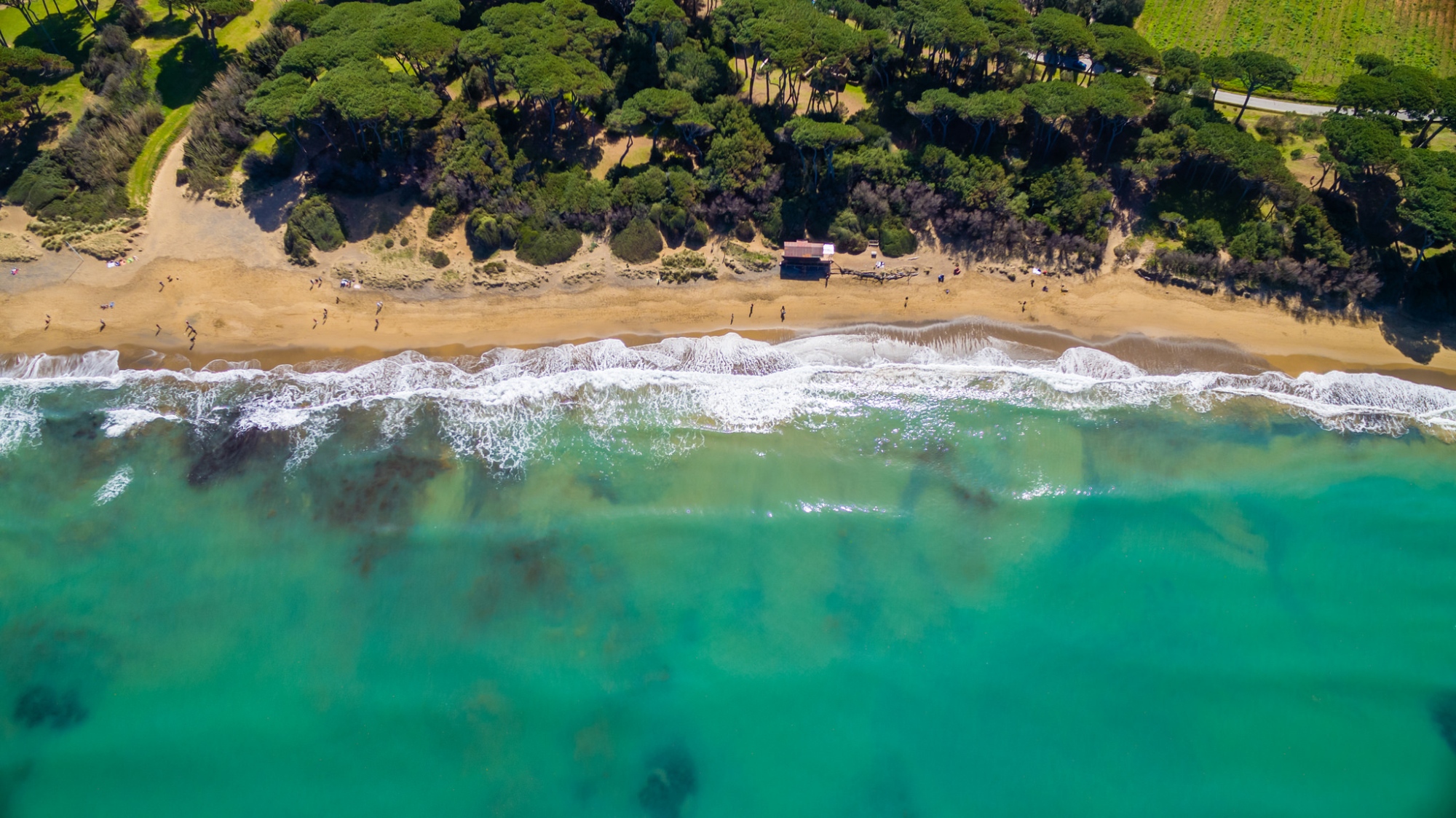
A stretch of coastline where nature is intense and the landscape is constantly changing. The Etruscan Coast alternates between beaches, pine forests and Mediterranean scrub, with the sea attracting the gaze and a truly ancient history resurfacing along the entire coastline.
It was here that the Etruscans founded Populonia, their only city by the sea, overlooking the Gulf of Baratti where necropolis and archaeological remains still dialog with the landscape.
The coast is traversed by following the Aurelia, between cliffs and sandy stretches, shady pine forests and headlands overlooking the water. Castiglioncello, San Vincenzo, Vada and Piombino narrate different chapters of the same territorial story, while the hinterland reveals a scattering of villages such as Suvereto, Sassetta, Montescudaio and Guardistallo, suspended between cultivated hills and silences.
The journey alternates sea and land, shifting between nature walks, thermal springs and archaeological remnants.
A coast to be experienced entirely, letting the light, scents and open horizons guide the experience.