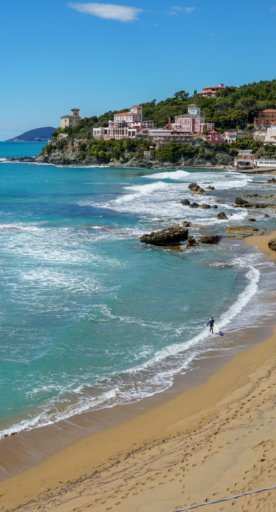
Livorno, city of the sea. Livorno, the Tuscan Venice with romantic canals. Livorno, home of shipyards and steel mills. These are the many faces of the city of Livorno, rendered in strong colors by Italian filmmakers, following in the footsteps of the Divisionists who were the first to paint this place in the early 1900s.
Livorno in Luchino Visconti’s “White Nights” (1957) is entirely reconstructed in the studio in a dreamlike manner, where the canals become the existential space in which the love-drama described in Fëdor Dostoevsky’s short story of the same name is consummated, played by Marcello Mastroianni and Maria Schell.
Instead, the 1960s Bagni Pancaldi is the place to begin a life lived to the fullest or down-and-out, in search of success in cinema, in Paolo Virzì’s 2020 “La prima cosa bella” (“The First Beautiful Thing”). In this moving and engaging film, the 2 exceptional protagonists of Micaela Ramazzotti and Stefania Sandrelli describe the fascination exerted by cinema in the dreams of Italians in the years postwar and during the economic boom.
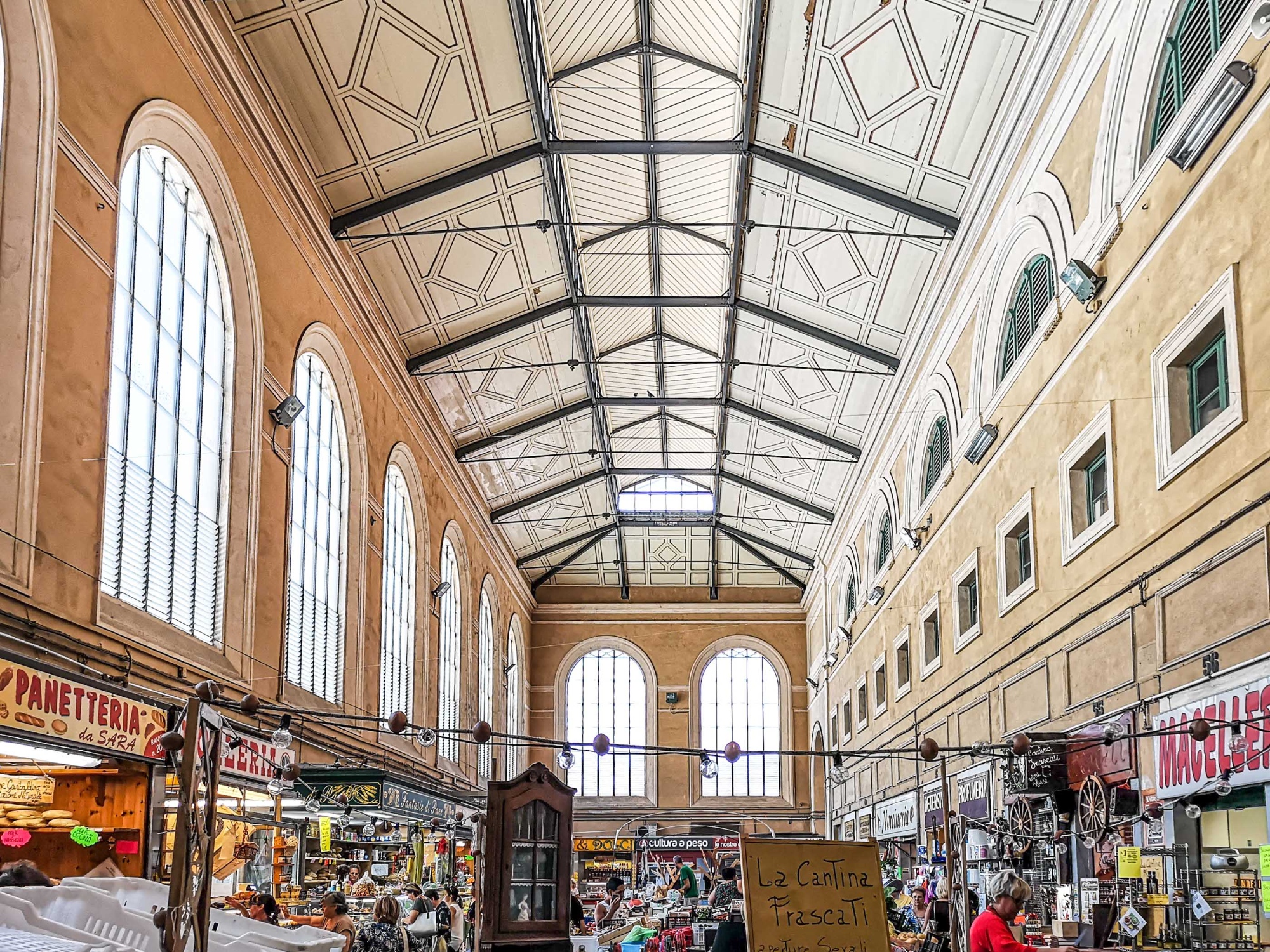
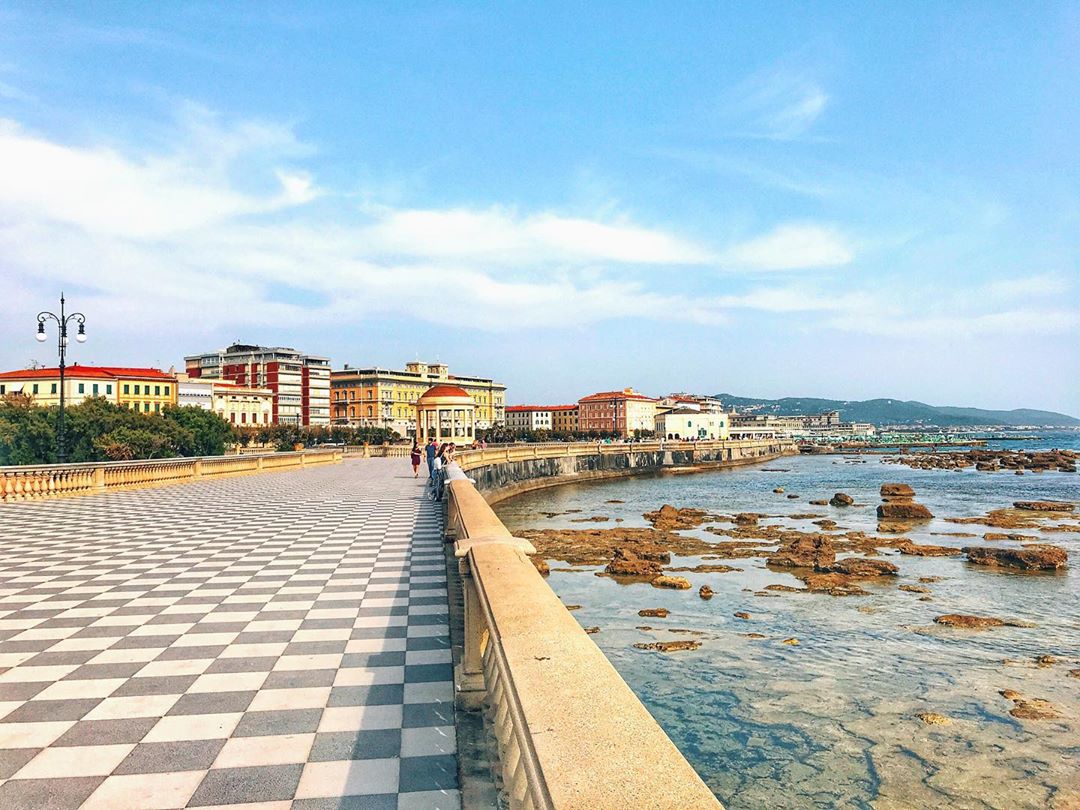
The city of Livorno has been chosen for the Mediaset miniseries, “Tutto quello che ho” (2025), starring Vanessa Incontrada and Marco Bonini. For 4 weeks, the set covered various areas of Livorno including the Venezia district, the Garibaldi district, the Mascagni Terrace, the Scoglio della Regina (where the police station was reconstructed), the Vettovaglie Market, the municipal cemetery, the former bus depot and the waterfront. In the miniseries, Lavinia (Vanessa Incontrada) and Matteo (Marco Bonini) are a lawyer and a policeman, a mother and a father. A close-knit couple whose equilibrium is shattered when their 18-year-old daughter Camilla mysteriously disappears.
Another TV series, this time by Rai, chose Livorno to set the events of “Romanzo Famigliare” (2018), which stars Vittoria Puccini, Guido Caprino and Fotinì Peluso. Shooting mainly took place at the Livorno Naval Academy, the port, the district of La Venezia and aboard the Amerigo Vespucci ship. Young clarinetist Micol is expecting a child following a relationship with her young teacher, Frederick. Her story mirrors that of her mother Emma who, in turn, fell pregnant at the age of 17. The latter, in her maturing journey, will return to Livorno, her hometown, where she will have to come to terms with her past, especially with her overbearing father, a wealthy industrialist.
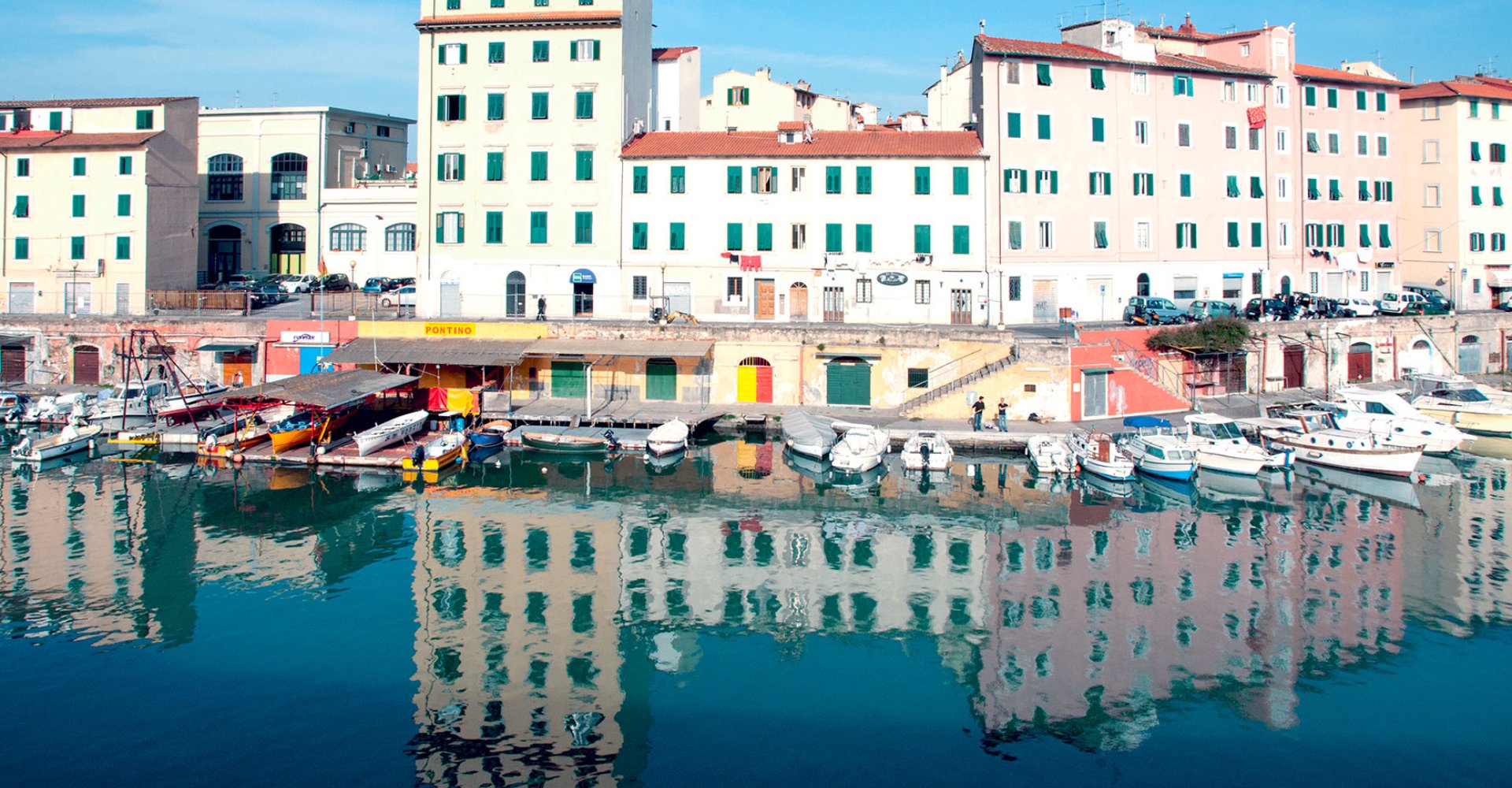
Not to be overlooked is Fausto Brizzi’s 2012 audience favorite “Maschi Contro Femmine” (“Men vs. Women”). The film, a comedy with an ensemble cast and involving multiple Italian cities, also made a stop in Livorno, a city that serves as the backdrop for the events involving the Tuscan protagonists, with scenes set in the port and waterfront.
The picturesque Tyrrhenian coastline is then the backdrop for the 2012 film by Livorno musician, screenwriter and director Carlo Virzì, “I Più Grandi di Tutti” (“The Greatest of All”), a musical comedy that aims to bring the public’s attention to some little-known musical realities that have had a large following locally. Overall, the film shows an unprecedented Tuscany where rock music unites the youth.
For the big screen, director Francesco Bruni chose Livorno as the set for most scenes in his 2020 film “Cosa Sarà” (“Everything’s Gonna Be Alright”). A dramatic film that lightly and humorously recounts the experience of his illness, leukemia, inspired by his real-life story. The protagonist is an uncommon and good Kim Rossi Stuart. Filming involved various views of the city, including the district of Venezia Nuova and the Mascagni Terrace.
A film selection produced in collaboration with the Toscana Film Commission, which supports film and audiovisual productions shooting in the region.