Go to main content
Pellegrino Ansaldi Botanical Garden

Glimpses of Tuscany

7 scenic spots among hills, villages and cities of art

To grasp the beauty of Tuscany from an elevated position or vantage point is to interpret the territory in all its languages. The landscape is constantly changing in an alternation of sea and mountains, hills, villages and cities of art, offering ever-changing views.
Here are 7 scenic places to observe Tuscany, choosing viewpoints able to reflect iconic yet somehow unobvious images.

Contents
  • 1.
    The winding roads of the Val d’Orcia and Terre di Siena
  • 2.
    A silent village in the Apuan Alps
  • 3.
    A botanical garden among the rocks
  • 4.
    A terrace by the sea
  • 5.
    Hills framed by art
  • 6.
    An Etruscan city carved into the rock
  • 7.
    Florence as seen from above

The winding roads of the Val d’Orcia and Terre di Siena

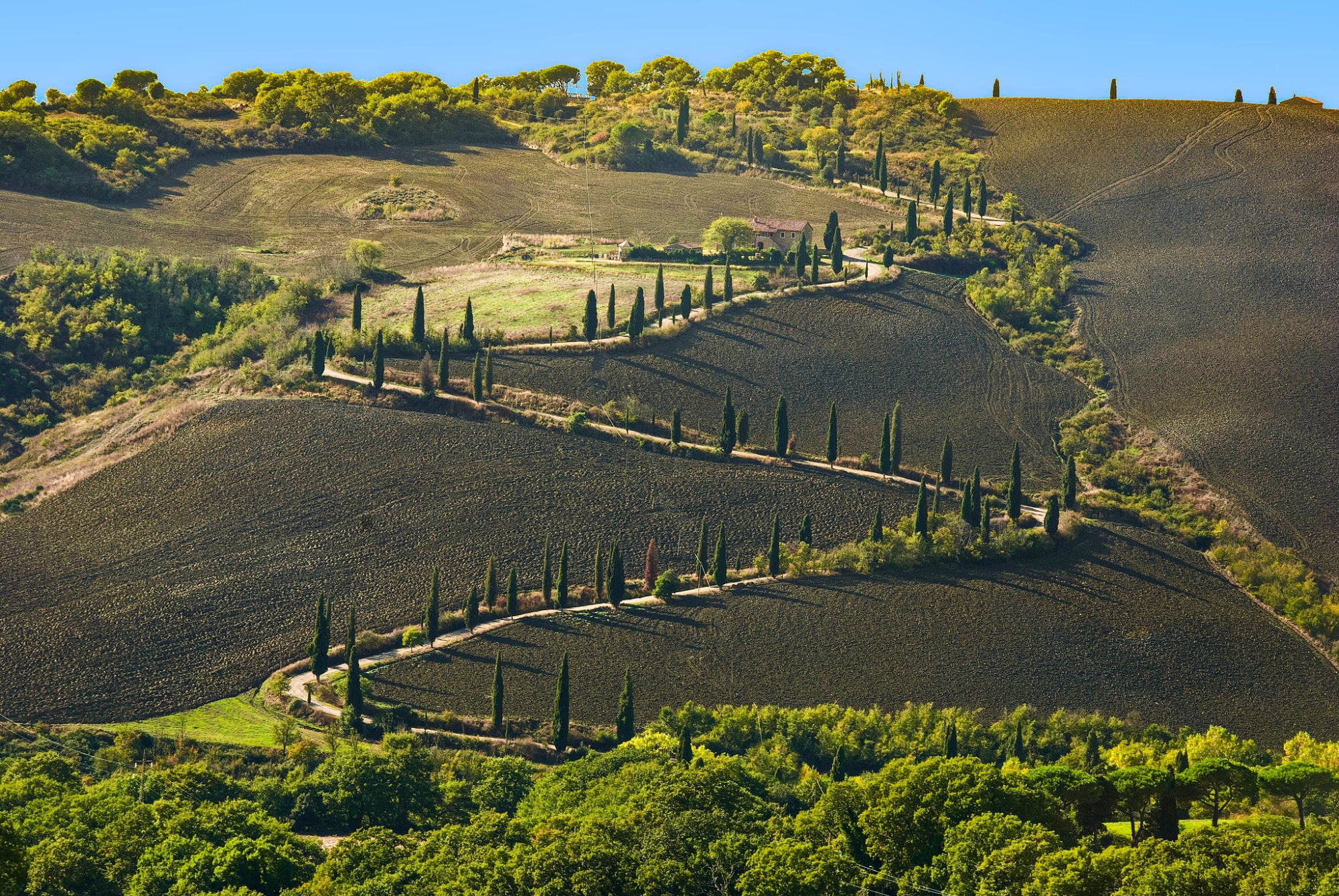
A panoramic view of the Regional Nature Reserve of Lucciolabella
Regional Nature Reserve of Lucciolabella - Credit: John Weiss (CC BY-NC-ND 2.0)

In the heart of unspoiled, almost dreamy countryside, dotted with soft, rolling hills, winds a road lined with cypress trees. This is undoubtedly the image that best represents Tuscany and its landscapes. Following the ancient Via Cassia southward from Siena, you encounter one of the most fascinating and characteristic places in the region: the Val d’Orcia, a UNESCO World Heritage Site.
As soon as you enter this evocative valley, a unique and extravagant territory opens before your eyes. Here, vineyards, olive groves, cultivated fields and woods form a harmonious mosaic, punctuated by villages rich in art and architecture, such as San Quirico d’Orcia and Pienza.
One of the most famous viewpoints in the Val d’Orcia is undoubtedly the road inside the Regional Nature Reserve of Lucciolabella. This fine scenic road is visible from La Foce, in the territory of Chianciano Terme, south of Pienza.
The winding road around Monticchiello—a hamlet of the municipality of Pienza—is also particularly photographable. The vantage point is located on Via Campo Alla Piana, before reaching a farm along the road.


Finally, the road leading to the Podere Baccoleno in Asciano, nestled in the Crete Senesi landscape, deserves a mention. The cypress-lined dirt road is private, but along the main road, the SP60 between Asciano and San Giovanni d'Asso, you can park and walk to the ideal viewpoint.

A silent village in the Apuan Alps

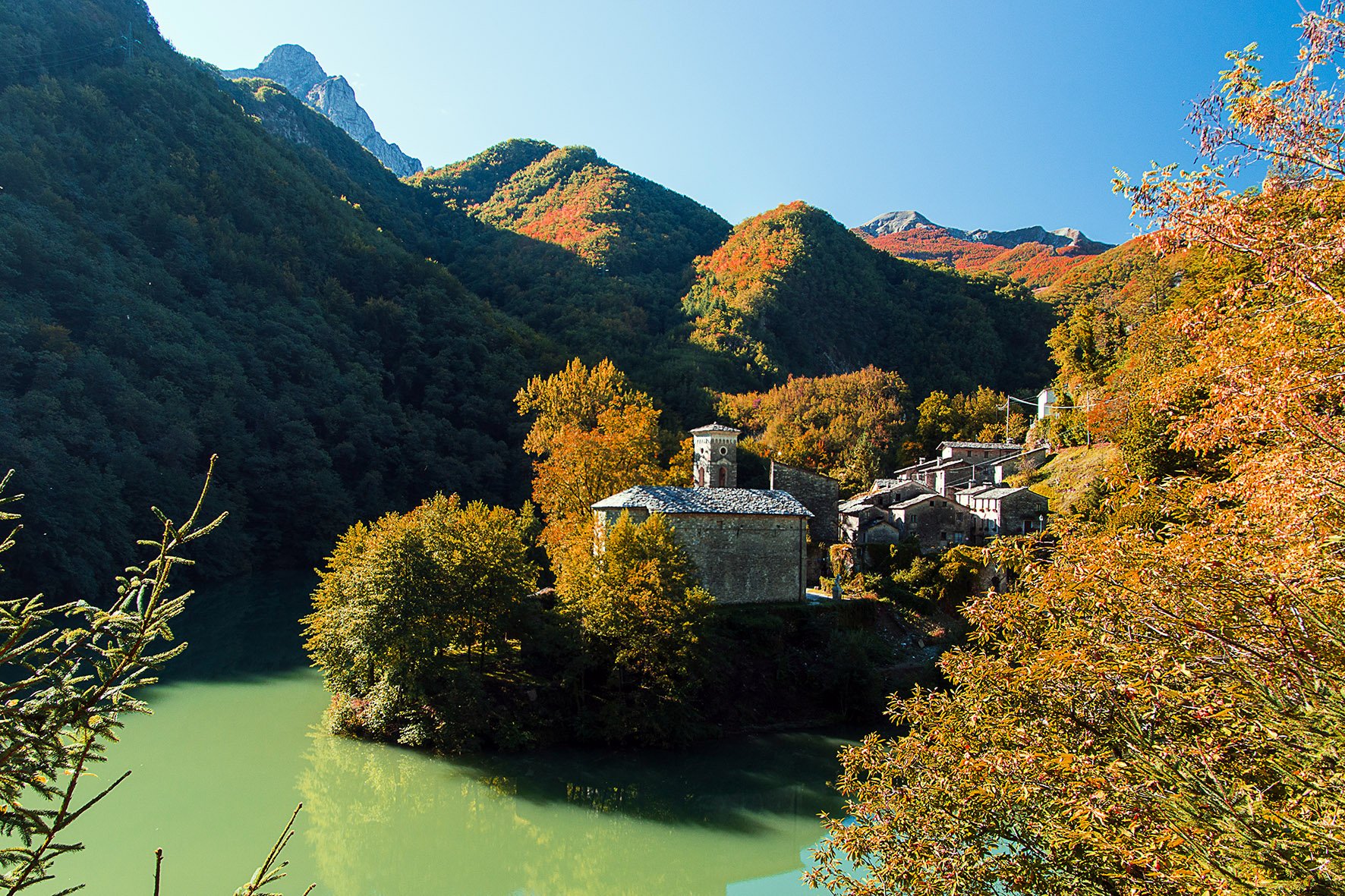
A panoramic view of Isola Santa in autumn
Isola Santa in autumn - Credit: Cristiano Antonini

In the heart of the Apuan Alps, along the road down to the coast of Versilia, you encounter an oasis of silent beauty, an unexpected place that seems to belong to another dimension. 
It is Isola Santa (Holy Island), a truly old village built in the Middle Ages around a place hospitality for travelers and pilgrims, on the banks of the Turrite Secca River.
For centuries, Isola Santa was a place to stop and replenish for those crossing the Foce di Mosceta, a natural passage connecting Versilia and Garfagnana. 
In 1950, the construction of a dam for hydroelectric power generation forced residents to abandon their homes. Later, a reclamation project launched in the 2000s restored new life to the shore of the lake, leaving the village suspended in time. Today, Isola Santa appears almost uninhabited, frequented only by a few fishers and passing travelers.
To observe the village from a panoramic perspective, it is possible to reach the lookout point near the dam.

A botanical garden among the rocks

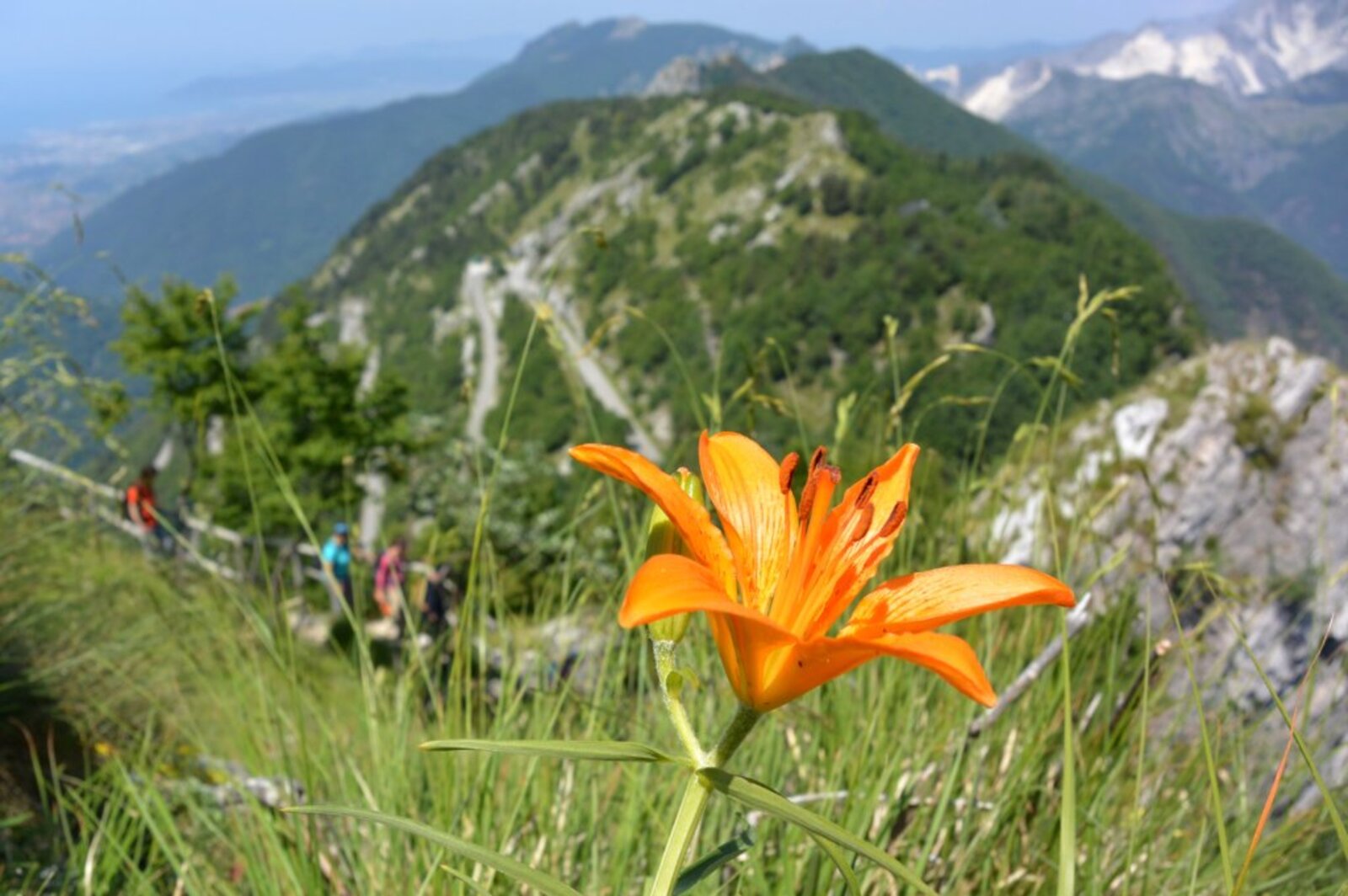
A panoramic view of the Apuan Alps from the Botanical Garden
Orto Botanico

At Pian della Fioba, over Massa at some 3000 feet or 900 meters above sea level, the Botanical Garden of the Apuan Alps opens as a green oasis overlooking one of Tuscany’s most spectacular mountain landscapes. 
Reached by driving along the scenic road that climbs from Massa to Arni or along the Via dei Marmi (Marble Road), the garden is dedicated to the Massa physician and botanist Pietro Pellegrini, set on a rocky mass that dominates the surrounding environment.
The species here are largely wild and tell of the extraordinary biodiversity of the place. 
The lower part of the area is structured as an educational itinerary. Going up, you enter a more natural environment, where you can observe numerous endemic species related to this specific mountain environment.

A terrace by the sea

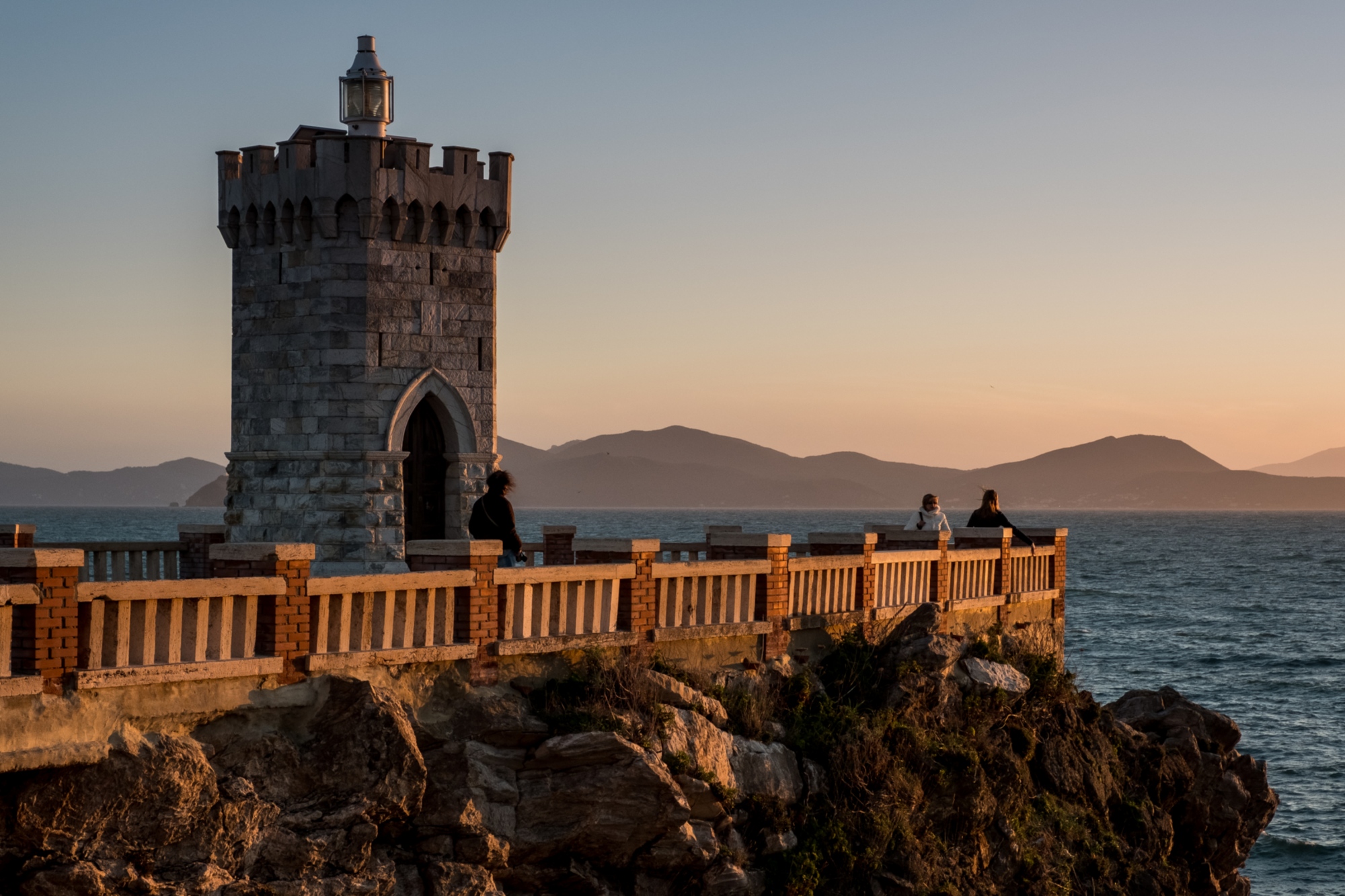
Panoramic view of Piombino at sunset
The panoramic terrace - Credit: Shutterstock.com / robertonencini

Piazza Giovanni Bovio in Piombino is located at the top of the promontory, opening like a terrace facing the sea on three sides. 
Built in the 1920s following the demolition of an Etruscan fortification, the square follows the profile of the cliff and offers a broad and spectacular view of the Piombino Channel, encompassing much of the Tuscan Archipelago and, on clear days, extends as far as Corsica and Giannutri.
At the far end of the terrace arises the Rocchetta, a neo-medieval lighthouse-tower that marks the most advanced point towards the sea.

Hills framed by art

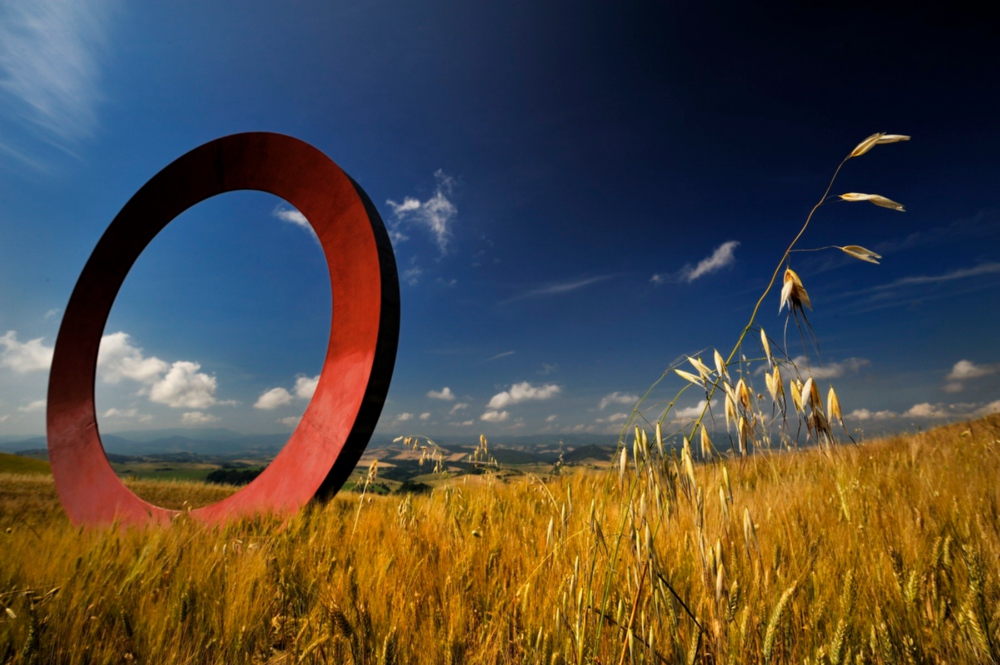
Staccioli’s work in the countryside around Volterra
Staccioli’s work in the countryside

Volterra stands on high ground between the Cecina and Era valleys, surrounded by Etruscan walls that are still well preserved. Before entering the town, you encounter Mauro Staccioli’s sculptures, large circular steel works that frame the hilly landscape, transforming the view into an artistic experience.
From the historic center, comprised of narrow streets and stone buildings, the view then opens to the surrounding countryside.

An Etruscan city carved into the rock

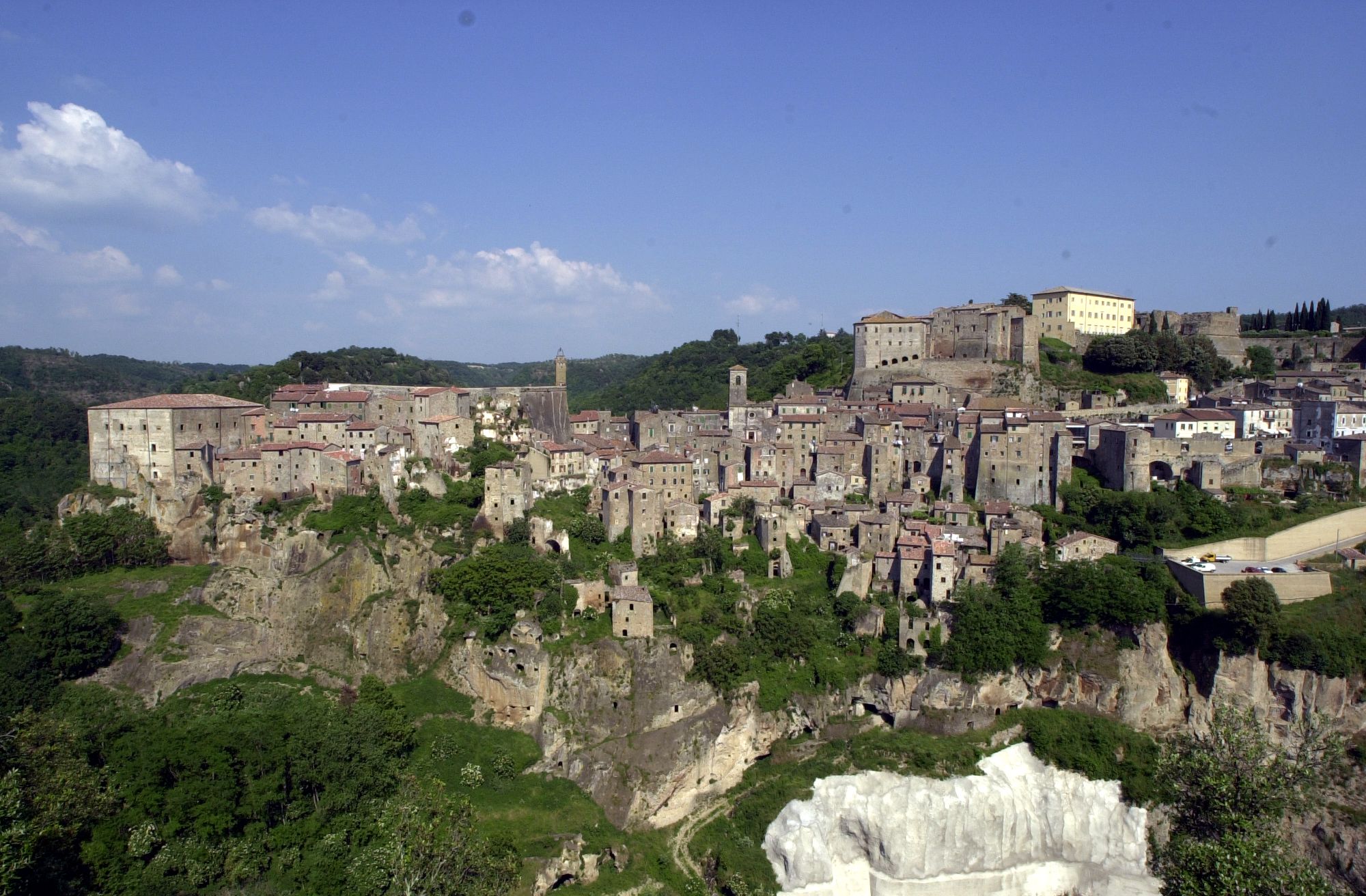
A glimpse of the village of Sorano
Sorano

Sorano is an ancient town perched on a tuff outcrop and carved into the rock. It is traversed by the striking Vie Cave, deep pathways carved in stone and frequented since Etruscan times. The historic center is a web of paved alleys, climbs and descents, where houses are propped against the cliff face, in a continuous dialog between architecture and nature.
To take in the village from within, one of the most striking points is the Masso Leopoldino, also known as Rocca Vecchia, a fortified structure with a panoramic terrace and clock tower, from which the vista embraces the town from overhead. 
To catch a glimpse from the outside, however, it is worth heading to the Archaeological Park and gazing out from the San Rocco quarries, from where Sorano appears in full scenic force.

Florence as seen from above

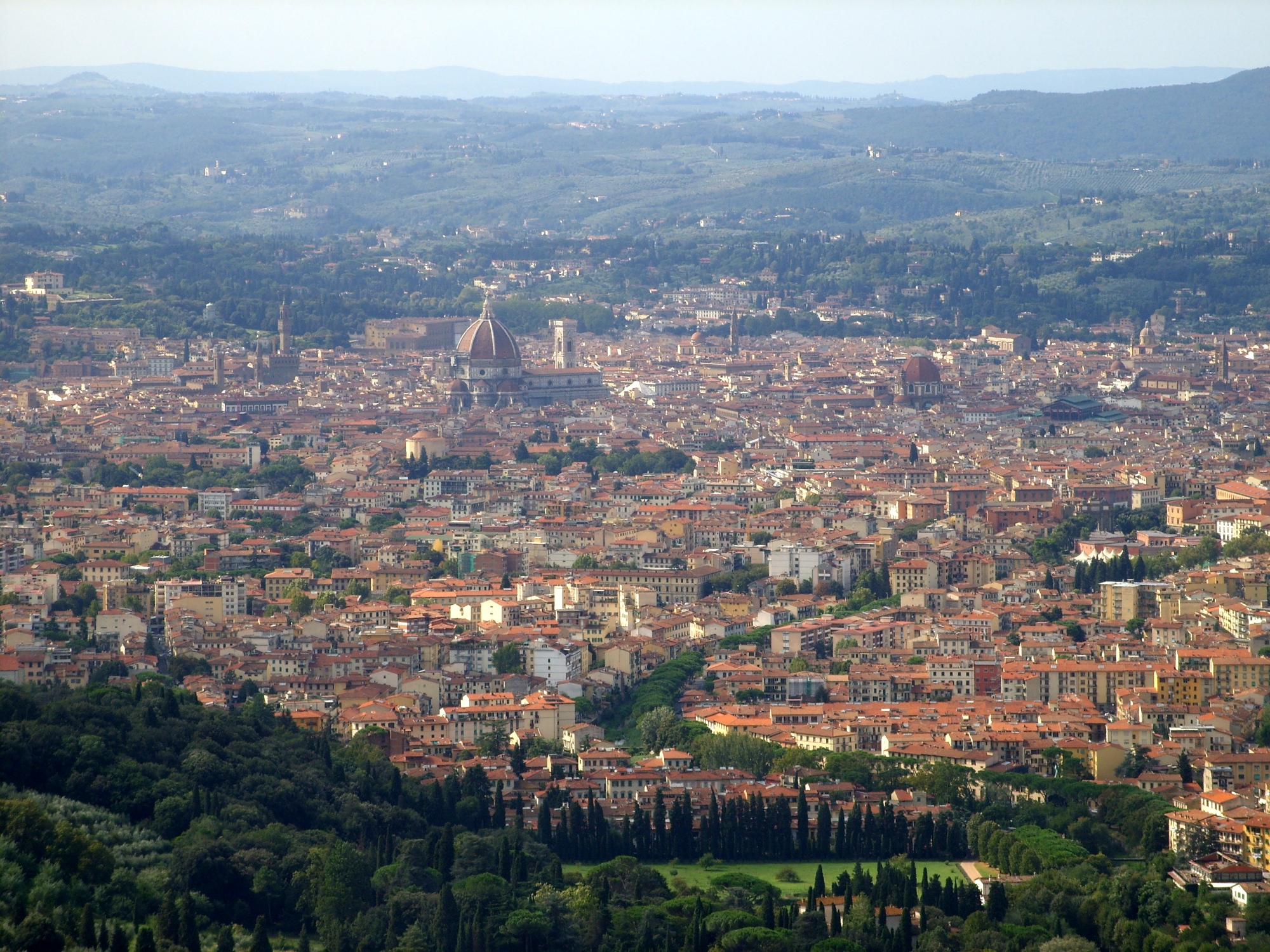
Florence as seen from Fiesole
Florence as seen from Fiesole - Credit: prinsesse Lea

Florence is ready to be observed from several vantage points, each capable of revealing a different side of the Renaissance capital. 
Southwest of the city, Bellosguardo is a gentle, reserved hillside giving sweeping views of the historic center. Numerous villas of Renaissance origin stand here, over the centuries having welcomed personalities such as Giuseppe Garibaldi, Ugo Foscolo and Henry James, who were attracted by the quiet and beauty of the place.
To the northeast, just 5 miles or 8 kilometers from the city center, Fiesole looks down on Florence from up high. Of Etruscan origin, it was one of the main settlements on the southern slopes of the Tuscan-Emilian Apennines before being conquered by the Romans. In the Middle Ages, its role declined with the political and economic rise of Florence, but from the 14ᵗʰ century onward, it became a favorite vacation spot for the most influential Florentine families, as evidenced by the historic villas scattered throughout the hills.
Within the territory of Fiesole, Monte Ceceri offers one of the most striking views of the city. Now a protected natural area, this expansive hillside park is also linked to Leonardo da Vinci, who experimented with human flight right here. 
To reach this vantage point is to combine the beauty of the landscape with a strong historical evocation.

What’s nearby?

Must-see places, stage-by-stage routes, events and tips for your trip
Events • 4 results
Ideas • 109 results
Itineraries • 48 results
Travelogs • 4 results