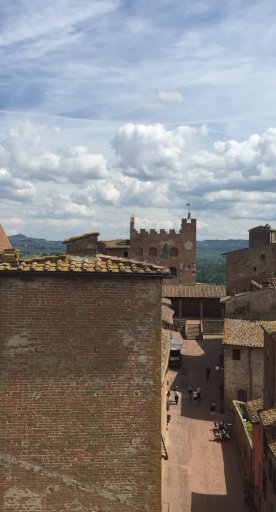
An ideal destination for an out-of-town trip, Greve in Chianti is located about 18 miles or 30 kilometers from Florence and is considered one of the gateways to the Chianti Classico area.
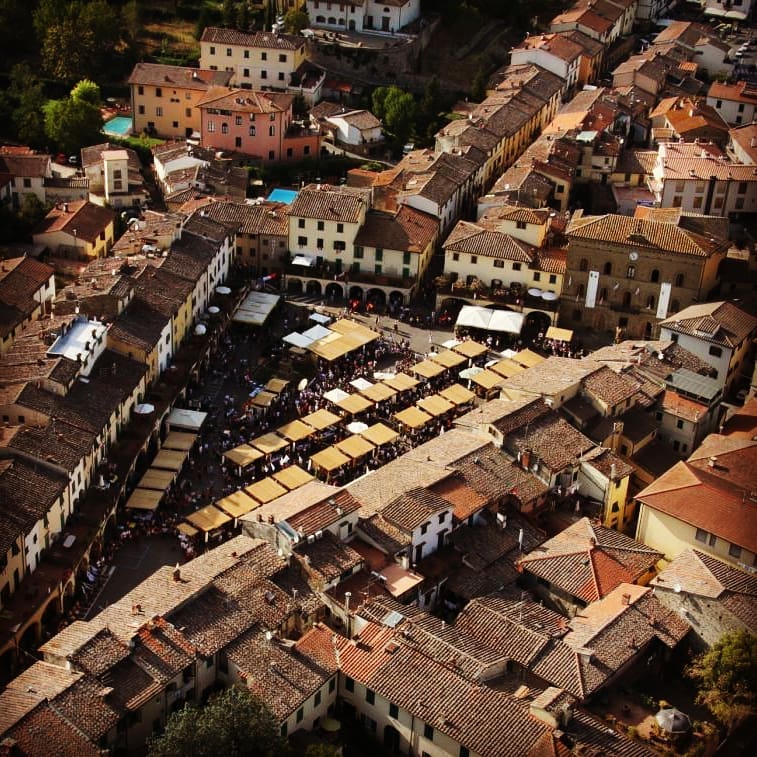
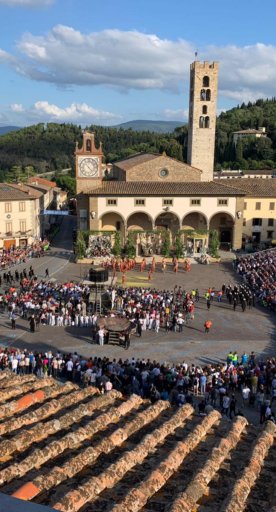
The historic center revolves around the distinctive triangular piazza that, for centuries, has hosted events and happenings much loved by the community.
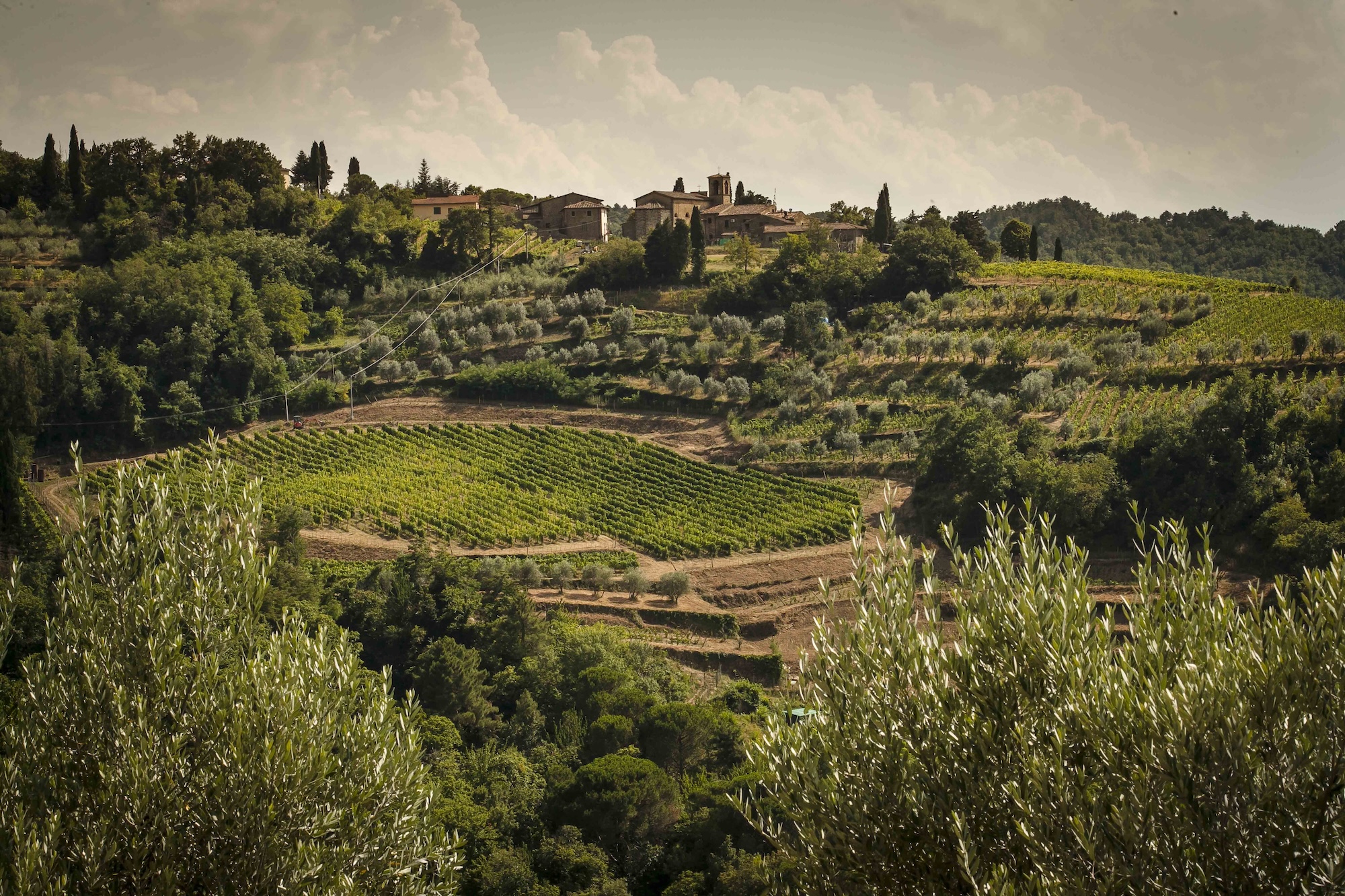
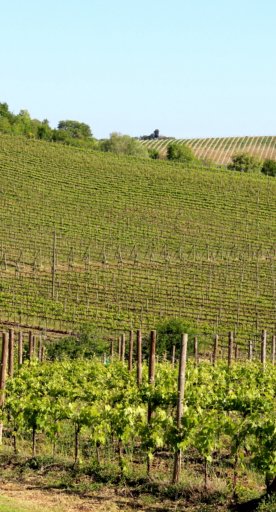
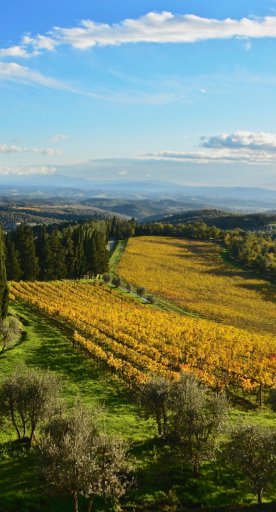
Surrounding the village is a landscape of vineyards, olive groves, small towns, castles and villas, in an area that has inspired travelers, artists and explorers throughout the ages.
Here are 6 stops to discover Greve in Chianti and its surroundings.
The heart of Greve in Chianti, Piazza Matteotti is fulcrum of the town’s development over the past 5 centuries.
The south side is overlooked by the Santa Croce Church, which contains works attributable to the school of Beato Angelico.
All along the porticos are workshops, wine bars and stores offering up local crafts and food products.
From spring to fall, every 4ᵗʰ Sunday of the month, the piazza hosts the organic market of Il Pagliaio, while in September it becomes the center of the Chianti Classico Expo, an event that brings together wine producers and enthusiasts. Each Easter Monday, the square becomes the setting for the famous antiques fair.
The space is also overlooked by the Santa Croce Church, which houses a triptych by Bicci di Lorenzo depicting the Madonna and Child with Saints.
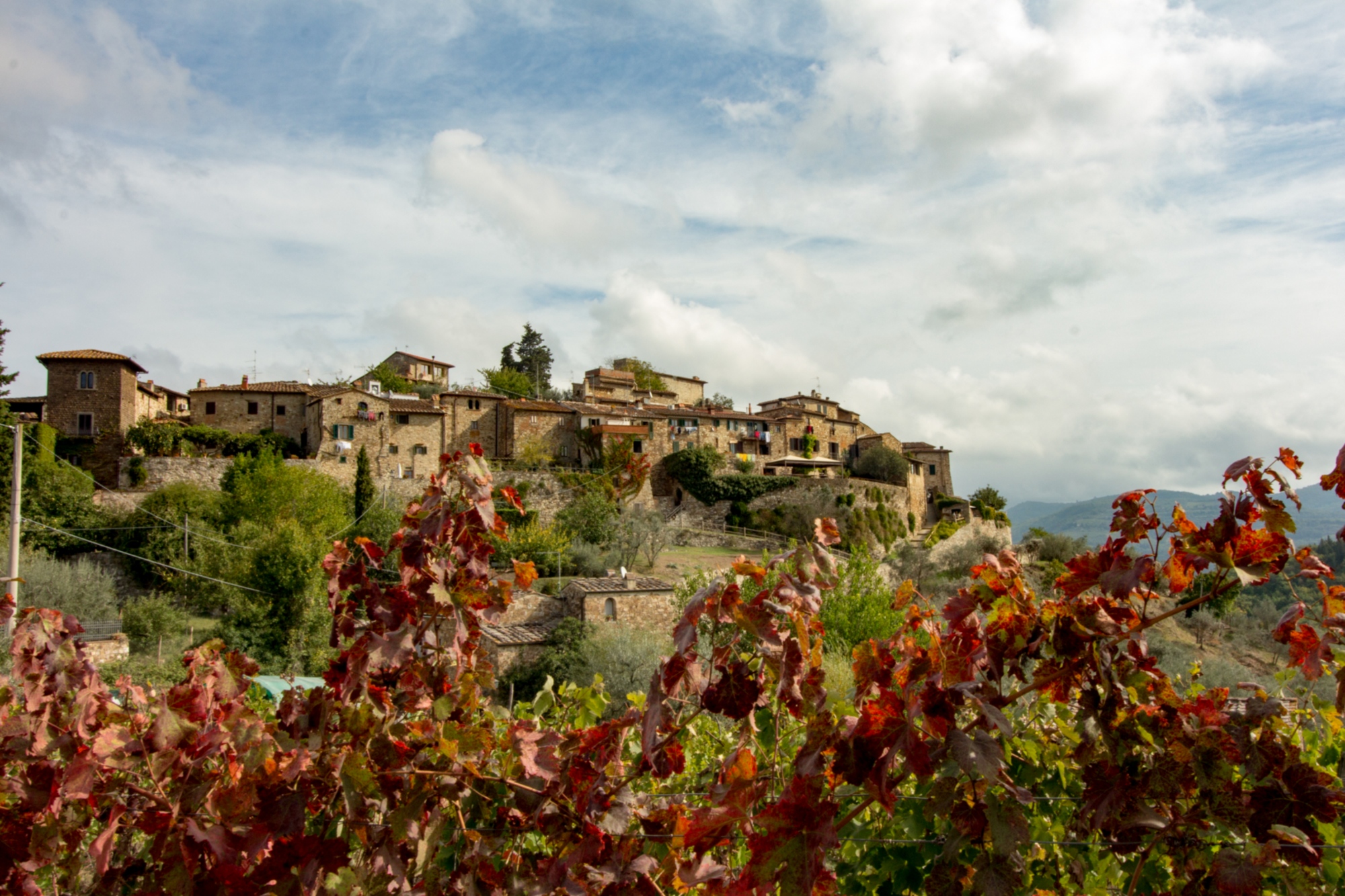
Just minutes from the center of Greve, Montefioralle is one of the oldest nuclei in Chianti.
Still enclosed in medieval walls, it retains a compact layout of stone houses and streets that create an intimate and cozy atmosphere.
This is an ideal place for a slow stroll or a stop for lunch, immersed in a setting that has remained unaltered over time.
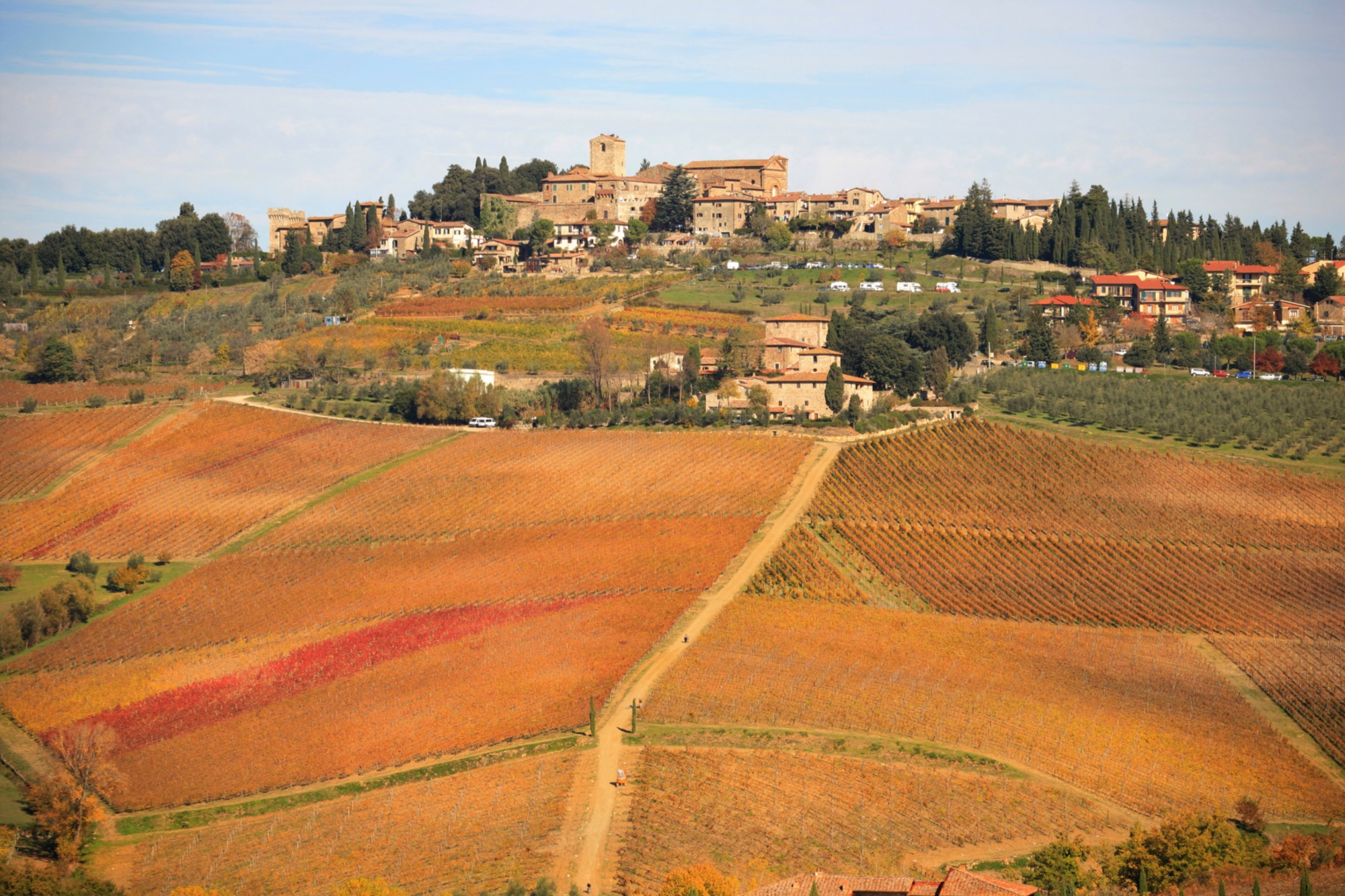
Located some 1640 feet or 500 meters above sea level, Panzano in Chianti dominates the surrounding landscape with sweeping views of the hills.
The historic center preserves the San Leolino Church, one of the most important Romanesque remnants in Chianti, which houses works by artists such as Giovanni della Robbia and Raffaellino del Garbo.
The village is also known for the Vino al Vino wine fair, held on the 3ʳᵈ weekend of September, and for the presence of Dario Cecchini’s famous butcher shop.
Lamole is a small village nestled among vineyards, known for offering one of the most striking views in Chianti.
The quaint village is nicely contained, with a church, a restaurant and a small store, perfect for a quiet, photographic stop.
It is reached by driving along the Via Chiantigiana through a landscape embellished with vineyards, farms and historic villas.
Around Greve, the landscape is dotted with castles and historic villas that tell of centuries of history, including defensive architecture, noble residences and Italian gardens.
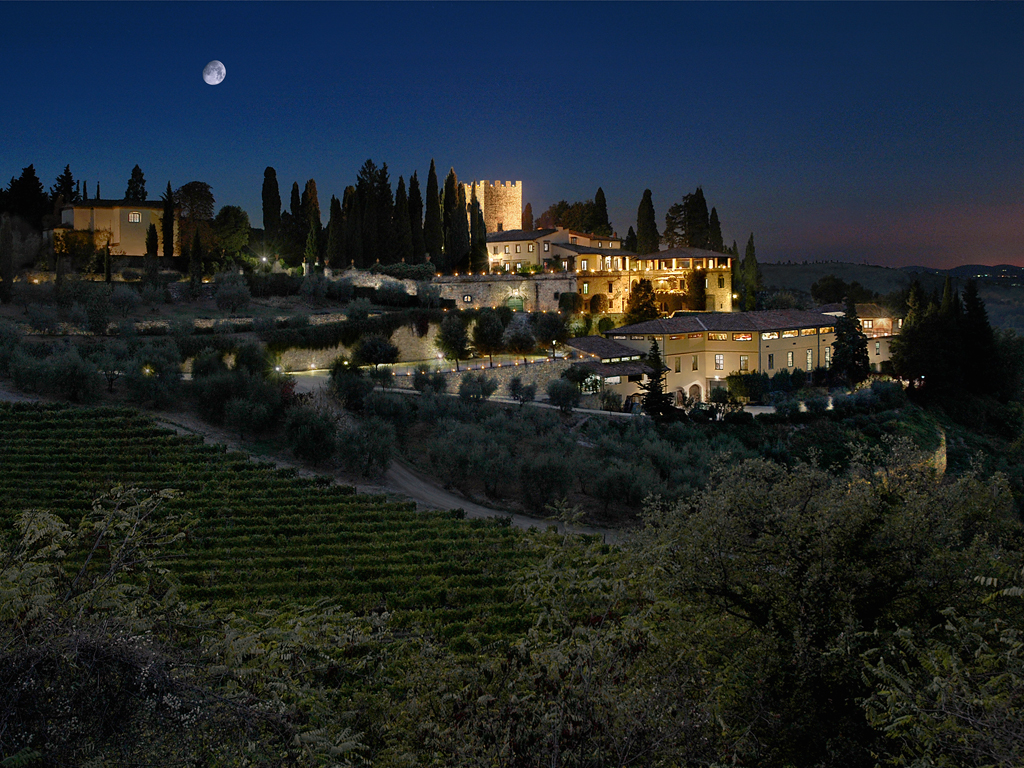
Perched on a hill that opens onto a wide panorama, Verrazzano Castle traces its origins to a likely settlement from Roman times.
In the past, it belonged to the family of the famous explorer and navigator Giovanni da Verrazzano.
Over time, the building lost its defensive function to become a farm then a manor house. With 19ᵗʰ-century renovations, it regained its present spectacular appearance, characterized by its turreted profile and complemented by its Italian garden.
Villa Vignamaggio was built by the Gherardini family in the 14ᵗʰ century and is now a wine estate with agriturismo.
Tradition has it that this was once the home of Lisa Gherardini, the Mona Lisa portrayed by Leonardo da Vinci, hence why the villa is also known as the Villa of the Mona Lisa.
In the 1990s, the property was chosen as a film set for Kenneth Branagh’s 1993 film Much Ado About Nothing, based on William Shakespeare’s play.
Also known as Vico de’ Lombardi, a name that recalls its Lombard origins, Vicchiomaggio Castle is first cited in documentation from 857.
Over the centuries, it belonged to prominent families, including the Buondelmonti and later the Scolari clans.
Of the original structure, a dizzying 13ᵗʰ-century tower crowned by a gallery that can be viewed to this day today.
The rest of the complex was converted into a villa in the 16ᵗʰ century, a period to which the present Italian garden also dates, defining its more elegant and residential appearance.
These properties form part of wineries that, by reservation only, open their doors to the public for tours and other experiences.