Go to main content
The Historic Rolling Stock Depot in Pistoia
Photo © Comune di Pistoia

Pistoia and Cinema: the most famous locations

Many film sets in Pistoia, from downtown historic buildings to mountain peaks

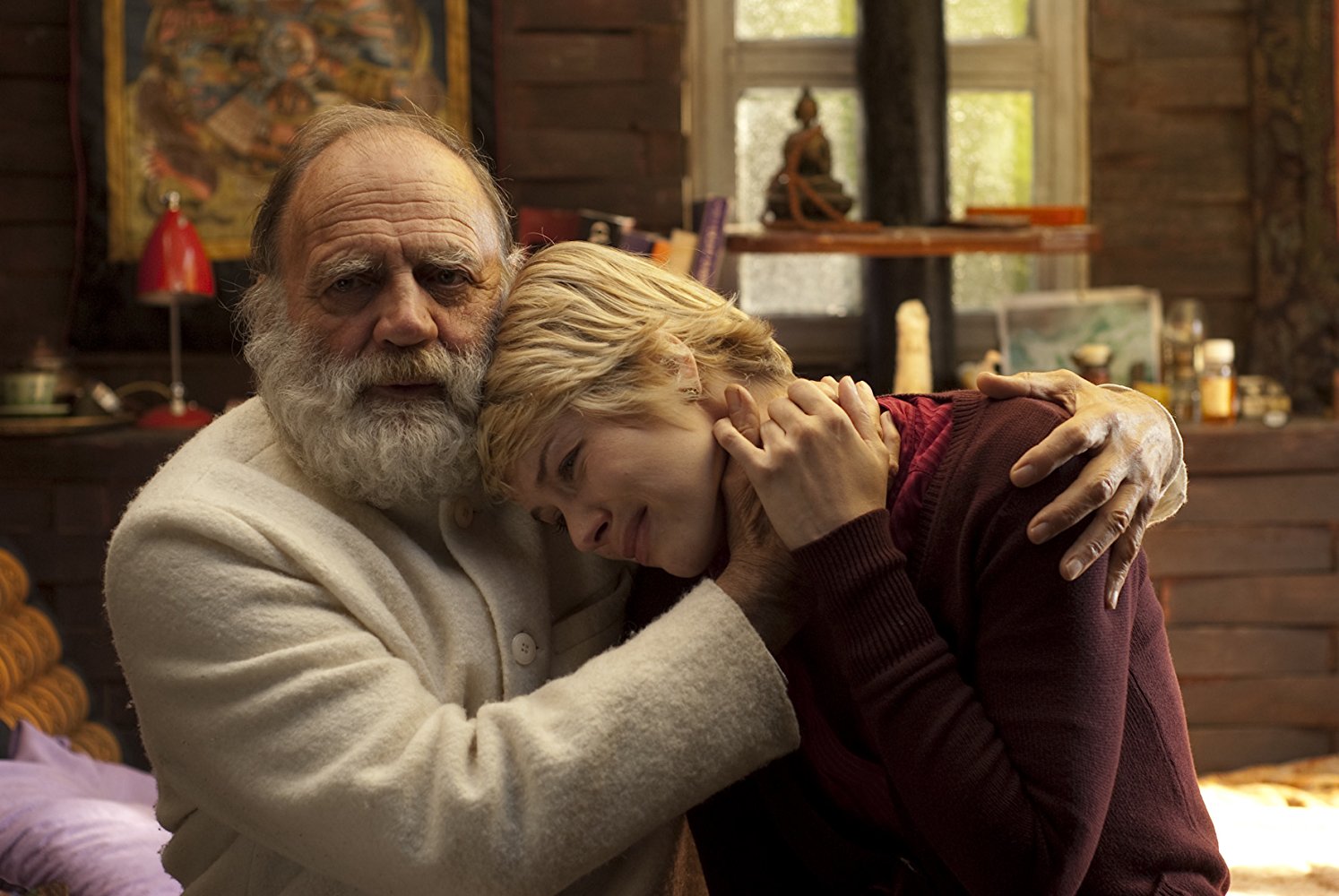
Thanks to its charming mountain locations and historic city center replete with monuments and monumental buildings, Pistoia has long attracted Italian and international filmmakers. One of the most evocative mountain villages in the Pistoia area, Orsigna, served as the set of the film “The End is My Beginning,” an account by Director Jo Baier of the last glimpse of the life of Florentine journalist and writer Tiziano Terzani (masterfully played by Bruno Ganz), who decided to live out his final days in that very location. Inspired by the book of the same name, containing the spiritual testament that Tiziano Terzani had left to his son Folco, the film presents viewers with all the magic and spirituality of a lush and still unspoiled place: the mountain landscape of Orsigna, on the peaks of the Pistoiese Mountains.
The End is My Beginning
The End is My Beginning - Credit: Rolf v. d. Heydt - © collina filmproduktion

Tuscan Director Leonardo Pieraccioni chose Pistoia to set his film “I Love You in Every Language in the World,” a sentimental comedy in which he plays Gilberto, a gymnastics teacher at a Pistoia school who is betrayed by his wife and pursued by a pupil, who reveals her feelings to him ... in all the languages of the world! When the man meets the girl’s mother, Marguerite, by chance, a complicit relationship arises between the two. The school principal, however, suspects the teacher of continuing to date the student and transfers him to a school in Borgo a Buggiano.

The center of Pistoia was also chosen to film the Rai TV miniseries “Le Ragazze di San Frediano,” where the Florence recounted in the novel by Vasco Pratolini was reconstructed.  Although the story is set in the Florentine neighborhood of the same name, the final scenes and most of the exterior shots were shot in Piazza Duomo in Pistoia, where the atmosphere of the Florentine neighborhood was recreated. The series follows the sentimental affairs of mechanic Andrea (Bob), played by Giampaolo Morelli, who is involved with 5 different women at the same time, including characters played by Vittoria Puccini and Martina Stella.

And again in Pistoia, scenes have been recreated that relate to the history of Florence. This is the case in the film based on Giovanni Boccaccio’s Decameron, “Wondrous Boccaccio” by Paolo and Vittorio Taviani, with some takes in Piazza del Duomo. To escape the epidemic of the plague, certain lads decide to take refuge in a farmhouse, telling each other a short story every day to pass the time. There is the one about Monna Catalina, abandoned in a church and rescued by Messer Gentile; the story of Calandrino, an awkward painter often mocked by his colleagues; the love affairs of Ghismunda; the novella of Sister Isabetta; and the sad affair of Federigo degli Alberighi and Monna Giovanna.

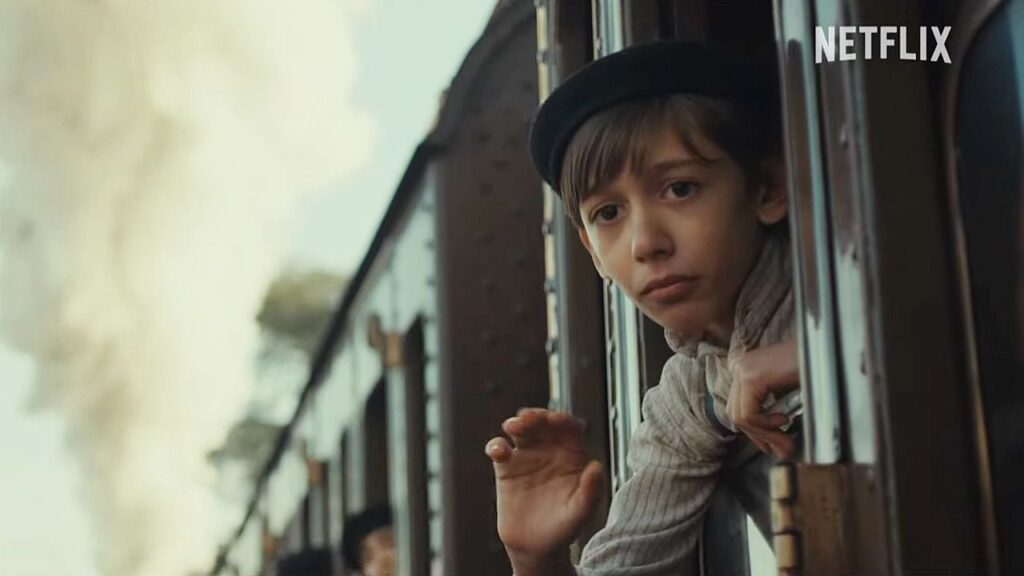
A scene from the film “The Children’s Train”
A scene from the film “The Children’s Train” - Credit: Netflix

Among the most recent film productions, Pistoia hosted some of the filming for “The Children’s Train” by Cristina Comencini, particularly in the Historic Rolling Stock Depot of the Fondazione FS and in the San Benedetto Church. The film is an adaptation of Viola Ardone’s novel of the same name. The events kick off in 1946, telling the story of Amerigo (Stefano Accorsi as an adult and Christian Cervone as a child), who lives in Naples in extreme poverty with his mother Antonietta (Serena Rossi). His life changes when his mother decides to put him on a train to the north, sending him off to live with Debra (Barbara Ronchi), a farm worker who will care for him as if he were her own son.  The film is inspired by a true story that occurred post-World War II in Italy, when some families in northern Italy, aligned with leftist associations, showed their solidarity with the people of the South, plagued by severe poverty, by taking in their children who were in need of food, clothing and medical care.

Pistoia’s Palazzo Comunale also relives the splendors of the past thanks to Prato-based director Giovanni Veronesi, who chose the medieval spaces of the Sala Maggiore to set some scenes of his new film “Dio Ride,” a comedy set in the 17ᵗʰ century and starring 2 of the leading actors in Italian cinema, Pierfrancesco Favino and Silvio Orlando. 

Television productions have also stopped by Pistoia. The highly successful TV movie, which chose Pistoia as a backdrop for several takes, is “Milano Palermo – The Return” directed by Claudio Fragasso. The cast of the film counts Giancarlo Giannini, Raul Bova and Romina Mondello. The film is the sequel to “Palermo Milan – One Way” and tells the story of mafia turncoat Turi Arcangelo Leofonte (Giancarlo Giannini), who was released from prison after serving his time. To escort him to a secret destination, some people from his previous escort return. Among the intermediate stops that will lead him to his destination is Pistoia.

In addition, filming of the international TV series “Medici: Masters of Florence” involved some of the iconic historic buildings and churches in Pistoia’s historic center, including the Town Hall building and San Zeno.

A film selection produced in collaboration with the Toscana Film Commission, which supports film and audiovisual productions shooting in the region.