How often does an industrial production site risk falling into ruin or oblivion, burying memory and know-how with it? It happens to places that were once places of excellence, abandoned in favor of advancing technologies or changing needs.
But all is not lost. In the area around Florence, we have identified at least 5 examples of artisanal or industrial sites being converted, offered up for the enjoyment of tourists or the city, following routes that are decidedly off the usual tracks.
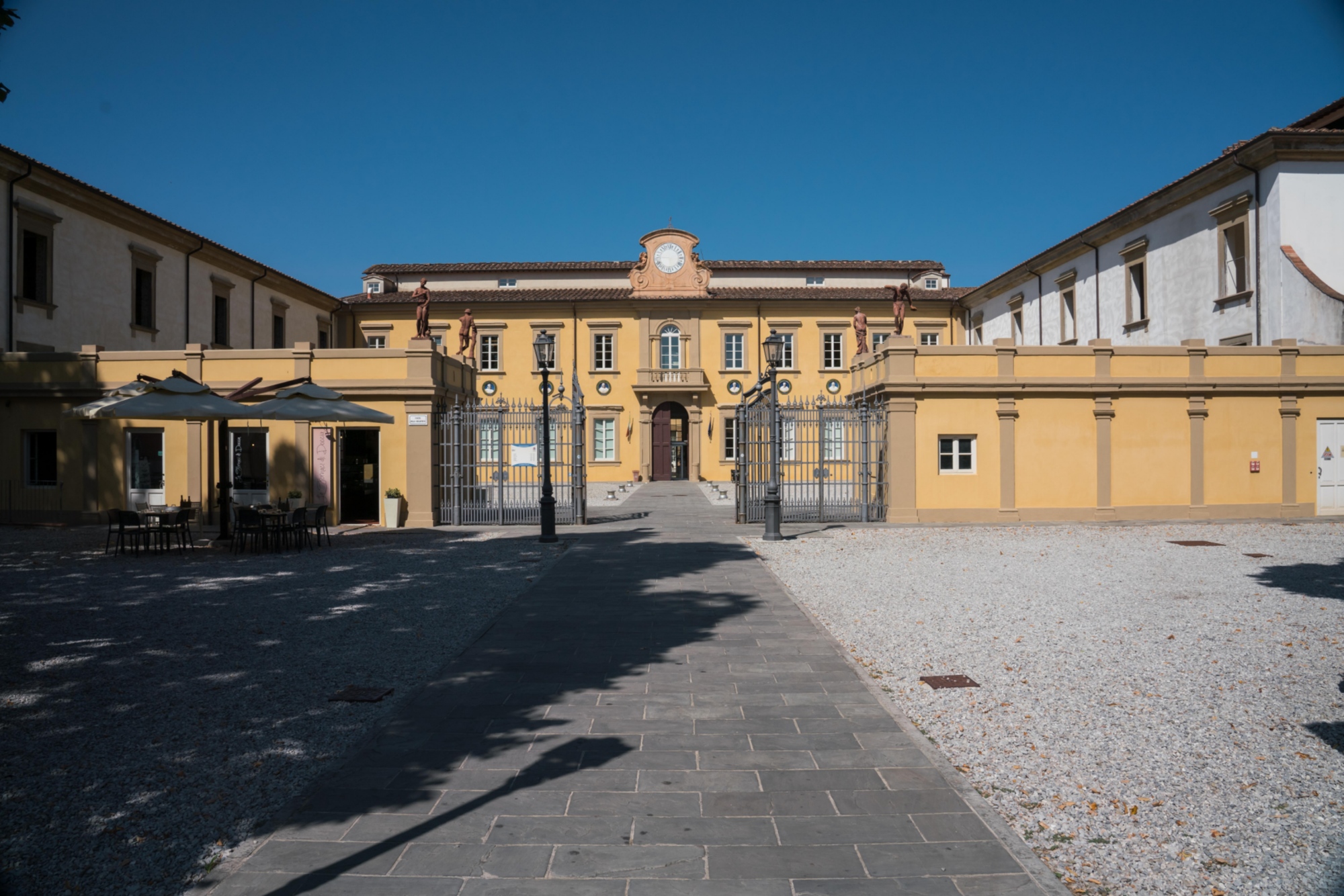
Sesto Fiorentino, for the Romans the 6ᵗʰ mile from Florence, is a point of reference for the production and creation of porcelain objects, especially since 1737 when Carlo Ginori inaugurated the production site in Doccia, just outside Sesto Fiorentino.
Tableware, decorative items, even reproductions of famous works of art were sent out around the world. The intuition to establish a porcelain school then helped create an industry that is still present to this day.
The Manifattura di Doccia is a vast manufacturing area with many original parts. Within, the Villa Ginori has been transformed into a wonderful civic library (the Biblioteca Ragionieri) with a program of performances and exhibitions featuring original Richard Ginori pieces.
All this is in anticipation of the reopening of the Ginori Museum, located next to the new factory in the industrial area of Sesto Fiorentino.
Hear talk of terracotta and you immediately think of Impruneta, in the hills south of Florence where the clayey subsoil is rich in iron—the perfect earth to be worked and fired, a practice that, moreover, has roots in centuries past.
Terracotta from Impruneta takes form in pitchers, vases, statues, floor tiles and roof tiles, characterizing a landscape that is Florentine, Tuscan and beyond.
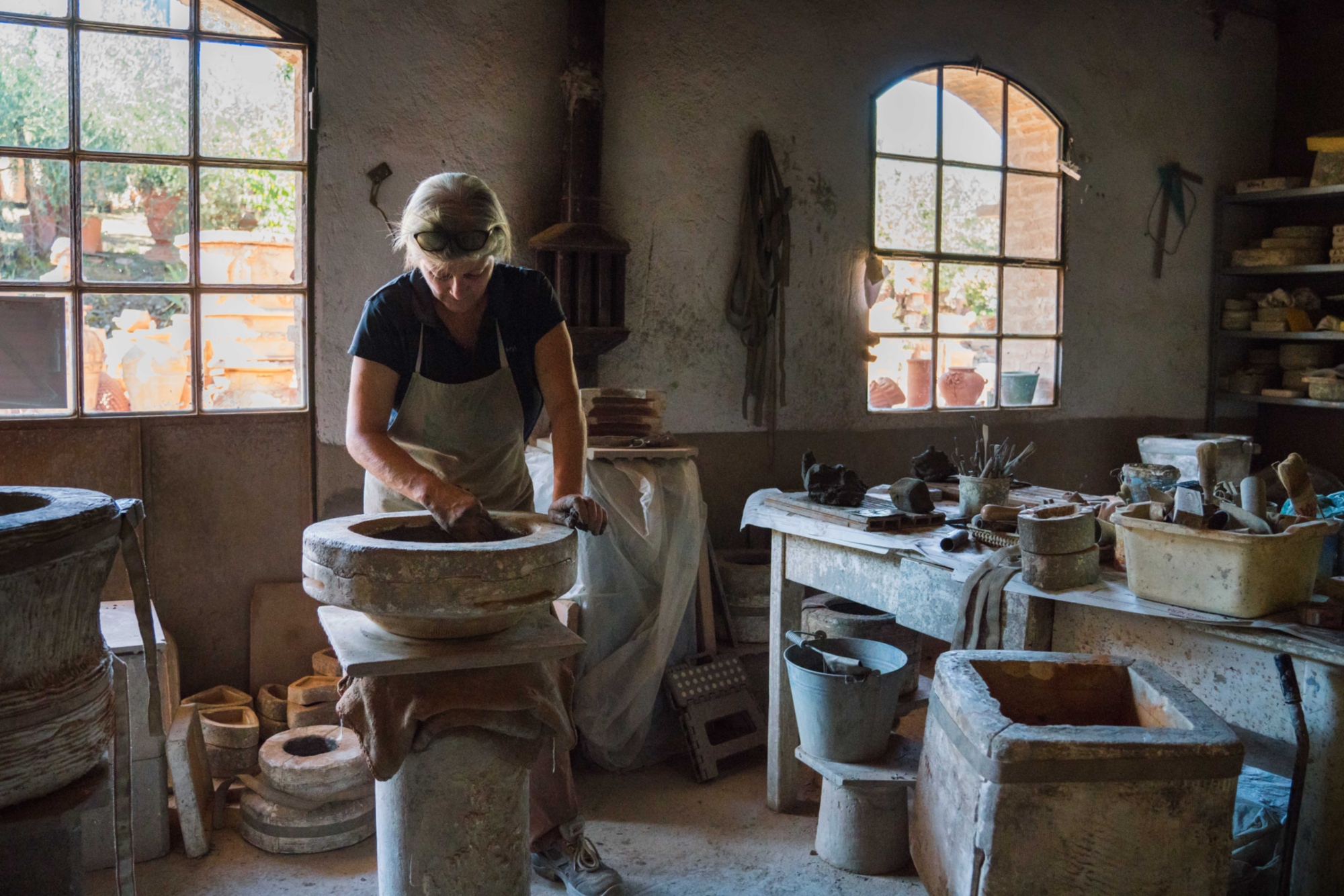
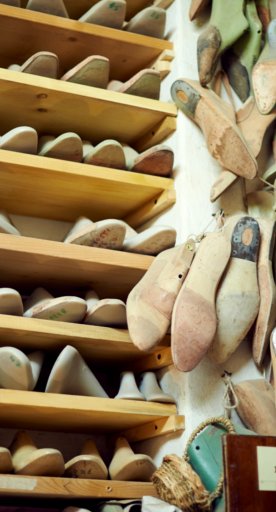
Many factories are still operational today. Others, rather, have ceased to exist, becoming symbolic places of this tradition, such as the Fornace Agresti, where ancient molds are preserved and it is possible to follow the manufacturing stages.
Among the furnaces still in operation is that of Masini, which also serves as a reception center for visitors to guide them through modeling, firing and the entire, highly fascinating process.
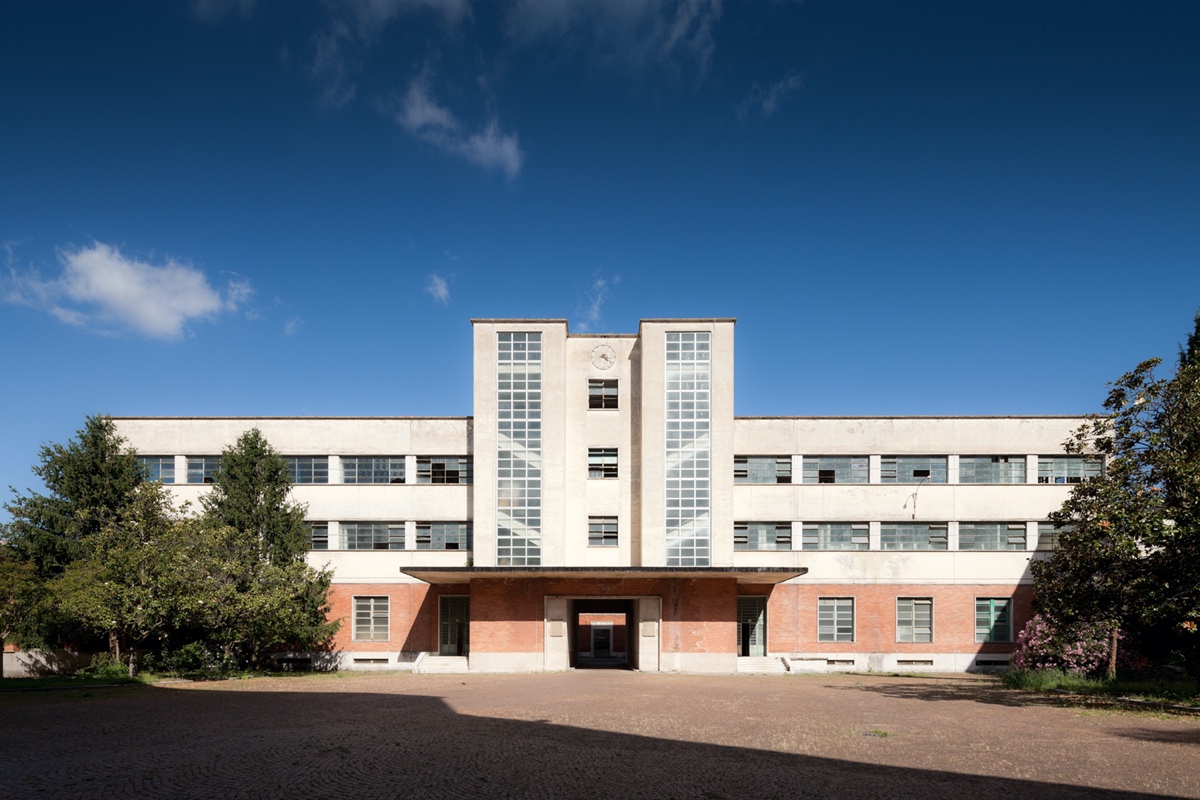
Built in the 1930s by engineer Pier Luigi Nervi along the border of the Cascine Park in Florence, the Manifattura Tabacchi (Tobacco Factory) represents one of the most significant expressions of the Italian rationalist style.
Until its closure in 2001, it churned out cigars and cigarettes, employing numerous workers, mostly women. Since then, the Manifattura Tabacchi has been subject to a redevelopment project, involving the restoration and preservation of the site, exalting its unique character and historical importance.
The most interesting aspect is not to relegate the factory to the past but to acquire a new role, adapted to contemporary art, fashion and new trends in craftsmanship. Traces of the factory’s past life have remained in its huge spaces, thanks in part to a warehouse-museum that can be visited on Saturday mornings.
Along Via Bolognese, in Pian di San Bartolo in the municipality of Fiesole, stands what was once the Fabbrica La Marzocco, manufacturer of espresso machines found in many Italian coffee shops.
Since always and for everyone, this place was simply known as “l’officina” (“the workshop”), a place for savoir faire, animated by skilled hands, where La Marzocco remained until 2009, when it moved to more suitable spaces in the Mugello area.
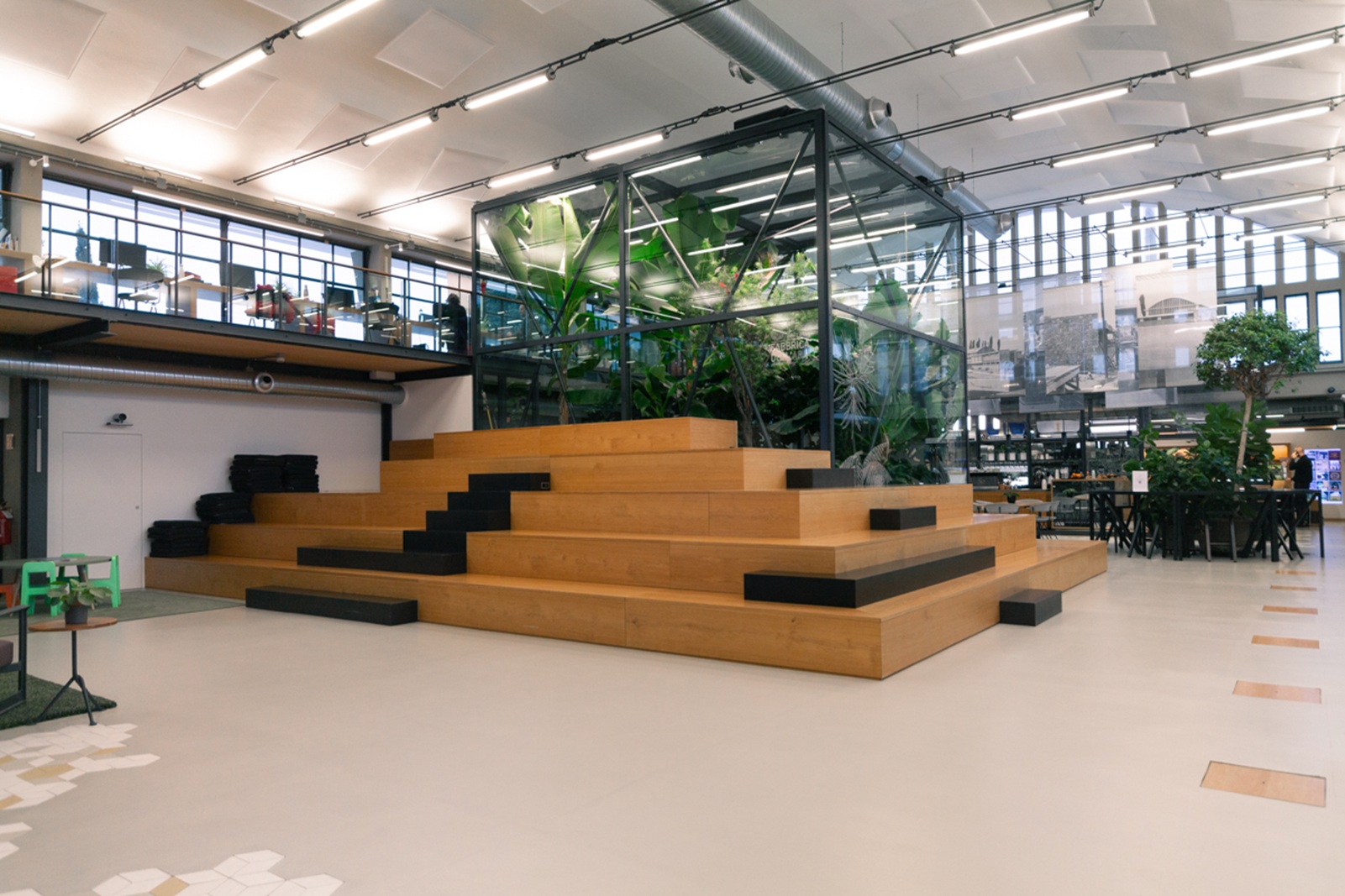
Still, the old industrial building has not been abandoned but transformed into the Accademia del Caffè Espresso (Espresso Coffee Academy), a multifunctional space open for visits. The space aims to offer an all-encompassing look at the world of coffee. Thus, there is a coffee shop as it was in the 1970s, a company museum, an archive, a truly rich thematic library, courses and tastings for a real coffee education.
The indoor greenhouse, where coffee plants are grown, is also really interesting.
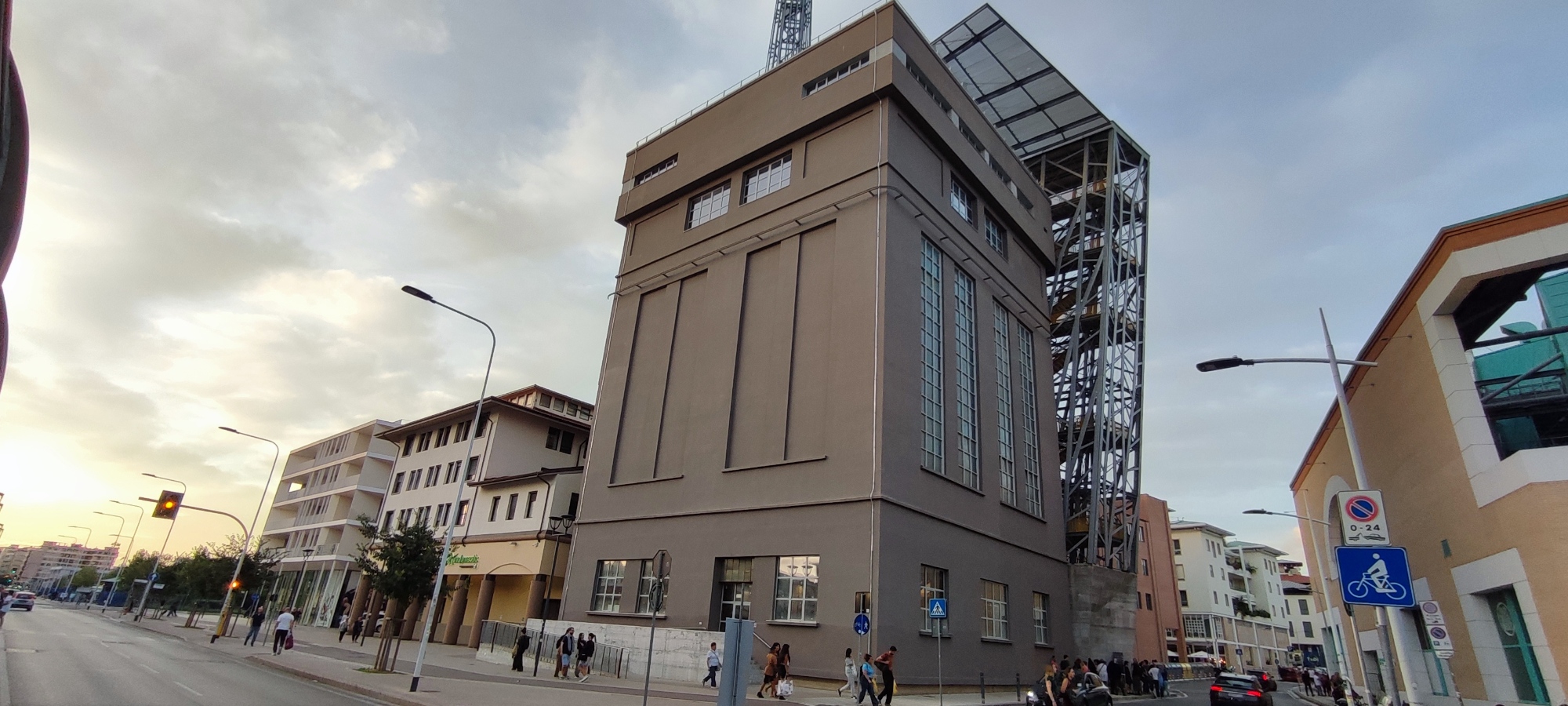
We conclude this tour among old industrial sites at the former Centrale Termica (Thermal Power Plant) of the FIAT area in Florence’s Novoli district. At 164 feet or 50 meters high, the building has distinguished this place since 1938, reaming standing despite the total decommissioning of the entire area, where—among other things—a shopping mall, university buildings, housing blocks, hotels and a public park have sprung up.
The tower of the power plant has been restored and is soon set to be a space for cultural events. A sneak-peak was offered during the Festival Fabbrica Europe dedicated to dance. The reclaimed interior spaces, with their beauty and over-dimensionality, promise great excitement.
The chimney also has a terrace at the top for a 360-degree view.