Palazzo dei Capitani, Palazzuolo sul Senio
The ancient seat of Florentine power in the Upper Mugello
The Palazzo dei Capitani, built at the end of the 14ᵗʰ century, is one of the most important historical and architectural landmarks of Palazzuolo sul Senio. Located in the heart of the village, the building bears witness to the strategic role that the area played in past centuries as a borderland between Tuscany and Romagna. Its construction is closely linked to the expansion and consolidation of the power of the Florentine Republic, which sent representatives to its outlying territories to perform administrative, judicial and political oversight functions.
The building was, in fact, originally constructed as the seat of the Capitani del Popolo, being magistrates appointed by Florence to govern the local community and ensure compliance with the laws and protection of the interests of the Republic. Even today, the façade still bears numerous coats of arms belonging to the Capitani who succeeded one another over the centuries. These emblems are an extraordinary historical record, offering insight into the administrative history of the region and the political ties that linked Palazzuolo sul Senio to the city of Florence.
From an architectural standpoint, the Palazzo dei Capitani stands out for the elegance of its forms and for several particularly noteworthy features. The striking corner loggia, which characterizes the building and enhances its striking appearance, is one of the most recognizable features of the historic center. The complex is then dominated by the Clock Tower, a landmark for the community and a symbol of civil power, which for centuries was housed within the Palazzo. Visible from various points in the town, the tower helps define the town’s skyline and is one of its most iconic features.
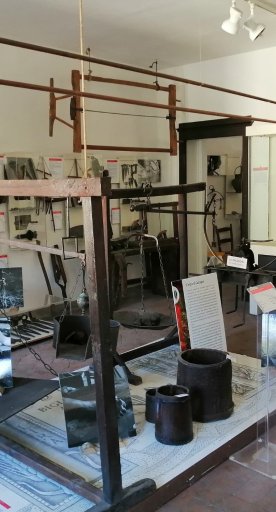
Today, the Palazzo dei Capitani continues to play an important cultural role. Indeed, it houses the Archaeological Museum of the Upper Mugello and the Museum of Mountain Folk, being 2 institutions that preserve and promote the historical, archaeological, ethnographic and cultural heritage of the entire region. The collections on display allow visitors to deepen their understanding of the ancient civilizations that once inhabited these lands and the traditions that have shaped the lives of mountain communities over the centuries.