Abbey of Santa Maria in Susinana
An ancient complex nestled in the tranquility of the mountains
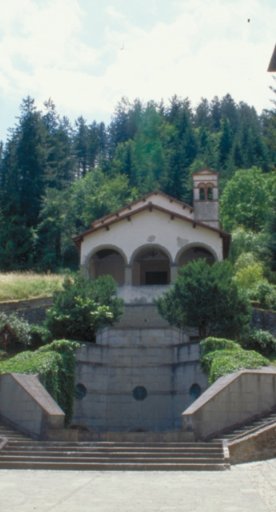
The Abbey of Santa Maria in Susinana, located in Palazzuolo sul Senio, is one of the most important monastic complexes in the Tuscan-Romagnolo Apennines. The abbey is of Vallombrosan origin and its roots stretch back over a thousand years, with evidence attesting to its existence even before the year 1000 and a documented monastic presence dating back to the 11th century. Over the centuries, the abbey has served not only as an important spiritual and religious center, but also as a strategic landmark for controlling the communication routes between Tuscany and Romagna.
Its history is deeply intertwined with that of the powerful feudal families who ruled these borderlands, which were marked by political rivalries, conflicts between the Guelphs and Ghibellines and constantly shifting alliances. One of the most illustrious figures associated with the abbey is the famous military leader Maghinardo Pagani, a key figure in the political affairs of Romagna during the 13th and 14th centuries, who chose to be buried in the abbey’s cemetery in 1302. His figure, also mentioned by Dante Alighieri in the Divine Comedy, reflects the central role this place played in the medieval history of the region.
The complex still retains the charm of its long historical and architectural evolution. It includes the abbey church, the evocative crypt and the rural buildings that have supported the religious life of the monastic community over time. Although it has undergone renovations and reconstructions over the centuries, the abbey retains its historical value and identity, making it one of the region’s most important cultural landmarks.
What makes this place even more special is the natural setting in which it is located. The abbey is nestled in a landscape of extraordinary beauty, embraced by the waters of the Senio River and the Rio Cesare rivulet and surrounded by centuries-old forests and nature that enhances its sense of peace and spirituality.