Fossa Nera Archaeological Area
A treasure trove of information on the ancient history of the Lucca Plain
The Fossa Nera archaeological area on the Lucca Plain is a place of great historical interest, as it contains a variety of ruins from different eras: evidence of human presence and land use dates back to the Bronze Age, continuing through the Etruscan and Roman periods.
This important archaeological site is located in the municipality of Porcari, in an area known as “Piana delle cento fattorie” (Plain of the hundred farms), located between the Pisan Mountains, the Cerbaie Hills and the city of Lucca, which was once a Roman colony.
The Bronze Age
The Etruscan Period
Around 500 BC, the Fossa Nera A site developed into a small cluster of Etruscan dwellings. The artifacts discovered in this area, in addition to household pottery and tableware, include Etruscan and Greek wine amphorae and stone millstones, providing evidence of the settlement’s agricultural nature.
The Roman Settlement Period
The Roman settlement period is evidenced by what remains of two large farms, Fossa Nera A and Fossa Nera B.
The Roman farm named Fossa Nera A, founded in the 2nd century BC, with foundations still visible today, is divided into residential areas (pars urbana) and agricultural sectors (pars rustica). The residential part consists of the entrance (fauces), which leads to a central open area (atrium) around which the rooms used for family life unfold. Wine-making took place here, as demonstrated by the discovery of a Calcatorium - a vessel used for fermenting grape must - connected to a small wine vat.
The farm of Fossa Nera B is located about a hundred meters from the Fossa Nera A complex and also dates back to the late Republican period, between 210 and 175 BC, but it is 5 or 6 times bigger. In fact, its large perimeter walls form a rectangle of about 900 m2, consisting of a large courtyard, alongside which you will see the residential area and the production sectors, including rooms used for textile processing, cheese production and wine-making.
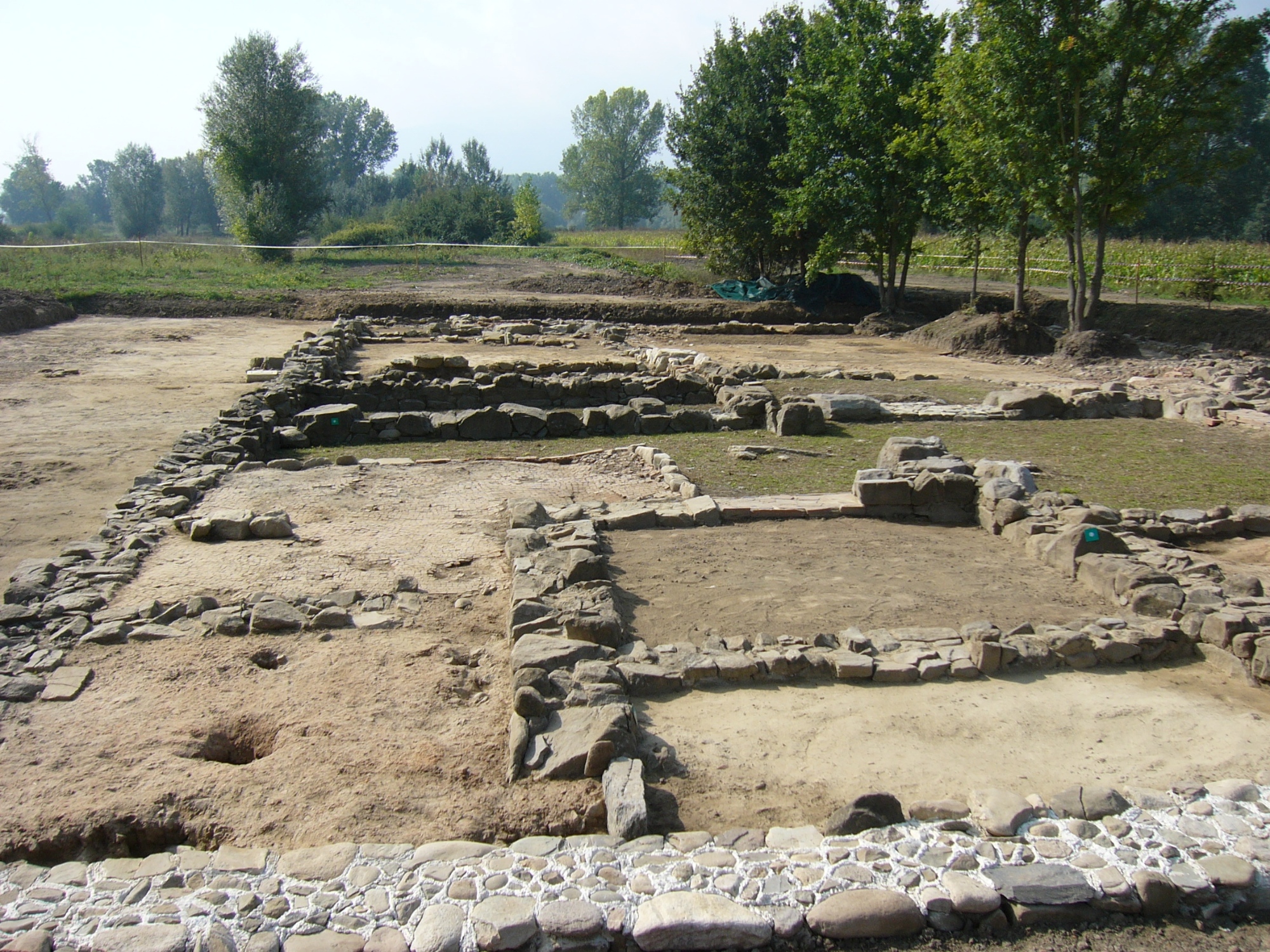
Dedicated paths have been set up, allowing you to explore the site, while the artifacts are kept in the National Museum of Villa Guinigi in Lucca and on display in the Permanent Archaeological Exhibition at the Porcari Library.