Piazza della Santissima Annunziata
A treasure chest of important Renaissance jewels in the heart of Florence
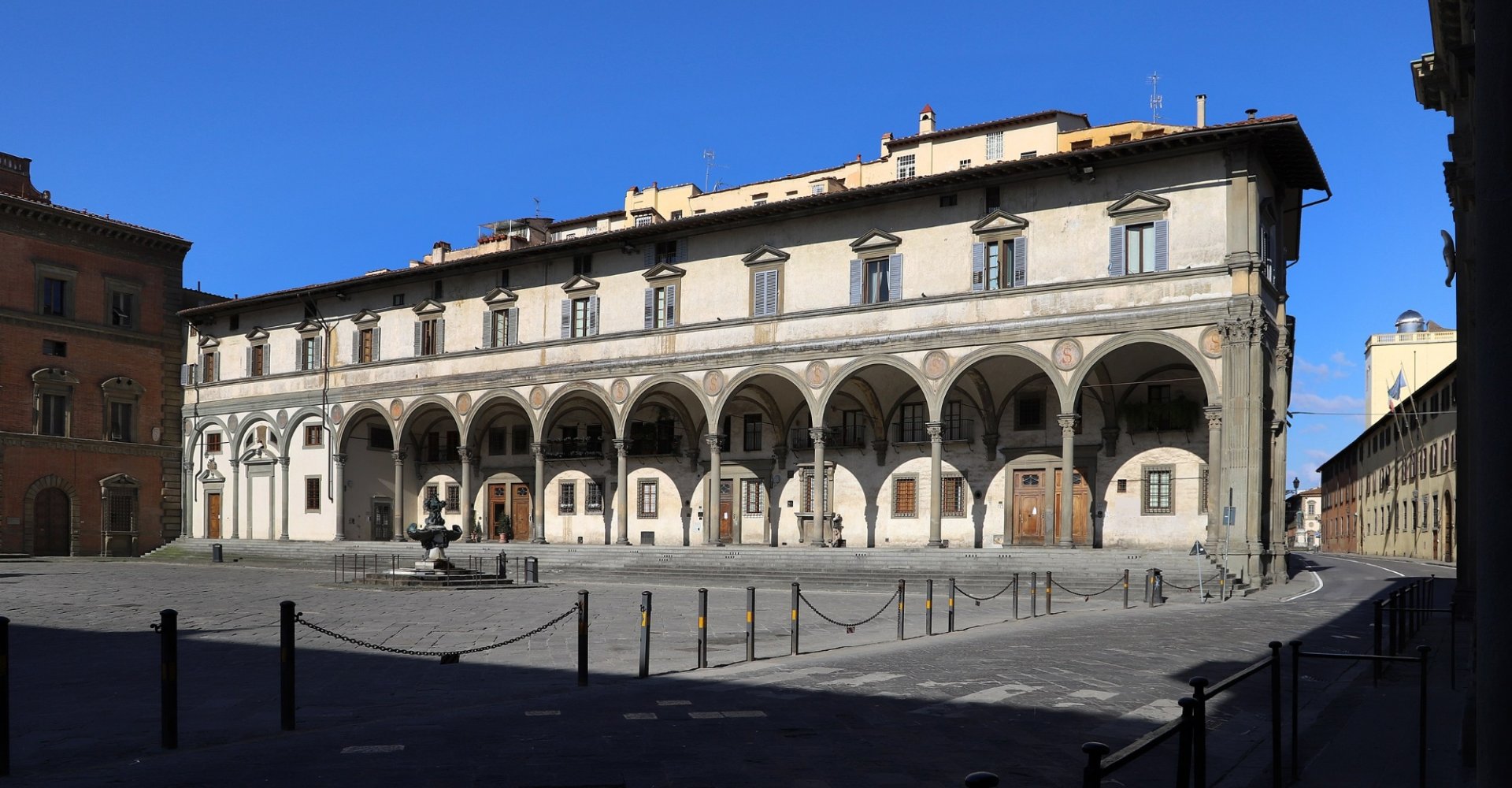
In the heart of Florence, just a short stroll from the Duomo, Piazza della Santissima Annunziata is one of those surprising places: a generous, bright space where everything seems to be in perfect balance.
Here, the Renaissance is not just history but proportion, harmony, breath.
It was Filippo Brunelleschi who gave the piazza its shape, designing the Spedale degli Innocenti.
The elegant arches, punctuated by the regular rhythm of columns and adorned with the famous glazed terracotta putti, influenced the entire arrangement.
The portico was added to the front of the buildings and the façade of the Basilica, creating a unique setting, among the most coherent of the Renaissance.
From here, your gaze stumbled across the dome topping the Duomo, seem from a surprising perspective, with the square being one of the few places in the city where this wonder comes suddenly, amid the Renaissance architecture.
For centuries, Piazza Santissima Annunziata was a destination for pilgrimages and processions and, until 1750, also the favored place to celebrate the Florentine New Year, which coincided with the feast of the Annunciation on March 25.
Even today, right here you can celebrate the Rificolona, a traditional folk festival held on the evening of September 7.
The piazza is overlooked by some of the city’s most important Renaissance buildings.
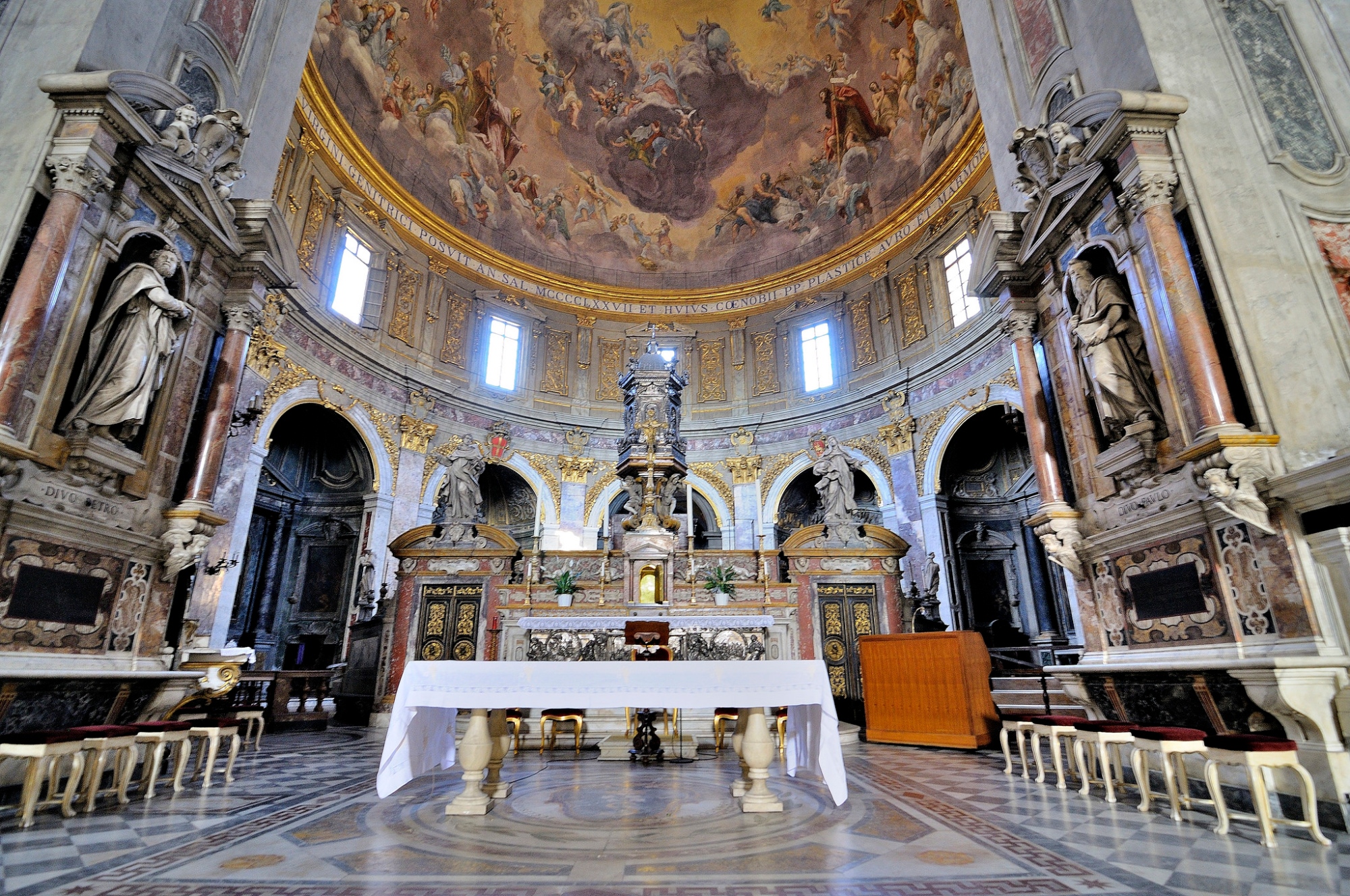
The Basilica of Santissima Annunziata, Florence’s main Marian shrine, holds the famous Annunciation fresco that has been an object of devotion since the Middle Ages.
The architectural complex includes 2 cloisters—the Chiostro dei Voti and the Chiostro Grande—decorated with important pictorial cycles and representing one of the most significant places of the city’s spirituality.
Next to the Basilica is the National Archaeological Museum of Florence, among the most important in Italy, with collections devoted to Egyptian, Etruscan and Greco-Roman art.
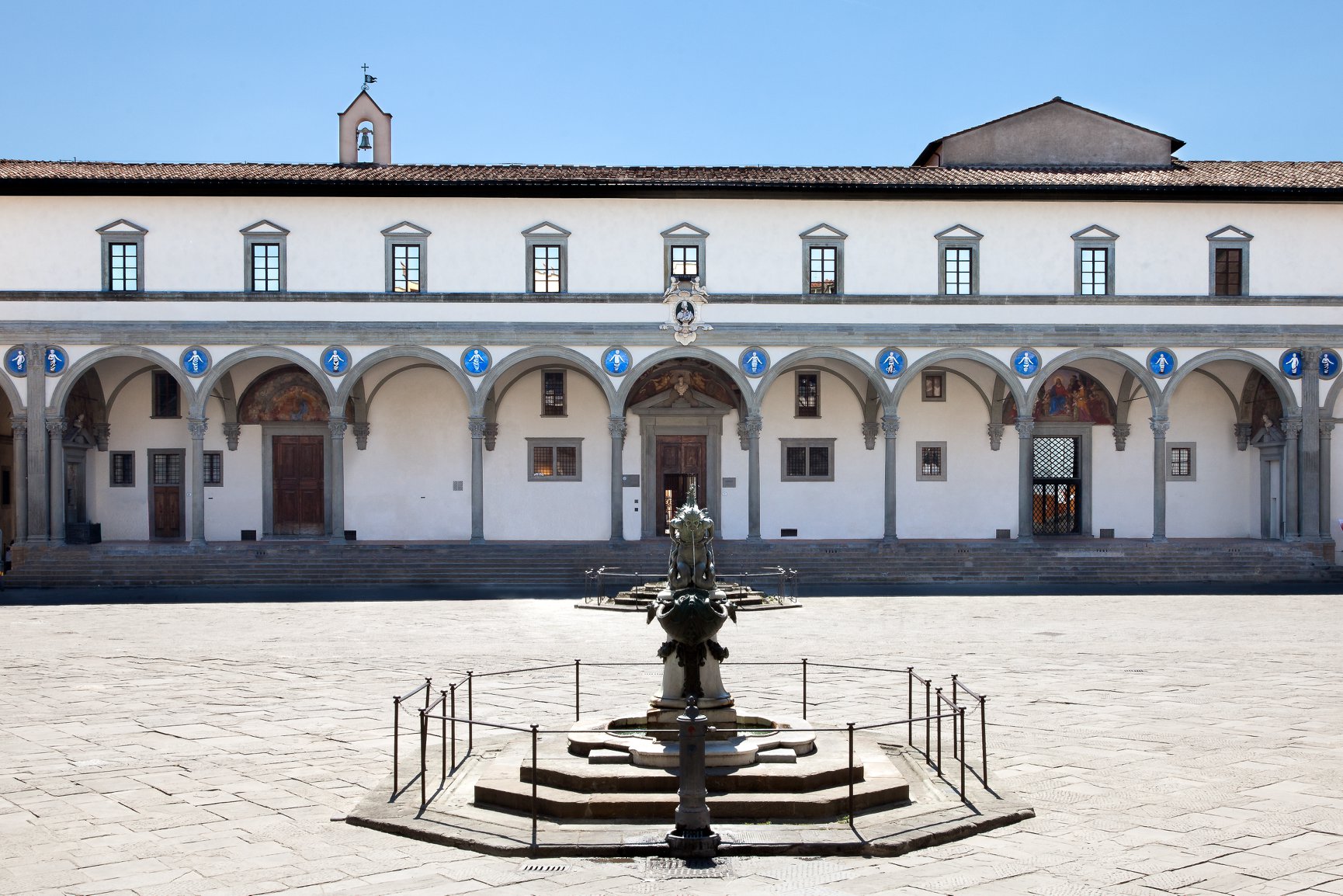
The piazza is most famous for the Spedale degli Innocenti, Europe’s first orphanage founded in the 15ᵗʰ century, one of Brunelleschi’s masterpieces.
Today, it houses the Museo degli Innocenti, where centuries of caring for children are recounted through paths dedicated to history, architecture and art, with works by Botticelli, Domenico Ghirlandaio, Piero di Cosimo and Luca della Robbia.
Also beneath the portico is the iron window, used to take in children from 1660 to 1875.
On the opposite side is the Confraternita dei Servi di Maria, a building constructed in 1525 by Antonio Sangallo the Elder and Baccio d’Agnolo as an imitation of Brunelleschi’s loggia.
At the south end of the piazza faces Palazzo Budini Gattai, a 16ᵗʰ-century stately residence designed by Giuliano di Baccio d’Agnolo and continued by Bartolomeo Ammannati, who also worked on the garden.
Built around 1573, the Italian garden was later expanded and transformed in the Romantic era.
Legend has it that a window in the Palazzo always remains open for a young bride still awaiting her husband’s return from the war.
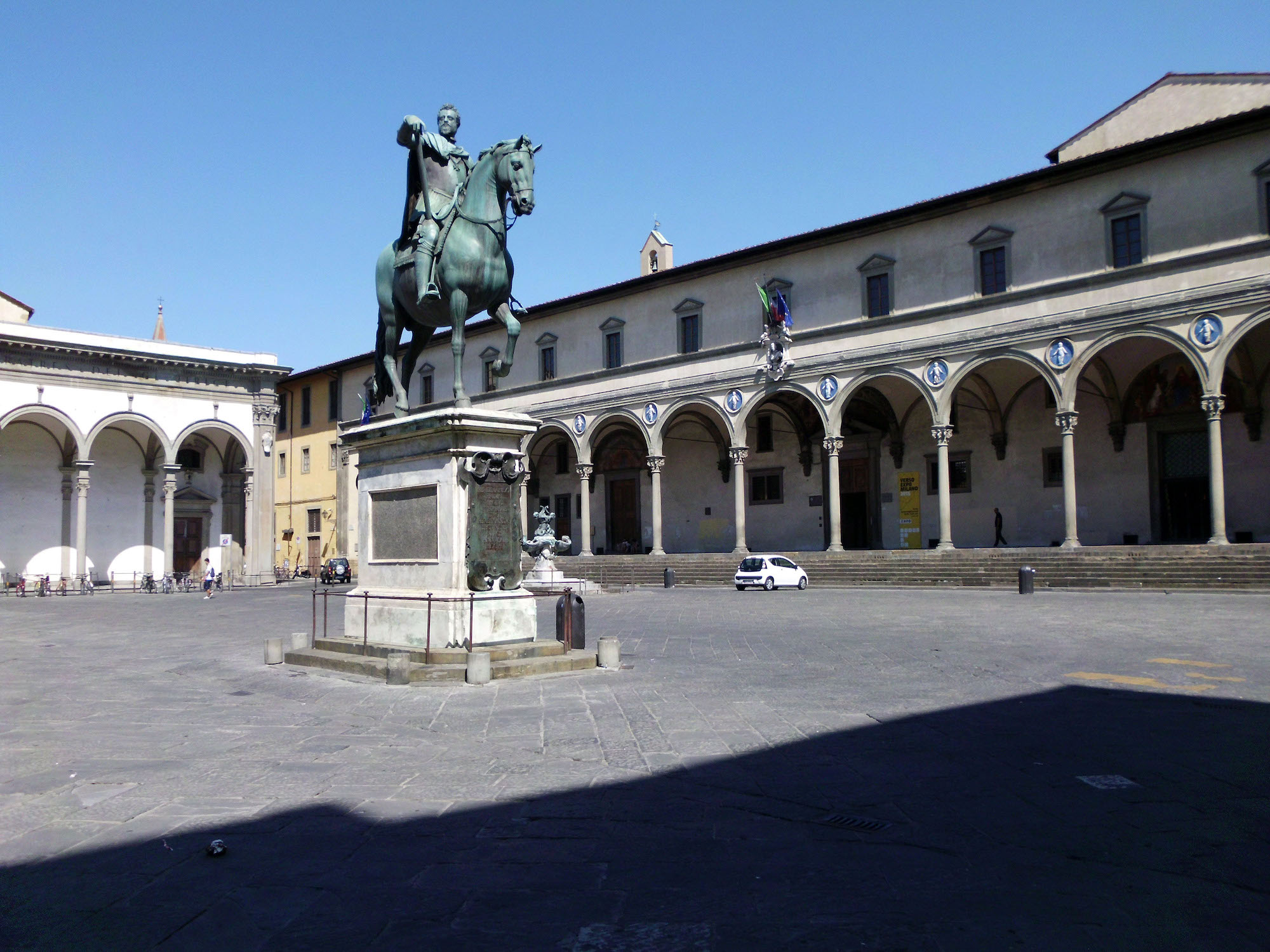
In the center of the piazza is the equestrian monument to Ferdinando I de’ Medici, created by Giambologna and completed by Pietro Tacca, who also designed the two fountains with sea monsters.
On the plinth is a symbol of the Grand Duke: a queen bee surrounded by other bees, being difficult to count due to their irregular arrangement, having become the subject of much interest and legends over time.