Villa Guinigi National Museum
The museum that tells the story of Lucca: from its origins to the 18ᵗʰ century
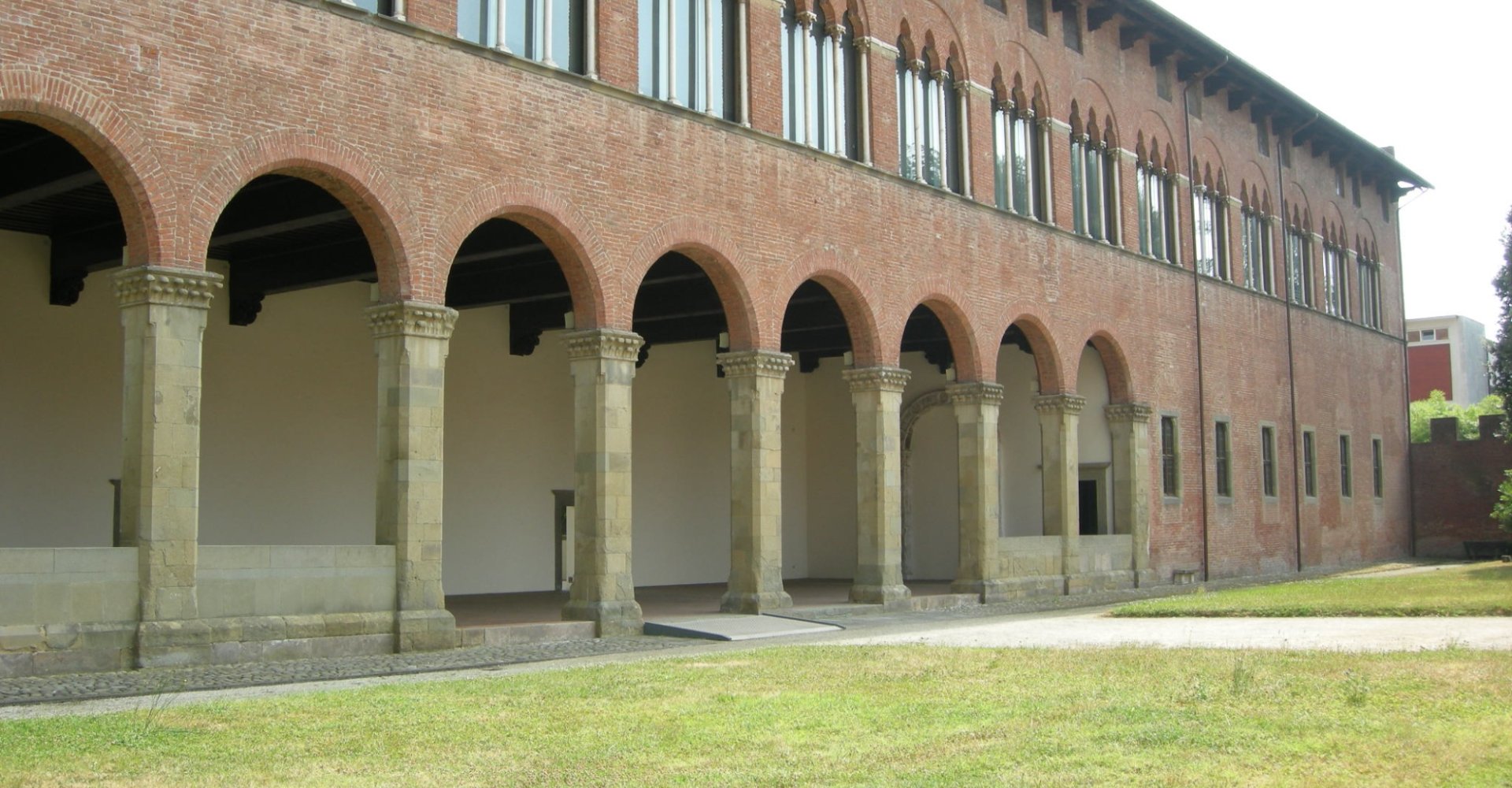
The Villa Guinigi National Museum is one of the main cultural hubs in Lucca, offering a fascinating journey through the city’s artistic and cultural history, from its origins to the 18ᵗʰ century. The villa that houses the museum, located in the northeastern part of the city outside the 13ᵗʰ-century walls and later incorporated into the 16ᵗʰ-century fortifications, is one of Lucca’s most significant buildings. It was commissioned by Paolo Guinigi, lord of the city from 1400 to 1430, and built starting in 1413 as his ‘residence of delights.’ The building, in the late Gothic style of Lucca, is characterized by its single brick body, airy loggia and triple lancet windows with trefoil arches supported by slender columns, testifying to the refined architecture of the period.
After Paolo Guinigi passed away, the villa suffered various damages until in 1924, it was designated as a civic museum, before being given to the state in 1948. Between 1948 and 1957, under the supervision of Superintendent Piero Sanpaolesi and his collaborator Luigi Pfanner, major restoration works were carried out, leading to the opening of the National Museum in 1968. Today, the rooms of the museum piece together the story of the city through the works of local and foreign artists, offering a chronological journey from the archeology to the 18ᵗʰ century.
On the ground floor are archaeological artifacts documenting the origins of the Lucca area, including Etruscan finds, Apuan Ligurian remains and Roman artifacts. Among the most valuable pieces is the Attic krater depicting Theseus killing the Minotaur, from the Rio Ralletta tomb in Capannori.
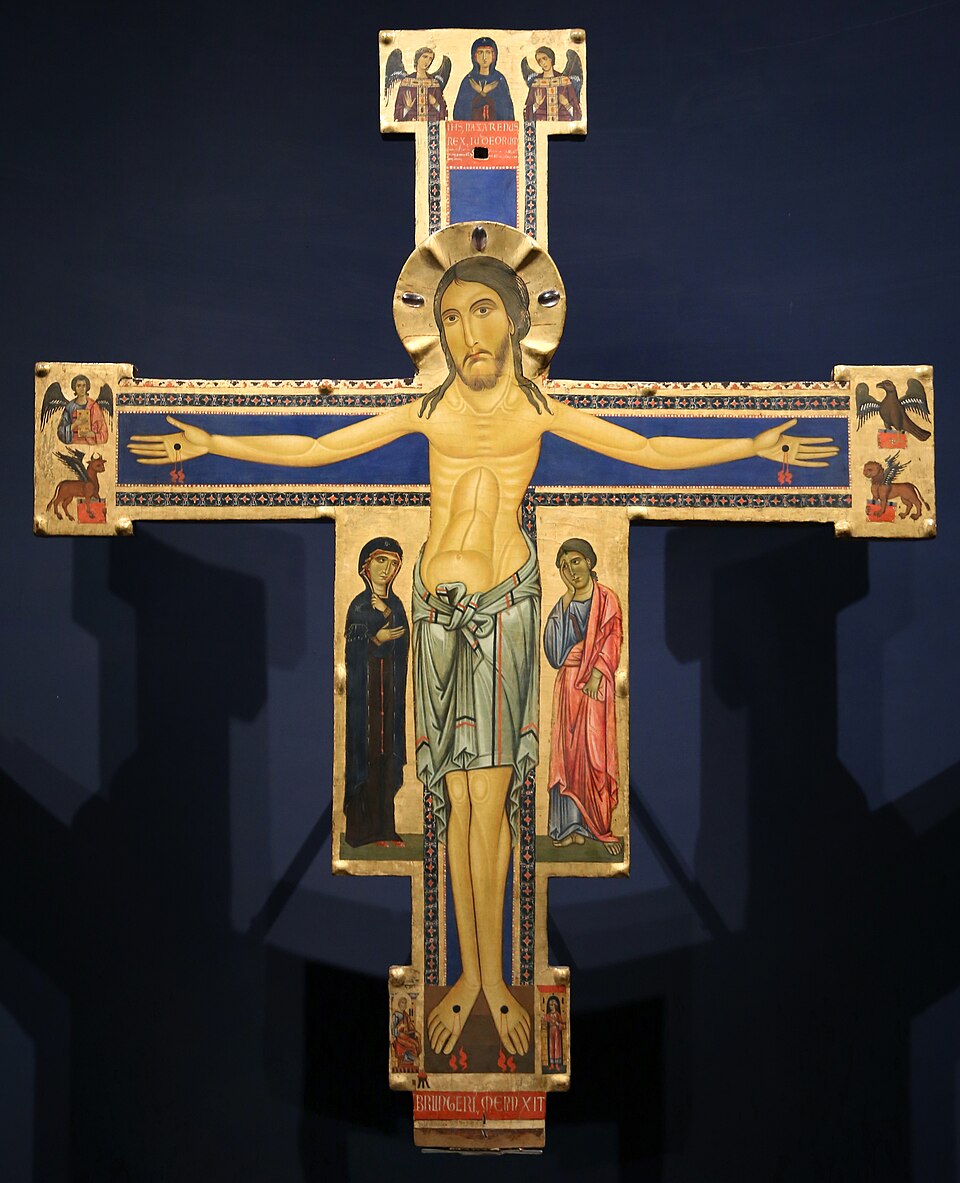
The upper floor, rather, houses art collections covering more than 1,000 years of history, from the early Middle Ages to the 18ᵗʰ century. Among the most important works are Berlinghiero Berlinghieri’s Cross of Lucca, frescoes and paintings by artists such as Deodato Orlandi, Angelo Puccinelli and Spinello Aretino, Tino da Camaino’s Madonna and Child, as well as Jacopo della Quercia’s Saint Ansano. The rooms even depict Lucca’s Renaissance with works by Matteo Civitali, Michelangelo di Pietro Membrini, Vincenzo Frediani and Bernardino del Castelletto, while the 16ᵗʰ century and Mannerism are showcased by Fra Bartolomeo, Amico Aspertini, Giorgio Vasari and Donatello. The following centuries brought to light the Caravaggesque naturalism of Pietro Paolini and the 18ᵗʰ-century masterpieces of Pompeo Batoni of Lucca, including the Ecstasy of Saint Catherine.
In addition to figurative art, the museum maintains a scientific section with historical medical instruments from the old Ospedale di San Luca, plus a graphic collection that includes drawings and prints from the 17ᵗʰ century onward. The Villa Guinigi National Museum likewise organizes temporary exhibitions, such as “Sumptuosa tabula picta” reconstructing painting in Lucca between the 14ᵗʰ and 15ᵗʰ centuries, restoring dispersed works and recovering the contributions of local and international artists.
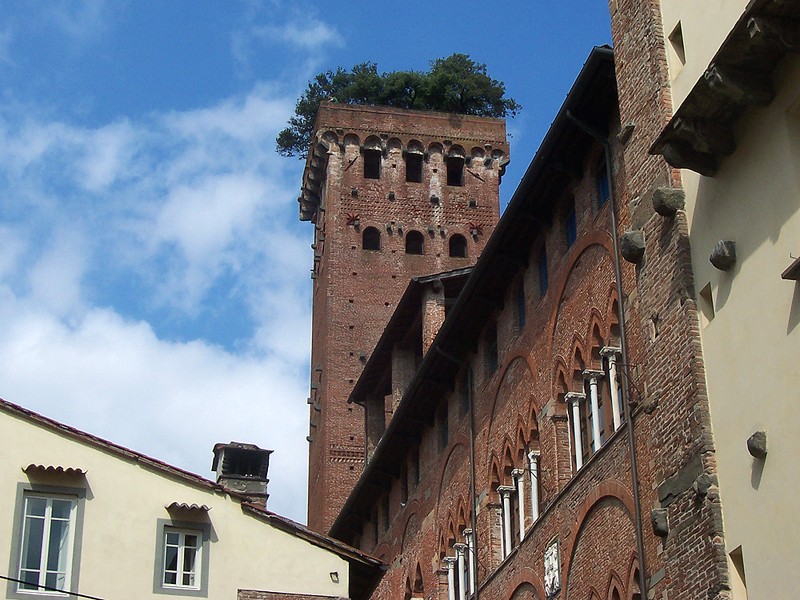
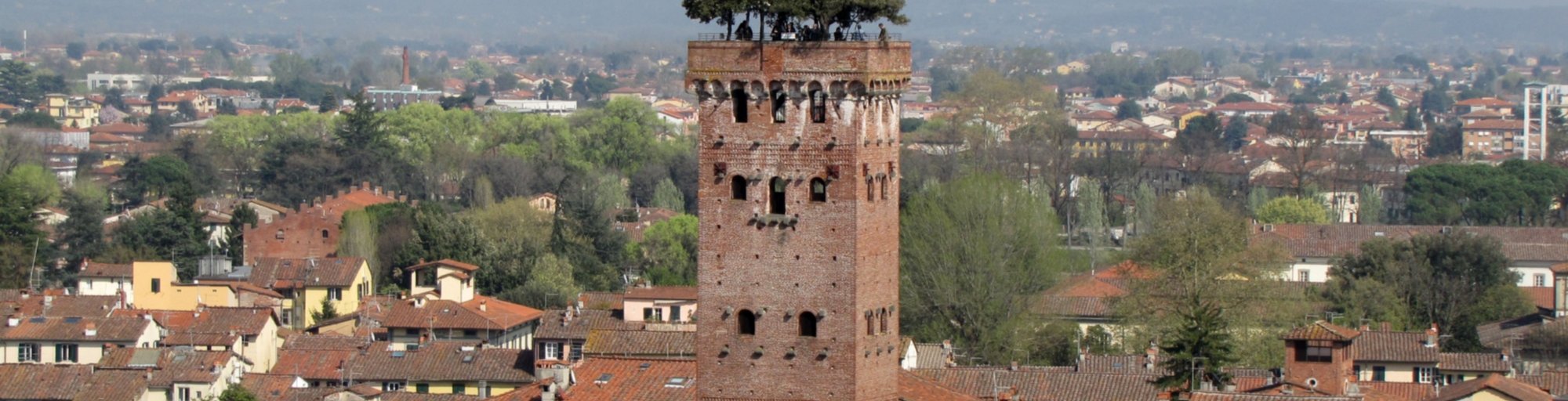
About 1970 feet or 600 meters away, soars the distinctive Guinigi Tower belonging to the same family. The Guinigi Tower is the lone survivor of the imposing towers that, together with the palazzi, formed the neighborhood of the mighty Guinigi family and symbolized their power in the 14ᵗʰ–15ᵗʰ centuries. The tower, topped with trees, represented their ambition and eventually, by the will of the last descendant, it passed to the municipality with the attached palazzo.
At Villa Guinigi, opera becomes a piece of the history of the city and its territory. From the ground floor with archaeological artifacts to the upper rooms with masterpieces of sacred art and beyond to 18ᵗʰ-century paintings, the museum offers a coherent and fascinating journey that allows visitors to rediscover Lucca throughout the centuries in the splendid villa of Lord Paolo Guinigi.
For information on accessibility, visit luccamusei.it.
-
hotelAccommodationchevron_right
-
restaurantWhere to eatchevron_right
-
holiday_villagePackages and stayschevron_right
-
celebrationExperienceschevron_right
-
local_libraryGuides and mapschevron_right