Church of Santa Croce in Vinci
Located in the center of Leonardo's hometown, it contains the baptismal font in which the great genius was baptized
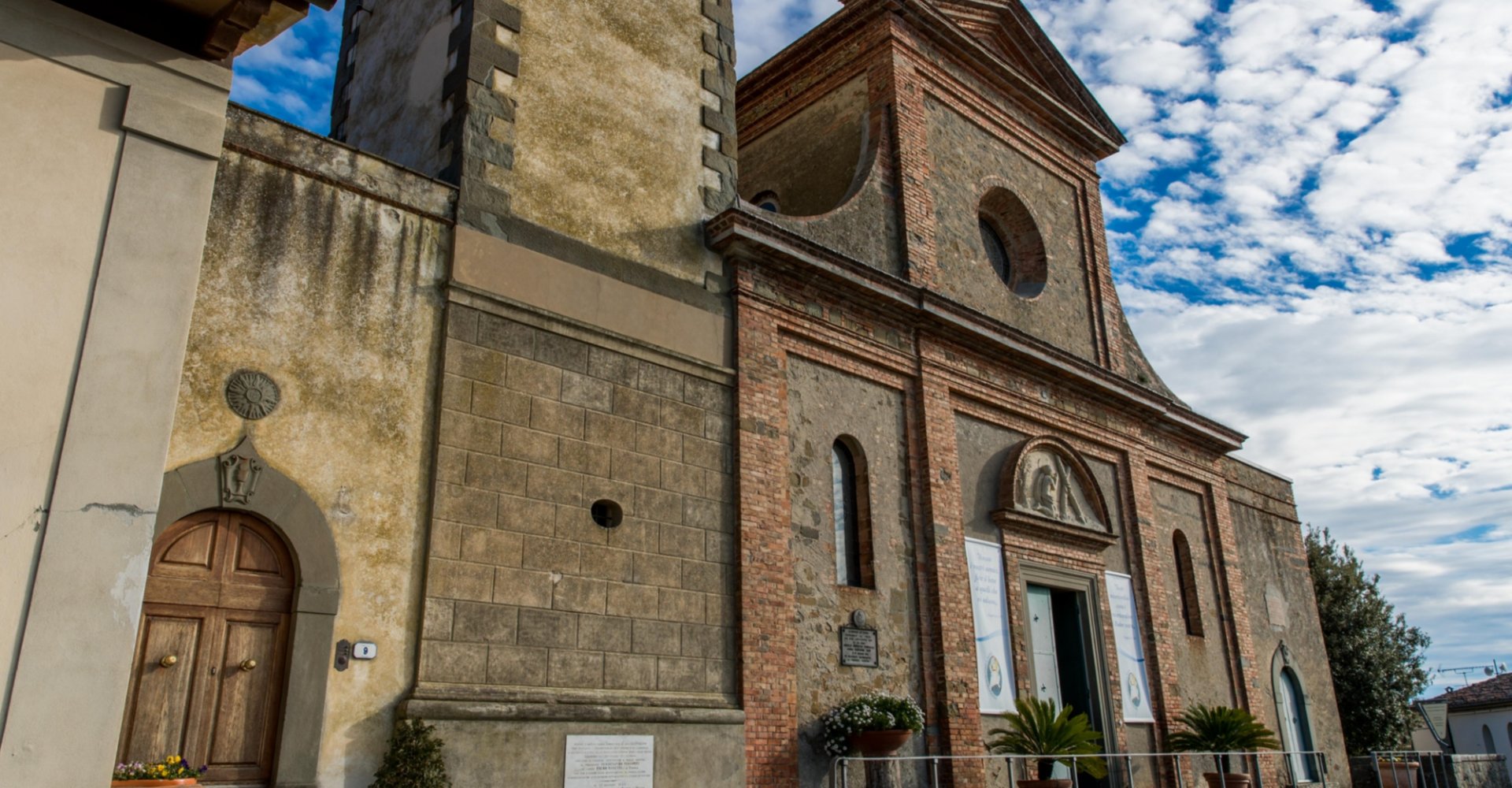
The Church of Santa Croce, located in the village of Vinci, is a true treasure chest of history and art. Its origins go back to the 13th century, when it was known as the Vincio Chapel, mentioned in documents as early as 1132. The title of Santa Croce was adopted in the 13th century, while its current appearance, in neo-Renaissance style, is the result of restoration work carried out in the 1920s and 1930s. The bell tower, inaugurated in 1855, stands beside of the façade, made entirely of stone, with a central rose window and a rectangular portal above which there is a marble lunette.
The interior of the church has three naves supported by columns with Corinthian capitals and with several chapels along the sides. These include the Chapel of Sant’Andrea, the Chapel of the Holy Sacrament, the Chapel of the Baptistery and the Chapel of Santa Croce, where you will find an ancient wooden crucifix from the first half of the 15th century, relics of the Holy Cross and an image of Our Lady of Sorrows, an object of great popular devotion.
The Baptistery, built for Leonardo's 500th anniversary in 1952, contains the ancient baptismal font where the young Leonardo da Vinci is believed to have been baptized on April 16, 1452 by parish priest Piero di Bartolomeo Cecci. In 2010, the baptistery was further enriched by a series of metal sculptures created by artist Cecco Bonanotte, entitled "The Baptism of Leonardo". On the walls of the baptistery, a plaque commemorates the words of Leonardo's grandfather, Ser Antonio da Vinci, who wrote the date and place of his grandson's birth in an ancient notarial book.


Among the works of art preserved in the church, there are important paintings like the Nativity of the Virgin (1562) by Francesco Brina, the Virgin of the Rosary by Matteo Rosselli from the Badia Fiorentina, the Miracle of San Biagio (around 1756) attributed to Gaetano Piattoli and the Adoration of the Magi by Pier Dandini.
The Church of Santa Croce is not just a place of worship, but a true center of historical and artistic memory in the village of Vinci. Its connection with the Castle of the Guidi Counts, the chapels rich in works of art and the baptistery linked to Leonardo, make a visit to this building a must for those who want to discover the history and culture of the area and lose themselves in the charm of the Renaissance.