The Parish Church of San Cresci in Valcava
An ancient early-Christian parish church, standing alone among the fields
The Parish Church of San Cresci in Valcava, in the municipality of Borgo San Lorenzo, is one of the oldest places of worship in the Mugello region.
History tells that it was founded in the 6ᵗʰ century on the site of the martyrdom of Saint Cresci, a Christian preacher who arrived in the area in the 3ʳᵈ century A.D. His evangelizing work contributed to the spread of Christianity in a region that was still steeped in pagan beliefs. Over the centuries, the parish church became an important religious and cultural hub, playing a central role in the life of the local community.
The building features a complex architectural layering, the result of numerous renovations and expansions over time. The oldest structure, dating back to the early Middle Ages, retains elements of Romanesque tradition, such as the solidity of the masonry and the simplicity of its forms. In addition to these are adornments and renovations from the Renaissance and Baroque periods, bearing witness to the evolution of the parish church. Inside are works of religious art, including frescoes, Renaissance paintings and an ancient baptismal font.
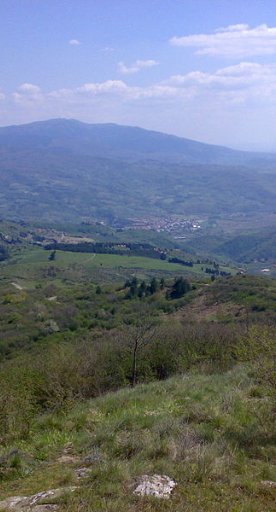
These elements illustrate the long-standing continuity of the region’s religious and artistic traditions. The location of the parish church is also particularly picturesque, nestled amid a landscape of meadows, hills and woods.
The place name “Valcava” may also refer to the site’s location, situated as it is in an ancient thoroughfare between the Mugello valleys. Even today, the parish church stands as a valuable testament to the religious, artistic and cultural history of the Mugello region. The connection to San Cresci and the presence of architectural elements from various eras exalt its historical value.
Finally, a tour offers the opportunity to discover a place where history, art, spirituality and nature come together in one of the most picturesque corners of Tuscany.
The stone façade and bell tower of the Romanesque Church of San Cresci in Valcava is surrounded by a well-manicured green lawn with rounded shrubs.