Madonna del Parto Civic Museums
Dedicated to the splendid fresco by Piero della Francesca
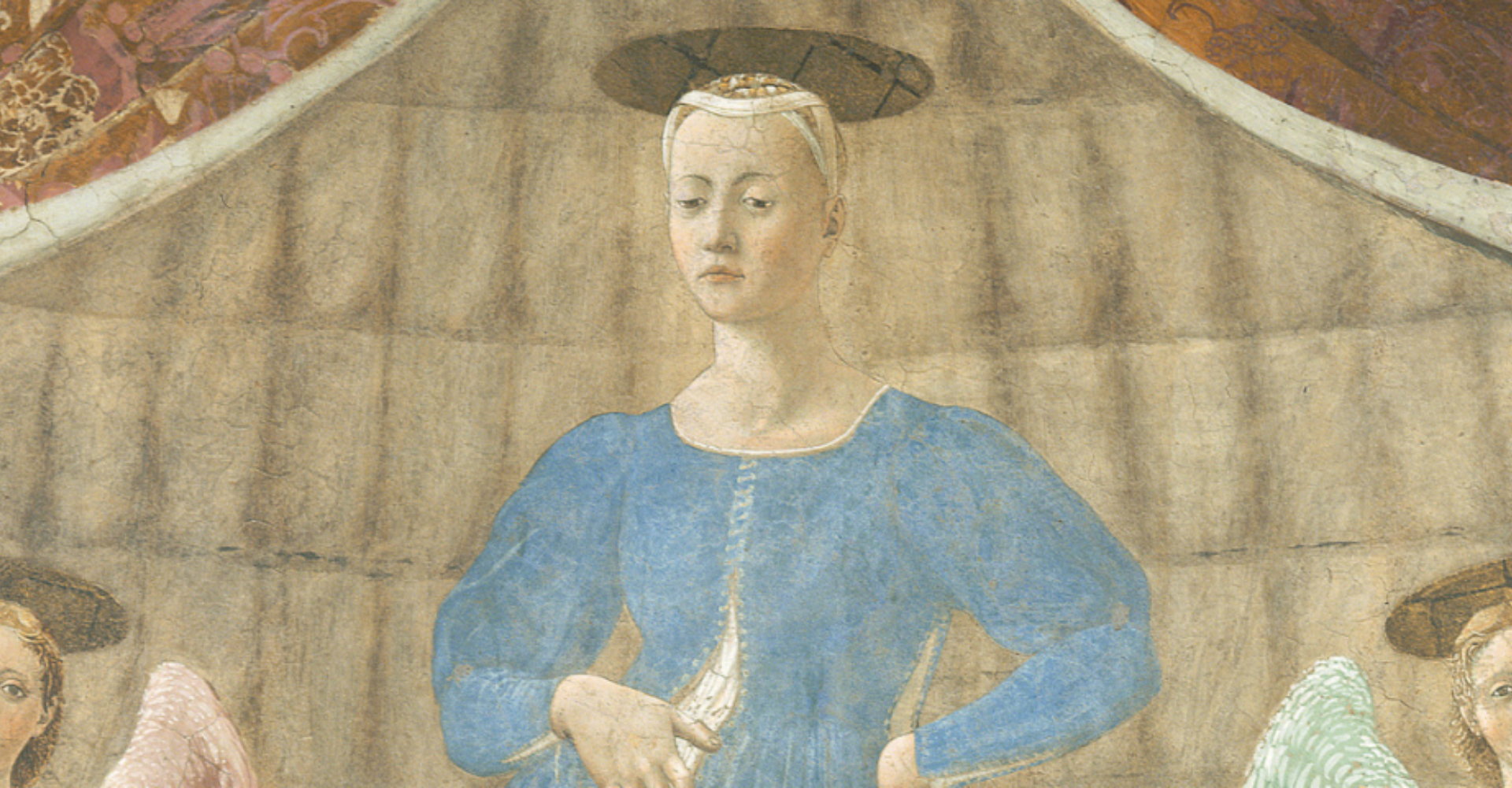
The Madonna del Parto Museum in Monterchi preserves one of the most celebrated masterpieces of Piero della Francesca and one of the highest expressions of the Renaissance.
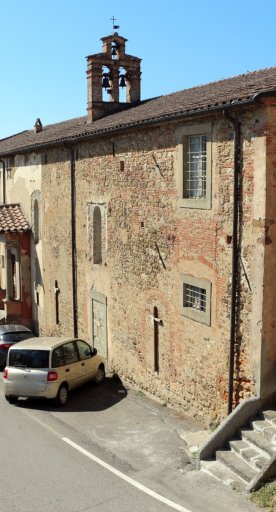
Dated to between 1450 and 1465, the fresco was painted in the Church of Santa Maria di Momentana, on the slopes of the Montione hill, in a place also linked to fertility cults in ancient times.
The Virgin is represented pregnant in the center of a canopy opened by an angel on each side who, with a decisive gesture, pull back the curtain to reveal the faithful.
She wears a simple blue robe, slightly open to let her white petticoat, a symbol of purity, show through.
Her right hand caresses her belly in a gesture that is both intimate and solemn, protective but in full awareness of the miracle she is carrying, while her left hand is resting on her hip.
Her lowered eyes and composed expression already seem to suggest the fate of the son.
Details in the canopy also spell out part of this symbolic narrative: the pomegranate flowers that decorate it recall the passion of Christ to come.
The history of the Madonna del Parto is deeply intertwined with that of Monterchi. According to tradition, Piero della Francesca painted it in memory of his mother, a native of the village.
The work was made over an earlier 14ᵗʰ-century fresco depicting a Madonna and Child, which emerged in 1911 when the painting was being detached for protective reasons.
In the following centuries, the masterpiece went through a series of complex events. The original church was partly demolished in 1785 to make way for the cemetery and the fresco suffered damage from 2 earthquakes.
Even during World War II, the population mobilized to protect it, fearing that the work would be taken away from Monterchi.
New interventions and modifications to the chapel followed post-war, including a change in orientation in 1955–56, which altered the original light conditions.
In the 1990s, on the occasion of the 5ᵗʰ centenary since Piero della Francesca’s death, Guido Botticelli carried out a conservative restoration that allowed for the work to survive to the present day, continuing to bear witness to the painter’s genius and the deep connection between this fresco and Monterchi.
Bookings can be completed through the site artsupp.com/en.
For information on accessibility, visit regione.toscana.it.