
Archaeological Museum of Murlo
A museum dedicated to the daily life of a small Etruscan community during the 7th and 6th centuries BC
On display at the Archaeological Museum of Murlo, you will find numerous artifacts from the local area. Among the items that stand out, in addition to the grave goods from the Poggio Aguzzo necropolis (7th century BC), there are the materials discovered at the important Etruscan site of Poggio Civitate.
The archaeological excavations at Poggio Civitate have unearthed the extraordinary remains of a princely residence, demonstrating that this was one of the most important places in Etruria, as it was located along the major routes connecting the Etruscan coastal and inland towns. The excavation of the building, characterized by two distinct construction phases (Orientalizing and Archaic) dating back to the 7th-6th centuries BC, marked a major milestone in our understanding of Etruscan residential architecture thanks to the discovery of terracotta elements used for cladding and roof decoration.
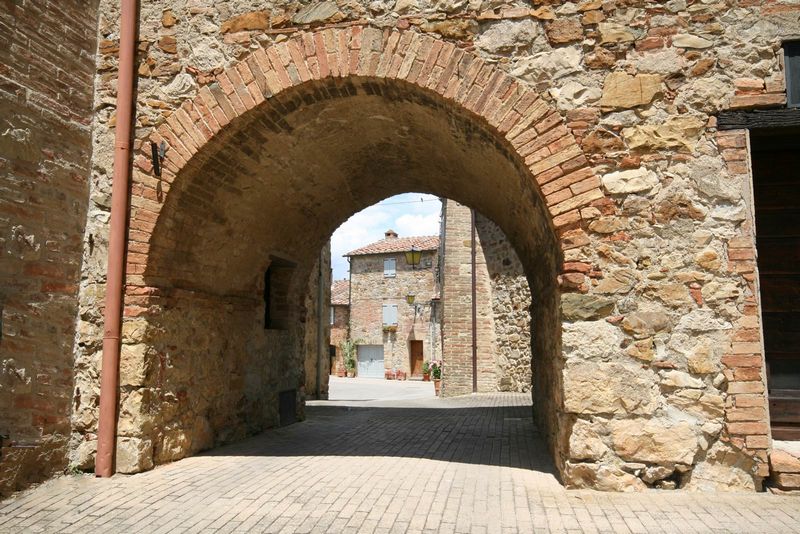
The Archaeological Museum occupies the three floors of the ancient Bishop’s Palace in the center of the small village of Murlo and contains several unique artifacts, like the terracotta plaques depicting scenes of banquets, assemblies, processions and a horse race, displayed according to their original function as an architectural frieze. Don't miss the bearded human statue wearing a hat, accompanied by a sphinx, which is a unique example of a pediment or acroterion decoration.
For information on accessibility: regione.toscana.it

