ORT: Easter Concert
music_note
Music
Easter Concert with Min Gyu Song and Simon Zhu
For the Easter Concert to be held in Florence on Thursday, April 2, the Orchestra della Toscana (ORT) brings together 2 artists transforming recognition into identity.
Min Gyu Song, the first Korean to win the Cantelli and, since 2025, Assistant Conductor of the Seoul Philharmonic Orchestra alongside Jaap van Zweden, boasts an education built early between Korea and Germany. Above all, he holds an idea of the podium that is anything but monumental, being instead comprised of clarity, listening and respectful collaboration with the orchestra.
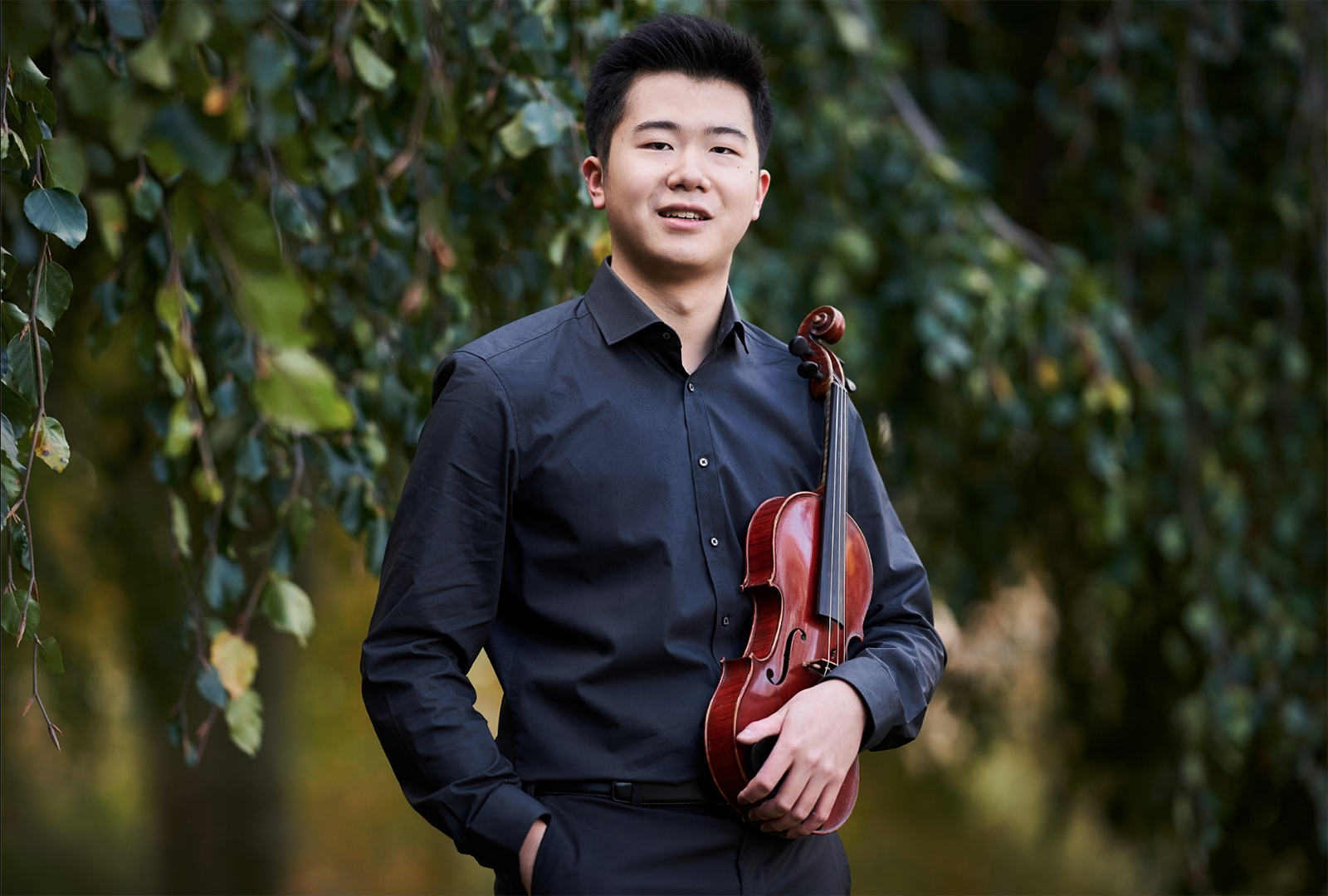
Simon Zhu, whom the ORT sought out immediately following the 2023 Paganini Prize, is now in Florence and belongs to the same rare category of musicians who do not need to raise their voices to be heard.
After the victory in Genoa, he played from the Louvre to London’s Guildhall, where he harnessed Paganini’s “Cannone,” and the trait with which he is most often credited, precisely what matters most in Mozart, being musical depth and interpretive naturalness. It is no mere detail that Zhu also won the Mozart Prize at the Menuhin.
Indeed, Concerto No. 5 K. 219 by W. A. Mozart, composed in Salzburg in 1775, begs for a quality that is difficult to simulate: to have liberty be felt within a terse, almost inescapable form. It is one of Mozart’s most theatrical violin concertos, already rich in formal surprises, cantabile outbursts and inventions that seem to arise with absolute simplicity.
Yet, that simplicity is a ruse.
Beneath the limpid surface bubbles incessant creativity. The same opening arpeggios change guise with each reappearance. The concluding Rondo alla Turca is not a decorative affectation but a sonic fracture, almost a character scene, at once rough and witty.
From such a violinist, the piece begs specifically for the crystal to be safeguarded without allowing it to stiffen, to let the grace breathe without losing backbone.
Beethoven responds from another, albeit no less crafty, side with Symphony No. 8 having long been mistaken for a step backward, almost a light interlude after the great heroic shocks. Instead, it is a fine machine, compact and disorienting, in which classicism is oiled with irony and precision.
There is the old Minuetto returning in charged form, the shadow of Maelzel and the metronome. There is a rhythmic pulse that never eases the tightness of its grip.
More than a nostalgic homage, it is a highly polished dissection of symphonic gears.
And it is here that Song can find ideal ground as a conductor who studies structure, character and phraseology, who rejects the idea of the podium as an authoritarian standpoint. Here, before him is a Beethoven to be brought to life from within, without mannered titanism or retro complacency.