ORT: Ceretta-Consonni Concert
music_note
Music
Diego Ceretta leads the ORT through Beethoven’s Concerto No. 3 (with Martina Consonni on piano) and Cherubini’s Symphony
On Wednesday, March 11 at the Teatro Verdi in Florence (and for other performances in Marradi, Figline, Poggibonsi and Pisa), Diego Ceretta directs the ORT for an evening that sees classical not as a reassuring form but a field of forces defined by balance and edges, measure and urgency, architecture and drama.
The program moves precisely along this line, bringing into dialog 2 different yet surprisingly aligned ways of understanding musical energy in the early 19ᵗʰ century.
On the one side is Vienna, with Beethoven crossing the threshold between inherited models and a now unmistakable voice in Concerto No. 3 in C Minor. Balanced on the other side is Parigi, with Cherubini and an 1815 Symphony that seeks not to merely shine on the surface but to hold an almost “scenic,” tight and precise tension.
Beethoven’s Concerto No. 3 is one of those works where the struggle is not so much displayed but focused.
Written between 1800 and 1803, C Minor shines a moral more than tonal light. Not patheticism but a watchful gravity shot through with sudden lyrical openings.
The orchestra does not accompany but dialogues, challenges, presses. Then the piano enters like a character that must take all the attention, measure by measure, without ever overwhelming the linear sense.
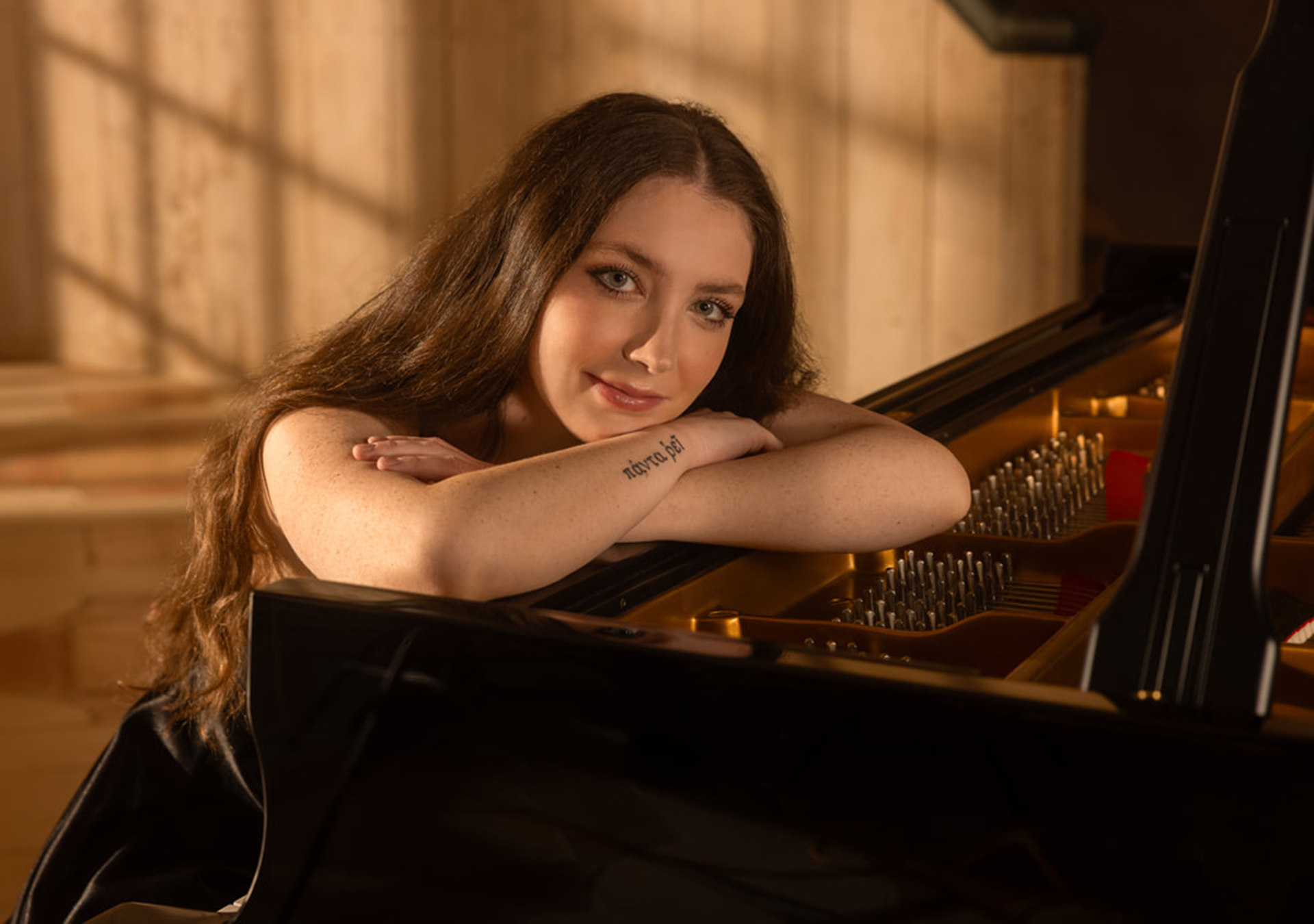
Into this interplay of contrasts—impetus and cantabile, shadow and transparency—comes Martina Consonni, a pianist from Lombardy who is making a name for herself with an approach that is both analytical and alive, with an attention to sound, to its granularity and a curiosity for structure that never cools but remains a way to let the music speak with clarity.
The second part of the evening changes accent without changing intensity. Luigi Cherubini’s Symphony in D major (1815) is a compact, incisive object, far from the idea of symphonism as a showcase of brilliance.
Here the precision—teetering on contrapuntal—is not ornamentation but internal tension, a way of keeping everything “live,” at a pace that seems to make the theater breathe.
Cherubini, a central figure between Classicism and early Romanticism, constructs a stern and nervous speech in a D major that does not glitter but sculpts. And it is precisely in this severity, so unaccommodating, that you feel the relevance of their language where music is a necessity, not mere decorum.
A concert, then, that showcases not 2 titles but 2 ideas of force: the Beethovenian that delves into conflict to transform it into form, and the Cherubian that ignites discipline to the point of pure theater.
pan_tool_alt
Please note
The insertion of this event was not edited by the Visittuscany editorial staff. For any information or details, contact Fondazione Orchestra Regionale Toscana.