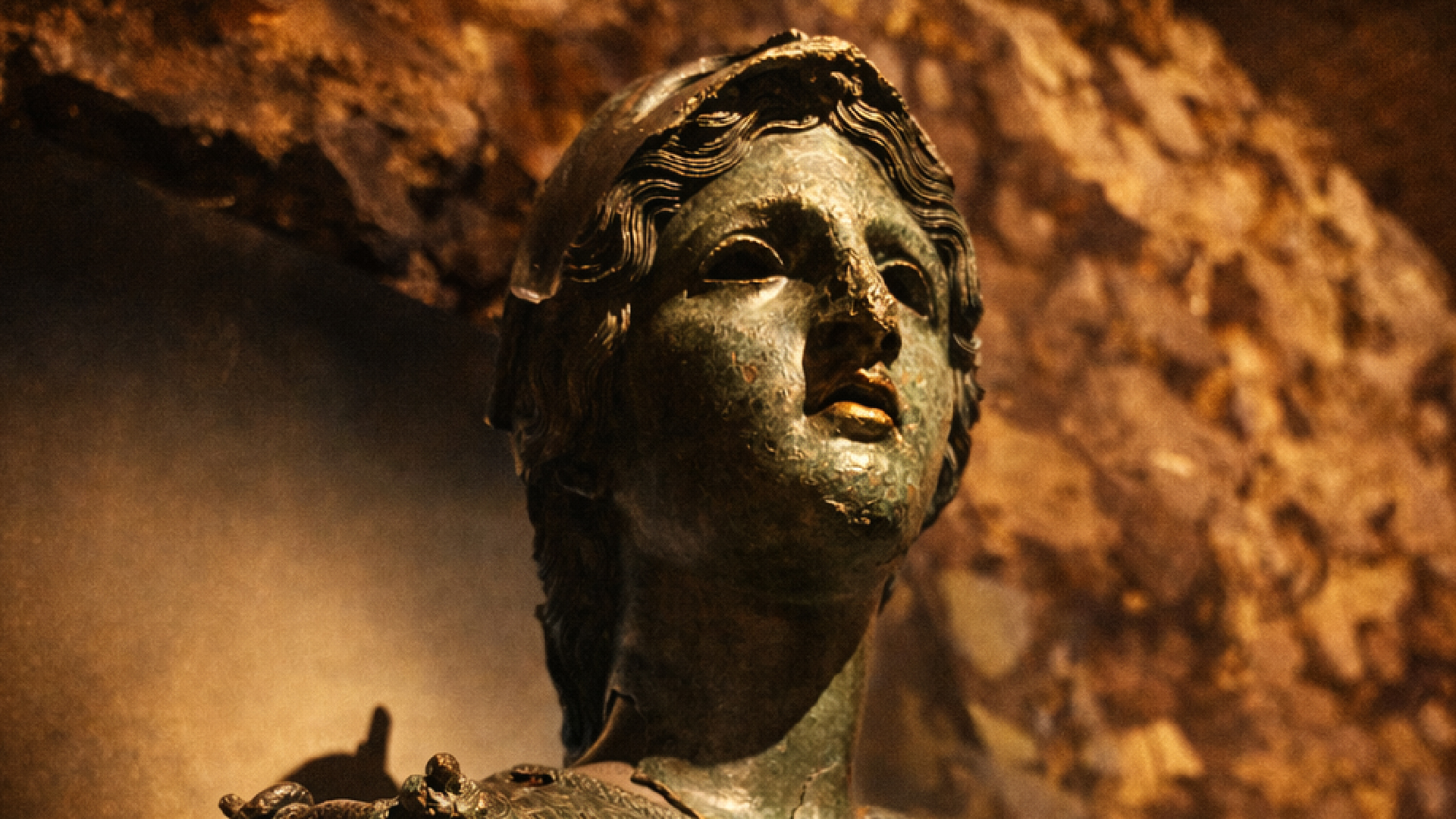
The Minerva of Arezzo: a story of rediscovered community
collections
Exhibitions
The National Archaeological Museum hosts the Minerva, a Hellenistic masterpiece and symbol of the city
From February 15 to September 6, 2026, Arezzo’s “Gaio Cilnio Mecenate” National Archeological Museum will display the Minerva, the city’s famous bronze symbolic statue, returning for a limited time to the place where it was found.
The dates of the exhibition are not coincidental. Indeed, the opening aligns with the Feast of Our Lady of Consolation, while the closing is scheduled on the same date as the Giostra del Saracino, the jousting event held each September, both occasions being deeply connected to Arezzo’s identity and tradition.
The precious Hellenistic bronze, usually housed at the National Archaeological Museum in Florence, was unearthed in Arezzo in 1541 during excavations for a well near the San Lorenzo Church in the Colcitrone district.
The connection between the goddess and this district of the city has remained very strong ever since, despite the work being permanently housed in Florence.
Approximately 5 feet tall, Minerva is depicted wearing a helmet and aegis, the shield on her chest decorated with Medusa’s head.
The bronze is dated between 300 and 280 B.C. and represents one of the masterpieces of Hellenistic sculpture. It will be featured in a special exhibit that will allow visitors to take a closer look at the finer details of ancient casting, underscoring Arezzo’s role as an important center of excellence for metalworking even in Etruscan and Roman times.
The return of the statue, welcomed with much fanfare by resident instutions and locals, represents not only an exhibition but also a strong symbolic gesture. The Minerva, which came on loan from the Florentine museum, closes the link between heritage, identity and community.
The work will be on view during regular museum opening hours.